
More than four in ten LinkedIn posts longer than 250 words may not have been written by a human at all. That single finding from a recent Pangram Labs report reframes something most professionals scroll past every day — and raises an unsettling question that cognitive science is only beginning to answer: if nearly half of the platform’s longer content is machine-generated, why do readers so rarely notice?
What the Pangram Labs Study Actually Found
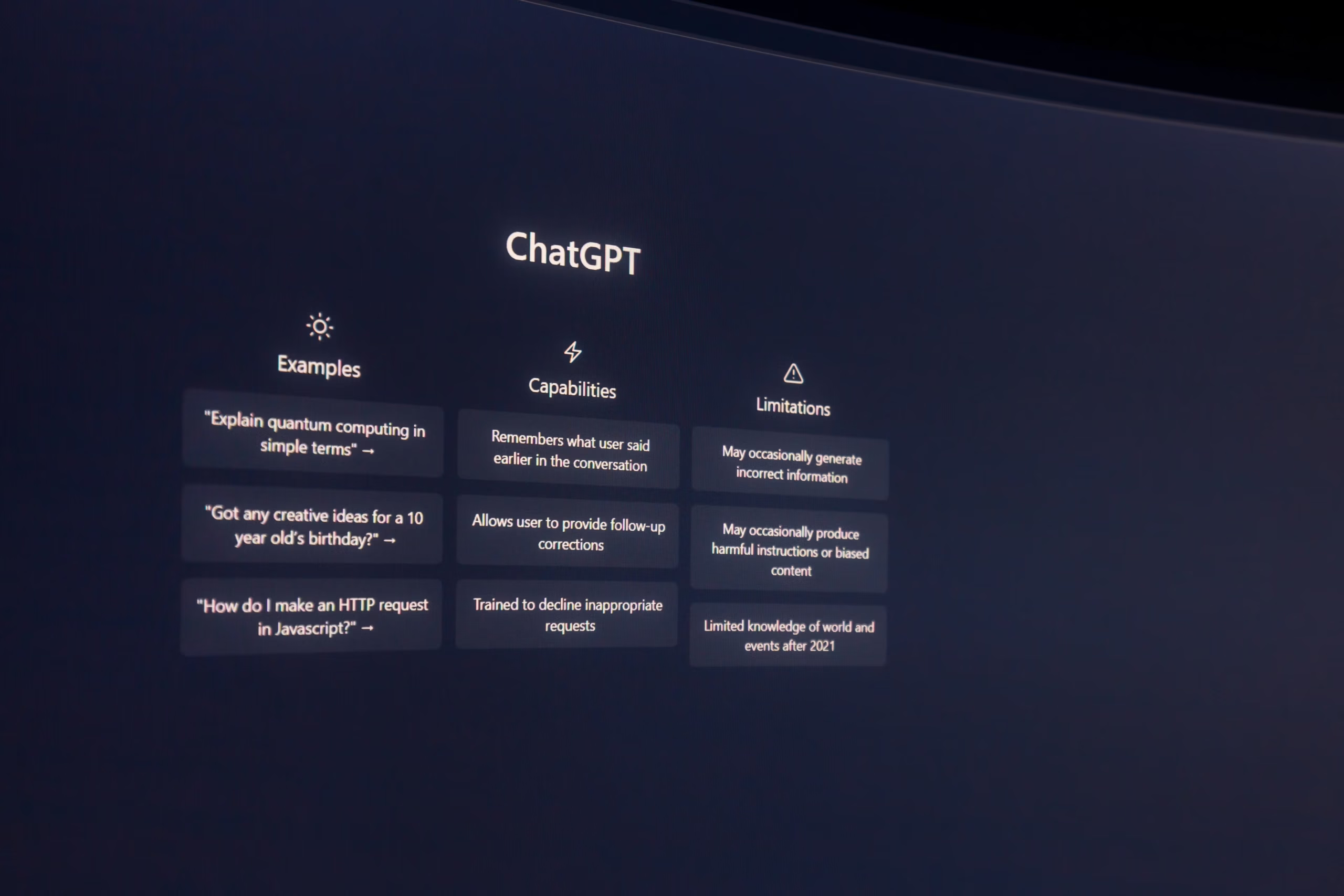
The Pangram Labs report analyzed writing across multiple major social platforms and concluded that LinkedIn and X had become the most saturated with AI-generated content, while Substack and Reddit remained comparatively human in voice and style. The headline figure — more than 40% of LinkedIn posts longer than 250 words flagged as fully AI-generated — positions LinkedIn as the most AI-saturated major social platform studied.
Understanding what “flagged” means here is essential before drawing conclusions. AI-content detection tools identify statistical patterns in word choice, sentence rhythm, and structural predictability that differ, on average, from human writing. They do not read meaning; they read probability distributions. No detection tool is perfectly accurate, and these systems produce false positives — meaning some posts flagged as AI-generated may in fact be human-written. The 40% figure should be read as a directional signal and an approximation, not a precise census of synthetic content.
With that caveat firmly in place, the scale of what Pangram Labs observed remains striking. LinkedIn is the platform where careers are built, reputations are made, and professional trust is established — yet the data suggests a substantial portion of its longer, more substantive content may be written by a machine presenting itself as a person.
Why Your Brain Falls for It: The Cognitive Science of Text Recognition
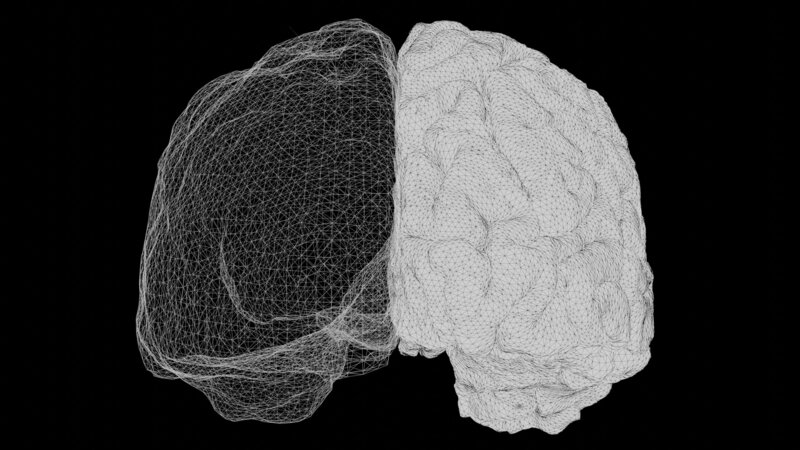
The human brain processes familiar, fluent text as credible by default. Cognitive scientists call this mechanism processing fluency — the easier prose is to read, the more trustworthy it feels, regardless of who or what produced it. This is not a flaw in individual reasoning; it is an evolved shortcut that works reliably when fluency correlates with genuine expertise and clarity. The problem is that large language models — AI systems trained on enormous volumes of human writing to predict and generate statistically likely text — have become extraordinarily fluent. They have learned, in effect, to trigger the brain’s trust shortcut on demand.
Research in human-AI interaction psychology has found that modern large language models consistently produce output that falls within the normal range of human writing variability. That overlap is the core of the detection problem. Peer-reviewed studies across computational linguistics and cognitive psychology find that untrained human readers perform near chance level — essentially a coin flip — when asked to distinguish AI-generated text from human text in blind tests. The brain is not failing; it is simply operating with a tool that was not designed for a world where non-human systems can produce grammatically sophisticated, contextually appropriate prose at scale.
Researchers are actively debating whether specific AI patterns can be trained into more reliable human detection skills. Some candidates include overly balanced sentence structures, an absence of genuine personal error, or a tendency toward abstract summary rather than granular specificity. These patterns are real but inconsistent enough across models and writing styles that no reliable heuristic has emerged for general readers. The fluency-based deception effect is well-documented and scientifically settled; whether humans can learn to overcome it through deliberate pattern training remains an open and actively contested question.
The Engagement Paradox: Disliking What We Cannot Consciously Detect
Here is where the data becomes genuinely paradoxical. AI-identified LinkedIn posts received 45% fewer engagements than human-authored content. Separately, consumer sentiment research found that 62% of social media users expressed negative feelings toward AI-generated content. Together, these numbers indicate that when audiences suspect or are explicitly told content is AI-generated, they pull back significantly — liking it less, sharing it less, and engaging with it less.
Yet in real-time scrolling, conscious detection remains elusive. The apparent contradiction resolves when a related psychological concept enters the picture: the uncanny valley of text. Originally a robotics term describing the unease humans feel when a humanoid machine looks almost — but not quite — human, the concept translates to written language. Readers may not consciously identify AI writing, but something subtly off in tone, emotional specificity, or the texture of lived experience can register as low-trust without a conscious label ever being applied. The discomfort exists below the threshold of articulation.
On LinkedIn specifically, this dynamic carries amplified stakes. Posts on the platform are routinely read as proxies for a person’s expertise, judgment, and authentic professional experience — qualities an AI system cannot actually possess. When a post describes navigating a difficult client relationship or drawing a hard lesson from a business failure, readers are implicitly evaluating whether those experiences are real. If they are not, the post represents a meaningful form of misrepresentation, even if no one can prove it in any individual case.
Why LinkedIn Became Ground Zero for AI-Generated Content

The structural incentives on LinkedIn created near-ideal conditions for AI content to proliferate. The platform’s algorithm has historically rewarded longer, insight-heavy posts — exactly the format that AI excels at producing quickly and consistently. That alignment between what the algorithm rewards and what AI generates efficiently created a feedback loop: AI output fits LinkedIn’s engagement grammar almost perfectly, so users who adopt it see results, which reinforces wider adoption.
Professional culture compounds the algorithmic pressure. Maintaining a consistent “thought leadership” presence demands high-volume content production that many professionals cannot sustainably generate alongside their actual work. AI assistance becomes an attractive, low-friction solution. The Pangram Labs research captures a spectrum here — from fully AI-generated posts to lightly AI-assisted writing — and the ethical and perceptual questions differ meaningfully across that range. A professional who uses AI to sharpen their own ideas is doing something categorically different from one who feeds a topic to a model and publishes the output unchanged.
The contrast with Reddit and Substack is instructive. On those platforms, community norms, insider knowledge, and personal narrative create higher authenticity bars that current AI models struggle to clear convincingly, according to the Pangram Labs findings. Research into the rise of AI-generated content on LinkedIn suggests that the platform’s formal, aspirational register — “here is what I learned” as a near-universal default frame — is particularly easy for language models to imitate at a surface level, making it harder for readers to spot the seams.
The Detection Problem: Why Technology Has Not Solved This

AI-generated content detection tools face a fundamental arms-race problem. The same large language models that produce synthetic text are iteratively improved to produce output that evades the statistical signatures those detectors rely on. As models improve, detector accuracy degrades. There is no stable equilibrium in this dynamic — it is structurally similar to spam filtering, except that the content being filtered is often indistinguishable in quality and apparent intent from legitimate human-written content.
The false-positive risk carries concrete fairness implications. Non-native English speakers, people with certain cognitive styles, and those who naturally write in structured or formulaic formats are disproportionately flagged by current detection tools — a pattern researchers have begun to document and that raises serious concerns about using these tools in high-stakes contexts such as hiring or academic evaluation. Treating a detection score as definitive in those situations is not currently justified by the available evidence.
The scientific consensus, stated plainly: no currently available tool — human or algorithmic — can reliably distinguish AI from human writing at scale with sufficient accuracy for high-stakes decisions. A different approach under active research is watermarking embedded at the model level, where AI output carries a hidden cryptographic signature invisible to readers but detectable by verification systems. Major AI developers including Google DeepMind and OpenAI have explored viable approaches to model-level watermarking, though no widely deployed standard yet exists.
What This Means for Professional Trust — and What Should Come Next
The combination of near-undetectable AI fluency, strong negative user sentiment toward AI content, and platform incentives that reward AI-friendly formats is quietly eroding the authenticity infrastructure that professional networks depend on. This is not a dramatic collapse — it is a gradual, largely invisible shift in the relationship between audience and author, mediated by a technology that most users are not actively accounting for as they read.
For individual readers, cognitive scientists suggest one behavioral adjustment that can partially counteract processing-fluency bias: treating high fluency and structural polish as a reason for mild skepticism rather than as a trust signal. Well-organized, smoothly written prose is no longer reliable evidence that a human being with genuine expertise produced it. That inversion of a long-standing intuition is uncomfortable, but it reflects the current landscape accurately.
At the platform level, the more realistic near-term lever may be disclosure rather than detection. Researchers and policy advocates increasingly argue that labeling AI-assisted content should become a standard expectation — analogous to the sponsored-post disclosure rules that now govern advertising on social media. The logic is parallel: audiences have a reasonable interest in knowing the nature of what they are consuming, particularly in contexts where authenticity is part of the implicit value being offered.
The Pangram Labs data and the cognitive science together do not prove that AI-generated content is uniformly harmful. Some AI-assisted writing is genuinely useful; some is transparently labeled and accepted by audiences on its own terms. But the gap between what people say they want — human authenticity, earned expertise, real experience — and what they are actually consuming on platforms like LinkedIn is now wide enough, and well-documented enough, to warrant serious attention from users, platforms, and researchers alike. The problem is not that AI writes. The problem is that no one can reliably tell when it has.