
Picture a creature striding upright across a Triassic floodplain roughly 230 million years ago: toothless, beaked, walking on long hind legs, with two conspicuously small arms tucked against its body. It looks, at first glance, like an ostrich that wandered in from the wrong geological period—but Labrujasuchus expectatus is, in technical terms, a crocodile relative, and its existence is forcing paleontologists to rethink what the early crocodile family tree actually looked like.
Meet Labrujasuchus expectatus: A Crocodile Relative That Looks Nothing Like One
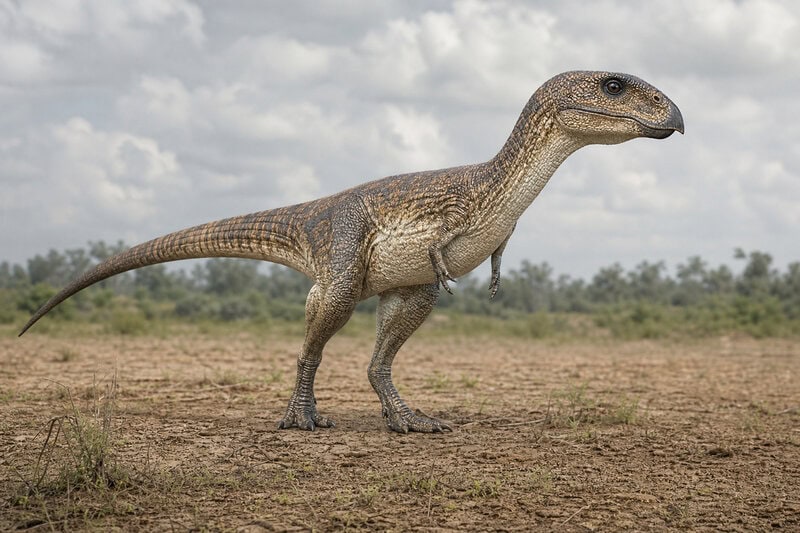
Labrujasuchus expectatus is a newly described species belonging to the family Shuvosauridae, placed within the broader evolutionary group known as Crocodylomorpha—the technical term for the full lineage containing all crocodile relatives, living and extinct. It lived during the Triassic period, making it one of the earliest documented examples of an upright, bipedal body plan on the crocodile side of the archosaur family tree. Archosaurs are the great reptile clade that, during the Triassic, split into two major branches: one leading to modern crocodilians, the other to dinosaurs and eventually birds. Labrujasuchus expectatus sat firmly on the crocodile-line branch, yet it bore almost none of the physical hallmarks we associate with crocodilians today.
The confirmed anatomical facts are striking on their own. The animal was fully bipedal, meaning it walked on two hind legs rather than four. It was entirely toothless. In place of the tooth-lined snout of a modern crocodile, it carried a beak. Its forelimbs were markedly reduced—tiny arms, in the informal but accurate shorthand researchers have used to describe them. The comparison to an ostrich is not casual hyperbole; scientists formally note that Labrujasuchus expectatus more closely resembles a large flightless bird in overall body plan than it does any living crocodilian. That comparison, given the animal’s actual evolutionary position, is as disorienting as it sounds.
It is worth being precise about what is established and what remains open. The bipedal posture, the toothless beak, and the reduced forelimbs are confirmed findings from the fossil material itself. What the animal ate, how fast it moved, and whether it was a dedicated runner—traits that would define its ecological role—remain active questions that additional specimens and biomechanical modeling will need to address. Reporting in Nautilus on the discovery captures the breadth of surprise the specimen has generated among researchers familiar with the crocodile-line fossil record.
What Is Shuvosauridae, and Why Does This Family Keep Getting Mistaken for Dinosaurs?
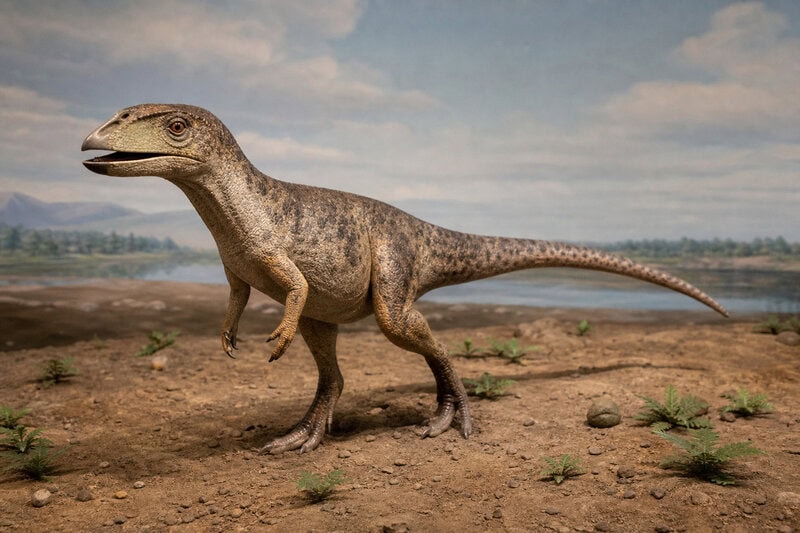
Shuvosauridae belongs to a grand evolutionary clade called Pseudosuchia, informally called the croc-line archosaurs. These animals diverged from bird-line archosaurs—the group that produced dinosaurs and, eventually, modern birds—during the Triassic. Despite their sometimes strikingly dinosaurian appearance, Shuvosaurids are more closely related to a living alligator than they are to Tyrannosaurus rex. That distinction matters enormously, because the family has a documented history of being misidentified: earlier Shuvosaurid fossils were initially classified as dinosaurs precisely because their upright, bipedal anatomy so closely matched what paleontologists expected from the dinosaur lineage rather than the crocodile one.
Labrujasuchus expectatus extends and deepens that pattern. By combining full bipedalism, a toothless beak, and markedly reduced arms in a single, well-preserved specimen, it gives researchers a new and unusually complete data point for mapping how convergent evolution—the independent arrival at similar body plans by distantly related lineages—operated across Triassic ecosystems. The fact that both croc-line and bird-line archosaurs independently evolved upright posture, toothless beaks, and reduced forelimbs during roughly the same geological window suggests these traits may have been adaptive responses to shared environmental pressures, rather than features inherited from a common ancestor.
Coverage at ZME Science places the discovery in the context of ongoing efforts to disentangle which Triassic animals were genuine dinosaurs and which were croc-line mimics—a problem that has complicated the fossil record for decades and that new specimens like this one help to resolve, even as they raise fresh questions.
The Tiny Arms Problem: What Reduced Forelimbs Actually Tell Us
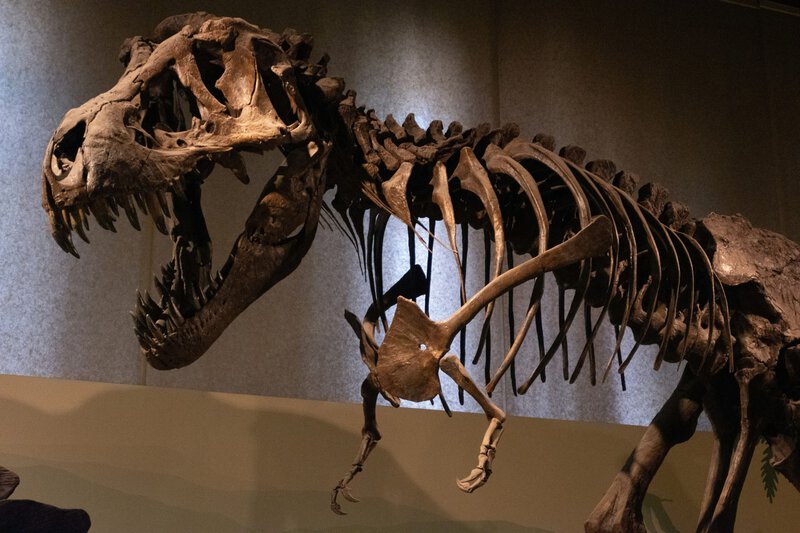
Reduced forelimbs—arms that have shrunk relative to overall body size over evolutionary time—are a pattern that appears repeatedly in the history of bipedal animals. The most famous examples come from theropod dinosaurs: Tyrannosaurus rex and Carnotaurus both carried dramatically small arms relative to their massive bodies. Their presence in Labrujasuchus expectatus, a croc-line animal with no close relationship to those theropods, raises a genuine mechanistic question: does bipedal locomotion itself drive arm reduction, or do the two traits evolve independently and simply tend to co-occur?
The leading biomechanical hypothesis is straightforward in outline. Once an animal commits to walking and running on its hind limbs, the forelimbs are released from weight-bearing duties. If maintaining large, muscular arms carries a meaningful metabolic cost—and for a vertebrate, it does—natural selection may favor reducing them when they provide no compensating functional advantage. This explanation is widely discussed, but it remains a hypothesis rather than settled consensus. The fossil record cannot directly measure metabolic costs, and limb reduction likely involves developmental constraints and additional factors not captured by a simple cost-benefit model.
In Labrujasuchus expectatus specifically, the tiny arms appear alongside a toothless beak, which carries its own implication. Animals that rely on a beak as their primary feeding apparatus tend to use their head—rather than their forelimbs—as the main tool for acquiring and processing food. Modern birds are the clearest living example of this pattern. If Labrujasuchus expectatus followed similar functional logic, its reduced arms may reflect a body plan in which the forelimbs had become redundant for feeding as well as for locomotion. Researchers caution, however, that inferring behavior from limb proportions alone is uncertain, and that multiple competing explanations remain viable until more complete material is described and analyzed.
The Triassic Context: Why This Period Produced Such Radical Body Plans
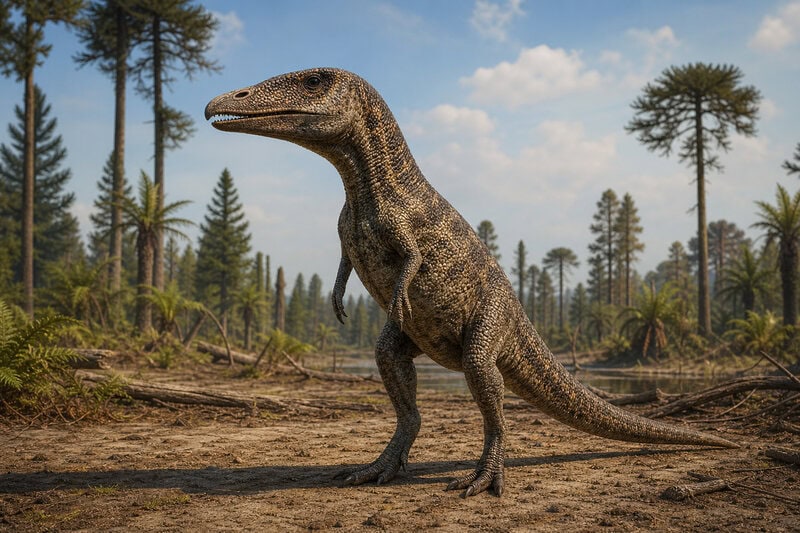
The Triassic period, spanning roughly 252 to 201 million years ago, followed the end-Permian mass extinction—the largest extinction event in Earth’s history, which eliminated an estimated 90 percent or more of marine species and a comparable proportion of terrestrial ones. The ecological vacancies left by that catastrophe gave surviving archosaur lineages extraordinary freedom to diversify, and the Triassic fossil record reflects that freedom in the sheer variety of body plans it preserves. Labrujasuchus expectatus is a direct product of that evolutionary latitude.
During the Triassic, croc-line and dinosaur-line archosaurs were genuine ecological competitors. They occupied overlapping niches across what was then the supercontinent Pangaea, and the convergence in their body plans—both sides independently producing upright, beaked, small-armed animals—likely reflects the similar selective pressures they encountered in those shared environments. SciTechDaily‘s reporting on the discovery underscores how systematically the Triassic generated these parallel experiments across the archosaur family tree.
By the end of the Triassic, the picture had changed dramatically. The croc-line archosaurs that survived into the Jurassic had largely converged on the four-legged, semi-aquatic, heavily armored body plan we recognize in living crocodilians. Bipedal, beaked forms like Labrujasuchus expectatus did not persist—they represent what evolutionary biologists sometimes call a road not taken, a cluster of body plans that flourished briefly and then disappeared. Whether they vanished because of direct competition with increasingly dominant dinosaurs, because of the end-Triassic extinction event, or some combination of both, remains actively debated. The honest answer is that both factors probably contributed, but their relative weight is not yet settled by the available evidence.
How This Discovery Reshapes Our Understanding of Crocodile Evolution
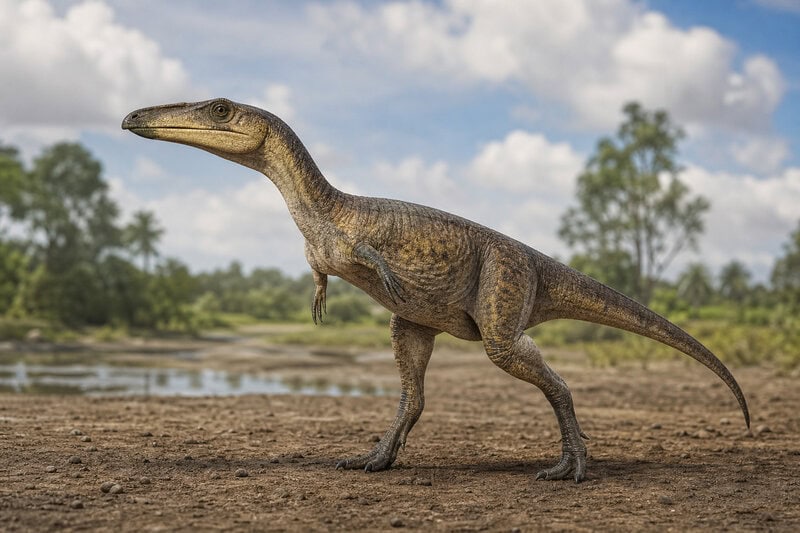
Every new Shuvosaurid specimen refines the range of evolutionary positions and body plans that early crocodylomorphs demonstrably explored. Labrujasuchus expectatus does so by presenting a previously undescribed combination of characters in a single animal: confirmed bipedalism, a confirmed toothless beak, and confirmed forelimb reduction. That combination challenges a lingering assumption in the field—that the four-legged, sprawling posture of modern crocodilians represents a deeply ancestral condition for the lineage. The growing Shuvosaurid fossil record, with Labrujasuchus expectatus as its newest and most anatomically complete addition, suggests instead that early crocodile relatives were far more ecologically and anatomically diverse than their living descendants would imply.
The discovery also strengthens the case that the toothless beak evolved independently multiple times across archosaur evolution—in the bird-line dinosaurs called ornithischians, in birds themselves, and now demonstrably in at least one croc-line lineage. This is the pattern evolutionary biologists call homoplasy, and its repeated appearance in the archosaur record supports a model in which the beak represents a reliably useful solution to certain ecological problems rather than a rare or difficult evolutionary innovation. Phys.org’s coverage of the find highlights how the specimen fits into this broader pattern of repeated convergence across the archosaur tree.
There are also practical consequences for how paleontologists interpret fragmentary fossil material. Isolated bones—a hip socket, a hind-limb element, a jaw fragment—that might once have been assigned to dinosaurs because of their upright proportions may now warrant reassessment. If croc-line animals could be this dinosaurian in their overall architecture, the boundary between the two groups in the fragmentary fossil record is less clear than it once appeared, and some previous attributions may deserve a second look.
Why the Weirdness of Labrujasuchus expectatus Matters
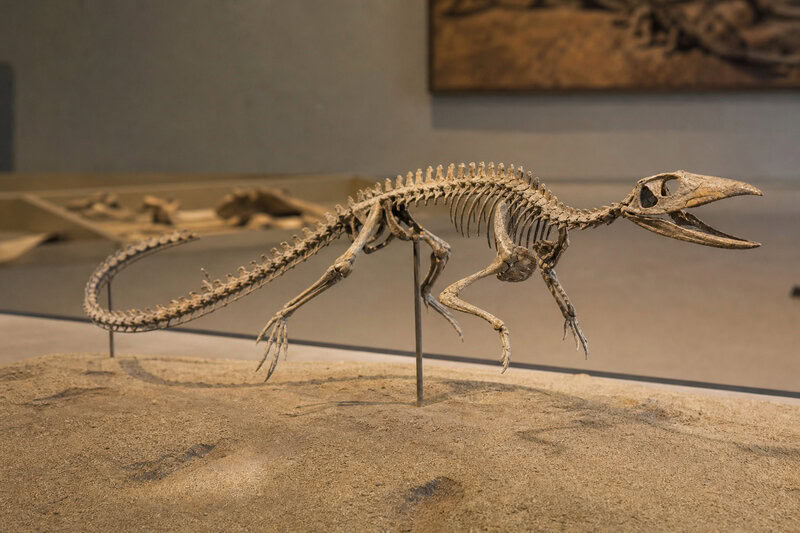
Modern crocodilians are often described, with some justice, as living fossils—animals whose basic body plan has remained relatively stable for tens of millions of years. That stability can create a misleading impression: that the flattened, four-legged, semi-aquatic crocodile is the default setting of the lineage, its natural and perhaps inevitable form. Labrujasuchus expectatus is a concrete, well-documented corrective to that impression. The crocodile family tree, during the Triassic, was producing some of the most morphologically adventurous animals on the planet—upright, beaked, small-armed creatures that would have looked, to any reasonable observer, like something from a completely different branch of life.
For researchers studying convergent evolution, the animal offers a rare natural experiment: a croc-line species that independently evolved a suite of traits—bipedalism, a toothless beak, reduced forelimbs—previously associated almost exclusively with bird-line theropod dinosaurs. That experiment, preserved in fossil bone across roughly 230 million years, carries real scientific value precisely because it was not planned, not engineered, and not inherited from a common ancestor that had these features first. It happened at least twice, on opposite sides of a major evolutionary divide, under broadly similar ecological conditions. Understanding why it happened, and why it ultimately did not persist on the crocodile line, is a question that Labrujasuchus expectatus has now placed squarely on the research agenda.
The broader lesson is that evolution does not move in straight lines toward the familiar. The stillness of a modern crocodile at the water’s edge—ancient, patient, unchanged in its essentials for eons—is not the whole story of its lineage. It is the survivor of a far stranger and more varied family history, one that once included creatures striding upright through a Triassic world, arms barely there, beak forward, looking for all the world like something they were not.