
Within hours of returning from orbit, astronauts routinely describe the same disorienting sequence: gravity feels like a punishment, familiar colors look almost painfully vivid, and ordinary air smells overwhelming after weeks of breathing the recycled, filtered atmosphere of a spacecraft. NASA research confirms that even short missions of two to four weeks produce measurable changes in how the human brain processes sight, balance, smell, and touch — changes that no pre-flight briefing fully prepares crews to experience.
Astronauts Return to Wapakoneta for Summer Moon Festival
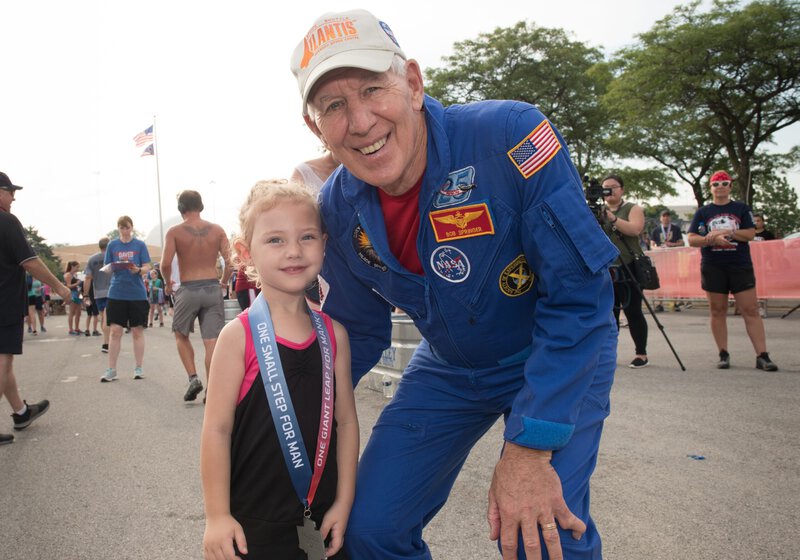
On July 18 and 19, the small Ohio city of Wapakoneta — birthplace of Neil Armstrong and home of the Armstrong Air & Space Museum’s Summer Moon Festival — hosted a remarkable gathering of spaceflight experience. NASA astronauts Don Thomas, Mike Foreman, and Carl Walz appeared across two days of public programming, bringing firsthand accounts of orbital missions to a community that has long understood spaceflight as something more than abstraction.
Mike Foreman, who returned to Wapakoneta for his third Summer Moon Festival, spent 26 days in space across his astronaut career. Don Thomas appeared at Heritage Park on Saturday from 3:00 to 4:00 PM before returning Sunday morning for a session in the museum’s STEM Center. Carl Walz signed autographs at Heritage Park on Saturday. Together, the three astronauts offered festival visitors something peer-reviewed literature alone cannot supply: direct personal testimony about what the human body actually experiences when it leaves orbit and comes back.
According to festival organizers, the opportunity to question real NASA astronauts about the physical reality of spaceflight drew consistent crowds — and the answers, grounded in lived experience rather than cinematic heroism, routinely surprised attendees.
The Gravity Switch: Why Standing Becomes a Skill You Must Relearn
The vestibular system — the inner-ear network responsible for telling the brain which way is “down” — is functionally unemployed in microgravity. NASA’s Human Research Program has documented that within 48 hours of launch, the brain begins suppressing vestibular input and shifts its orientation strategy toward vision instead. That adaptation is efficient and useful in orbit. It becomes a liability the moment a capsule splashes down.
Upon return, the vestibular system reactivates before the brain has recalibrated its trust in those signals, producing what NASA researchers call re-adaptation sickness: dizziness, nausea, and postural instability that affects the majority of returning crew members regardless of mission length. A 2021 study published in npj Microgravity, a Nature partner journal, found that astronauts returning from the International Space Station showed detectable changes in cerebrospinal fluid distribution and white matter microstructure — physical brain changes that correlated directly with post-flight performance on cognitive and balance assessments.
The practical consequence is not subtle. NASA protocol requires a recovery team to physically lift crew members from the capsule on landing day — not as ceremony, but because attempting to stand unassisted poses a genuine fall risk in the first hours after touchdown. The legs have not forgotten the mechanics of walking. The brain has simply stopped trusting the signals that make walking automatic.
Recovery from vestibular re-adaptation typically unfolds over days rather than hours, and individual variability is significant. NASA researchers acknowledge they cannot yet reliably predict, based on pre-flight characteristics, which astronauts will experience severe symptoms versus mild ones — an uncertainty that is itself an active area of investigation.
The Color Problem: Why Earth Looks Oversaturated After Orbit
Astronauts consistently report that Earth’s colors appear almost uncomfortably vivid in the hours immediately after return — greens registering as too intense, blues carrying an unfamiliar depth. Researchers at NASA’s Johnson Space Center attribute this to contrast adaptation: eyes calibrated to the stark, unfiltered solar radiation of low Earth orbit must re-adjust to the softer, atmospherically scattered light of the surface.
The retina’s photoreceptor cells undergo documented sensitivity shifts during spaceflight. A 2020 review published in Frontiers in Physiology noted that without the atmospheric scattering that softens sunlight on the ground, orbital light exposure alters baseline photoreceptor sensitivity thresholds in ways that take days to normalize after return. The experience is consistent enough across astronaut reports that it is treated as an expected, if temporary, feature of re-entry rather than an anomaly.
This phenomenon is distinct from — and should not be confused with — spaceflight-associated neuro-ocular syndrome, or SANS, which involves lasting structural changes in some long-duration astronauts’ optic nerves and visual acuity that persist well beyond the short-term re-adaptation window. NASA classifies SANS as an active research priority, not a solved problem. The two phenomena share an orbital origin but differ significantly in mechanism, severity, and duration.
The Smell of Earth: The Sensory Return Nobody Anticipates
Of all the re-entry experiences astronauts describe — at events like the Summer Moon Festival and in post-flight debriefs — the olfactory impact of returning to Earth is among the least expected and most consistently reported. Fresh air, soil, grass, and even jet fuel on the tarmac register as acute sensory events after weeks in a recycled, filtered spacecraft atmosphere.
The ISS cabin air is processed through a sophisticated life-support loop that scrubs carbon dioxide, manages humidity, and controls particulate contamination. What it does not — and cannot — deliver are the volatile organic compounds that constitute the molecular signature of living environments: the airborne chemistry of plants, rain, soil microbes, and open air that human olfactory systems are evolutionarily primed to detect.
NASA’s Human Research Program notes that olfactory adaptation follows a pattern similar to vestibular and visual recalibration: the brain down-regulates sensitivity to stable background stimuli over time, making re-exposure to Earth’s comparatively rich olfactory environment feel amplified rather than normal. It is worth noting, however, that this is among the less rigorously studied dimensions of spaceflight sensory change. Most published data in this area relies on self-reported astronaut accounts rather than controlled olfactory testing, making it a genuinely promising but not yet fully validated line of research.
The Bone and Muscle Cost of Microgravity
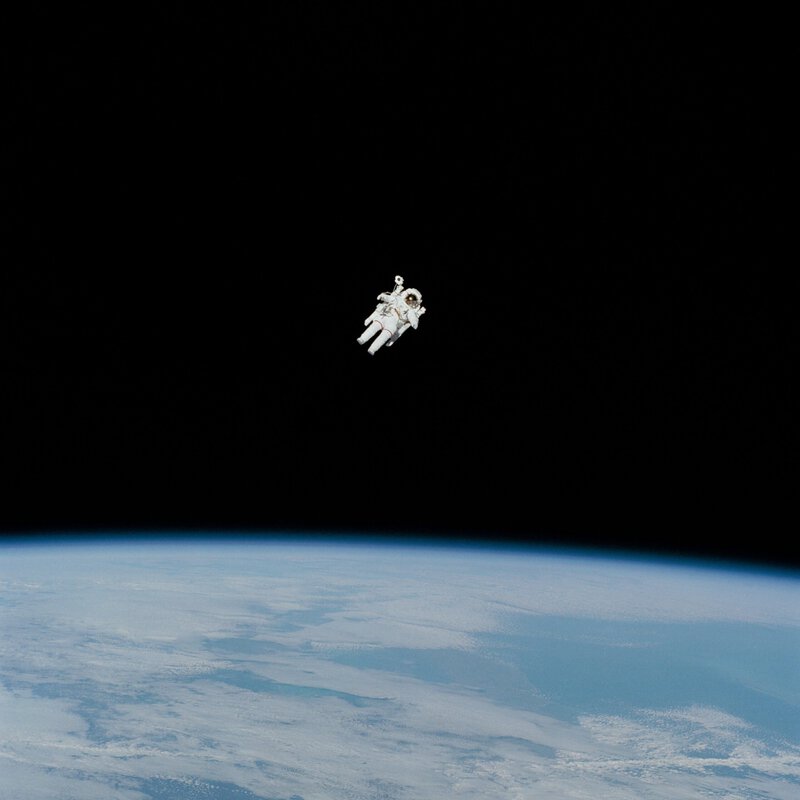
NASA’s research consensus, supported by decades of ISS data, holds that astronauts lose approximately one to two percent of bone density per month in microgravity — a rate comparable to early-stage osteoporosis — with the greatest losses occurring in load-bearing bones including the hips, femur, and lumbar spine. Muscle atrophy proceeds faster: without the constant low-level effort of moving against gravity, postural muscles can lose measurable mass within the first week of spaceflight, according to NASA’s Human Research Program documentation.
The standard countermeasure aboard the ISS — approximately two hours of daily resistive and aerobic exercise — significantly slows but does not fully prevent these losses. A 26-day mission, of the type completed by Mike Foreman, represents a shorter exposure window than a typical six-month ISS increment, with correspondingly faster physiological recovery expected after return. Even so, full bone density restoration after long-duration missions can take months to years, and NASA researchers describe long-term astronaut health monitoring as both a scientific and ethical commitment rather than a post-flight formality.
Why In-Person Astronaut Outreach Produces Results Broadcast Media Cannot
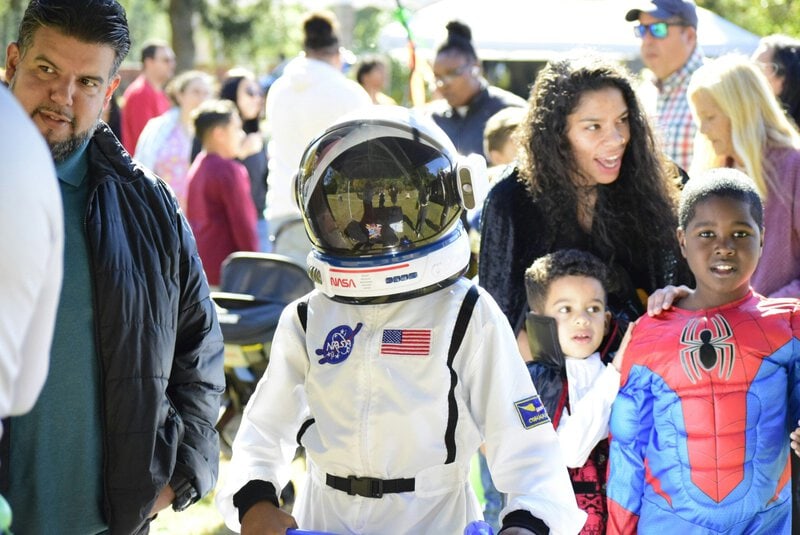
The structured public appearances at the Summer Moon Festival — Don Thomas in the museum STEM Center on Sunday morning, Carl Walz signing autographs at Heritage Park on Saturday, Mike Foreman engaging with his third consecutive festival audience — represent a form of science communication with documented effects that passive media exposure does not replicate. Research consistently links direct, in-person astronaut contact with measurable increases in youth interest in STEM fields. Communication researchers distinguish this format specifically because personal interaction produces more durable attitude changes than broadcast or print exposure to the same content.
Astronaut outreach also serves a function internal to NASA’s public research mission. When astronauts describe the genuine physical difficulty of return — the dizziness, the legs that must relearn walking, the colors that seem wrong, the smell of ordinary air arriving as revelation — they are not undermining the prestige of spaceflight. They are building accurate public understanding of why human research programs require sustained funding and why unanswered questions matter.
As a prior Summer Moon Festival visit from a retired astronaut demonstrated, these conversations resonate with particular depth in Wapakoneta — a city whose identity is inseparable from the history of human spaceflight, and whose annual festival functions as a living bridge between that history and the research questions NASA is still working to answer.
What Science Still Cannot Predict — And Why That Gap Is the Point
NASA’s Human Research Program currently identifies five broad categories of unresolved risk in human spaceflight health research: behavioral health challenges in long-duration isolation, SANS-related vision changes, bone integrity restoration timelines, immune system alterations, and cumulative radiation exposure effects. None of these has a complete, evidence-based countermeasure package cleared for deep-space missions beyond low Earth orbit.
The sensory re-adaptation experience — the overwhelming convergence of gravity, color, smell, and sound in the first hours after return — is among the better-characterized short-term effects. But individual variability in that experience remains poorly predicted. NASA cannot yet reliably identify, before a mission, which crew members will experience severe re-adaptation symptoms and which will experience mild ones. That gap matters more as Artemis-program timelines target a return to the Moon and eventual crewed Mars transit, where re-adaptation would occur far from Earth-based medical infrastructure and recovery teams.
The questions that festival visitors in Wapakoneta put to Don Thomas, Mike Foreman, and Carl Walz — what does it feel like to come back, does your body remember how to be on Earth, does the world look different — are the same questions NASA flight surgeons are actively pursuing in peer-reviewed aerospace medicine research. The gap between what astronauts can describe vividly from experience and what science can currently predict or prevent is not a failure of research. It is precisely the frontier that makes human spaceflight physiology one of the most actively published and genuinely open fields in modern medicine.