
A single antelope tooth, pulled from a South African cave and dated to roughly 50,000 years ago, has done something remarkable: it yielded recoverable ancient DNA despite spending millennia in a climate that scientists long considered lethal to genetic material. That finding, emerging from a region written off by much of the ancient DNA research community, is now quietly forcing a rethink of one of the field’s most entrenched assumptions — and opening a potential window into human prehistory that has been effectively shut for decades.
Why Scientists Assumed Warm Climates Destroyed Ancient DNA
Ancient DNA — abbreviated aDNA, meaning genetic material extracted from archaeological or paleontological remains rather than living organisms — is a notoriously fragile molecule. At the chemical level, DNA is a long-chain structure held together by bonds that two processes relentlessly attack: hydrolysis, in which water molecules cleave those bonds, and oxidation, in which reactive oxygen compounds corrupt the genetic sequence. Heat accelerates both processes dramatically, compressing what might take millennia in a cold environment into centuries or even decades in a warm one.
To account for this, researchers developed the concept of thermal age — a calculated figure that adjusts a specimen’s real chronological age to reflect the cumulative heat it has endured. A 10,000-year-old bone from the Siberian permafrost might carry a thermal age of a few thousand years, leaving its DNA essentially readable. The same bone resting in tropical African soil for an equivalent period could carry a thermal age orders of magnitude higher, reducing its DNA to unrecoverable fragments too short and damaged to sequence reliably.
The empirical record reinforced this model convincingly. Permafrost sites across Siberia and northern Europe have yielded aDNA stretching back hundreds of thousands of years — including sequences from woolly mammoths and archaic human relatives — cementing the scientific consensus that cold, dry, and dark environments represent the gold standard for preservation. Africa’s warm and often humid conditions were largely written off on theoretical grounds. Crucially, that theoretical dismissal became a practical one: because researchers assumed preservation was impossible, few mounted serious extraction attempts, creating a sampling bias that may have quietly self-reinforced the assumption for decades.
What the South Africa Cave Find Actually Showed
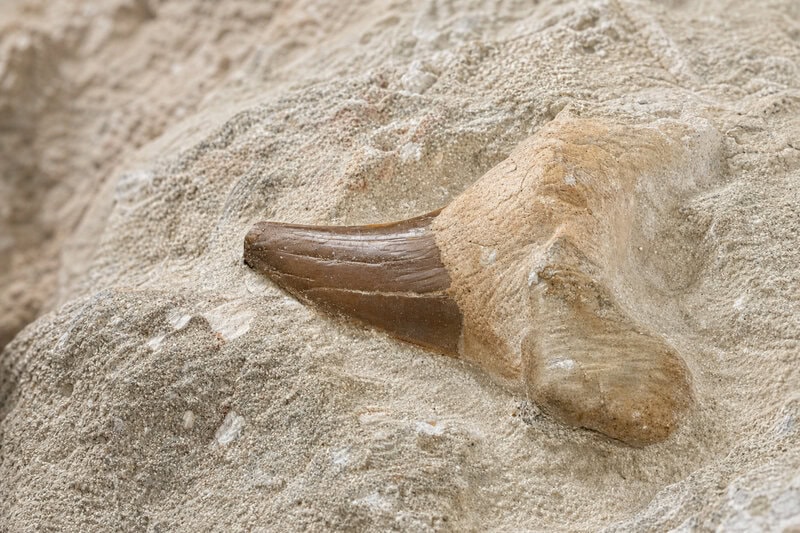
The specimen at the center of this challenge is an antelope tooth recovered from a cave in South Africa, dated to approximately 50,000 years ago — placing it squarely within the last ice age, a period when megafauna still roamed the region alongside early modern humans. According to reporting on the research, scientists successfully extracted and sequenced DNA from the specimen, demonstrating that ancient DNA survival in warm climates is achievable well beyond what previous empirical estimates had suggested.
Equally significant is what the broader dataset from the site showed. Researchers also recovered genetic material from other long-dead animals at the same location, suggesting this is not a single fortunate anomaly attributable to one unusually well-preserved specimen. When multiple organisms from the same site yield readable DNA, it points toward a site-level preservation phenomenon — something about this cave’s specific microenvironment that slowed the usual degradation pathways across the board.
One critical distinction deserves emphasis before the excitement runs ahead of the evidence: the study demonstrates that ancient DNA can survive under these conditions. It does not yet establish, with mechanistic precision, exactly why it survived here when it fails elsewhere in Africa. Independent replication across additional specimens and laboratories will be necessary before the field formally revises its preservation models — a non-negotiable standard in ancient genomics, where contamination risks and methodological artifacts demand rigorous verification at every step.
The Cave as an Accidental Time Capsule

Understanding why this particular cave may have protected its genetic archive requires a brief detour into preservation physics. Caves are not simply holes in rock — they are microenvironments that can buffer external temperature swings, block ultraviolet radiation that damages nucleic acids, and restrict the oxygen flow that drives oxidative degradation. Each of those factors works, individually and in combination, to slow the chemical clock that destroys DNA.
This is not entirely novel territory. Researchers studying preservation conditions in caves across the Middle East and the Mediterranean have occasionally retrieved genetic fragments from warm-region specimens, hinting that geology and site-specific chemistry — not latitude alone — govern whether ancient sequences survive. The South Africa find fits into and amplifies that emerging picture rather than standing as an isolated contradiction.
Particularly relevant is the role of mineral binding. Calcium-rich substrates — tooth enamel is an excellent example, and cave sediments often qualify — can adsorb DNA strands, meaning the genetic material binds physically to mineral surfaces rather than floating freely in groundwater where enzymes and hydrolysis would quickly dismantle it. Tooth enamel is already recognized as one of the best-preserving biological matrices for aDNA in temperate climates. The South African antelope tooth find suggests that advantage may extend further into warm-climate contexts than anyone previously tested.
What remains uncertain is the precise microclimate history inside this specific cave over 50,000 years. Scientists have not yet fully characterized whether it experienced prolonged cool phases, unusual dryness, or other transient conditions that contributed to preservation. That characterization will be essential to determining whether this site represents broader African cave contexts or is an exceptional geological outlier — a distinction with major consequences for how aggressively researchers pursue similar sites elsewhere on the continent.
Revising the Timeline: How Long Can DNA Actually Survive?

The previous scientific benchmark placed a theoretical ceiling of roughly one million years on aDNA recovered under optimal cold conditions — a figure derived from modeling studies and anchored to the oldest reliably sequenced specimens from frozen environments. In warm climates, that ceiling dropped precipitously, with practical recoveries measured in thousands of years at best and outright failure being the norm for older material.
Recovering legible DNA from a 50,000-year-old warm-climate specimen pushes the demonstrated lower bound for African preservation meaningfully forward. The fossil DNA lifespan in Africa has almost certainly been systematically underestimated — though by precisely how much remains an open question that a larger body of evidence will need to answer. A single successful extraction is a proof of concept, not a revised textbook figure.
An important nuance shapes how researchers interpret warm-climate recoveries even when they succeed: surviving DNA in hot environments tends to arrive in shorter, more heavily damaged fragments than its cold-climate equivalents. Sequence quality is lower, strand lengths are reduced, and the chemical damage patterns — which are paradoxically useful because they authenticate material as genuinely ancient rather than modern contamination — are more complex to decode. Advances in laboratory technique, including single-stranded library preparation methods that capture even highly degraded molecules, have made it possible to coax readable sequences from material that would have defeated methods available a decade ago. The South Africa find may be partly a story of improved technology revealing what was always there, waiting for tools sophisticated enough to see it.
Why This Matters for Human Origins Research
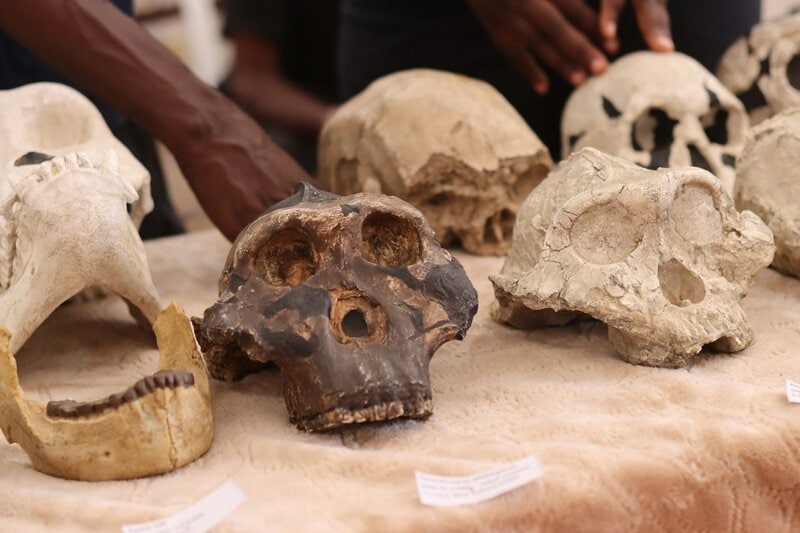
The broader scientific stakes are difficult to overstate. Africa is the origin point of Homo sapiens and the stage for the most consequential chapters of human evolution — yet it has remained almost entirely inaccessible to ancient DNA research. Where Eurasian prehistory has been transformed by genetic sequencing of Neanderthals, Denisovans, and dozens of ancient human populations, Africa’s prehistoric genetics are largely a blank. Meaningful aDNA recovery on the continent has been limited to the last few thousand years in cooler, drier regions — a narrow and geographically unrepresentative window.
If ancient DNA can be recovered from African cave sites at scale, that blank could begin to fill in ways no other scientific discipline can replicate. Researchers might, for the first time, genetically characterize populations who lived alongside or predated anatomically modern humans on the continent — populations currently known only from fragmentary bones and stone tools. Among the most pressing unanswered questions is whether Homo sapiens interbred with archaic African populations in ways analogous to the well-documented admixture events with Neanderthals and Denisovans in Eurasia. Skeletal morphology suggests complex population interactions across the continent; only direct ancient genetic evidence can confirm or characterize the nature of those encounters.
The South African cave finding represents a proof-of-concept data point for that broader ambition, not a solved problem. Taphonomic conditions — the specific physical and chemical history of how remains were buried, what minerals surrounded them, and how groundwater moved through a site — will vary enormously across African cave systems. A favorable outcome at one site does not guarantee comparable results continent-wide, and researchers will need to resist the temptation to over-generalize from limited early data.
What Comes Next
The immediate scientific priority is replication. Independent laboratories working with the South African specimens will need to confirm the extractions and rule out contamination, following the rigorous authentication standards that have defined ancient genomics since its earliest controversies in the 1990s. Assuming confirmation holds, the logical next step is systematic survey work — identifying African cave sites with similar geological profiles and subjecting preserved faunal and, eventually, hominin remains to modern extraction methods.
The methodological landscape is, for the first time, genuinely equipped for that challenge. Single-stranded library preparation, improved enzymatic repair of damaged bases, and increasingly sophisticated computational tools for reconstructing heavily fragmented sequences have collectively lowered the barrier for recovering information from degraded material. The combination of better tools and a loosened geographic assumption may open a research frontier that was effectively closed for the field’s first three decades.
The geographic implications extend beyond Africa. Researchers studying ancient populations across South and Southeast Asia, the Amazon basin, and other warm-climate regions where aDNA recovery has historically been poor may find renewed methodological justification to revisit previously dismissed sites. Cave microenvironments, calcium-rich substrates, and favorable sediment chemistry may be doing preservation work across the tropics that no one has yet systematically looked for — a significant gap given how much of human prehistory played out in exactly those regions.
The South Africa cave finding does not overturn everything scientists understand about DNA degradation. Heat still accelerates hydrolysis and oxidation; thermal age still matters; cold environments remain far more reliably productive for ancient DNA research. What the finding does, with appropriate scientific caution, is demonstrate that the cold-climate-only doctrine was a useful rule of thumb built on limited sampling — not an inviolable law of nature. The prehistoric genetic record of the tropics may be far richer, and far more recoverable, than anyone had reason to believe before a single antelope tooth, 50,000 years in the dark, suggested otherwise.