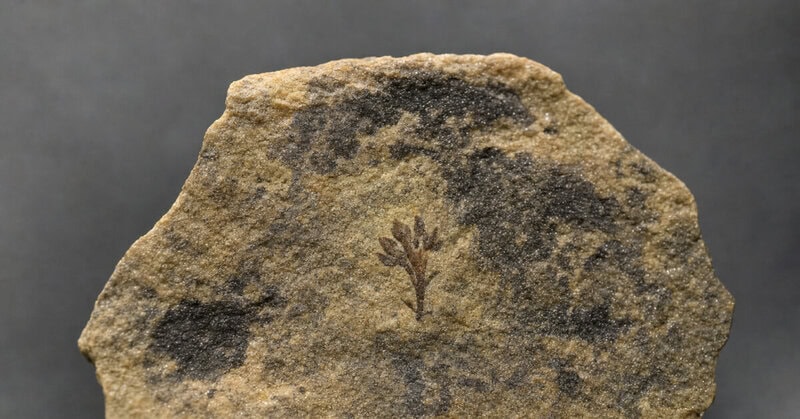
A flower no taller than a sesame seed — just 1.5 millimeters from base to tip — has been hiding inside a piece of rock for roughly 100 million years, sitting in an institutional collection for more than 130 of those years without anyone able to see it clearly. In November 2026, synchrotron X-ray imaging finally changed that.
A 1.5-Millimeter Flower That Outlasted the Dinosaurs
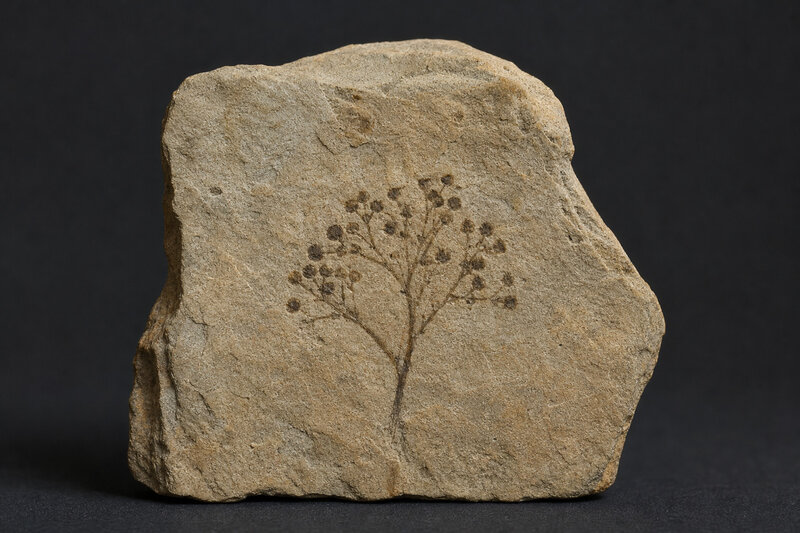
The fossil in question is Tomlinsoniella pedicellata, a Cretaceous flower formally announced on 23 November 2026 in the American Journal of Botany and publicized by the Royal Botanic Gardens, Kew. Researchers describe it as the oldest fossil flower to clearly exhibit a structural hallmark consistent with monocot flowers — the plant group that today includes grasses, palms, orchids, and lilies. That single sentence carries considerable scientific weight: a well-preserved, diagnosable specimen from the age of dinosaurs that places a recognizable monocot body plan at a critical node in evolutionary history.
What makes the discovery equally significant, however, is not only what was found but how it was found. This is as much a story about a breakthrough imaging method as it is about the flower itself.
The Rock Sat in a Collection for Over 130 Years
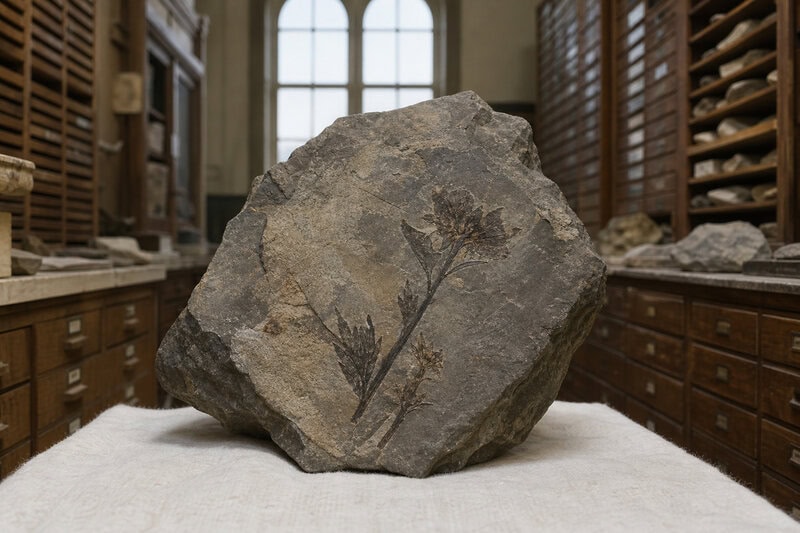
The specimen was not unearthed in a dramatic new excavation. The rock containing the fossil was collected more than 130 years ago, placing its acquisition in the Victorian era — a period of ambitious natural history collecting when institutions amassed enormous volumes of material, much of which has never been examined at modern resolution. The rock sat, catalogued but effectively unread, until the right technology caught up with it.
The reason it went undetected for so long is straightforward: at 1.5 millimeters tall, T. pedicellata is smaller than most printed letters on a standard page. More critically, it was sealed inside opaque rock rather than exposed on a surface where even a keen Victorian eye might have spotted it. It could not be seen, and it could not safely be cut out without destroying the very features that make it scientifically valuable.
One point deserves emphasis, because media coverage of fossil flowers often conflates two very different preservation types. Unlike many celebrated ancient flower fossils — including specimens frequently described in headlines about flowers from the age of dinosaurs — T. pedicellata was preserved in rock, not amber. Amber preservation tends to offer extraordinary surface detail but can limit certain kinds of three-dimensional internal imaging. Rock preservation, by contrast, encases a specimen in mineral matrix that is opaque to the naked eye. Extracting meaningful anatomical data from such a specimen required a technique capable of reading density differences through solid stone — which is precisely what synchrotron X-ray imaging provides.
The fossil dates to approximately 100 million years ago, the mid-Cretaceous period. At that time, non-avian dinosaurs still dominated terrestrial ecosystems, the continents were configured differently from today, and global temperatures were considerably warmer. Crucially, flowering plants — angiosperms — were only in the early stages of their rise to global dominance. T. pedicellata lived near the beginning of one of the most consequential ecological revolutions in Earth’s history.
How X-Rays Read a Flower Sealed in Stone
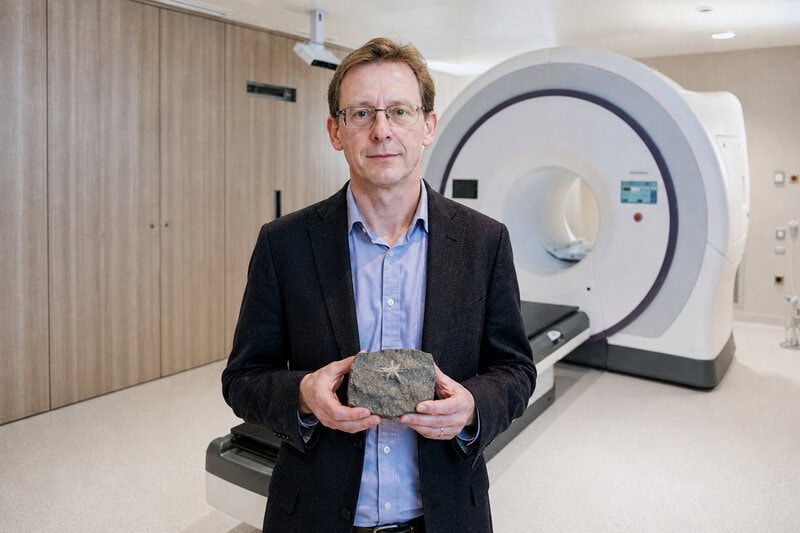
Synchrotron X-ray imaging works by directing an intensely focused beam of X-rays through a specimen and capturing the way different densities within the material absorb or scatter that radiation. The resulting data can be processed into a detailed, three-dimensional virtual model of the object — inside and out — without any physical contact, cutting, or preparation that might damage irreplaceable material.
What makes a synchrotron facility different from a hospital CT scanner is the nature of the beam itself. Synchrotrons generate X-rays by accelerating electrons to near light-speed around a large storage ring, producing radiation that is orders of magnitude brighter and more spatially coherent than anything a clinical machine can produce. A conventional CT scanner resolves features at roughly the millimeter scale — meaning the entire flower would appear as little more than a blur. Synchrotron X-ray imaging can resolve features at the micron scale (one micron is one-thousandth of a millimeter), small enough to distinguish individual cell-like structures within a 1.5-millimeter specimen.
Applied to this Cretaceous rock, the technique allowed researchers to produce a virtual anatomical model of T. pedicellata detailed enough to identify the diagnostic structural features needed to classify it — features that mechanical preparation alone could never have revealed without destroying the fossil in the process. As covered by Phys.org at the time of announcement, synchrotron imaging of fossil material has become an increasingly powerful tool across paleobotany and paleontology more broadly, enabling a new generation of discoveries from specimens that physical methods could not unlock.
What Makes This Flower Scientifically Significant
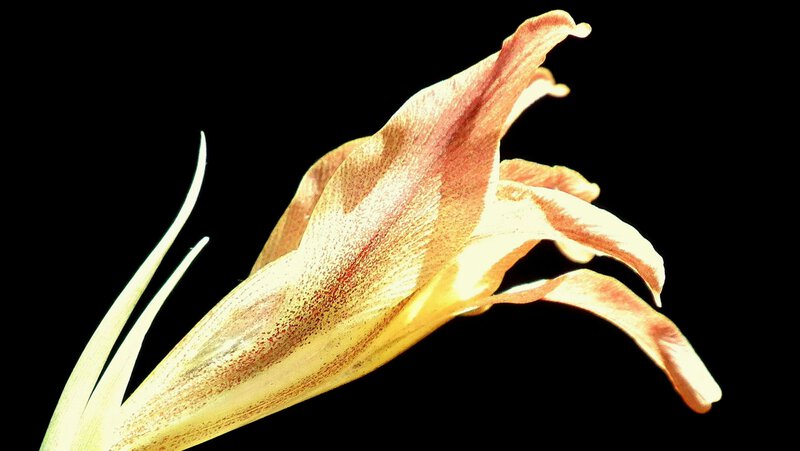
To understand why the classification matters, it helps to know what monocots are. Monocotyledons — monocots — are one of the two major groups of flowering plants, the other being eudicots. They are defined by embryos that carry a single seed leaf, and many monocot species display flower parts arranged in multiples of three: three petals, three sepals, six stamens, and so on. That structural arrangement is a key diagnostic feature, and it is precisely this kind of pattern that researchers identified in T. pedicellata through the synchrotron-generated virtual model. Monocots today include grasses, palms, orchids, and lilies — collectively one of the most ecologically and economically consequential plant groups on Earth.
The claim researchers make is stated carefully in the American Journal of Botany publication: T. pedicellata is the oldest fossil flower to clearly exhibit a particular structure consistent with monocot flowers. The phrasing — “clearly exhibit” and “consistent with” — reflects appropriate scientific caution. The fossil record of early monocots has been sparse and often fragmentary, making a well-preserved, clearly diagnosable specimen from approximately 100 million years ago a genuinely significant data point for understanding when and how the monocot lineage diverged and diversified.
The mid-Cretaceous origin of flowering plants is an area of active and sometimes contentious research. Molecular clock studies — analyses that use mutation rates in living plant DNA to estimate when lineages diverged — have produced a range of estimates for monocot origins, some pushing the divergence earlier than the fossil record had previously confirmed. A concrete, well-characterized fossil flower from roughly 100 million years ago adds an anchor point to those estimates that molecular data alone cannot provide.
Scientific honesty demands one further note: the classification of early angiosperm fossils is a contested field, and the significance of T. pedicellata will be evaluated — and potentially challenged — by other paleobotanists as the community scrutinizes the published data. The American Journal of Botany publication invites exactly that peer engagement, and the broader scientific value of the discovery will be shaped by how that conversation develops.
The Cretaceous World This Flower Grew In
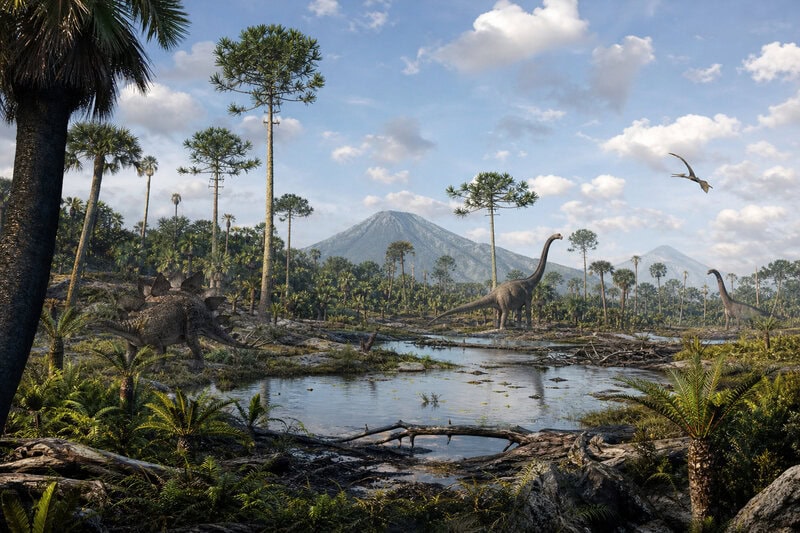
One hundred million years ago, Earth looked and functioned very differently from today. The continents were still separating, global temperatures were significantly warmer, shallow seas covered portions of what are now continental interiors, and the dominant terrestrial vertebrates were non-avian dinosaurs — including large sauropods and early members of the tyrannosauroid lineage. It was into this world that T. pedicellata and its relatives were quietly flowering.
The ecological significance of the angiosperms’ rise during the Cretaceous is difficult to overstate. Flowering plants co-evolved with insects, gradually displacing ferns and gymnosperms as the dominant ground-cover vegetation, and in doing so restructured food webs, soil chemistry, and atmospheric dynamics. The eventual descendants of those early radiating lineages include virtually every food crop that sustains human civilization today, from wheat and rice — grasses, which are monocots — to fruit trees and legumes.
T. pedicellata, at just 1.5 millimeters, is a physical record of that pivotal moment — a snapshot of a lineage near the base of a group that would eventually account for a substantial fraction of all terrestrial plant diversity. What it cannot tell us, and what researchers do not claim it tells us, is the specific ecological role that individual flower played in its local Cretaceous environment. The published findings and the Royal Botanic Gardens, Kew press release support the evolutionary significance of the specimen; the ecological details of its day-to-day existence remain beyond the evidence.
What This Means for Paleobotany — and What It Doesn’t
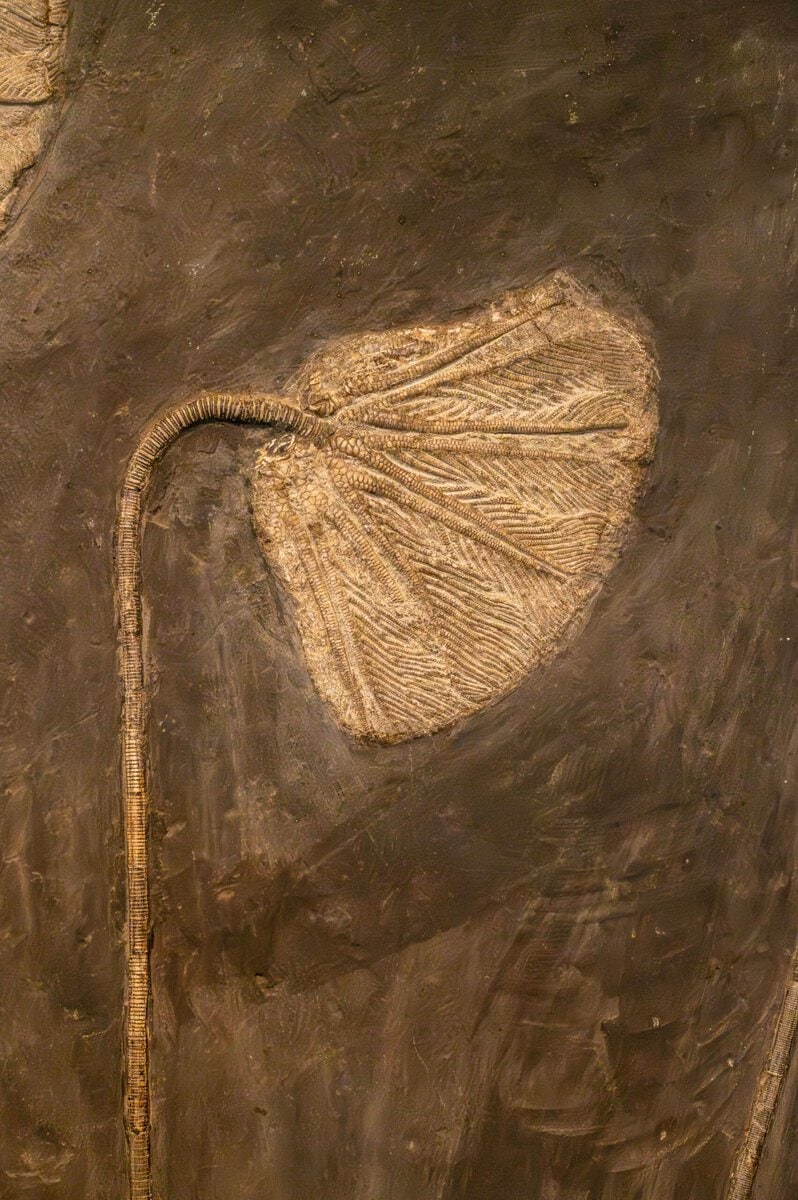
What the discovery of T. pedicellata concretely confirms is that a well-preserved, identifiable monocot-type flower existed approximately 100 million years ago, adding a durable data point to both molecular clock estimates and the fragmentary earlier fossil evidence for monocot origins. That is a meaningful contribution to the scientific record.
What it does not do is resolve the longstanding debates about precisely when monocots diverged from other angiosperms, what the ecological conditions of that divergence looked like, or what the common ancestor of all monocots would have resembled. Those questions require convergent evidence from genetics, additional well-characterized fossils, and comparative morphological anatomy — a research program that one spectacular specimen, however well-imaged, cannot complete alone.
The more durable methodological contribution may prove equally important in the long run. The demonstration that synchrotron X-ray imaging can extract fine anatomical detail from rock-bound micro-fossils in century-old collections — specimens that have been physically present in museum drawers for generations but effectively invisible to science — implies a significant, largely untapped archive. If one Victorian-era rock sample contained a diagnosable 100-million-year-old monocot flower, the question that follows immediately is: what else is waiting? As noted in related work on overlooked fossil palm flowers from UC Santa Barbara, the re-examination of legacy collections with modern imaging is already yielding results across multiple institutions.
The Royal Botanic Gardens, Kew, which issued the press release accompanying the American Journal of Botany publication, holds one of the world’s most significant botanical collections and research programs. Its institutional involvement lends both credibility and practical context to the announcement — Kew’s collections and expertise are directly relevant to the kind of work that produced this finding.
Museum Drawers as Untapped Archives
The most resonant implication of the T. pedicellata story may have nothing to do with monocots specifically. The fact that this rock sat in an institutional collection for more than 130 years before yielding its secret is a pointed reminder that natural history museums are not static repositories of solved problems. They are dynamic scientific resources whose value actively increases as new analytical technologies emerge. A specimen that was unremarkable to a Victorian collector becomes, with synchrotron X-rays, a window into a world 100 million years gone.
Synchrotron facilities are expanding globally, and paleobotanists and paleontologists are increasingly applying these tools systematically to legacy collections rather than waiting for new field discoveries alone. T. pedicellata may represent an early, high-profile example of what promises to be a broader wave of re-discoveries from specimens that have technically been in human hands for decades or even centuries — each one waiting for the right question and the right beam of light.
A 1.5-millimeter flower from the age of dinosaurs, hidden in plain sight for over a century and revealed by X-rays in 2026, is both a scientific finding and a lesson in the patience that discovery sometimes requires — and in the importance of keeping old rocks carefully stored. The full findings are published in the American Journal of Botany (announced 23 November 2026); readers seeking primary detail should begin with the Royal Botanic Gardens, Kew press release and the journal publication itself. Additional reporting is available via Phys.org’s coverage of the announcement.