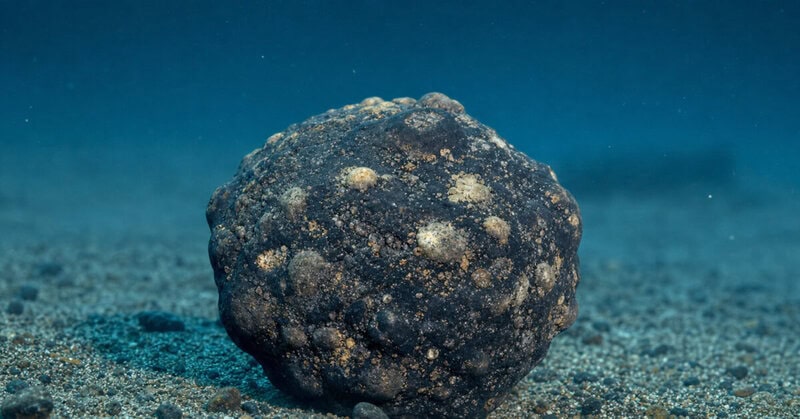
On the abyssal plain, nearly five kilometers below the last trace of sunlight, a potato-sized rock has been quietly growing since before humans walked the Earth — adding roughly one millimeter every ten million years. These are deep-sea polymetallic nodules, and the global race to mine them is now accelerating fast enough to outpace the science needed to understand what would be lost.
A Rock That Grows Slower Than Your Fingernails
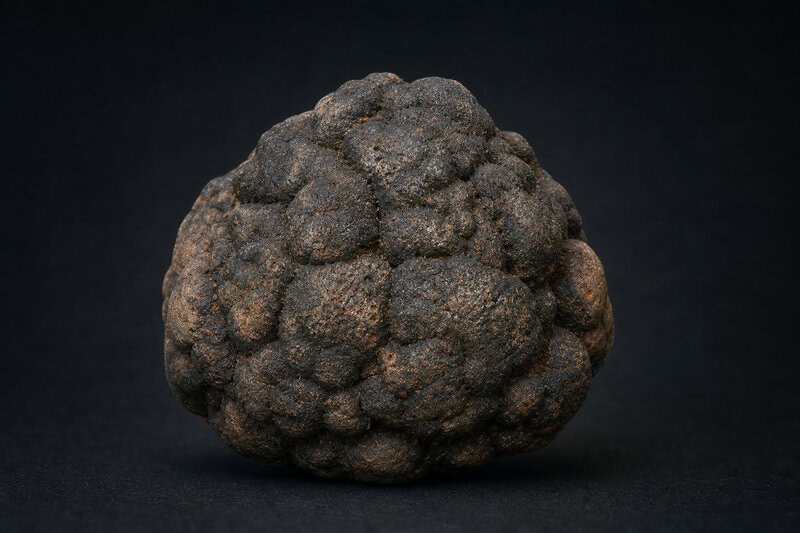
Polymetallic nodules form on abyssal plains when dissolved metals in seawater and sediment pore water slowly precipitate around a tiny nucleus — a shark tooth, a shell fragment, a grain of sediment. Layer by microscopic layer, over timescales that dwarf human civilization, these formations accumulate into lumpy, dark-brown nodules scattered across vast stretches of ocean floor. The process is so slow that a nodule the size of your fist may represent tens of millions of years of continuous growth.
Their composition begins with manganese, iron, silicates, and hydroxides — but that is only the opening entry. Embedded within their layered structure are concentrated quantities of nickel, cobalt, copper, rare earth elements, and platinum: the same metals that underpin electric vehicle batteries, wind turbines, and consumer electronics. According to the International Seabed Authority, polymetallic nodules are found across enormous areas of the deep ocean floor, representing one of the most significant untapped mineral accumulations on the planet.
Nodule size varies considerably — from micro-nodules barely visible to the naked eye to larger formations. It is their sheer abundance and mineral density, however, that have drawn the sustained attention of governments, mining consortia, and clean-energy supply chain planners worldwide.
The Critical Minerals Jackpot Hidden on the Ocean Floor
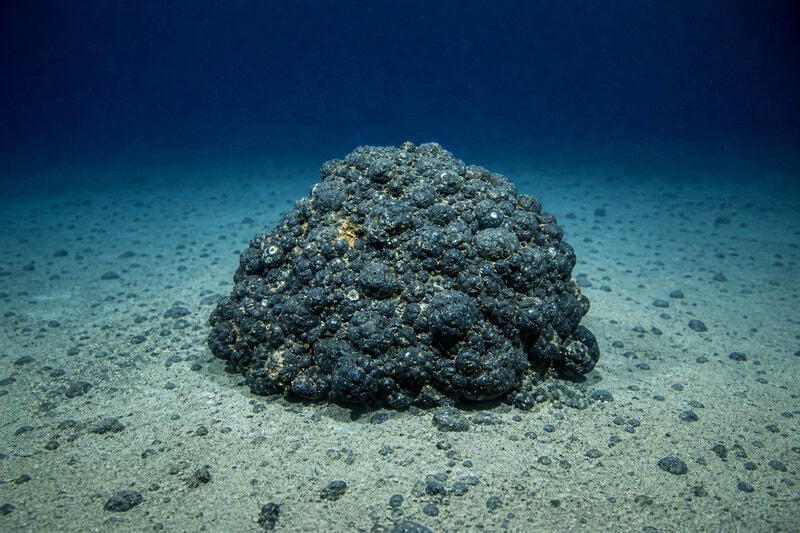
To understand why deep-sea nodules have become a subject of geopolitical urgency, consider what they contain at scale. Research from GEOMAR’s Helmholtz Centre for Ocean Research describes manganese nodules as the most important potential source of raw materials in the marine realm, holding larger quantities of certain metals than are found in terrestrial deposits. For cobalt, nickel, and copper specifically — three essential metals found in nodules — that assessment carries significant weight given accelerating demand from clean energy manufacturing.
The Clarion-Clipperton Zone in the Pacific Ocean, a nodule-rich abyssal plain roughly the size of the contiguous United States, has drawn exploration licenses from dozens of nations and private consortia. It is the most studied nodule field on Earth, yet it remains only partially characterized scientifically. Beyond this region, NOAA identifies three distinct deep-ocean environments that hold mineral-rich deposits: abyssal plains with polymetallic nodules, seamounts with cobalt-rich deposits, and a third category of marine mineral deposit environments — each with its own geology, depth profile, and ecological character.
As geopolitical pressure over critical mineral supply chains intensifies, these deposits have shifted rapidly from scientific curiosity to strategic resource. That shift is happening faster than the regulatory and scientific frameworks designed to govern it.
Life in the Dark: What Actually Lives Among the Nodules
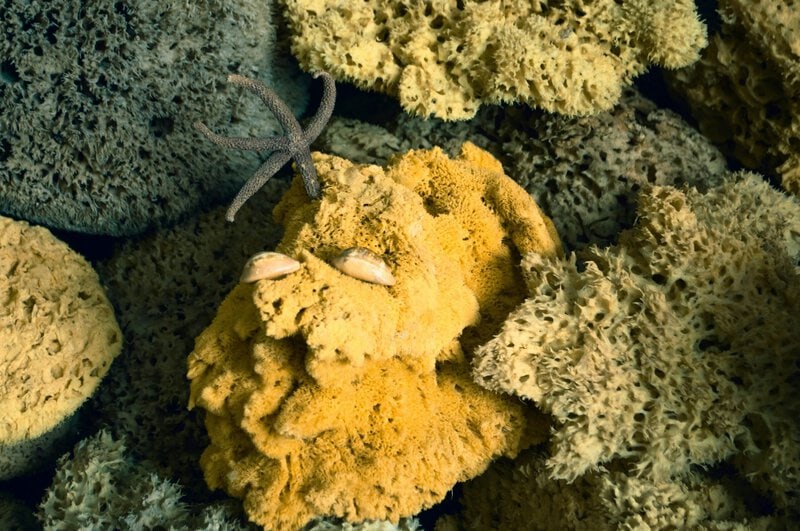
The abyssal plain was once assumed to be a biological desert — a featureless expanse of soft sediment too cold, too dark, and too remote to support complex life. Decades of research have overturned that assumption entirely. Nodule fields host a surprisingly diverse ecosystem, and the nodules themselves serve a structural function that is easy to underestimate: they are among the only hard substrate available on an otherwise uniformly soft, muddy seafloor.
Sponges, corals, polychaete worms, starfish, and dense microbial mats colonize and inhabit nodule fields. Many species found here exist nowhere else on Earth — and a significant number have not yet been formally named or described by science. This is not a minor footnote. It means that mining activity could drive species to extinction before researchers have even documented that they exist.
The relationship between nodules and the life that depends on them is not incidental — it is structural. Remove the nodules, and you remove the physical architecture upon which entire biological communities are organized, with no equivalent replacement available on the surrounding sediment plain. Disturbance studies from experimental trawling conducted in the 1970s offer a sobering reference point: sites revisited decades later show little meaningful biological recovery even after fifty years.
How Deep-Sea Mining Would Work — and What It Would Disturb
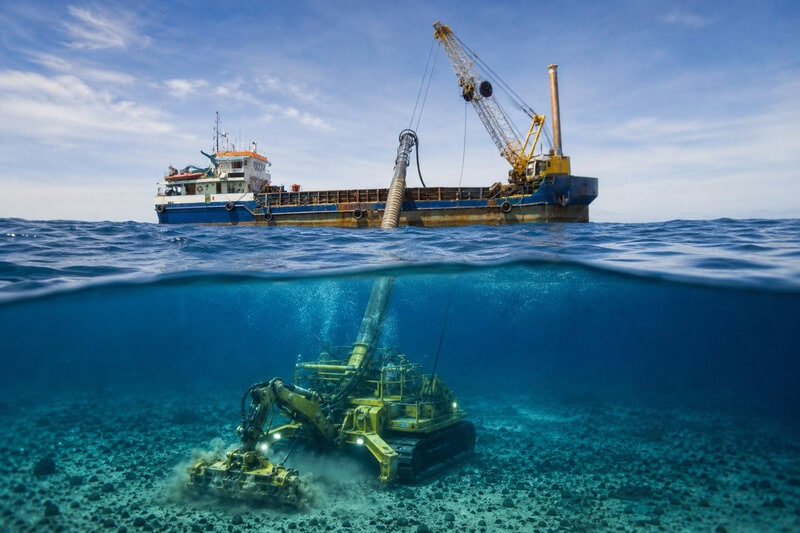
Proposed deep-sea mining systems would deploy large remotely operated collector vehicles to vacuum or scrape nodules from the seafloor, sending the harvested material up a riser pipe to a surface support vessel. The engineering challenge is formidable, but it is the ecological footprint that draws the sharpest scientific concern.
The immediate physical disturbance covers large swaths of seafloor per mining track — but the impacts do not stop at the collection zone. Sediment plumes kicked up during extraction can travel hundreds of kilometers through the water column, smothering filter-feeding organisms and disrupting food webs well beyond the direct mining area. Noise, light, and chemical disturbance propagate through a water column otherwise defined by perpetual silence and near-total darkness — conditions that the fauna living there have been shaped by over millions of years of evolution.
Unlike a clearcut forest, which can theoretically regrow over decades, a scraped abyssal plain operates on geological timescales. The nodules themselves — growing at approximately one millimeter every ten million years — will not return within any human planning horizon. The environmental impact of deep-sea mining is, in that sense, effectively permanent on any timescale relevant to human decision-making.
The Science Gap: We Don’t Know What We’re About to Lose
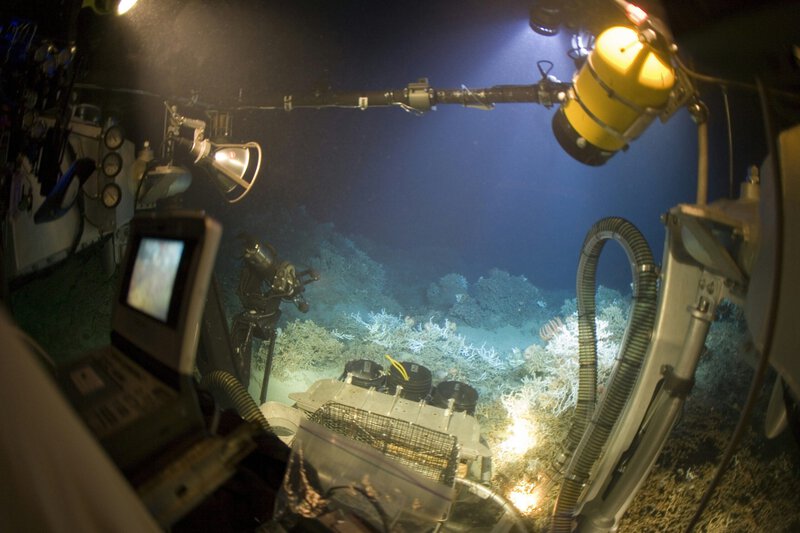
Less than 20 percent of the global ocean floor has been mapped at high resolution. The biological inventory of abyssal nodule fields is even more incomplete. New species are regularly discovered during environmental baseline surveys — a fact that transforms “unknown biodiversity” from an abstract concern into a concrete, ongoing reality that complicates any cost-benefit framework applied to mining approvals.
The International Seabed Authority, which governs seabed mining in international waters, is under mounting pressure to finalize its mining regulations. But a growing number of marine scientists argue that the environmental baseline data needed to make responsible decisions simply does not yet exist. Approving large-scale extraction before that data is collected, they contend, is not a calculated risk — it is a gamble with irreversible stakes.
A broad coalition of researchers, conservation organizations, and some technology companies have called for a precautionary pause on deep-sea mining approvals. Their argument is straightforward: the cost of getting this wrong cannot be undone. The science of what lives in these fields — and how those communities function — is still being written.
The Hard Question: Can the Clean Energy Transition Afford to Wait?
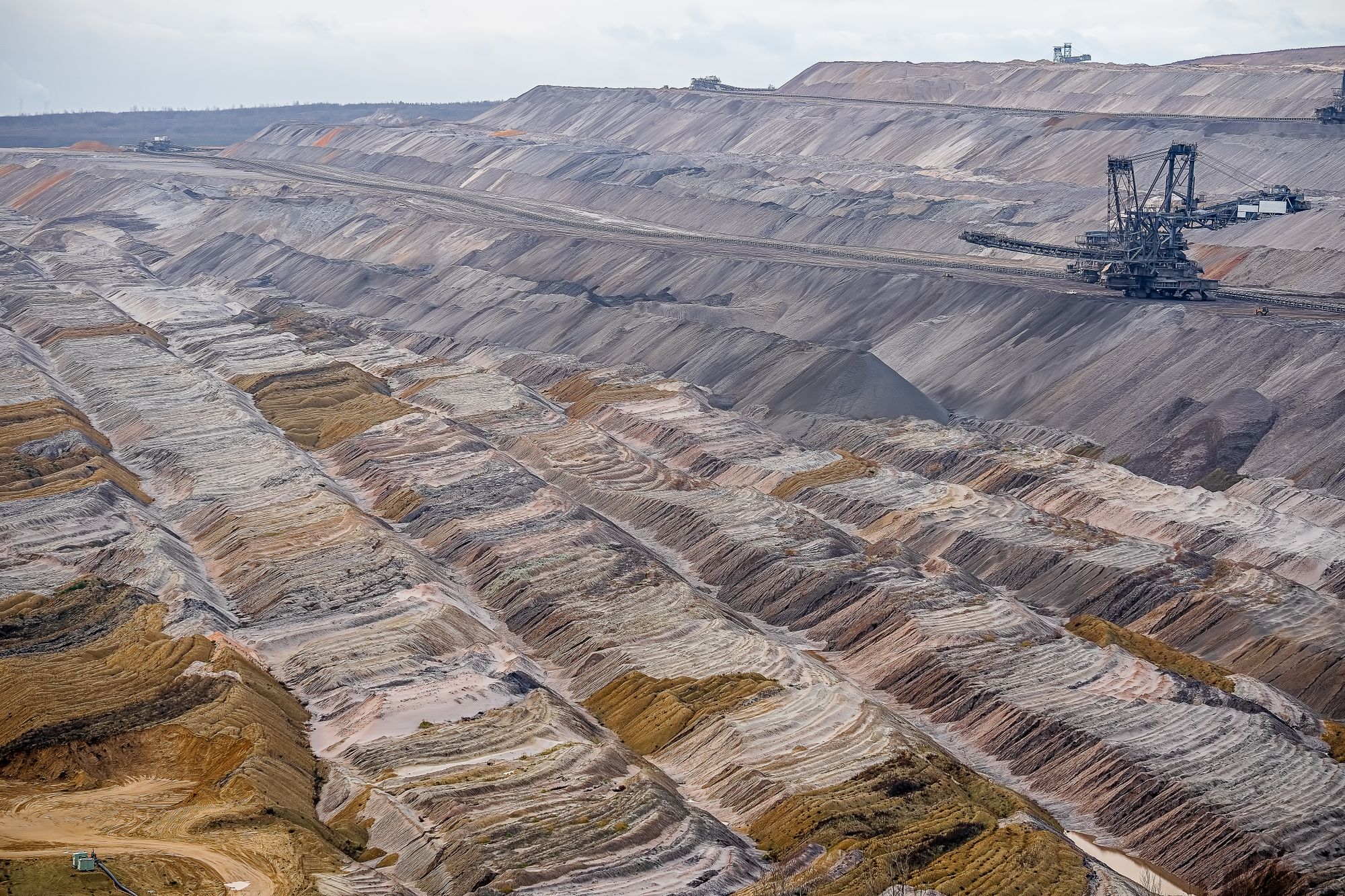
Proponents of deep-sea mining make a pointed counterargument. Land-based mining for the same critical minerals carries its own devastating environmental record — deforestation, toxic runoff, and in many cases serious human rights concerns. Framed as a comparative harm calculation, accessing nodule deposits on the ocean floor could reduce pressure on some of the most ecologically and socially harmful terrestrial extraction operations currently supplying global markets.
Critics counter that the clean energy transition must not be financed by the destruction of another ecosystem — particularly one so poorly understood. They point to rapid advances in battery recycling technology, alternative battery chemistries that require less cobalt, and circular economy models as viable paths that could meaningfully reduce or defer the need for new primary mineral sources. The question of whether deep-sea extraction is necessary, or simply convenient, sits at the center of that debate.
The ten-million-years-per-millimeter growth rate of manganese nodules is not a rhetorical device or a dramatized approximation. It is a hard physical constraint — one that makes the phrase “sustainable deep-sea mining” a claim that demands rigorous, specific justification before it is allowed to become the foundation of policy.
What happens in the next few years — in regulatory negotiating rooms, in corporate boardrooms, and aboard research vessels positioned above the abyssal plain — will determine whether humanity treats the deep ocean as a commons to be understood or a warehouse to be emptied on a schedule set by commodity markets. The nodules will not grow back. The species that depend on them may not survive long enough to be discovered.