
Every month, when the electricity bill arrives, it carries the weight of a political fight most households never asked to join. As Democrats move to challenge the Trump administration’s fossil fuel agenda and push for clean energy expansion, the central claim on both sides is the same: our plan will lower your power bill. The economics behind that claim have shifted more decisively than the political noise suggests — and understanding where the evidence is solid, where it is contested, and where it depends on choices not yet made is the most useful thing any household or voter can do right now.
The Metric That Actually Settles the Generation Cost Question
To evaluate any politician’s promise about energy costs, it helps to understand the tool energy economists rely on most: the levelized cost of energy, or LCOE. This figure captures the total lifetime expense of building and operating a power source — construction, fuel, maintenance, financing, and expected lifespan — then divides that by the total electricity the plant produces over its life. The result is a true apples-to-apples cost per unit of power generated, stripped of accounting tricks and campaign-season framing.
LCOE matters because it exposes a structural difference that campaign speeches rarely acknowledge clearly. Fossil fuel plants carry ongoing fuel costs that swing with global commodity markets — geopolitical shocks, pipeline disruptions, liquefied natural gas export demand, and seasonal weather all feed directly into what utilities pay for natural gas or coal. Solar panels and wind turbines, once built, have near-zero fuel costs. The sun and wind do not send invoices. That distinction has enormous implications for long-term price stability, and it sits at the heart of any honest clean energy versus fossil fuels cost comparison.
LCOE is not a perfect measure — it does not capture the value of reliability or the cost of integrating intermittent power into a grid — but it is the most widely used and rigorously constructed benchmark available, and its trajectory over the past decade is unambiguous.
The Numbers: Where Renewables Have Won and Where Caveats Apply
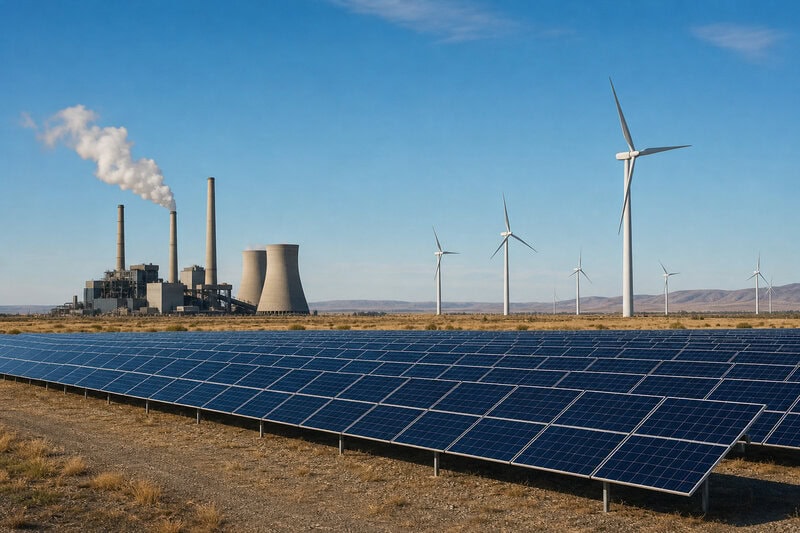
A decade ago, arguing that solar or wind could undercut coal or gas on pure generation cost required optimism. Today, it requires only looking at current market data. According to Lazard’s 2023 Levelized Cost of Energy analysis, utility-scale solar can generate electricity for as little as $24 per megawatt-hour. New coal plants cost between $68 and $166 per megawatt-hour. Onshore wind typically falls in the range of $25 to $50 per megawatt-hour — competitive with or cheaper than new natural gas generation across most U.S. regions.
The cost of solar panels dropped roughly 90 percent between 2010 and 2023, driven by manufacturing scale, technology improvements, and global supply chain expansion. These are not aspirational projections — they reflect actual prices embedded in utility contracts being signed across the country. When utilities build new generating capacity today, solar and wind are frequently the cheapest options on a pure generation-cost basis.
The important caveat is that generation cost is not the same as system cost. A renewable-heavy grid requires transmission upgrades, grid balancing services, and — eventually — significant storage capacity to handle periods when solar and wind output is low. Those system-level investments are real and they add to overall costs in ways that raw LCOE figures do not capture. Honest advocacy for clean energy acknowledges this; honest opposition to it acknowledges that the same system-cost complexity applies to fossil fuel grids, which require fuel supply chains, pipeline infrastructure, and pollution control equipment of their own.
This is part of why Democrats are pushing to challenge the Trump administration’s fossil fuel agenda and accelerate clean energy development, framing the effort not only as an environmental priority but as a household affordability issue. The underlying generation economics support that framing. The system-level economics are more complicated and more dependent on how the transition is managed.
So Why Are Electricity Bills Still Rising?
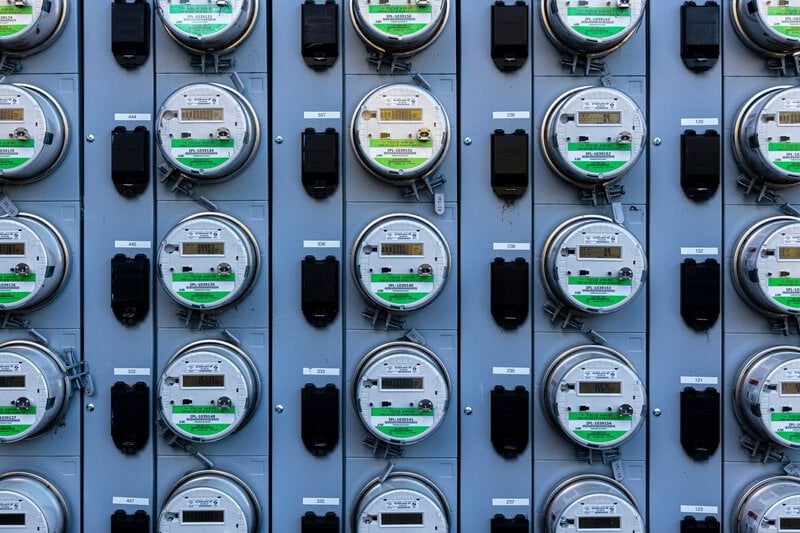
If solar and wind are genuinely cheaper to build and run than new fossil fuel capacity, a reasonable question follows: why does the average U.S. household still spend more than $1,500 a year on electricity, with bills trending upward in many states?
The answer lies in the gap between the cost of generating electricity and the cost of delivering it reliably. Cheap generation is only one component of a utility bill. Transmission and distribution infrastructure, utility profit margins set by state regulatory commissions, storm hardening investments, and — critically — the lingering debt from decades-old fossil fuel assets all layer costs on top of raw generation prices. Many households are, in effect, still paying off coal and gas plants built in the 1970s and 1980s through fixed charges that utilities are legally permitted to recover from ratepayers regardless of whether those plants are still the cheapest way to generate power.
Natural gas price volatility compounds the problem in real time. When Russia’s invasion of Ukraine in 2022 disrupted global natural gas markets, electricity rates in gas-dependent regions of the United States spiked as a direct consequence. Regions with higher shares of renewable energy — including parts of the Pacific Northwest and the Upper Midwest — showed more stable average rates during the same period. The insulation from fuel price shocks is among the least-discussed practical advantages of a renewable-heavy grid, and it is distinct from the question of whether generation costs are lower in absolute terms.
What the Energy Transition Actually Costs Households — and When
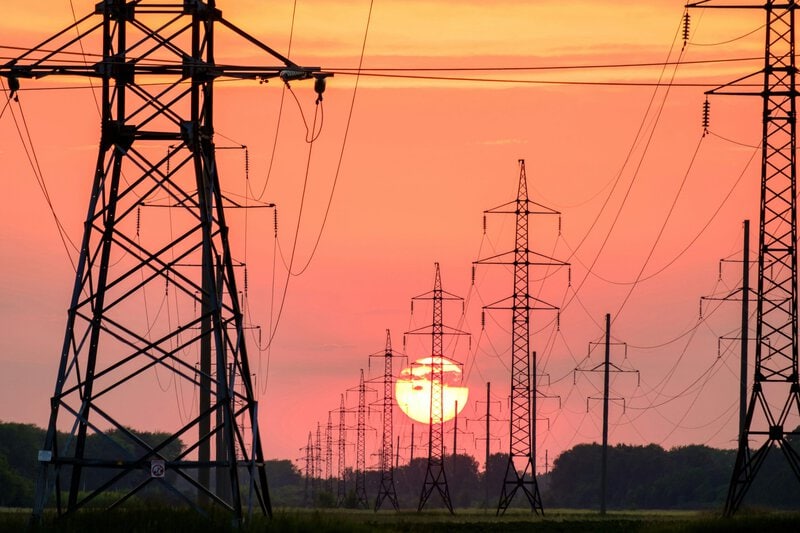
Honesty about the energy transition requires acknowledging that short-term costs are real and unevenly distributed. Retiring old power plants before they are fully paid off, building new long-distance transmission lines, and integrating battery storage systems all carry price tags that utilities may pass on to ratepayers during the transition period. This is not a myth invented by fossil fuel interests — it is a genuine feature of any large infrastructure overhaul, and low-income households in regions with aging fossil fuel infrastructure face particular exposure.
Research from Lawrence Berkeley National Laboratory has found that households in states aggressively expanding renewable capacity tend to see net bill savings within roughly five to ten years as cheaper generation progressively displaces more expensive fossil fuel power in the generation mix. The long-run trajectory is toward savings; the question that policy design actually controls is how quickly planning and investment can close the gap between upfront transition costs and the relief that follows.
At the household level, rooftop solar adopters save an average of roughly $1,500 per year on electricity costs, though the barrier of upfront installation expenses remains significant for families without access to subsidies or low-cost financing. The Inflation Reduction Act’s clean energy tax credits were specifically structured to reduce that barrier, extending credits for rooftop solar installations, battery storage, and heat pumps to a broader income range than previous policy reached. Protecting those credits is a core element of the Democratic argument that their clean energy push translates into tangible household savings — not merely an abstract environmental benefit.
The Fossil Fuel Counterargument — and Where It Has Genuine Merit

A fair accounting requires engaging with the strongest version of the fossil fuel argument rather than dismissing it wholesale. The most technically credible counterpoint is not cost — the LCOE data has largely settled that question for new capacity — but reliability and grid integration.
Natural gas and coal plants are dispatchable: operators can ramp output up or down on demand, independent of weather conditions. Solar panels produce nothing at night and sharply reduced output on overcast days. Wind turbines go still during calm weather. Battery storage technology is advancing rapidly and costs have fallen substantially, but storage is not yet cheap or widespread enough to make a fully renewable grid seamless and reliable under all conditions in all parts of the country. The 2021 Texas winter storm exposed vulnerabilities in a grid that was inadequately weatherized across all fuel types, but it also illustrated how quickly supply-demand imbalances can produce price spikes and outages when backup capacity is insufficient.
In some regions — particularly rural areas distant from large-scale renewable resources, and in certain industrial contexts — existing gas infrastructure continues to deliver power at competitive all-in rates, particularly where the alternative would require substantial new transmission investment to access remote wind or solar. These are legitimate engineering and economic realities that responsible energy planning must account for, not simply fossil fuel industry talking points to be waved aside.
The honest technical and economic consensus is genuinely nuanced on this point: fossil fuels are not inherently cheaper than renewables on a generation-cost basis — the data makes that clear — but a poorly coordinated or politically rushed transition carries real short-term cost and reliability risks for consumers. Speed without planning can produce exactly the kind of bill shock and service disruption that critics of aggressive clean energy timelines warn about.
The Bottom Line for Households and for the Policy Debate

The weight of current evidence is not ambiguous on the core generation-cost question: new renewable energy is cheaper to build and fuel than new fossil fuel power in most U.S. markets, and that cost gap has widened consistently over the past decade. That is a market reality reflected in investment decisions by utilities, insurance companies, and private energy developers across the political spectrum — not a contested political claim.
Democrats challenging the Trump administration’s fossil fuel agenda are, in this respect, pushing in the direction the energy market is already moving. But the pace and quality of planning will determine whether households experience that transition as genuine relief or as additional strain on already stretched budgets. The most cost-effective path, according to energy economists who study grid transition, is a managed transition — one that retires fossil fuel assets on a coordinated schedule, scales renewable generation and storage in step with reliability needs, invests in transmission proactively, and protects vulnerable ratepayers during the period when transition costs are highest.
For individual households, the actionable conclusion does not depend on how the larger political fight resolves. The clean energy incentives currently available — including federal tax credits for rooftop solar, home battery storage, and efficient heat pumps — represent genuine near-term savings opportunities that remain available while current law holds. For households in a position to access them, those options offer the most direct path to lower electricity costs regardless of which energy agenda ultimately prevails in Washington. For households that cannot, the policy design of any transition — who bears upfront costs, how quickly savings materialize, and what protections exist for low-income ratepayers — matters as much as the direction of the transition itself.