
For generations, the story of how Celtic languages spread across ancient Europe seemed just out of reach — close enough to theorize about, too elusive to prove. Now, ancient DNA extracted from prehistoric skeletons is pulling that story into focus, and what it reveals is challenging assumptions scholars have held for more than a century.
The Languages That Survived at the Edge

Irish, Scottish Gaelic, Welsh, and Breton cling to Europe’s Atlantic fringe today — a geographic puzzle that has quietly frustrated linguists for generations. During the Iron Age, Celtic languages were spoken across a vast sweep of the continent, from the Iberian Peninsula to Anatolia. Tribes across Gaul, the British Isles, and deep into Central Europe used languages belonging to the same family. Yet almost all of those voices eventually fell silent, absorbed by Latin, Germanic tongues, and Slavic expansion, leaving only a handful of communities on the far western seaboard still speaking Celtic into the modern era.
The obvious question — how did one language family spread so far, so fast, across such varied terrain — has never had a clean answer. Two rival camps have dominated the academic debate for decades: one placing the Proto-Celtic homeland in Central Europe’s Hallstatt culture, the other arguing for an Atlantic Bronze Age origin along the western seaboard. Neither model has fully explained the patchy, continent-wide distribution of Celtic place-names, inscriptions, and dialects preserved in the archaeological record. That stalemate may now be breaking open, thanks to a 2025 study by H. McColl and colleagues that applies ancient genomics directly to one of historical linguistics’ oldest disputes.
Why Genetics Can Answer What Linguistics Cannot
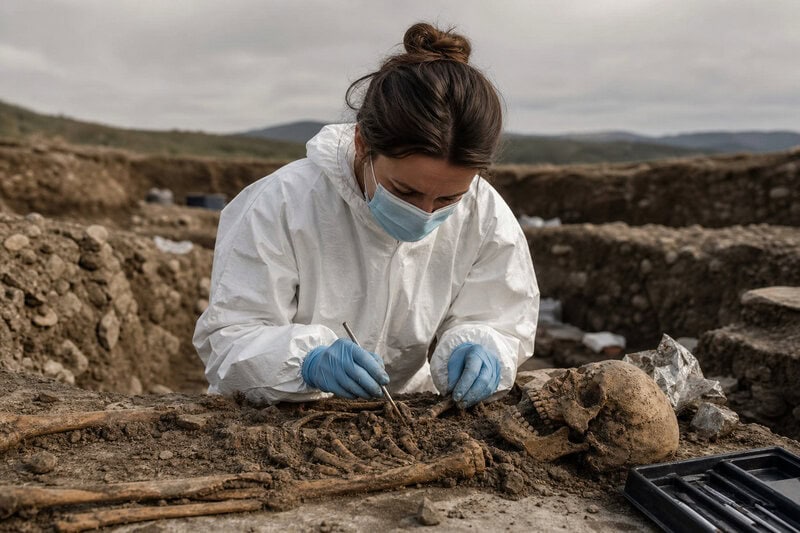
Historical linguistics is a powerful tool. Scholars can reconstruct proto-languages, build family trees, and estimate when branches diverged. What linguistics cannot do is tell you which people physically carried a language across a mountain range or an open sea. A language can travel with migrants, but it can also spread through trade, prestige, intermarriage, or conquest — sometimes leaving almost no trace in the archaeological record and no detectable movement of people visible through traditional methods.
Ancient genomics changes that equation. By extracting and sequencing DNA from prehistoric human remains, researchers can reconstruct the genetic profiles of individuals who lived thousands of years ago, compare those profiles across sites and time periods, and identify patterns of ancestry, migration, and population mixing that were previously invisible. Applied to the Celtic question, this means researchers can test, for the first time, whether the spread of Celtic languages actually coincided with the movement of people — or whether the two processes decoupled in ways nobody anticipated.
What the New Research Actually Did
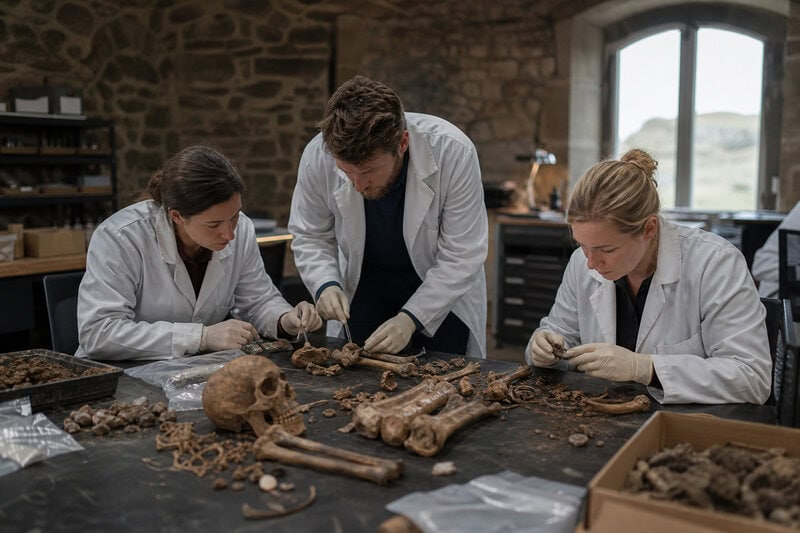
The study, produced by researchers at Leiden University and the University of Copenhagen, assembled new genomic data from Bronze Age and Iron Age sites across Europe. Researchers compared the genetic profiles of individuals buried in historically Celtic-speaking regions against those from populations elsewhere on the continent during the same periods. By tracing patterns of ancestry, mixture, and migration encoded in ancient genomes, the team could map where people — and by inference their languages — were actually moving, and crucially, where they were not.
The approach is part of a broader methodological shift in which ancient population genomics is being applied to questions that archaeology and linguistics alone could never resolve. Similar work has already revised long-held narratives about Indo-European expansion, the peopling of the Americas, and the origins of farming in Europe. The Celtic study brings the same analytical methods to a question that sits at the heart of European prehistory.
The Findings That Are Rewriting the Map

The genomic evidence does not support the picture of a single Central European elite spreading Celtic speech outward from a Hallstatt heartland. The population signals are considerably more complex. Rather than a clear pulse of migration radiating from one origin point, the data reveals a patchwork of connections, continuities, and movements that resist any single clean narrative.
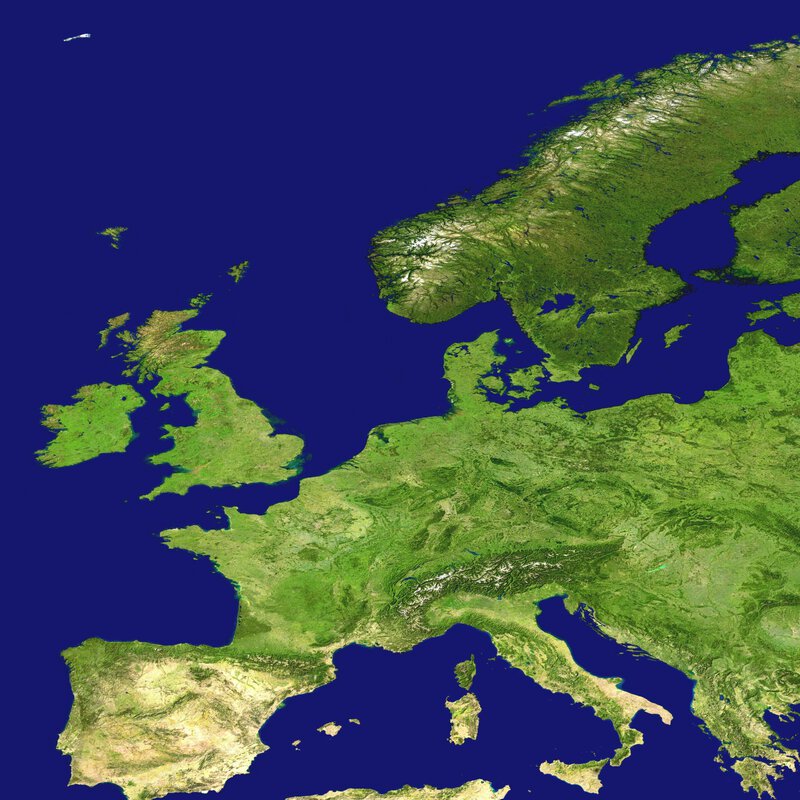
Atlantic-facing regions show deep, continuous genetic connections that predate the Iron Age, lending new credibility to the idea that Celtic language roots may lie in Bronze Age coastal networks rather than in a later continental expansion. Maritime communities stretching from the Iberian Peninsula to the British Isles appear to have maintained contact over long periods, sharing ancestry in ways that suggest sustained interaction rather than a single dramatic migration event.
Perhaps most significantly, the research demonstrates that language spread and population movement do not always coincide. In some regions, Celtic tongues appear to have transferred without large-scale replacement of the resident population — meaning the language moved, but most of the people did not. This forces researchers to separate two questions that have often been conflated: where Proto-Celtic originated, and how the language family subsequently spread across the continent. The answers to those two questions, it turns out, may be very different from each other.
What This Means for the Atlantic Fringe

The implications for the surviving Celtic languages are considerable. The persistence of Irish, Welsh, Scottish Gaelic, and Breton on Europe’s Atlantic fringe has traditionally been interpreted as a retreat — the last redoubt of a language family that once dominated the continent, pushed to the margins by Roman conquest and subsequent migrations. The new genomic evidence complicates that picture.
Genomic continuity in some Atlantic communities stretches back well into the Bronze Age, suggesting these populations were connected by maritime trade and culture long before Rome reshaped the linguistic map of Europe. Rather than representing a refuge where Celtic retreated to survive at the margins, the Atlantic fringe may be one of the regions where Celtic languages had their deepest and oldest roots. For speakers of Irish or Welsh today, the implication is striking: their languages may be among the most direct descendants of a prehistoric Atlantic world, not late survivors clinging on after a continental collapse.
The Bigger Picture — and What Remains Unresolved
The Celtic study is part of a wider pattern in which ancient genomics research is forcing historians and linguists to revise long-held assumptions about how languages travel — sometimes with migrating populations, sometimes entirely without them. The lesson emerging across multiple research programs is that language, genes, and culture move on different timescales and by different mechanisms, and that conflating them has led scholars astray for over a century. As sequencing costs continue to fall and more ancient remains are sampled across underrepresented regions, the resolution of these genomic maps will keep improving.
Important caveats remain. The 2025 study was published as a preprint at the time of writing, meaning it had not yet completed full peer review; its conclusions should be treated as compelling but provisional. Genomic coverage of Iberian and Anatolian Celtic-speaking populations from the Iron Age remains thin, leaving significant portions of the spread story still unresolved. Linguists and geneticists are also still working out a shared framework for deciding when population ancestry can reliably stand in as evidence for language transmission — a methodological question with no straightforward answer, and one that will shape how future studies in this field are interpreted.
The debate over where Celtic languages came from and how they spread is not closed. But for the first time, researchers have a biological thread to pull — and what unravels next could reshape the story of European prehistory entirely.