12. Robots may no longer need electricity to operate.
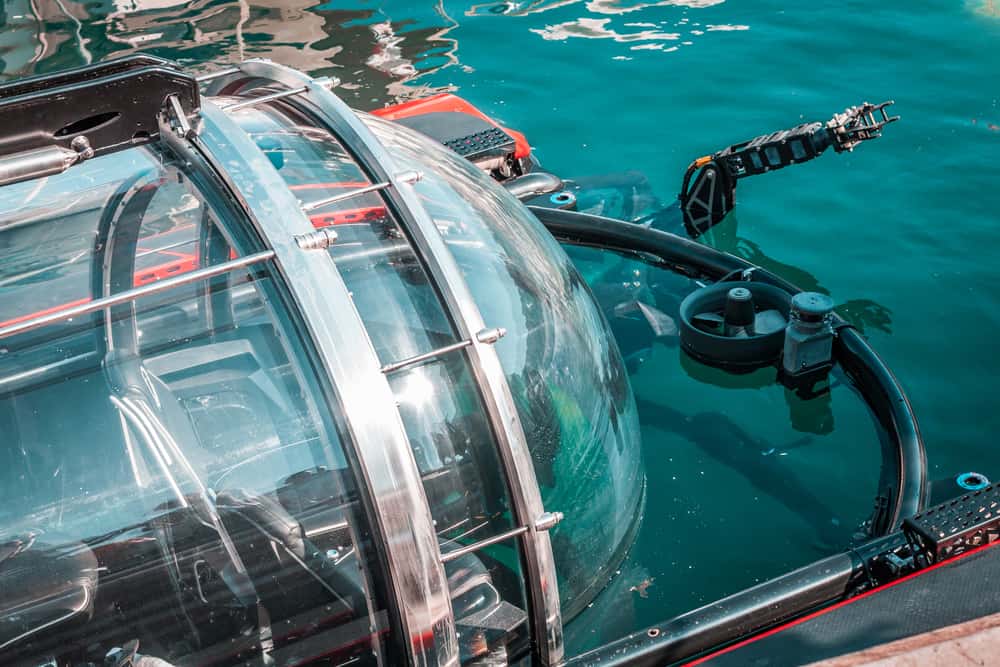
Scientists and Engineers at the Department of Energy’s Lawrence Berkeley National Laboratory have created what they are calling “water-walking” liquid robots (via News Center). Essentially, these tiny robots function like miniature submarines, capable of going underwater and retrieving substances and returning to the surface with them. However, the question always remained, how can they work for long periods without some form of power or electricity? They operate using chemicals instead of electricity, controlling their buoyancy to rise or sink in the water. As long as they have access to chemicals in the liquids they are kept in, they can function without end.
As it stands, they can perform specific tasks like detecting different kinds of gas. They also believe it may have applications in the medical fields by being a drug delivery system or screening chemical samples. Depending on their configuration, they can also perform multiple tasks at once, allowing for their use to be diverse but routine at the same time. The robots themselves are also tiny, typically looking like little open sacks and just barely measuring in at 2 millimeters in diameter (via News Center).