Ghost Nebula
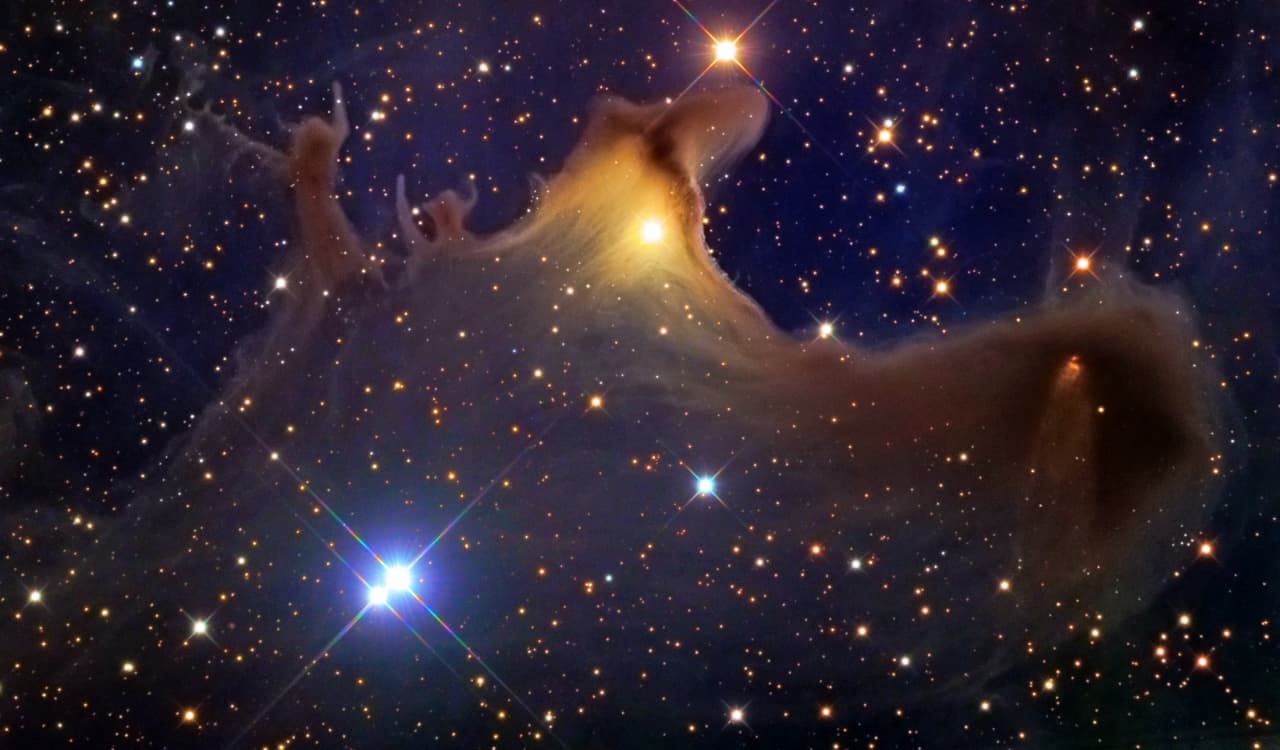
It is not hard to see how this nebula ended up getting its name. Nicknamed the “Ghost Nebula,” science refers to it as Sh2-136, VdB 141. This is in connection to the scientists/researchers that discovered it. The nebula is next to a cluster known as NGC 7023, known as the Iris Nebula. Both of these nebulae are reflection nebulas, or those that reflect the light of a nearby star or stars due to their interstellar dust. Of course, star energy is not enough to ionize the gas of the nebula to create emission nebulas. However, it is certainly enough to scatter things out and make dust visible.
This creates a frequency spectrum that is presented by reflection nebulae acts just like that of illuminating stars. While a lot is present here, among the microscopic particles responsible for the nebula scattering are carbon compounds. This is often referred to as “diamond dust.” The compounds of other elements like iron and nickel combine with carbon compounds. The two then go on to align with the galactic magnetic field of the nebula, which causes scattered light to be ever so slightly polarized. Overall, our Ghost Nebula is over 2 lightyears across and is clearly one of the most recognizable nebulas in space.