Cerebral Lobes
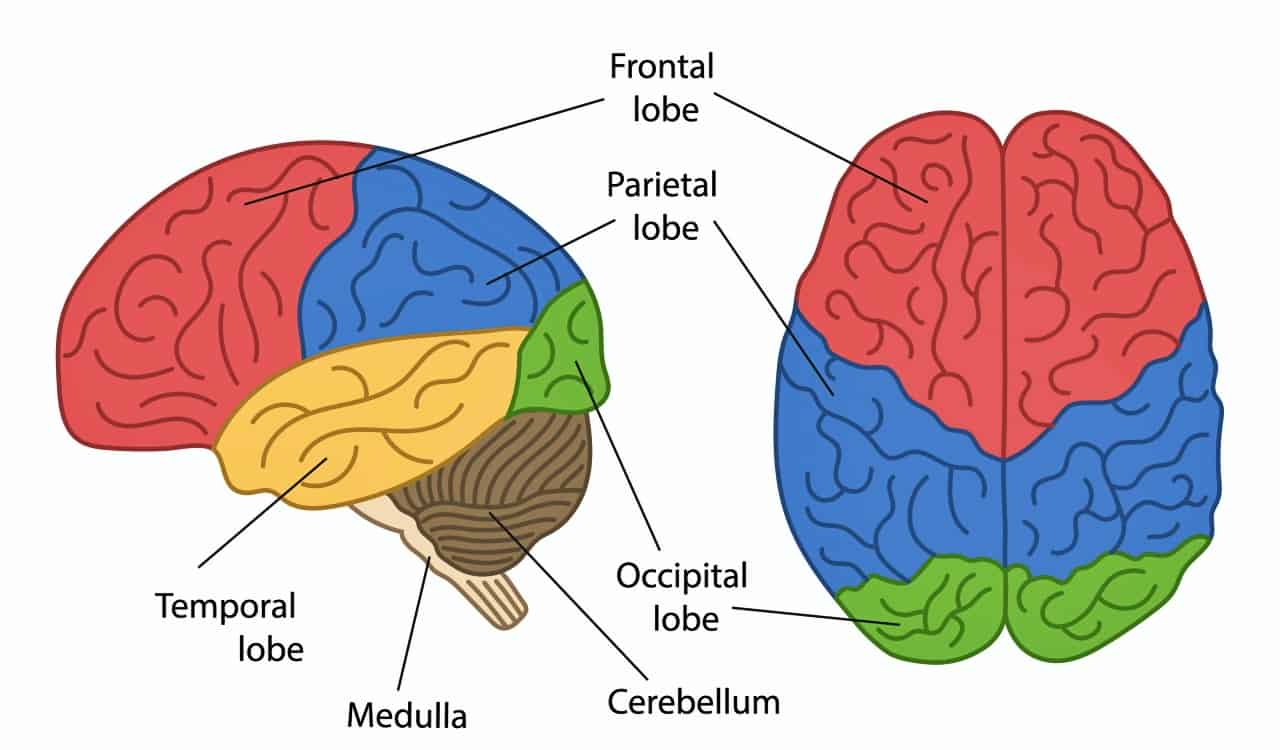
While there are 4 main lobes, as mentioned, there are a few more that are also worthy of inclusion as they still do a lot for the human brain. The Frontal Lobe is the largest of all the lobes, it is responsible for several useful things. It is what often controls our movement, attention, decision-making, planning, and even our speech. The Parietal Lobe is mostly known for its sensory responsibilities. While it handles “some” vision & hearing material, it is mostly known for being responsible for touch and taste.
The Temporal Lobe is responsible for sensory input and takes what the Parietal offers along with the frontal when it comes to sensory. It’s right on the line with the frontal, handling smell for the brain. It’s also responsible for hearing as well as memory and the processing of it. It will also handle emotion and partially even vision. The Occipital Lobe pretty much handles everything vision-related. From actually seeing something to processing it and sending the signals to the rest of the brain. This lobe can even affect movement coordination too.

The Limbic Lobe often revolves around every other lobe, acting as a connector. It is arc-shaped, on the medial surface of the brain. Officially, it navigates through the Frontal, Parietal, and Temporal lobes. Mostly in the sensory sectors. The Insular Lobe is also referred to as the insular cortex and is commonly linked with the lobes. It’s mostly residing in the same area as the Temporal and Parietal, often acting as a connector.