
On July 14, a 67-million-year-old Tyrannosaurus rex skeleton sold at Sotheby’s for $50.1 million — nearly double the auction house’s own high estimate — setting a new world record for a dinosaur fossil sold at auction and immediately triggering alarm among the scientists who study these animals for a living.
A Record Sale and the Warning It Carried
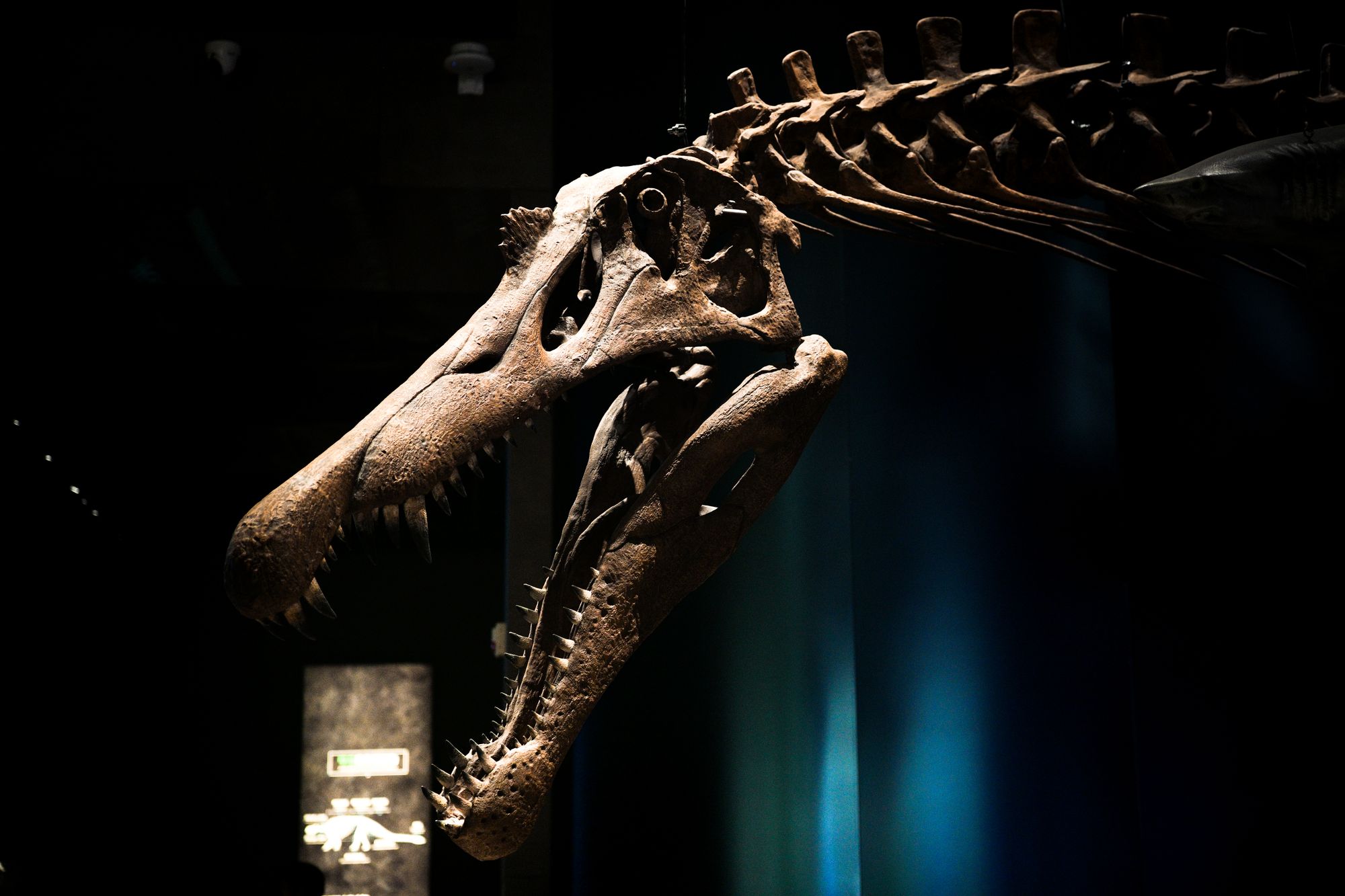
Sotheby’s had estimated the specimen — nicknamed Gus — would fetch between $20 million and $30 million. When bidding closed at $50.1 million, the final price landed 67 percent above that top estimate, stunning even experienced fossil dealers. The buyer has not been publicly identified. Within days of the sale, a source quoted by SD News Watch warned that news of a $50 million transaction could act as a magnet, drawing a new wave of commercial fossil hunters to western South Dakota and surrounding regions where T. rex remains are most commonly found.
That warning crystallizes a tension that has simmered for decades. The same geological formations that make the American West a scientific treasure house also make it an increasingly lucrative hunting ground — and paleontologists argue those two uses are fundamentally incompatible. The record price is not merely a remarkable market moment; researchers say it is a leading indicator of accelerating pressure on one of Earth’s most irreplaceable fossil records.
The Market Is Accelerating

The $50.1 million sale is not an isolated event. Science News reported that additional T. rex specimens are moving through auction pipelines, with pre-sale estimates ranging from roughly $15 million to $25 million per skeleton. Taken together, these listings suggest the auction market now treats T. rex skeletons as a recognizable, tiered asset class — with a defined floor, a defined ceiling, and a sharply upward trajectory.
For context: the celebrated specimen Sue sold in 1997 for $8.4 million, itself a shocking figure at the time. Stan, another specimen from the same formation, sold in 2020 for $31.8 million. The jump to $50.1 million in five years signals that the commercial value of a T. rex skeleton is compounding rapidly — and with it, the incentive to find one.
Economists of the collectibles market describe a dynamic known as the anchor effect: each record sale resets buyer expectations upward, making the next high price feel justified by precedent. The practical consequence, paleontologists argue, is that the expected return on locating a T. rex has never been higher. That shifts the risk-reward calculation for illegal or unregulated fossil collection more sharply toward action than at any previous point in the hobby’s history.
What Commercial Fossil Hunting Is — and Why Scientists Draw a Sharp Line
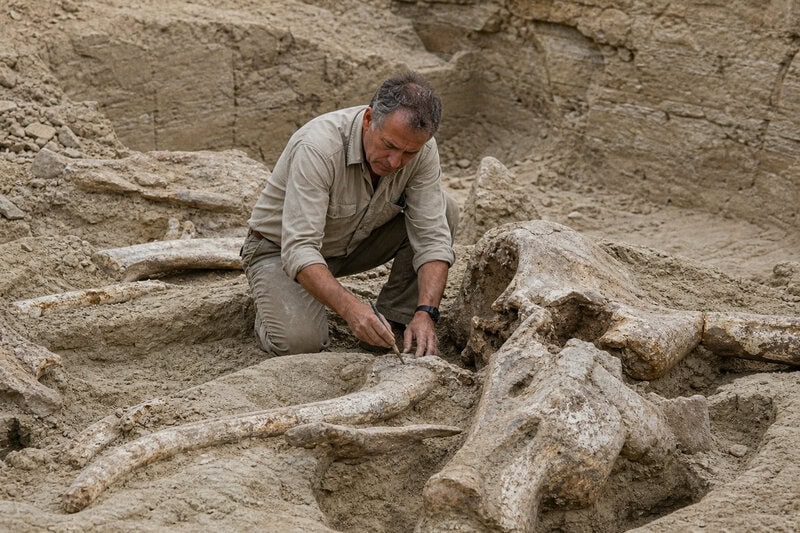
Commercial fossil hunting refers to the excavation of vertebrate fossils — including dinosaurs — primarily for resale rather than for peer-reviewed scientific study. In the United States, the practice is legal on private land but prohibited on federal and tribal lands without a permit issued under the Paleontological Resources Preservation Act of 2009. Fossil poaching — the unlicensed removal of specimens from public or tribal land — is the illegal extreme of this spectrum, and prosecutors have pursued several high-profile cases involving large theropods removed from protected formations.
It is important to distinguish commercial fossil hunting from amateur collecting, which has a long and often scientifically productive history. Many significant specimens have been discovered by hobbyists who then donated or loaned them to accredited institutions. The distinction scientists draw is one of intent and destination, not simply the identity of the finder. A hobbyist who documents a find and alerts a museum is a collaborator; a commercial operator who excavates without systematic recording and sells to a private buyer is, in the scientific community’s view, eliminating a data point that cannot be recovered.
The Society of Vertebrate Paleontology maintains a formal policy opposing the commercial sale of significant vertebrate fossils. Its position holds that once a specimen enters a private collection, it is — for practical research purposes — lost to science, even if the bones themselves remain physically intact.
The Scientific Cost: It Is Not About the Bones
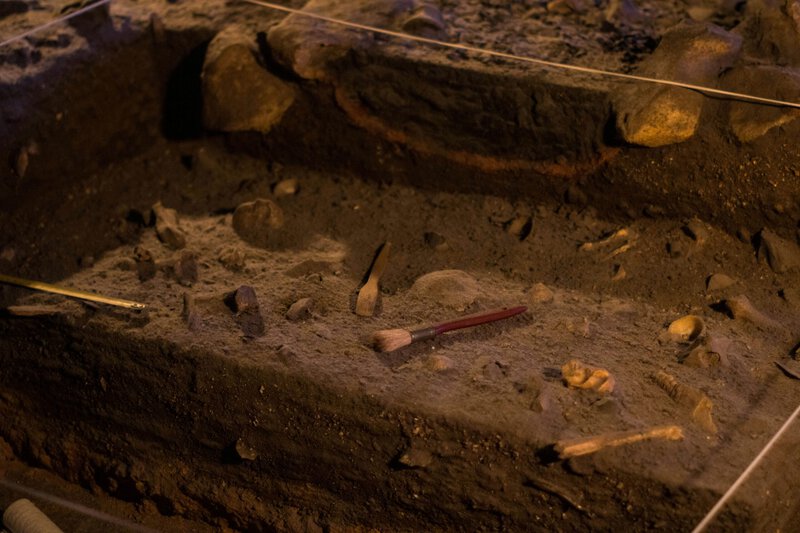
This is perhaps the most counterintuitive point in the entire debate: the monetary value of a fossil and its scientific value are almost entirely unrelated. What makes a specimen irreplaceable to researchers is not the skeleton itself but the stratigraphic context surrounding it — the precise rock layer in which it was found, the associated micro-fossils, the chemical signatures of the surrounding matrix. That context is destroyed the moment excavation begins without systematic documentation.
Provenance data — the recorded geological and geographic origin of a specimen — is a prerequisite for publication in peer-reviewed journals. Specimens without verified, undisturbed provenance cannot be used to establish evolutionary relationships, date extinction events, or reconstruct ancient ecosystems with scientific confidence. A single T. rex locality, carefully excavated by a museum team, can yield years of data on bone pathology, growth rates, isotopic diet signatures, and associated fauna. None of that information commands a premium at auction. All of it is, according to paleontologists, the actual scientific payload.
Once a site is commercially disturbed, that contextual data is gone permanently. No subsequent re-excavation, CT scanning, or chemical analysis of the extracted bones can reconstruct what 67 million years of geology recorded in the surrounding rock. The broader consequences for paleontology extend well beyond any single specimen.
Western South Dakota: Ground Zero for the Conflict

The Hell Creek Formation — extending through western South Dakota, Montana, Wyoming, and North Dakota — is the world’s most productive source of T. rex fossils. Its accessibility, combined with a patchwork of private, state, federal, and tribal land, makes jurisdictional enforcement exceptionally complex. The source quoted by SD News Watch specifically flagged western South Dakota and nearby areas as the region most likely to see increased prospecting pressure following the $50.1 million sale. That concern is grounded in history: both Sue and Stan, the two most commercially prominent T. rex finds before this latest record, originated in the Hell Creek Formation.
Landowner incentives complicate enforcement further. Private landowners in economically depressed rural counties face genuine financial pressure, and a commercial fossil hunter offering a share of a potential multi-million-dollar find can present a more immediately persuasive case than an abstract appeal to scientific heritage. Federal agencies including the Bureau of Land Management and the National Park Service have limited enforcement resources relative to the vast scale of the Hell Creek outcrop, meaning deterrence relies heavily on community awareness and voluntary compliance — neither of which is guaranteed when the financial stakes reach $50 million.
The Counterargument: Does the Market Ever Help?
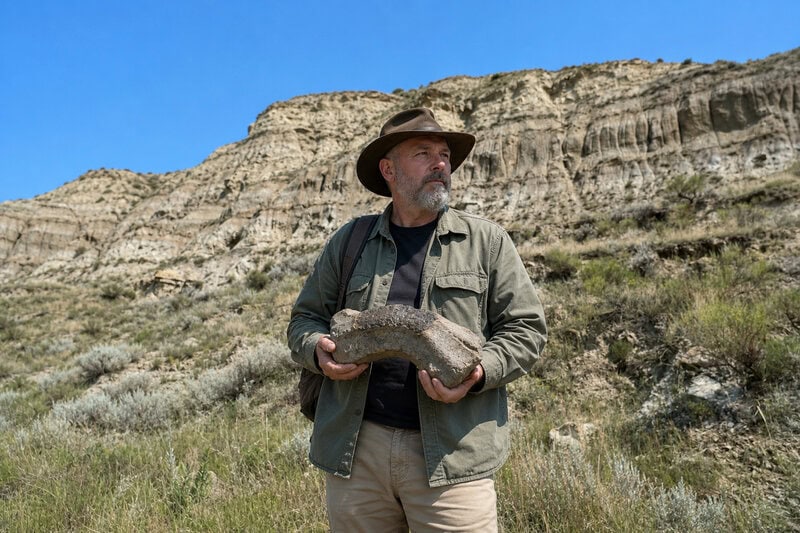
Proponents of the commercial fossil market argue that private investment surfaces specimens that would otherwise erode out of hillsides undiscovered. The Hell Creek Formation loses an unknown but significant fraction of exposed fossils to natural weathering each year, and commercial hunters sometimes locate and stabilize specimens that no underfunded museum crew would have reached in time. This is a real phenomenon, not a rhetorical invention.
Some auction-sold specimens have ultimately entered museum collections. The Field Museum acquired Sue in 1997 with a combination of corporate and public funding, and that specimen has since anchored dozens of peer-reviewed studies. The pipeline from auction house to research institution is not entirely closed.
A contested but recurring proposal within paleontology is a regulated commercial licensing system — analogous to fishing quotas — that would require documented provenance and mandatory first-offer rights to accredited institutions before any private sale. The Society of Vertebrate Paleontology has not endorsed this approach, viewing it as legitimizing a practice it considers fundamentally incompatible with scientific stewardship.
The $50.1 million price point, however, makes the argument that institutions can simply buy specimens back increasingly untenable. Few natural history museums carry acquisition budgets capable of competing at that level without extraordinary philanthropic intervention — and such interventions cannot be planned or relied upon systematically.
Policy Gaps and a Record That May Not Stand Long
The Paleontological Resources Preservation Act of 2009 strengthened protections on federal land but left private land entirely unregulated for vertebrate fossils. Legal scholars and paleontologists have identified this legislative gap as the core policy failure enabling the commercial market’s growth. Closing it would require Congress to navigate significant property-rights opposition — a difficult prospect under any near-term political conditions.
With additional T. rex specimens expected to go under the hammer in coming months, the auction calendar itself now functions as a signal to the prospecting community about where high-value targets remain in demand. Each listing is, in effect, a public advertisement for the commercial viability of T. rex fossil hunting.
Researchers argue that the most actionable near-term intervention is not an auction ban — which faces substantial First Amendment and property-rights obstacles in the United States — but expanded funding for rapid-response museum excavation teams that can claim and document sites on public land before commercial interests locate them. Speed of access, not legal prohibition alone, is the practical lever most available to the scientific community right now.
The $50.1 million record should be read, paleontologists warn, not simply as a remarkable transaction but as a directional signal. If the pattern of escalating T. rex auction prices continues — and the pipeline of upcoming sales suggests it will — the incentive structure for unregulated fossil hunting will intensify in direct proportion. The stratigraphic record of Earth’s most studied apex predator, already finite and non-renewable, will narrow accordingly. What stands to be lost is not bones. It is context — specifically, 67 million years of it, encoded in rock and readable only once.