
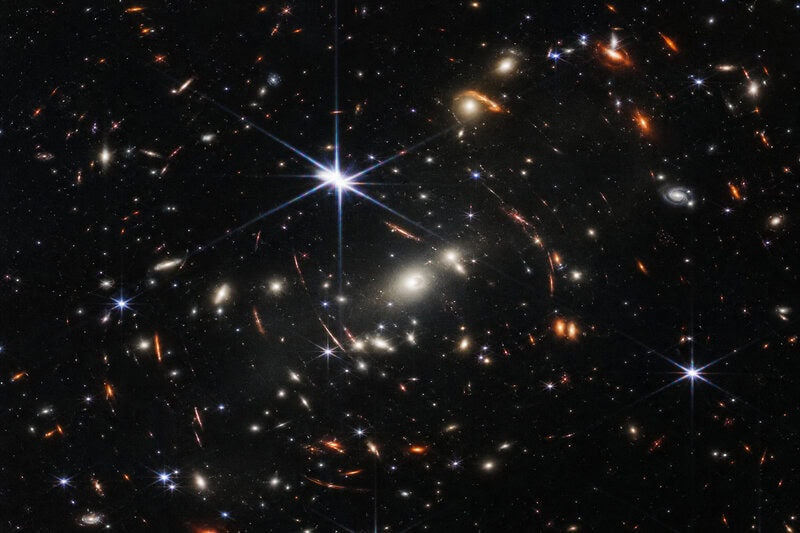
In 2023, astronomers analyzing data from the James Webb Space Telescope’s Cosmic Evolution Early Release Science (CEERS) survey announced something that stopped the field cold: fully formed, massive galaxies existing just 500 to 700 million years after the Big Bang — some containing as many stars as the Milky Way, yet assembled in a fraction of the cosmic time that standard models said was necessary. If the universe’s first sharp portrait is already rewriting the rulebook, the question becomes unavoidable: what else have we been missing about everything beyond our own galaxy?
What Is Extragalactic Astronomy?

Extragalactic astronomy is the branch of astronomy concerned with objects outside the Milky Way — individual galaxies, galaxy clusters, and the vast stretches of diffuse gas that connect and feed those structures across cosmic time. It encompasses both the internal workings of galaxies and the intergalactic medium, the thin but enormous reservoir of ionized gas threading the space between them.
A useful distinction separates the discipline from cosmology. Cosmology seeks to describe the large-scale origin, content, and fate of the universe — the map of everything. Extragalactic astronomy extends those questions into a street-level survey, studying the individual galaxies and structures that collectively compose that map. The two scales are deeply entangled: answering one set of questions almost always requires confronting the other. Researchers at institutions including Steward Observatory at the University of Arizona and MIT’s Center for Astrophysics pursue both scales simultaneously for precisely that reason.
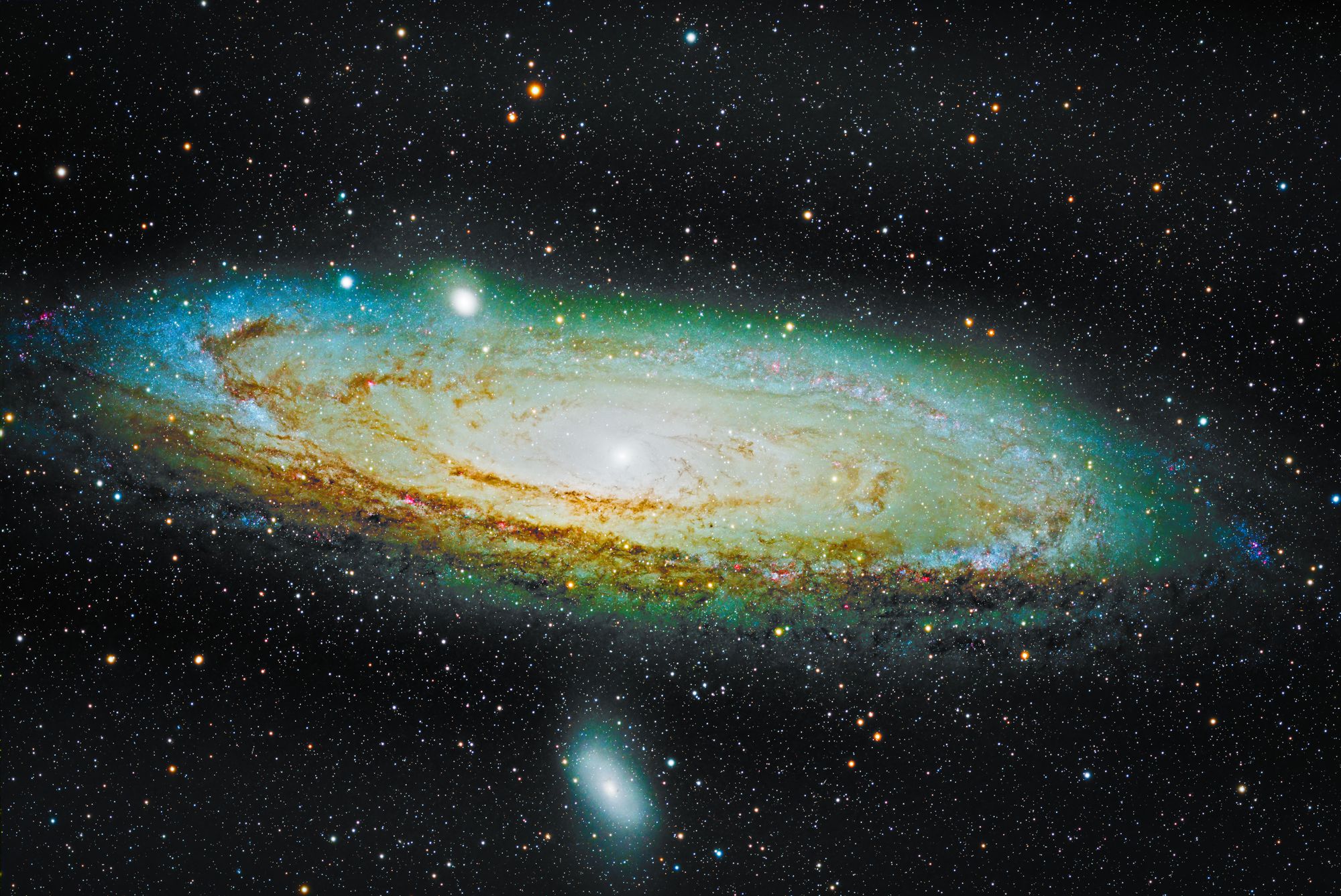
The modern field was effectively founded on a single observation. In 1924, Edwin Hubble used Cepheid variable stars — a class of pulsating star whose brightness-period relationship functions as a reliable cosmic ruler — to confirm that the Andromeda “nebula” was not a cloud of gas inside the Milky Way but an entirely separate galaxy roughly 2.5 million light-years away. That measurement did not merely add one object to the catalog; it multiplied the known scale of the observable universe and immediately raised the question of how many such island universes lay beyond our own. The answer, astronomers now know, runs into the hundreds of billions.
The Standard Model of Galaxy Formation — and Why It Is Under Pressure
For several decades, the Lambda-CDM framework has served as the consensus model of how galaxies come to exist. In broad strokes, the sequence runs as follows: dark matter — the invisible, gravitationally active substance that outweighs ordinary matter roughly five to one — collapses into structures called halos in the early universe. Ordinary gas cools into those halos, eventually reaching densities at which stars can ignite. Galaxies then grow over billions of years through a hierarchical process of mergers and accretion, with small structures combining into progressively larger ones. Teams at institutions including the Max Planck Institute for Astrophysics have spent decades refining simulations built on this architecture, and the framework has successfully reproduced a great deal of what observers find.
JWST data are now stress-testing that architecture in ways no prior instrument could. A landmark paper published in Nature by Labbé and colleagues in 2023 reported candidate galaxies with stellar masses potentially reaching up to 100 billion solar masses at redshifts above 7 — epochs when the universe was less than 800 million years old. Lambda-CDM does not comfortably account for structures that massive forming that early, because there has not been enough time, under the model’s assumptions, to assemble that much stellar material.
It is important to state the epistemic status of these findings honestly. Most researchers regard the tension as a serious stress test rather than a definitive refutation. Some of the discrepancy may narrow as photometric redshift estimates — derived from the color of a galaxy’s light across different filters — are confirmed or revised through more precise spectroscopic follow-up measurements. Nevertheless, the challenge is real, actively debated across the field, and generating new theoretical work at a rapid pace. The early universe appears to have been a far more efficient factory for building large galaxies than existing simulations anticipated, and understanding why is now one of extragalactic astronomy’s most urgent open questions.
Strange Galaxies: A Rogue’s Gallery of Rule-Breakers

The JWST findings represent only the latest additions to a catalog of objects that have unsettled assumptions about how galaxies form and evolve. Several categories of anomalous galaxy have accumulated over the past decade, and each forces a specific revision of the standard picture.
- Ultra-diffuse galaxies (UDGs): First catalogued systematically in the Coma Cluster by van Dokkum and colleagues at Yale University in 2015, these objects span areas comparable to the Milky Way while containing fewer than one percent as many stars. More provocatively, some UDGs appear to contain almost no dark matter — a direct challenge to the assumption that dark matter halos scaffold every galaxy without exception. Subsequent studies have debated whether this apparent dark-matter deficit reflects genuine physics or unresolved measurement uncertainties, and the argument remains open.
- Compact red nuggets: Dead, star-formation-quenched galaxies discovered at high redshift that carry the stellar mass of modern giant ellipticals compressed into volumes three to five times smaller. Studied extensively through the CANDELS survey, these objects suggest that galaxies can abruptly shut down star formation and then grow substantially in physical size over subsequent billions of years without adding proportional stellar mass — a sequence that is not yet fully explained by any single mechanism.
- Green pea galaxies: Tiny, intensely star-forming objects first identified by citizen scientists participating in the Galaxy Zoo project and subsequently characterized by Cardamone and colleagues in 2009. Their unusually high output of ionizing photons makes them leading candidates for nearby analogues of the much earlier galaxies thought to have reionized the universe — the process by which the neutral hydrogen fog of the cosmic dark ages was cleared away.
- Polar ring and shell galaxies: Objects whose warped, layered geometry records past collisions with other galaxies, catalogued in the Arp Atlas of Peculiar Galaxies. These structures provide direct observational evidence of the hierarchical merging that Lambda-CDM predicts, serving as a reminder that the model’s core mechanism is well-supported even where its finer details are under revision.
Every strange galaxy discovered is not merely an anomaly to be explained away — it is a data point that, collectively, is compelling astronomers to ask whether the universe constructs galaxies according to rules that have not yet been fully written down.
The Tools Transforming the Field Right Now
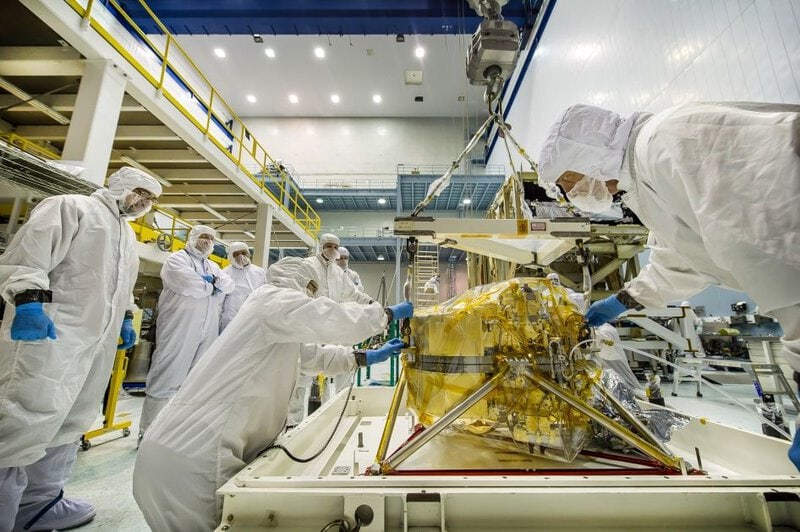
The pace of discovery in extragalactic astronomy is inseparable from the instruments making it possible. JWST’s Near Infrared Camera detects light from galaxies at redshifts above 10, meaning photons that left their source when the universe was less than 500 million years old. That capability gives researchers their first genuinely sharp view of the cosmic dawn epoch — the period when the first stars and galaxies were switching on — rather than the blurred, fragmentary glimpses that previous telescopes provided.
Operating at millimeter and submillimeter wavelengths, the Atacama Large Millimeter/submillimeter Array (ALMA) in Chile maps cold molecular gas and dust in distant galaxies. Because that gas is the raw fuel from which stars form, ALMA observations reveal how galaxies regulate their own growth — in particular, how energy released by supermassive black holes can heat or expel gas and thereby throttle star formation across an entire galaxy. ALMA’s resolution is fine enough to pinpoint these processes within individual star-forming regions at cosmological distances, a capability that was technically impossible a generation ago.
The Vera C. Rubin Observatory’s Legacy Survey of Space and Time (LSST), expected to reach full science operations in the mid-2020s, will survey the entire southern sky repeatedly over a decade and catalogue tens of billions of galaxies. That sample size — orders of magnitude larger than anything previously assembled — will transform galaxy-formation statistics from studies of thousands of objects into analyses of hundreds of millions, making rare and anomalous galaxy types statistically tractable for the first time and allowing researchers to map the large-scale structure of the universe with unprecedented fidelity.
Beyond traditional electromagnetic observation, multi-messenger astronomy is beginning to contribute. Gravitational-wave detections from LIGO and Virgo, combined with rapid optical follow-up, can now localize neutron-star merger events within specific host galaxies. Those localizations link the sites of heavy-element production directly to the galaxies that contain them, connecting stellar physics to the large-scale cosmic structure that extragalactic astronomy maps. The 2017 detection of the neutron-star merger GW170817, identified within the galaxy NGC 4993, demonstrated that this approach is not merely theoretical.
The Biggest Open Questions in Galaxy Formation
Even setting aside the JWST surprises, several foundational problems in extragalactic astronomy remain unsolved and are subjects of active, sometimes contentious debate.
The quenching problem asks what mechanism shuts off star formation in massive galaxies so rapidly and permanently. The leading hypothesis is feedback from an active galactic nucleus — the energetic central region powered by a supermassive black hole — which can drive winds capable of expelling gas from an entire galaxy. However, the precise timing, efficiency, and triggering conditions of this feedback remain contested. It is not yet clear, for instance, whether AGN feedback operates primarily by heating gas in place, by physically ejecting it beyond the galaxy’s gravitational reach, or by some combination of both processes that varies with galaxy mass and environment.
The missing satellites problem notes that Lambda-CDM simulations predict far more small dwarf galaxies orbiting the Milky Way than have been observed. Proposed resolutions range from baryonic physics — star formation and supernova feedback suppressing the formation of the smallest halos — to observational incompleteness. The Rubin Observatory’s deep, wide-field survey may substantially reduce that incompleteness in the coming decade by uncovering ultra-faint dwarf galaxies too dim for current surveys to detect systematically.
The Hubble tension is perhaps the most far-reaching discrepancy currently dividing the field. Two independent methods of measuring the universe’s expansion rate — one anchored to the cosmic microwave background as measured by the Planck satellite, another built on a distance ladder of galaxies calibrated by the SH0ES team led by Adam Riess — disagree at a statistical significance of approximately five sigma. Extragalactic distance measurements sit at the heart of that disagreement. JWST has already been used to re-examine Cepheid distance calibrations in an effort to identify systematic errors, and while some earlier concerns about crowding and contamination have been addressed, the tension has not yet resolved. Resolving it may ultimately require new physics rather than improved calibrations alone. As tracked in Nature’s cosmology and extragalactic astronomy research index, it remains one of the most-discussed problems in all of contemporary astrophysics.
Why the Universe Beyond Our Galaxy Matters
It would be a mistake to frame extragalactic astronomy as purely abstract — a matter of counting distant lights and fitting them into theoretical boxes. Understanding galaxies beyond the Milky Way is inseparable from understanding the origin of everything familiar. Every heavy element in the human body — the carbon, oxygen, iron, and calcium of living matter — was forged inside stars and distributed through galaxies across cosmic time. Extragalactic astronomy traces the full chain of stellar and chemical evolution that made planetary chemistry, and eventually biology, possible.
The field also functions as a precision laboratory for fundamental physics. Dark matter, dark energy, and the large-scale behavior of gravity all leave measurable fingerprints in the distribution and dynamics of galaxies. When a galaxy behaves anomalously — too massive, too diffuse, too dark-matter-poor — it may be signaling physics beyond the current Standard Model of particle physics, or modifications to general relativity that no Earth-based experiment can yet probe. Each anomaly is, in that sense, a potential window into physics that laboratory experiments cannot access.
There is a practical dimension worth acknowledging as well. The James Webb Space Telescope represents approximately ten billion dollars of investment by a fourteen-nation partnership. The discoveries now emerging from its first years of science operations — galaxies that should not exist under current models, structures forming faster than simulations allow — illustrate both the scale of international infrastructure required to push these questions forward and the genuine scientific returns that infrastructure can deliver.
Extragalactic astronomy is ultimately engaged in reconstructing the universe’s biography from the evidence it has left scattered across hundreds of billions of galaxies. The galaxies that break the rules are not embarrassments to be quietly set aside — they are the chapters that force a rewrite of everything preceding them, and the field is only now beginning to understand what that rewrite will require.