The Hafgufa
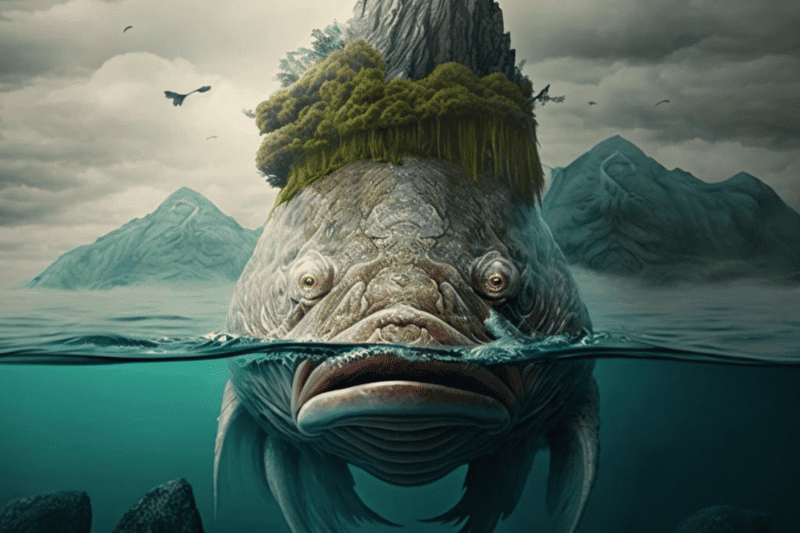
In Old Norse lore, the Hafgufa was known as an awe-inspiring enigma, alternatively referred to as a massive fish or whale. Descriptions vary from likening it to a floating nest of hills in the Ödds-Ordlinger Saga to Helli Odvarsson’s evocative portrayal of its length as “as long as waiting.”
King Håkon Håkonsson’s reluctance to vividly describe the creature in the Konungs Skuggsjá adds an air of mystery, emphasizing the challenge of belief without firsthand encounters. The Hafgufa’s colors, ranging from “blue” to “opal-hided,” create an ever-shifting spectacle, with its appearance transforming like a magician’s trick with the shifting hues of the sea and sky.
Beneath the waves, the Hafgufa reveals a fascinating feeding ritual, releasing an enormous belch that draws marine life to its location before swiftly devouring them. Despite its imposing presence, there’s a prevailing misconception that it can only be observed through two great nostrils protruding from the water, leading to startled reactions from onlookers.
Adding to its allure, the Hafgufa unwittingly becomes a resting place for weary sailors, who mistake it for an island, showcasing a unique sensitivity to their presence. As speculation swirls around the creature’s faith and divine nature, its ability to eavesdrop on human conversations and learn words like “stow” and “promise” reinforces its mysterious and captivating persona. The Hafgufa, an ancient inhabitant of the seas, continues to weave a tale of wonder and intrigue that transcends time and human understanding.