Gliese 667 Cc

Distance: 23.62 Lightyears
Star: Gliese 667 C
Constellation: Scorpius
The Gliese 667 Cc planet was officially discovered in 2011 but not announced until 2012. It was discovered at the European Southern Observatory using the radial-velocity method. This is done by using Doppler Shifts somewhere in an area where a planet’s parent star happens to be. Of course, we’ve seen some exoplanets in the Scorpio constellation territory, so it did not shock anyone to find that one existed in a proper habitable zone.
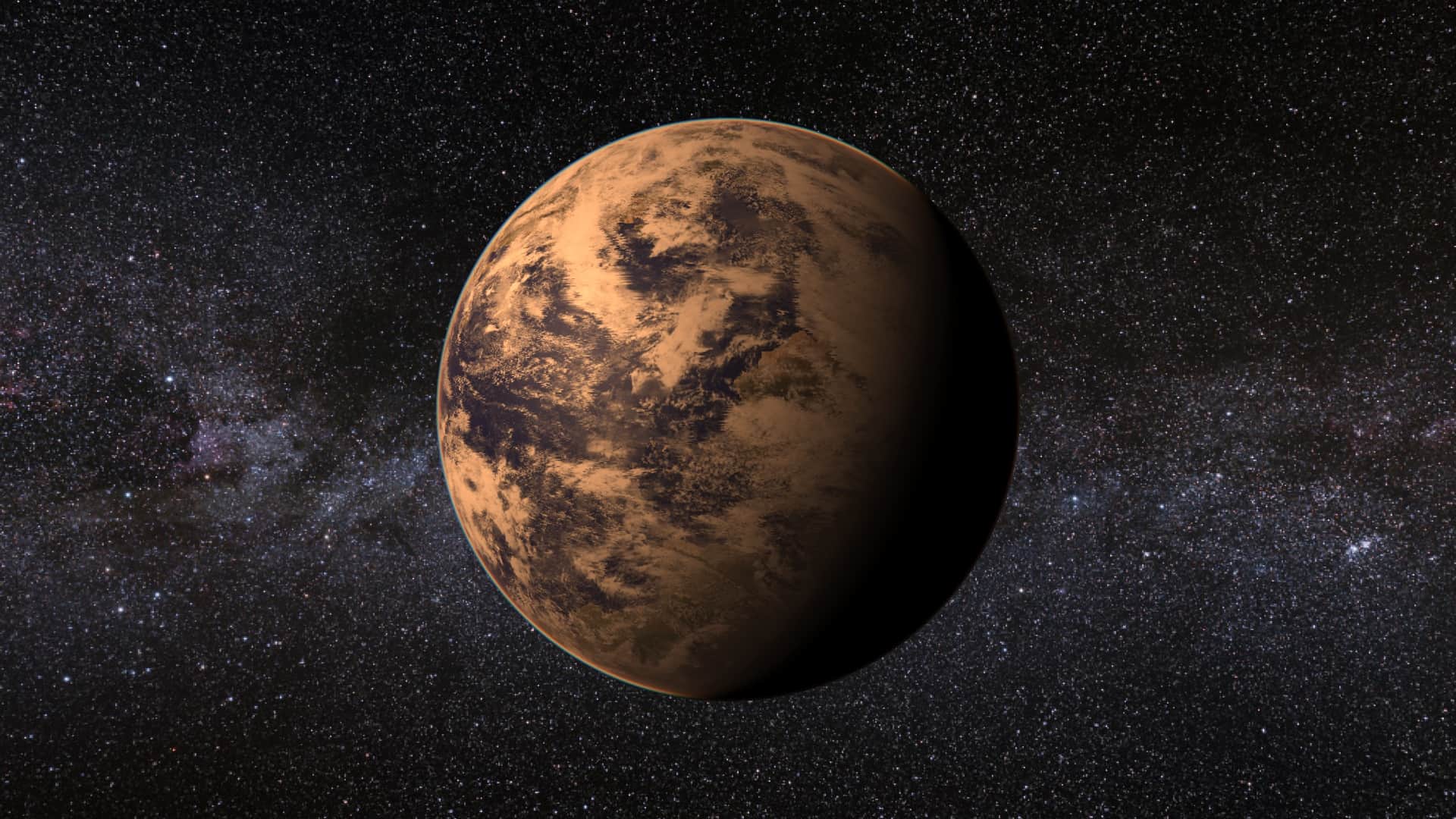
There is a lot of good with Gliese 667 Cc but some bad too. We know it is a Super-Earth that is much larger than our own planet, yet it is not quite as large as Uranus and Neptune. The temperature here is relatively good on average at 277.4 K or about 39.6 degrees Fahrenheit (4.3 Celsius). While still cold, being above freezing is critical. The Gliese 667 C red dwarf star, however, does not give off the same heat level. Our Sun’s surface temperature reaches 5778K but Gliese 667 C reaches 3700 K. Thereby giving just 1.4% luminosity by comparison. It only occupies between 0.003 to 0.006% of Gliese 667 Cc’s sky. The days are shorter and even the years. It takes 28.155 days to do a complete orbit around the parent star. In spite of some setbacks, this is one of the planets that could house human life. The good might very well outweigh the bad possibly.