
In 2020, a study published in Nature by Yale paleontologist Jasmina Wiemann and colleagues confirmed something that would have seemed absurd to most scientists just a decade earlier: some of the most iconic dinosaurs did not lay hard-shelled eggs at all, but soft, leathery ones — more like a python than a pigeon. The discovery did not merely add a footnote to paleontology; it dismantled more than a century of foundational assumption about how dinosaurs reproduced.
The Fossil Record’s Built-In Blind Spot
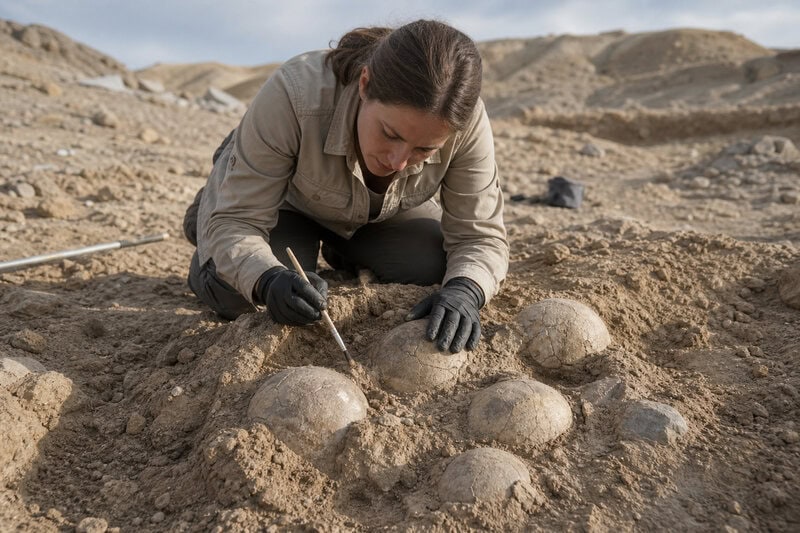
For more than a century, the scientific community operated on what seemed an entirely safe hypothesis: because birds — the living descendants of theropod dinosaurs — lay hard-shelled eggs, their ancient predecessors must have done the same. The logic was clean, the lineage unbroken, and the assumption largely untested. No one seriously questioned it, in part because the fossil evidence appeared to support it. Everywhere paleontologists looked, they found mineralized eggshell fragments.
What they did not immediately appreciate was that the fossil record was showing them a biased sample. Soft-shelled eggs, which lack the robust calcium carbonate structure of hard shells, decay rapidly after burial and leave almost no physical trace in rock. The absence of soft-shell evidence was not evidence of absence — it was an artifact of fossilization itself. The eggs scientists could not find were, by their very nature, the hardest to preserve.
Wiemann’s 2020 study reframed the central question entirely. Rather than asking simply whether dinosaurs laid eggs — the answer to which has always been yes — the research asked: what kind of eggs did they lay, and why did egg structure evolve so differently across lineages? The answer, it turned out, was far more complex than anyone had assumed.
Hard Shell vs. Soft Shell: What the Difference Actually Means
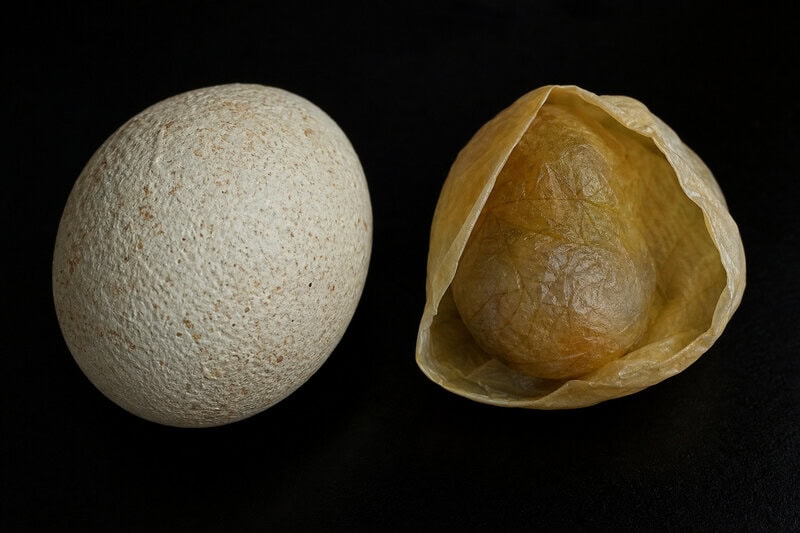
Eggshell type is defined by its mineral composition and microscopic architecture. Hard-shelled eggs, like those produced by birds and crocodilians, are reinforced with interlocking calcium carbonate crystals arranged in organized layers. These crystals give the shell structural rigidity and allow for the microscopic pores that regulate gas exchange and limit moisture loss — a critical advantage when eggs are laid in open, exposed nests where desiccation is a real threat.
Soft-shelled eggs, by contrast, have a thin, flexible, parchment-like membrane with little or no calcification — structurally similar to the eggs of most modern snakes and lizards. These shells are far more permeable, which makes them poorly suited to dry, open environments but well adapted to buried-nest conditions where the embryo can absorb moisture directly from damp soil. Shell type is not a trivial anatomical detail; it is a major life-history trait that shapes nesting behavior, embryo development time, clutch size, and vulnerability to predation.
Paleontologists use a specialized classification system called parataxonomy to organize fossil eggshells. Because isolated shell fragments can rarely be matched with certainty to a specific dinosaur species, researchers classify them as separate morphological entities called oospecies — a parallel naming system that acknowledges the inherent limits of the evidence. This framework has been essential for organizing the growing catalog of dinosaur egg types, but it also underscores how much uncertainty still surrounds individual specimens.
Why Soft Eggs Almost Never Fossilize — and How Scientists Found Them Anyway
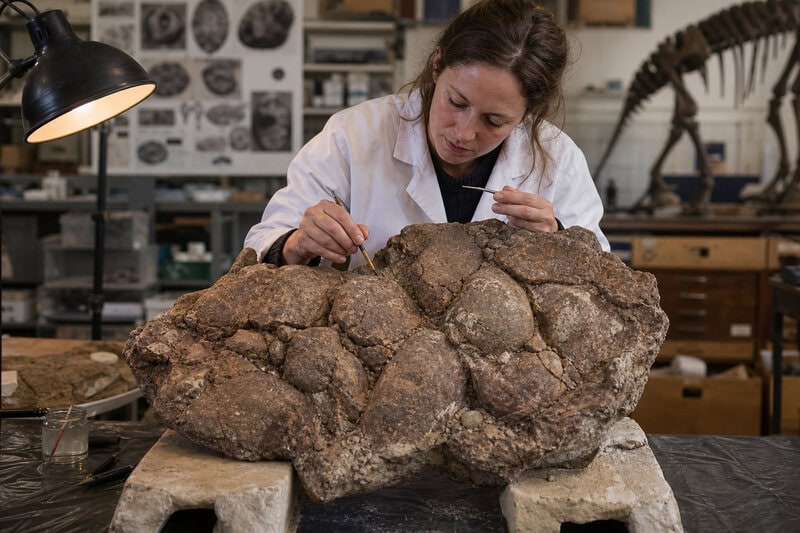
The core problem is geological: fossilization strongly favors hard, mineralized structures. Bone, tooth enamel, and calcified eggshell survive burial over millions of years with relative reliability. Soft organic membranes do not. They decompose quickly, consumed by bacteria and dissolved by groundwater, leaving behind no visible trace that a containing structure ever existed.
The breakthrough that allowed Wiemann’s team to detect soft-shelled dinosaur eggs came not from physical inspection of rock surfaces but from organic geochemistry. The researchers applied Raman spectroscopy — a technique that identifies molecular bonds by analyzing the way they scatter laser light — to the sediment matrix surrounding fossil embryos of Mussaurus (a sauropodomorph from Argentina) and Protoceratops (a ceratopsian from Mongolia). Even where no visible shell material remained, the spectroscopic analysis detected degraded proteins and lipids: the molecular ghost of an eggshell that had long since decomposed.
A complementary line of evidence came from what researchers informally describe as “ghost eggs” — indirect signatures including compression marks in surrounding sediment, unusual soil chemistry, and the posture of fossil embryos that suggested a containing membrane had once been present. Re-examining previously catalogued fossil sites with these spectroscopic tools is now revealing soft-egg evidence that was entirely invisible to earlier preparators working only with physical inspection. The rocks had held the answer all along; scientists simply lacked the chemical tools to read it.
For broader context on how these findings fit into our understanding of dinosaur reproduction, the overview of dinosaur nesting ecology published in American Scientist explains how nesting evidence and egg-type data are being synthesized across the field.
The Evolutionary Map: Which Dinosaurs Laid Which Eggs
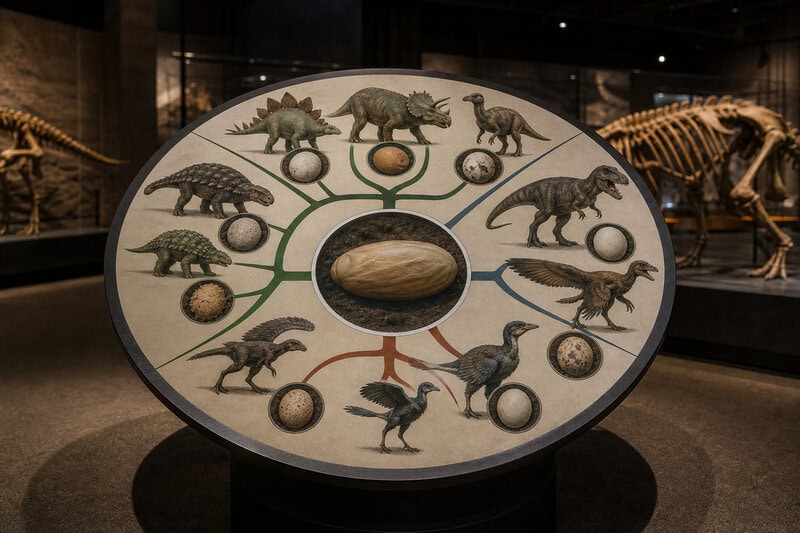
The 2020 Nature study, along with subsequent phylogenetic analyses, suggests that the ancestral dinosaur egg was most likely soft-shelled, and that hard shells evolved independently at least three separate times across the dinosaur family tree: once in ornithischians, once in advanced theropods (the lineage leading to birds), and possibly once or more within certain sauropod subgroups. This pattern of convergent evolution — where a similar feature evolves independently in separate lineages — is well established elsewhere in biology, but its confirmation in dinosaur eggshell was unexpected.
The three major dinosaur clades — Ornithischia, Sauropodomorpha, and Theropoda — each tell a different reproductive story:
- Theropods, including well-studied genera such as Troodon and the oviraptorosaurs, left a rich record of hard-shelled eggs. Their nesting behavior — open mound nests, documented brooding postures — aligns with the physiological demands of a hard, gas-permeable shell that can withstand direct contact with an incubating adult.
- Sauropodomorphs, particularly the long-necked giants, appear to have ancestrally laid soft eggs, though the picture grows more complicated in later, larger-bodied groups. Some titanosaur egg sites show moderately calcified shells, suggesting portions of this lineage may have transitioned toward harder shells as body size and nesting ecology shifted over geological time.
- Ornithischians, including ceratopsians like Protoceratops, also show evidence of soft-shelled eggs in early analyses, though the ornithischian egg record is less thoroughly characterized by chemical analysis than that of theropods.
The definitive answer to the question “did all dinosaurs lay eggs?” is yes. The answer to the follow-up question — “were those eggs all alike?” — is an unambiguous no.
Color, Pigment, and the Surprising Sophistication of Dinosaur Eggs
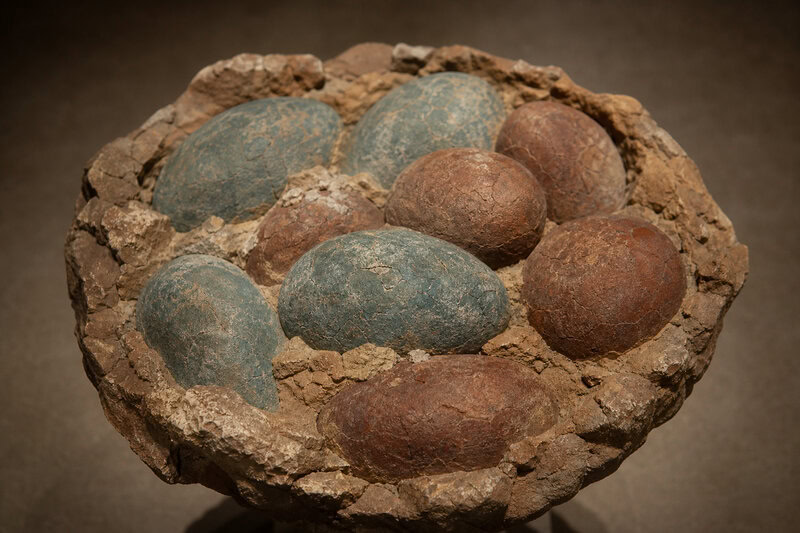
Eggshell chemistry has revealed more than just structure. Research published in Nature by Wiemann and colleagues in 2018 identified two egg-pigment molecules — biliverdin, which produces blue-green coloration, and protoporphyrin, which produces red-brown — preserved within fossil eggshells of Heyuannia, an oviraptorosaurian theropod from China. The find represented the oldest known evidence of egg coloration in any animal.
In modern birds, egg color serves documented functions including camouflage against nest predators, individual recognition of eggs within shared nesting sites, and even thermoregulation by influencing how much solar radiation an egg absorbs. If non-avian dinosaurs used egg color in similar ways, it implies a level of reproductive sophistication that was not previously attributed to them.
Earlier work pointing toward this possibility is discussed in coverage of research suggesting dinosaurs may have laid coloured eggs, which traces how this line of inquiry developed before the 2018 molecular confirmation. Importantly, studies suggest that different types of dinosaurs may have laid different coloured eggs, just as birds do today. Whether soft-shelled dinosaur eggs carried pigment — and whether that pigment could survive in the absence of a mineralized shell matrix to protect it — remains an open and actively researched question.
What Nesting Behavior Tells Us That Eggshells Cannot
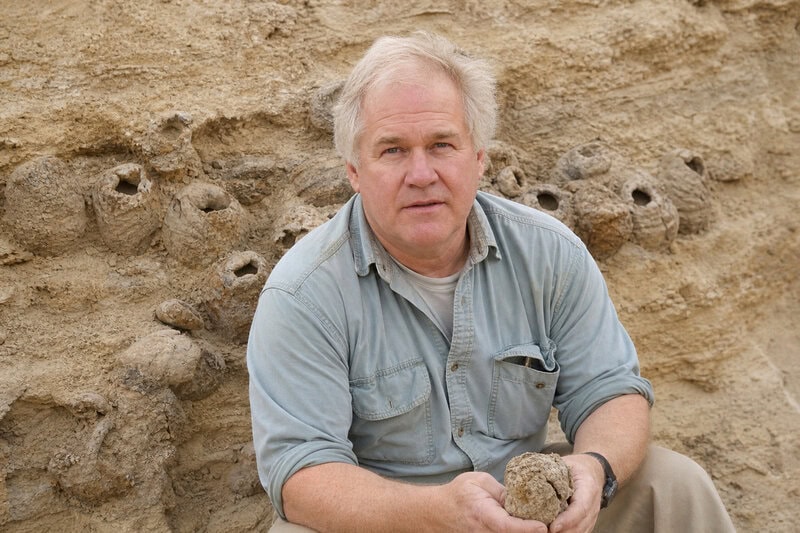
Eggshell chemistry provides molecular evidence; fossil nests provide behavioral context. The two lines of evidence, when read together, are mutually reinforcing in ways that neither achieves alone.
Fossil nests attributed to the hadrosaur Maiasaura, excavated by paleontologist Jack Horner at the site known as Egg Mountain in Montana during the 1970s and 1980s, provided the first compelling behavioral evidence that some dinosaurs engaged in extended parental care. The Maiasaura eggs were moderately hard-shelled, consistent with open-nest incubation strategies where parental proximity — and possibly body heat — played a role in development.
Brooding postures preserved in oviraptorid specimens from the Gobi Desert, documented by researchers including Mark Norell of the American Museum of Natural History, demonstrate incubation strategies that are functionally consistent with hard-shelled eggs. A hard shell can bear an adult dinosaur’s partial weight without collapsing; a soft shell cannot.
The inferred soft-shelled eggs of Protoceratops and Mussaurus point in the opposite behavioral direction. Soft shells require moisture from the surrounding environment to sustain embryo development — a condition met naturally by buried nests, where soil humidity and microbial heat drive incubation without direct parental contact. This is precisely the reproductive strategy used today by sea turtles, monitor lizards, and many other reptiles. Nesting ecology therefore generates behavioral predictions that geochemical egg-type data can confirm or contradict — and in the cases examined so far, the two lines of evidence have largely agreed.
What Remains Contested — and Why It Matters
The implications of soft-shell egg evolution extend beyond reproductive biology and into some of paleontology’s most actively debated questions. If hard-shelled eggs evolved multiple times independently across dinosaur lineages, then the hard shell of a modern bird’s egg is not simply an inherited ancestral trait — it is an evolutionary novelty refined within the theropod lineage specifically, shaped by particular selection pressures that lineage faced over tens of millions of years.
Researchers are also investigating whether egg-type differences correlate with differences in metabolic rate. The hypothesis, which remains unconfirmed as of the most recent published literature, is that soft-egg-laying dinosaurs may have had slower, more reptile-like metabolisms, while hard-egg-laying lineages were more endothermic — physiologically warm-blooded in a meaningful sense. If that link is established, it would connect reproductive biology directly to the long-running debate about dinosaur physiology, making eggshell chemistry a window into whole-body biology.
A key point of ongoing scientific contention is the exact number and timing of independent hard-shell evolution events. Some researchers argue that the current dataset of chemically analyzed fossil eggs is too small to support firm phylogenetic conclusions, and that additional specimens from the Triassic and Early Jurassic — when these lineages were diverging — are urgently needed before the evolutionary map can be drawn with confidence. The 2020 findings are widely accepted as a genuine advance, but they are understood within the field as a beginning rather than a resolution.
What is no longer in serious doubt is the basic conclusion: egg structure varied significantly across dinosaur lineages and evolved independently multiple times. The century-old picture of a uniformly hard-shelled dinosaur nursery has given way to something considerably more interesting — a dynamic, evolving reproductive landscape in which the type of egg a dinosaur laid was as much a product of natural selection as the shape of its teeth or the length of its neck.