
On June 23, a spacecraft nearly 6 billion miles from Earth switched itself back on using commands stored in its own computer — no human hand on any switch, no real-time signal possible across that gulf of space. NASA’s New Horizons had been silent for 321 days, and its quiet revival marks the resumption of humanity’s only active scientific mission operating in the outer solar system beyond Pluto.
A Robot Alarm Clock at the Edge of the Solar System
NASA confirmed that New Horizons woke up in good health after its record-breaking hibernation period — a two-word verdict that carries enormous weight when a one-way radio signal takes roughly nine hours to travel from Earth to the probe. Mission operators at the Johns Hopkins Applied Physics Laboratory confirmed the spacecraft’s status after receiving telemetry — the stream of engineering data the probe transmits about its own systems — once the wake-up sequence had completed.
The 321-day hibernation was the longest planned dormancy in the mission’s history. This was not a malfunction or an emergency. It was a deliberate, mission-planned decision designed to stretch the spacecraft’s dwindling power supply while it continued drifting deeper into the Kuiper Belt — the vast, icy ring of debris beyond Neptune that marks the solar system’s outer frontier and formed roughly 4.6 billion years ago alongside the planets themselves.
NASA placed New Horizons into hibernation mode on August 7, 2025. During that period, all non-essential systems were shut down, leaving only the spacecraft’s core computer and an internal timer running. The probe effectively entered a low-power standby state, slashing energy consumption significantly. The trade-off is straightforward: science instruments go dark during hibernation, but the energy saved buys the mission additional years of operational life in deep space.
The Mechanics of Waking Up 6 Billion Miles Away
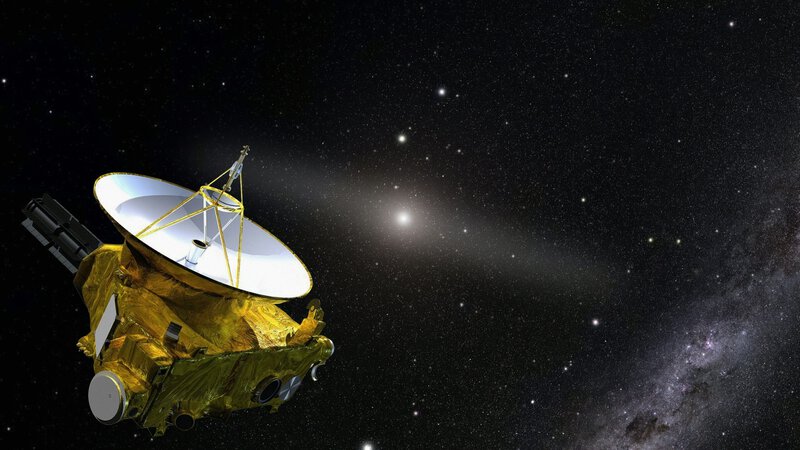
New Horizons did not wait for a radio command from Earth to wake up. Instead, it executed a pre-loaded sequence stored on its main onboard computer — a necessity, not a convenience, given that real-time communication across approximately 6 billion miles is physically impossible. At the speed of light, a signal takes around nine hours to travel one way between Earth and the spacecraft, meaning any instruction sent from mission control would arrive hours after it was needed.
This autonomous operation capability was engineered into New Horizons from the beginning, because any spacecraft venturing into the outer solar system must be able to function independently for extended periods without human intervention. After the wake-up on June 23, the spacecraft ran through a health check and began transmitting telemetry back toward Earth. Every command-and-response exchange between mission controllers and the probe is a slow, carefully choreographed dialogue stretched across an entire workday — and then some.
According to Mashable’s reporting, after waking, New Horizons resumed operations and began beaming deep-space data home, transitioning from its dormant state back into active scientific observation. The successful revival after nearly a year of silence validates autonomous spacecraft management techniques that will be critical for future deep-space missions, including any eventual probes sent toward the interstellar medium.
Where Exactly Is New Horizons — and Why That Distance Matters
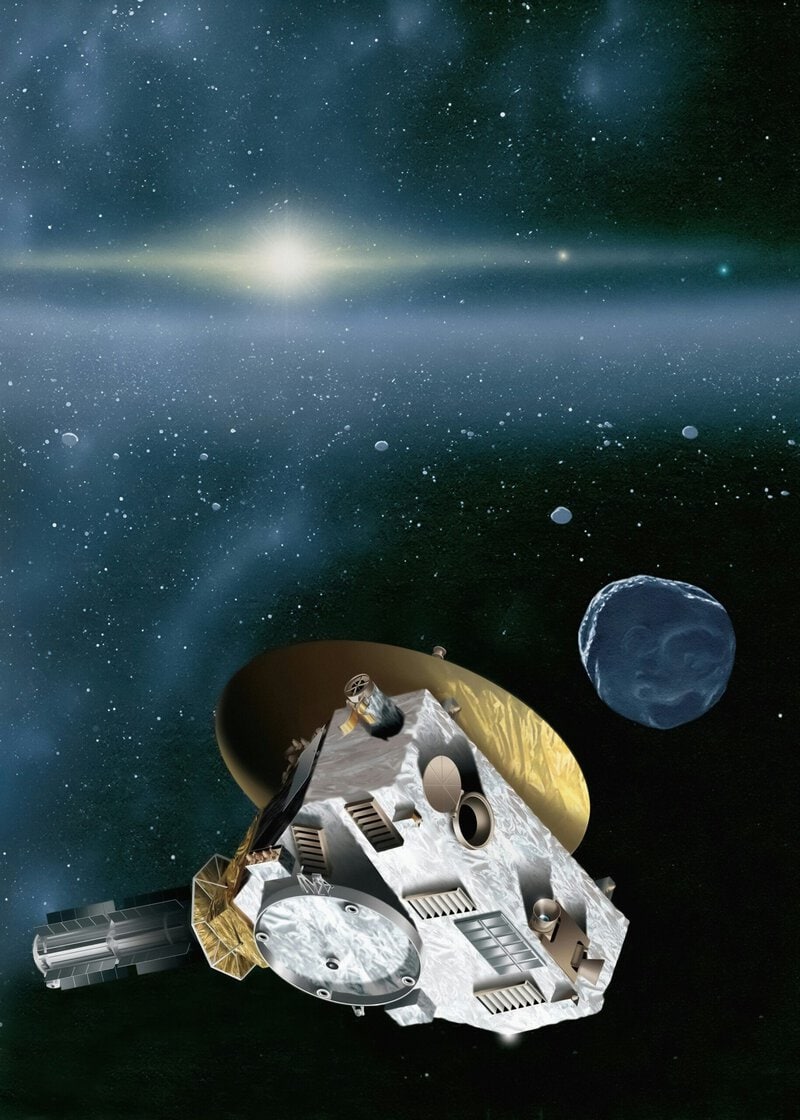
At approximately 6 billion miles from Earth, New Horizons is located in the Kuiper Belt, a region extending roughly from 30 to 50 astronomical units (AU) from the Sun, where one AU equals the Earth-Sun distance of about 93 million miles. To put that scale in perspective: the Moon is roughly 240,000 miles away; Mars at its closest approach is about 33 million miles; and sunlight reaching New Horizons is roughly 900 times fainter than the sunlight experienced on Earth’s surface.
No other active spacecraft is currently operating at this distance and conducting science. Voyager 1 and Voyager 2 are farther out, but both have long since passed beyond the heliopause — the boundary where the Sun’s influence gives way to interstellar space — and carry older, more limited instrument suites than New Horizons. As Geekspin notes, the probe’s position makes it uniquely capable of sampling a part of the solar system that no other functioning spacecraft can currently reach.
Distance is both the mission’s greatest scientific asset and its central engineering challenge. The farther New Horizons travels, the more pristine and undisturbed the Kuiper Belt environment it samples. But the same distance means weaker power output, longer communication delays, and fewer opportunities to correct problems in real time — which is precisely why autonomous systems and conservative power management are not optional features but mission-critical necessities.
What New Horizons Is Listening For: The Science Agenda After Wake-Up
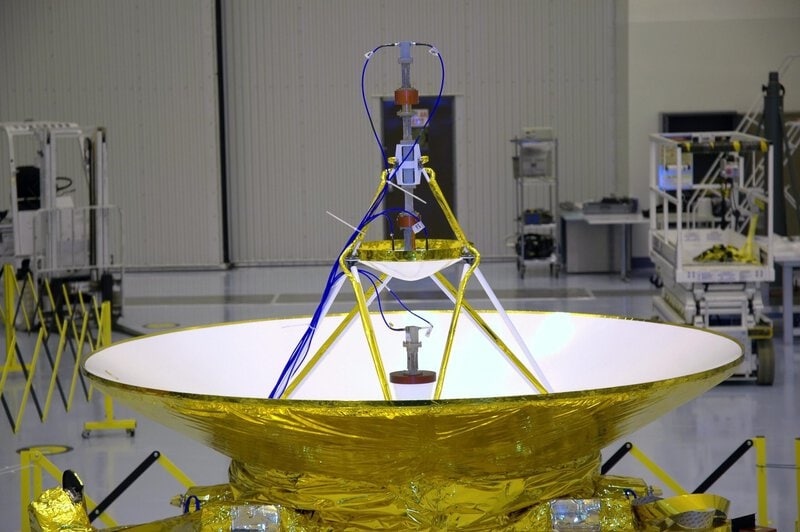
With science instruments back online, New Horizons resumed its Kuiper Belt exploration mission. Its scientific objectives encompass several distinct areas of inquiry. The spacecraft measures the density of hydrogen gas in the space between stars, maps ultraviolet light from distant stars and galaxies, and searches for small Kuiper Belt Objects (KBOs) — ancient, icy bodies that are chemical and structural relics from the solar system’s formation.
The instrument suite includes SWAP (Solar Wind Around Pluto), which detects charged particles streaming from the Sun, and ALICE, an ultraviolet spectrograph that analyzes light across wavelengths invisible to the human eye. Together, these tools allow scientists to characterize the plasma and photon environment in a part of space no mission has continuously sampled before. NASA’s stated mission goal is to use New Horizons to study the Kuiper Belt and the boundary region between the solar system and interstellar space, providing data that cannot be replicated by Earth-based telescopes or spacecraft operating closer to the Sun.
One of the more scientifically significant — and actively debated — questions New Horizons is positioned to address involves a faint, diffuse optical background glow detected in data from the mission. Some researchers have proposed this excess light could originate from sources beyond the known universe. This interpretation remains an emerging and contested finding, not scientific consensus, and ongoing observations by New Horizons are expected to contribute additional data to that debate. It is precisely this kind of irreplaceable, long-baseline observation that makes the mission’s continuation scientifically valuable.
The Power Problem: How Much Time Does New Horizons Have Left?
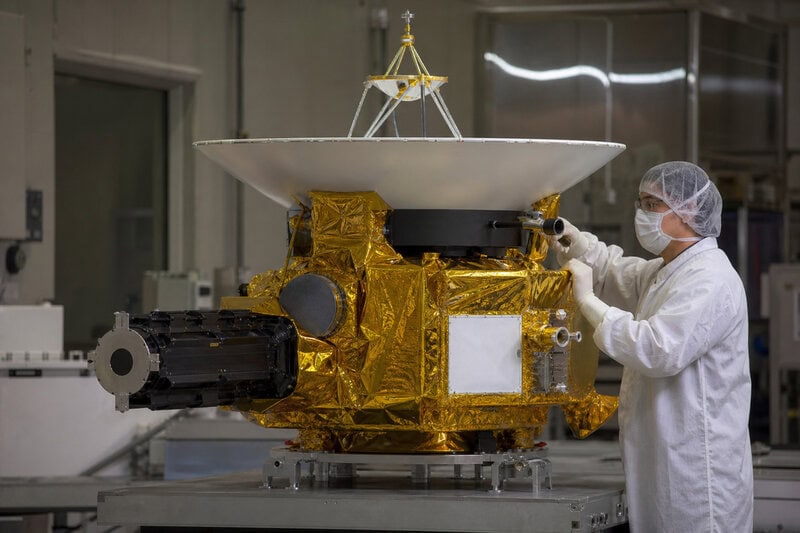
New Horizons is powered by a single Radioisotope Thermoelectric Generator (RTG), a device that converts heat from the natural radioactive decay of plutonium-238 into electricity. This power source degrades at roughly 3.5 watts per year as the plutonium slowly decays, meaning the spacecraft has progressively less energy available for instruments and communication with each passing year.
Engineers estimate the spacecraft has enough power to run at least some science instruments into the early 2030s, though the exact timeline depends on how aggressively hibernation and power-conservation strategies are applied. The 321-day hibernation completed in 2026 was not a luxury — it was essential to preserving the mission’s operational life. Each hibernation period effectively banks energy for future scientific work.
The mission does not currently have a confirmed flyby target the way it did with Pluto in 2015 or with the Kuiper Belt Object Arrokoth in 2019. Finding a suitable KBO close enough to the spacecraft’s trajectory to visit remains an ongoing search effort by astronomers using ground-based and space-based telescopes. NASA has not publicly confirmed an extended mission phase beyond the current Kuiper Belt Extended Mission 2 (KEM2), and future funding and operational status will depend on scientific productivity and agency prioritization.
A Quiet Triumph of Enduring Engineering
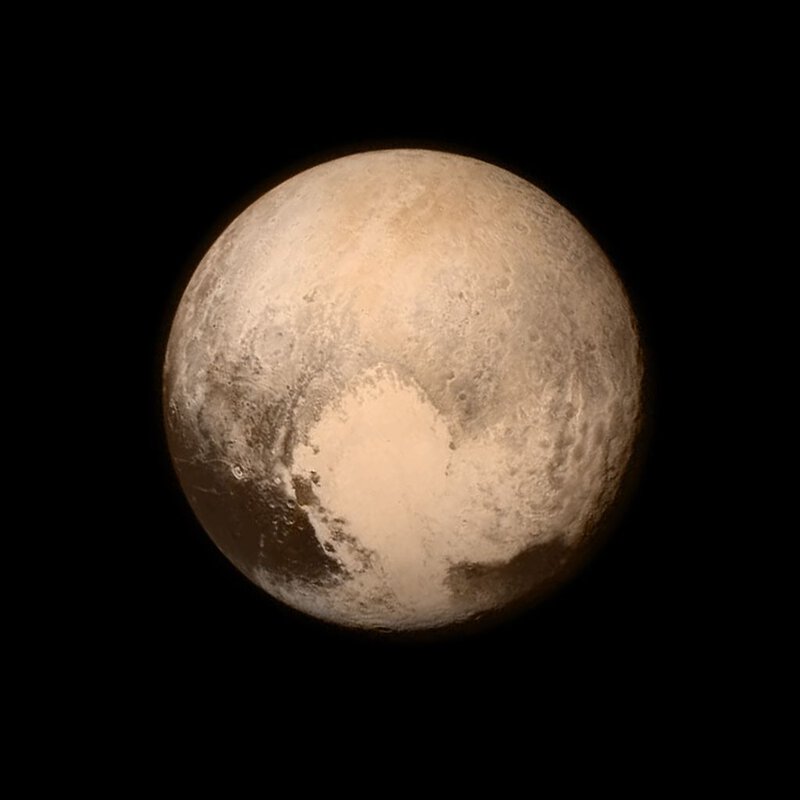
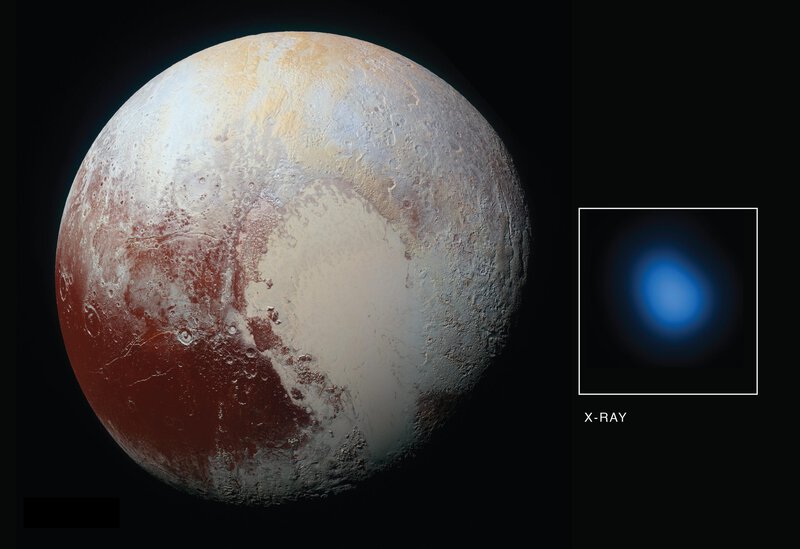
New Horizons launched in January 2006, designed primarily for a Pluto flyby that it accomplished in July 2015 — returning the first close-up images of Pluto and its moons. Nearly two decades after launch, the spacecraft continues to function in one of the most hostile environments imaginable: cold, dark, and extraordinarily far from any possibility of physical repair.
Its successful revival after 321 days of hibernation is a reminder that the probe continues to exceed its original design expectations. Every day New Horizons operates in the Kuiper Belt is a day of data from a region that took the solar system billions of years to build and that no follow-up mission is currently funded or scheduled to revisit in the near term.
In a field where headlines often chase the dramatic — Mars rovers, asteroid sample returns, James Webb Space Telescope images — New Horizons’ slow, patient drift through the outer solar system represents a different kind of exploration: methodical, irreplaceable, and, as of June 23, still very much awake.