The Mythbusters tackle whether pouring a small amount of water on a stovetop grease fire creates a massive fireball exceeding 30 feet in diameter.
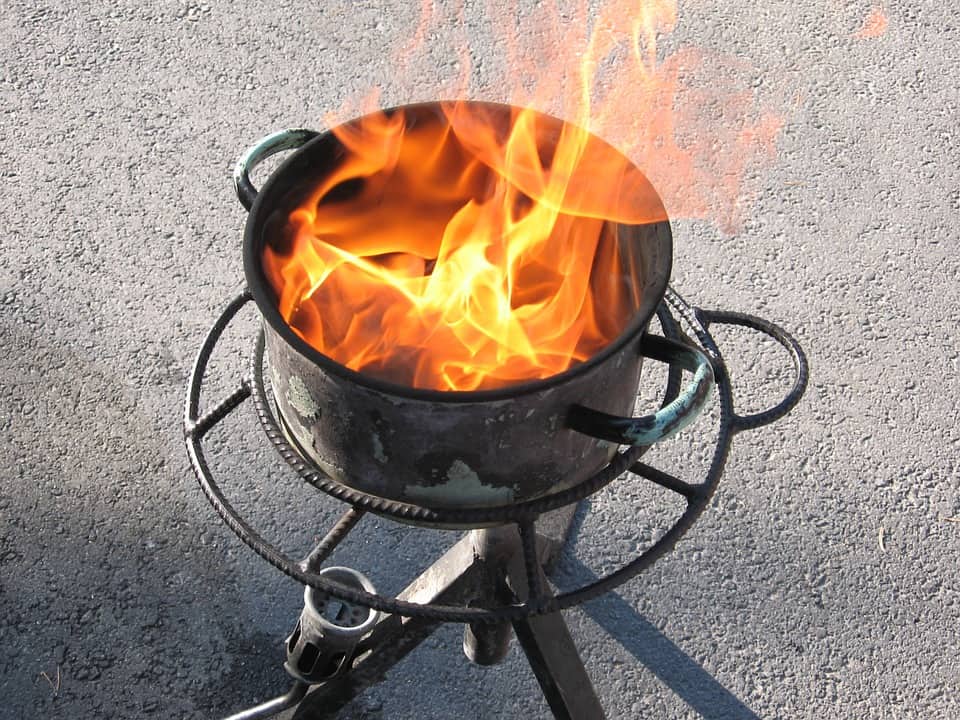
If there is a fire, you should dose the object with water. However, what if it is a grease fire? The Mythbuster team started stove fires with three different cooking materials: canola oil, peanut oil, and lard. In each case, a massive fireball formed when the water was poured in due to the sudden steam formation, which propelled the burning oil upward. However, no fireball reached higher than 25 feet. The team did some smaller-scale tests to investigate further, varying the oil and water ratio and the cooking pot’s shape. The latter had no apparent effect on the fireball height, but they decided to use a 2:1 balance for further full-scale work.
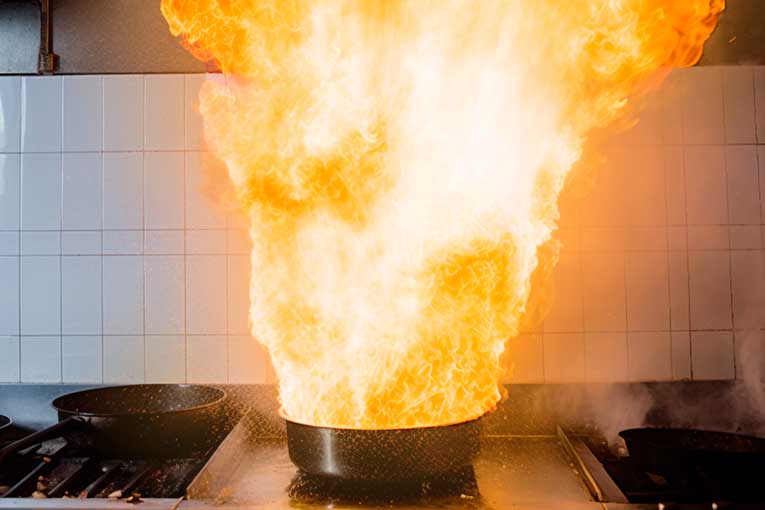
Under these conditions, they were able to get a 30-foot fireball. However, they declared the myth busted because the original 8:1 ratio did not generate the stated result. In a further test, they set up a shelf to drop an unopened can of soup into the oil, reasoning that having all the water-based material at the bottom of the pot would more effectively launch the oil when it vaporized and exploded. The result was a fireball with an estimated height of 100 feet. You must be cautious in the kitchen when cooking, especially foods with grease involved. From cooking hamburger beef to deep-frying chicken wings, grease can easily fly around the kitchen. Always have a fire extinguisher close at hand.