
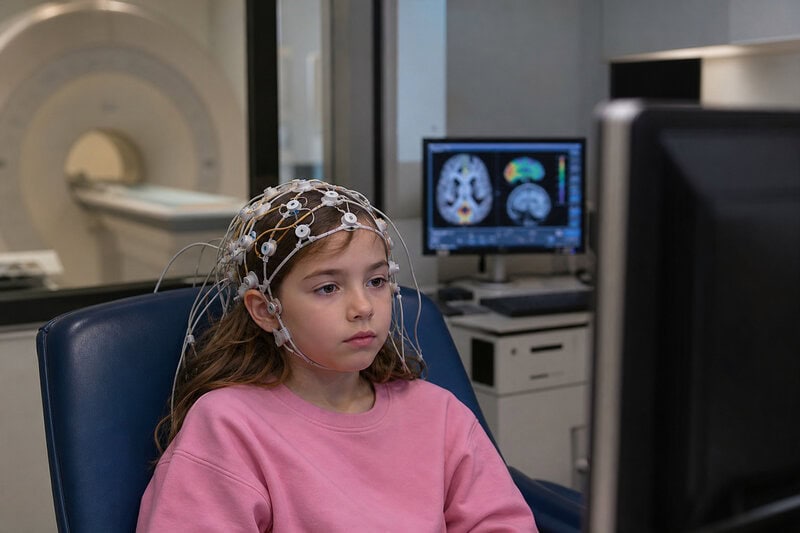
Brain wave patterns recorded when a child is nine years old can predict whether that child will develop anxiety or depression years before any symptoms emerge — a finding that reframes how scientists understand the origins of adolescent mental health disorders. Researchers tracking neurodevelopment across a seven-year longitudinal study have identified age nine as a critical neurological turning point, a window when the brain’s electrical signatures begin quietly forecasting future mood disorders.
A Seven-Year Window Into the Developing Brain
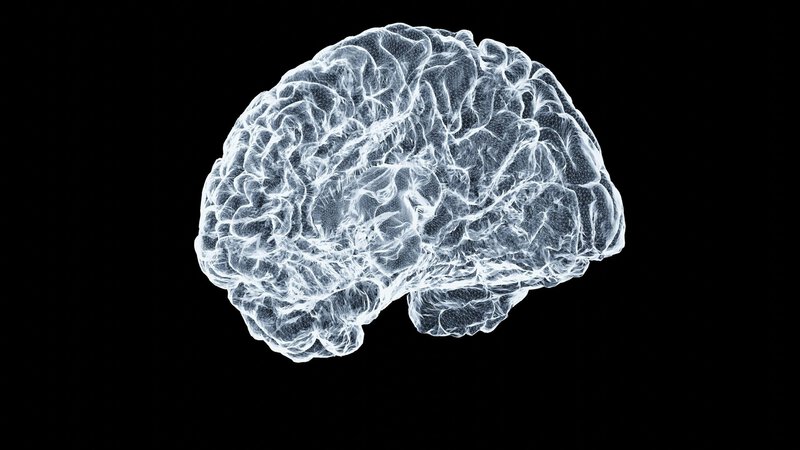
The research, summarized by Theravive’s clinical science reporting, followed children from early childhood through adolescence over a seven-year period, systematically mapping how neural architecture evolves and, crucially, where it begins to deviate from healthy trajectories. The central goal was to uncover the neurodevelopmental origins of adolescent anxiety and depression — identifying patterns that precede diagnosis rather than simply reflecting it after the fact.
That distinction is scientifically significant. Most psychiatric research begins with symptomatic patients and works backward, attempting to infer what went wrong in the brain. This study reversed that sequence, beginning with brain data gathered in childhood and tracking forward to see which children eventually received diagnoses. The result is a rare prospective window into the biological conditions that appear to set the stage for mood disorders long before a clinician would have any conventional reason to intervene.
A parallel investigation, published in Frontiers in Child and Adolescent Psychiatry, extended the inquiry by examining sex differences in how these developmental origins play out, recognizing that anxiety and depression do not emerge identically in male and female adolescents. Together, the two studies represent a meaningful shift in psychiatric science: moving from symptom-first diagnosis toward biology-first prediction, using the developing brain itself as the primary source of evidence.
This research arrives against a documented backdrop of deteriorating youth mental health. Investigators at Northwestern University’s Feinberg School of Medicine have documented that the percentage of children and adolescents diagnosed with anxiety or depression increased measurably between 2016 and 2022, reinforcing why earlier and more biologically grounded intervention strategies are urgently needed.
What ‘Neurodevelopmental Origins’ Actually Means
The term neurodevelopmental origins refers to the idea that the seeds of psychiatric disorders like anxiety and depression are planted during early brain development — often long before emotional symptoms become visible or diagnosable. This framework connects mood disorders to a broader class of conditions known as neurodevelopmental disorders (NDDs), an umbrella term for conditions such as attention-deficit/hyperactivity disorder (ADHD), autism spectrum disorder, and learning disabilities that arise from atypical patterns of brain development.
The connection between NDDs and early-onset mood disorders proved to be one of the study’s more clinically striking findings. Research on childhood-onset versus adolescent-onset anxiety and depression found that individuals whose anxiety or depression first appeared during childhood had a substantially higher prevalence of NDDs compared to those whose disorders emerged during adolescence. That divergence suggests the two groups may not simply represent the same condition appearing at different ages — they may reflect genuinely distinct biological pathways, with childhood-onset cases more deeply rooted in early neurodevelopmental disruption.
This distinction carries real clinical weight. If childhood-onset and adolescent-onset mood disorders follow different developmental trajectories and involve different underlying biology, they may also require different prevention strategies and therapeutic interventions. Treating them as interchangeable risks missing the specific mechanisms driving each pathway.
Age Nine: Why This Biological Window Matters

Among the study’s most concrete findings is the identification of age nine as a critical turning point in the developmental trajectory toward anxiety and depression. As reported by EurekAlert, researchers describe brain signatures at this age as early warnings that would not become clinically audible for years.
The biological rationale for why nine is significant is grounded in what is known about brain development at that stage. Around this age, the brain undergoes substantial reorganization. Synaptic pruning — the process by which unused or redundant neural connections are systematically eliminated to improve the efficiency of remaining circuits — accelerates during middle childhood and early adolescence. Simultaneously, the networks responsible for emotion regulation, including those connecting the prefrontal cortex to the amygdala, begin to mature and consolidate.
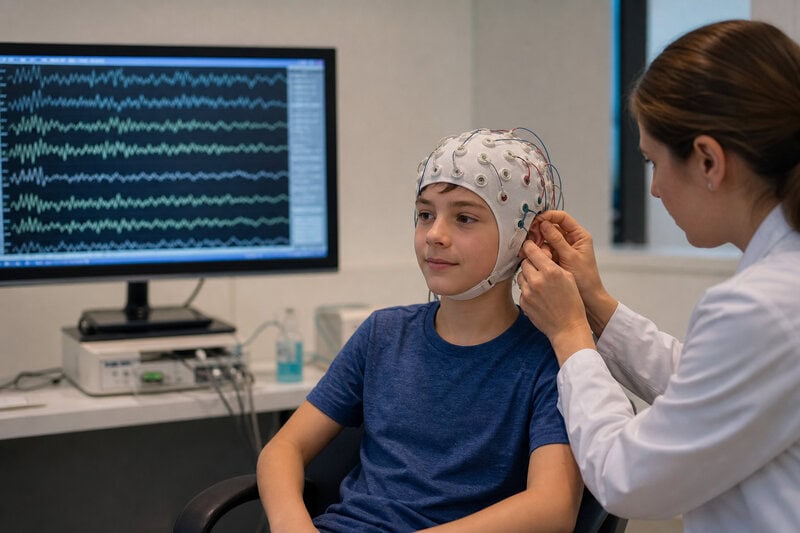
Brain wave patterns detected at age nine, likely reflecting how emotional-processing circuits are being wired during this reorganization, showed predictive power for mood disorders that would not become clinically apparent for years. PsyPost’s coverage of the brain wave findings notes that the electrical signatures captured at this age appear to encode something real and lasting about the trajectory of a child’s mental health — not merely a snapshot of a passing developmental moment.
It is essential to note where the science currently stands: this is an emerging finding, not established consensus. The predictive model built from these brain signatures requires validation across larger and more demographically diverse populations before it could responsibly inform any clinical screening protocol. Researchers themselves have been careful not to claim clinical readiness.
The Prediction Model: Promise and Caution
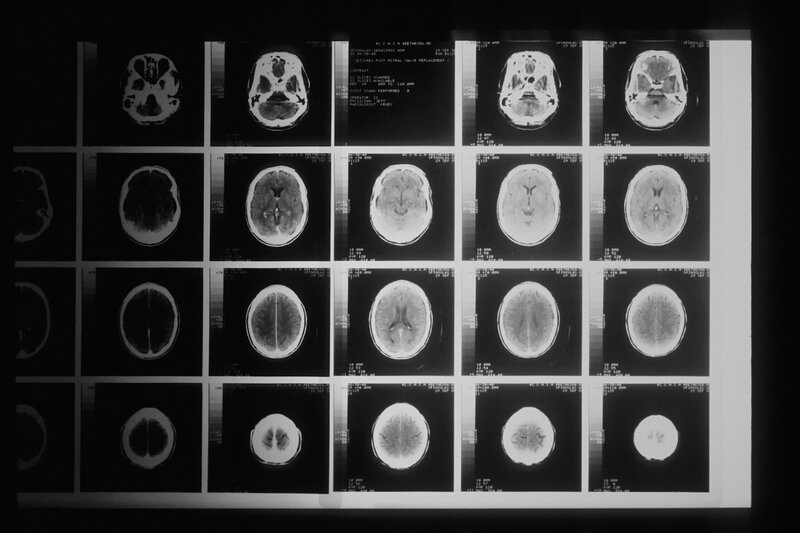
One of the study’s most forward-looking contributions is the development of a working prediction model that uses brain data gathered in childhood to estimate psychiatric risk before conventional symptoms arise. The approach draws on neuroimaging techniques that capture both electrical activity and structural connectivity in the developing brain, translating complex biological signals into interpretable risk indicators.
The potential applications are significant. Research highlighted by Northeastern University’s NUBIC initiative explores exactly this question — what childhood brain data can tell clinicians about future adolescent mental health — and the emerging answer is: quite a lot, provisionally. If such a model were validated at scale, it could eventually allow pediatricians and child psychiatrists to identify high-risk children far earlier than current diagnostic timelines permit, enabling preventive rather than reactive care.
Significant caution, however, is both scientifically warranted and explicitly expressed by the researchers themselves. Prediction models in psychiatry have a complicated history. They have frequently struggled with false positives — flagging children who never go on to develop a disorder — and with generalizability, performing well on the populations used to build them but less reliably on new, different groups. No claim has been made that this tool is ready for clinical deployment. It remains, at this stage, a research instrument pointing toward a possible future rather than a protocol ready for a pediatrician’s office.
There are also ethical considerations that the research community has not yet fully resolved. Who owns a child’s neurological risk profile? How should that information be disclosed to families — and by whom? What safeguards would prevent such data from being used to stigmatize or sort children rather than support them? These questions will need durable answers before any population-level screening program could be responsibly designed, regardless of how well the underlying science matures.
Sex Differences: Separate Neural Pathways to the Same Diagnosis
The Frontiers in Child and Adolescent Psychiatry study introduced an important layer of biological complexity by investigating sex differences in the developmental origins of adolescent depression. This reflects growing recognition in neuroscience that male and female brains mature on different timelines and under different hormonal conditions — differences that may meaningfully shape how and when mood disorders take root.
Girls tend to show earlier onset of depression during adolescence, a disparity that researchers believe may be partially rooted in how puberty-related hormonal shifts interact with the maturing stress-response system. The hypothalamic-pituitary-adrenal (HPA) axis — the body’s central stress-regulation pathway — develops differently across sexes and may interact with early neural risk factors in distinct ways depending on the timing of puberty.
If boys and girls present different early neural signatures of risk, a single universal prediction model may require calibration by sex to remain accurate across populations. This area of the research is explicitly described as emerging and contested: the precise biological mechanisms underlying sex-based differences in adolescent depression remain an active area of investigation without settled conclusions, and replication in independent samples will be necessary before strong claims can be made.
Limitations the Studies Acknowledge
No account of this research is complete without confronting its limitations directly. Longitudinal studies of brain development are expensive and logistically demanding, which means the samples used to build predictive models tend to be relatively small and demographically skewed — often toward higher-income, majority-white populations with reliable access to university research facilities. A model trained on such a sample may perform very differently when applied to children from lower-income households, different ethnic backgrounds, or under-resourced communities where environmental stressors interact with biological risk in ways the training data did not capture.
The researchers acknowledge these constraints and frame their current findings as a foundation for future work rather than a finished edifice. Independent replication — by separate research teams using separate populations and separate measurement instruments — remains the essential next step before any of these findings can be considered robust enough to inform clinical practice.
What the Research Means — and What It Doesn’t
Taken together, these studies support a meaningful reframing of adolescent anxiety and depression: not as conditions that suddenly materialize in the teenage years, but as outcomes of developmental processes that begin measurably during middle childhood. That reframing has practical implications for when and how society invests in mental health prevention — and for where research funding and clinical attention should be directed.
Yet the most important interpretive guardrail is one the researchers themselves emphasize. A brain scan at age nine is not — and should not be interpreted as — a destiny. The science demonstrates probabilistic risk, not certainty. Environmental factors, family support, access to therapy, school conditions, and a host of social determinants remain powerful moderators of whether early biological risk ever translates into a clinical diagnosis. Early risk is not fixed fate.
The most responsible near-term takeaway is not alarm but possibility. If the prediction model is validated across larger and more diverse populations, if sex-differentiated risk profiles are mapped with greater precision, and if robust ethical frameworks are developed to govern how such information is used and by whom, neurodevelopmental screening could one day give families and clinicians a meaningful head start on protecting adolescent mental health — intervening not after a crisis but before one takes shape.