
Sometime around your 50th birthday, something measurable happens inside your brain — not a slow fade, not an imperceptible drift, but what scientists are now describing as a discrete biological transition: a coordinated shift in immune cells, gene activity, and molecular architecture concentrated in the very region responsible for forming new memories. Researchers did not expect to find aging working this way, and what they found is already changing how neuroscientists think about the middle-aged mind.
The Brain Does Not Decline Gradually — It Reorganizes in Waves
For decades, the dominant model of brain aging was a slow, featureless slope: neurons gradually lost, connections quietly pruned, function steadily eroding across the decades. That model is now under significant scientific pressure. Researchers at Stanford Medicine identified abrupt, non-linear changes in molecular profiles during aging, suggesting the brain passes through discrete biological transition zones rather than a smooth continuum of decline. The shifts cluster in two particularly active windows: the 40s and the 60s.
That finding caught the research community’s attention for a specific reason. Aging science had long assumed that if you measured enough biological markers across enough people, the data would smooth into a gradual curve. Instead, the Stanford Medicine data showed something closer to a staircase — periods of relative stability punctuated by periods of accelerated molecular change. One of the most consequential of those steps appears to land in midlife.
Ground zero for this midlife brain shift is the hippocampus — the seahorse-shaped structure deep in the brain responsible for forming new memories and supporting spatial navigation. It is the region that lets a person remember where they parked the car, learn a new colleague’s name, or retrace a route walked only once before. And it is precisely here, between roughly ages 50 and 75, that scientists have documented a cellular and genomic reorganization substantial enough to qualify as a biological transition in its own right.
What the Research Actually Found

The core finding, reported by SciTechDaily and covered by Science Daily, is that the cellular landscape of the human hippocampus begins to shift in measurable, documented ways starting around age 50. Two distinct biological changes appear to occur in parallel: a transformation in the brain’s resident immune-cell population, and an alteration in the physical structure of the genome inside hippocampal cells. The convergence of both changes in the same region over the same decade is what has led researchers to characterize this as a coordinated biological event rather than coincidental noise.
What remains under active investigation — and what scientists are careful to distinguish from the established findings — is the causal sequence. The shift clearly occurs. The timeline of roughly 50 to 75 years of age is documented across study populations. What the research has not yet resolved is whether the cellular changes drive cognitive symptoms, whether they are a biological response to prior stress, or whether some third factor triggers both simultaneously. That distinction matters enormously for anyone hoping to design interventions, and the current science does not yet permit researchers to collapse it.
Meet the Microglia: The Brain’s Quiet Custodians
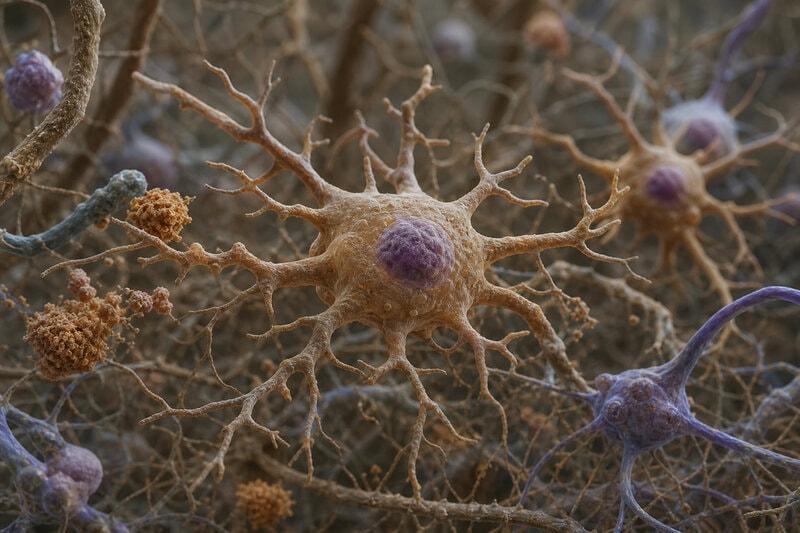
To understand what is shifting, it helps to understand what microglia actually do. Microglia are the brain’s primary resident immune cells, accounting for roughly 10 to 15 percent of all cells in the brain. Under normal conditions, they function as a continuous maintenance workforce: clearing away cellular debris, pruning synaptic connections no longer in use, patrolling neural tissue for signs of damage, and releasing molecular signals that regulate the local environment. A healthy hippocampus, in a young adult brain, is an actively curated space.
Scientists have found that microglia steadily decrease in the hippocampus from about age 50 to 75 — a documented, measurable decline in the brain’s own maintenance workforce. That decline alone would be significant. But the more consequential finding is what appears to replace them. The cells that move into the space left behind carry a more inflammatory molecular profile, shifting the hippocampal environment from a state associated with active maintenance toward one associated with cellular stress.
This is a population-level change in brain biology, not an individual diagnosis. Most people crossing 50 will not consciously notice the shift — there is no moment when the transition becomes subjectively apparent. Yet the cumulative effect on how efficiently memory circuits are maintained, over years and across the full arc of the 50-to-75 window, is precisely what researchers are now working to quantify. The brain is not breaking down; it is being maintained by a different workforce, one that appears to do the job less cleanly.
The Genome Gets Involved: When DNA Packaging Changes
Alongside the immune-cell transition, a second layer of biological change is occurring inside hippocampal cells themselves. The genome’s physical structure — specifically, how tightly or loosely DNA is coiled inside the cell’s nucleus — is also altered between ages 50 and 75.
This process, known as chromatin remodeling, operates on a principle worth understanding plainly. DNA does not float freely inside cells. It is wound around protein spools called histones, and how tightly it is wound determines which genes are accessible — which biological instructions can be read and acted upon, and which remain effectively locked away. A change in DNA packaging is not a mutation; it does not alter the genetic code itself. But it does alter which parts of that code the cell can use. In the aging hippocampus, the packaging is changing in ways that shift the gene-expression landscape — the set of molecular instructions the cell is actively running at any given time.
The significance of this finding lies in its timing. If both the immune-cell population and the gene-expression architecture of the hippocampus shift simultaneously over the same decade, the probability that these are independent, unrelated events is low. Scientists are likely observing a coordinated biological transition with multiple molecular components that are in some way coupled. The causal chain connecting those components, however, remains an active area of investigation, and researchers have been explicit about that boundary in their published work.
Why Does the Brain Choose Midlife as Its Inflection Point?
The obvious question the science raises — and does not yet fully answer — is why age 50 appears to function as a biological inflection point at all. What makes the fifth decade of life a threshold rather than simply another point on a continuum?
The Stanford Medicine framework of shifts clustering in the 40s and 60s offers one suggestive lead. The late 40s encompass, for a large fraction of the population, significant hormonal transitions: the perimenopausal period in women and the gradual androgen decline often described in men. Hormonal shifts of that magnitude have documented downstream effects on brain biology — including on microglial behavior and on the regulation of chromatin structure. It is plausible, though not yet proven, that these hormonal transitions act as one upstream trigger for the cascade of changes observed through the 50s and 60s.
Other researchers point to cumulative metabolic stress — the accumulated effects of decades of oxidative load, vascular change, and fluctuating blood glucose — as a more fundamental driver. Still others focus on declining levels of neurotrophic factors, proteins such as BDNF (brain-derived neurotrophic factor) that keep neurons alive, connected, and responsive, and that tend to fall across midlife in many individuals. The scientific community has not converged on a single cause, and it is likely that no single cause exists. What the current findings establish is that the transition happens, that its components are measurable, and that the 50-to-75 window represents a genuine biological phenomenon observed consistently across study populations — not a hard switch that flips on any individual’s 50th birthday.
What This Means for Memory and Everyday Cognition
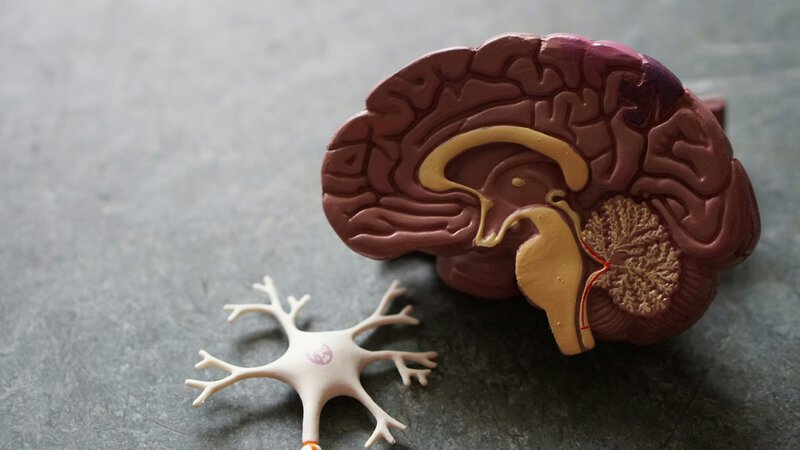
The hippocampus is the region most tightly linked to episodic memory — the form of memory involved in recalling where you left your keys, what you had for dinner three nights ago, or the name of someone you met briefly at a party. Shifts in hippocampal biology are therefore not merely of academic interest. They connect directly to experiences that many people in midlife already notice and frequently describe: a slightly longer search for a name, a greater reliance on written lists, a sense that new information requires more deliberate effort to retain.
The neuroscience literature offers a nuanced picture here. Cognitive changes in middle age are real and measurable on population-level tests, but they are modest and highly variable across individuals. Critically, the brain simultaneously develops compensatory strengths that the cellular studies do not yet fully account for — improvements in pattern recognition, emotional regulation, and the ability to integrate information across domains that continue well into midlife and beyond. The microglial and genomic shifts describe one dimension of a changing brain, not the whole story.
It is also essential to distinguish age-related biological change from pathological disease. The shifts described here are observed in neurologically healthy adults. They are not the same as Alzheimer’s disease, and they have not been confirmed as a direct precursor to it. Researchers do note, however, that understanding the normal biology of the midlife brain is essential scientific context for studying what goes wrong in pathological aging — you cannot fully characterize a deviation without a clear baseline.
What the Science Already Supports — and What Comes Next
The practical significance of mapping this transition at cellular resolution is that it creates a concrete target list. If researchers know which cell populations are shifting, which genomic changes are occurring, and roughly when, they can begin to ask whether any of those changes are modifiable — through pharmacological intervention, lifestyle factors, or diagnostic tools capable of detecting the transition before its downstream effects accumulate.
Those questions are currently being posed; they have not yet been definitively answered. No intervention has been proven to alter the microglial transition specifically. Whether lifestyle factors such as exercise or sleep influence the pace of the hippocampal shift is among the open questions the current research has identified but not yet resolved. What the broader neuroscience literature does consistently support — independent of this specific finding — is that aerobic exercise, adequate sleep, and sustained cognitive engagement are associated with healthier hippocampal function across midlife. These remain well-supported priorities for anyone attentive to their brain health, even while the more precise mechanistic questions are still being worked out.
The deeper reframe this science makes possible may be its most durable contribution. Knowing that the brain reorganizes in a discrete, biologically coherent transition around age 50 — rather than simply deteriorating on a featureless slope — invites a more accurate and considerably less fatalistic conversation about what it means to have a middle-aged mind. The shift is real. Its molecular components are now visible, at cellular resolution, in ways they were not before. And that visibility is the first prerequisite for doing something about it. The discovery does not make cognitive aging inevitable in any simple sense — it makes it, for the first time, legible.