
A study published in BMC Medicine found that simply liking the smell and taste of onions was statistically associated with lower odds of developing type 2 diabetes or having high blood pressure — suggesting that something as personal as a flavor preference may quietly signal something deeper about human biology. It is an unexpected finding for one of the most ordinary vegetables on the planet, and it is part of a growing body of evidence that nutrition science is only beginning to take seriously.
Why the Humble Onion Deserves a Second Look

Onions are among the most widely consumed vegetables on Earth, present in virtually every culinary tradition from West Africa to East Asia to the Americas. Yet they rarely appear on the superfood lists that elevate kale, blueberries, or açaí to cultural prominence. That quiet ubiquity may have caused researchers and the public alike to underestimate what science has been gradually assembling: a multi-directional case for the health benefits of eating onions that spans genetics, cellular biology, and decades of population-level data.
This article walks through that evidence — from large epidemiological studies to the specific molecules responsible for onion’s biological activity — carefully distinguishing what is well-established from what remains emerging or contested. The goal is not to crown onions as a miracle cure, but to give an honest account of why researchers are paying closer attention to a vegetable most people already have in their kitchen.
What the BMC Medicine Study Actually Found — and Why a Genetic Link Matters

The BMC Medicine study at the center of recent coverage identified something more specific than a general link between onion consumption and good health outcomes. Researchers found an association between a flavor preference for onions and measurable risk markers, including reduced likelihood of developing type 2 diabetes and hypertension. Crucially, they also identified a genetic variant associated with both a preference for onion flavor and a lower risk of those two conditions — what has been described as an onion-loving gene linked to lower diabetes and blood pressure risk.
That genetic dimension matters because it shifts the conversation in an important direction. If the protective association were purely behavioral — driven entirely by the choice to eat more onions — the findings would be useful but relatively straightforward. The involvement of a genetic variant opens the door to a field called nutrigenomics: the study of how individual genetic variation shapes the way food interacts with human health.
The essential caveat must be stated clearly. Association is not causation. People who genetically prefer onions may carry other protective genetic traits unrelated to onions themselves, or their lifelong preference may drive cumulative dietary patterns — eating more vegetables broadly, for example — that compound into health advantages over decades. Science Alert’s coverage of the research summarizes this tension well: the finding is intriguing precisely because it is not yet fully explained, and that uncertainty is exactly what makes it worth investigating further.
Quercetin: The Molecule at the Heart of Onion’s Health Story
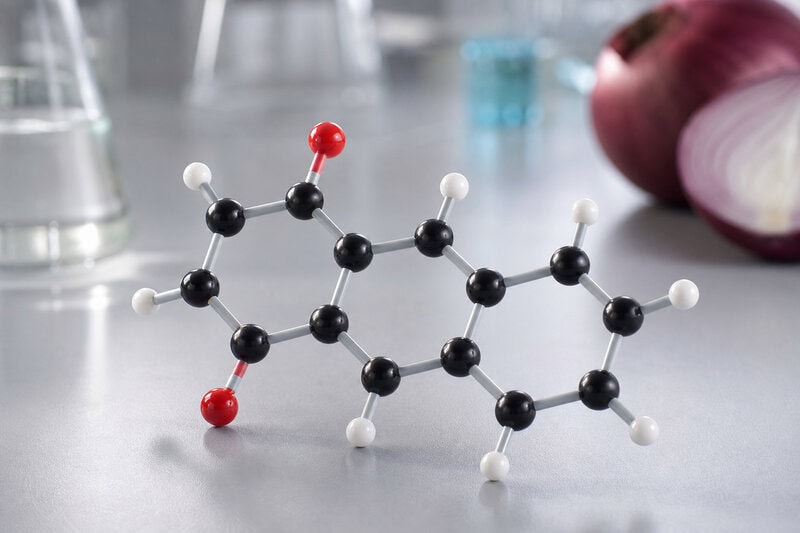
To understand why onions specifically might confer health benefits — rather than vegetables in general — it helps to examine their nutritional chemistry. Onions are among the richest dietary sources of quercetin, a flavonoid compound. Flavonoids are a broad class of plant-based antioxidants, and quercetin is one of the most extensively studied among them.
At the cellular level, quercetin appears to work through several mechanisms simultaneously. It neutralizes free radicals — unstable molecules that damage cells and accelerate aging — by donating electrons that stabilize them. It also inhibits inflammatory signaling pathways that, when chronically activated, are associated with cardiovascular disease, metabolic disorders, and neurodegeneration. Additionally, quercetin may help protect neurons from oxidative stress, which is damage caused by an imbalance between free radicals and the body’s ability to counteract them.
Perhaps the most concrete human evidence for quercetin’s neurological relevance comes from a peer-reviewed clinical study: 24 weeks of continuous intake of quercetin-rich onion was associated with a reduction in age-related cognitive decline, with researchers noting a possible improvement in emotional conditions as a contributing mechanism. That is a specific, time-defined, human-level finding — not a laboratory abstraction.
The honest framing, though, is this: quercetin’s antioxidant activity is well-documented in laboratory and cell-culture settings, and the cognitive study adds meaningful human data. But the translation of these findings into clinically guaranteed outcomes remains under active investigation. The science is promising, not settled.
Onions and Cancer Risk: What the Evidence Actually Shows

Some of the most widely discussed findings in onion nutrition research concern cancer risk. Population-level studies have found that people who eat diets rich in allium vegetables — the botanical family that includes onions, garlic, leeks, and chives — tend to have a lower incidence of certain cancers. This correlation has appeared across multiple populations and geographic regions. Indeed, one study found that people who ate the most onions were the least likely to have cancer.
The biological plausibility for this association is reasonably well-developed. Many kinds of onions contain chemicals that can help fight cancer, including quercetin, organosulfur molecules, and anthocyanins, the pigments that give red onions their color. These compounds have been shown to interfere with tumor cell growth and to promote apoptosis, the process by which the body eliminates damaged or abnormal cells.
Critical framing is essential here. These are population-level associations and laboratory findings, not clinical proof of cancer prevention. No regulatory body — including the U.S. Food and Drug Administration or the European Food Safety Authority — classifies onions as a cancer treatment. Researchers consistently call for larger, controlled human trials before drawing firm conclusions, and this evidence should never be interpreted as a substitute for evidence-based cancer screening or medical care.
Heart Health and Blood Pressure: A Consistent Signal Across Decades of Research

The link between onion preference and lower blood pressure risk identified in the BMC Medicine study does not emerge in isolation. It reinforces a longer history of cardiovascular research on allium vegetables. Quercetin and organosulfur compounds in onions have been shown in clinical trials to modestly reduce blood pressure and improve markers of vascular flexibility — the ability of blood vessels to expand and contract efficiently — which is a meaningful indicator of cardiovascular health.
WebMD’s overview of onion nutrition notes that onions also contain meaningful amounts of potassium and folate, both recognized by nutrition authorities as important for cardiovascular health. Potassium helps regulate fluid balance and counteracts the blood-pressure-raising effects of dietary sodium; folate supports healthy homocysteine metabolism, and elevated homocysteine is associated with increased cardiovascular risk.
The honest picture requires acknowledging scale. Effect sizes seen in individual studies on onions and blood pressure are modest — not large enough to replace antihypertensive medications or the well-established benefits of aerobic exercise and sodium reduction. Onions are most plausibly beneficial as part of an overall dietary pattern, such as a Mediterranean-style diet rich in vegetables, legumes, and healthy fats, rather than as a standalone intervention.
How to Actually Get the Benefits: What the Science Suggests About Preparation

If the goal is maximizing onions’ nutritional value, preparation method matters more than most people realize. BBC Good Food’s nutritional analysis of onions and broader dietary research support several practical principles:
- Raw onions preserve the highest concentration of quercetin and allicin precursors. Heavy boiling leaches water-soluble compounds into cooking water, significantly reducing their availability in the food itself. If onions are boiled, using the cooking liquid — in soups or stews, for example — retains more of those compounds.
- Red and yellow onions consistently show higher quercetin content than white onions in nutritional analyses, making variety selection a simple, cost-free variable worth considering.
- Eating onions alongside a source of healthy fat — olive oil being the most studied example — may improve the absorption of fat-soluble flavonoids, a principle supported by general research on dietary antioxidant bioavailability.
- Frequency likely matters more than quantity. Studies showing positive associations tend to reflect regular, habitual consumption as part of a varied diet, not occasional large doses.
The practical bottom line is straightforward: regular consumption of onions as part of a vegetable-rich diet is a low-risk, low-cost dietary choice with a plausible biological rationale. It is not a replacement for medical care, prescribed medications, or the lifestyle interventions — exercise, adequate sleep, stress management — with the strongest and most consistent evidence base.
The Bigger Picture: Why Onions Deserve More Scientific Attention
The convergence of genetic, epidemiological, and mechanistic evidence — from the BMC Medicine preference study to quercetin’s documented cellular effects to population-level cancer and cardiovascular data — makes onions a legitimately interesting subject for longevity research. Recent coverage of the BMC Medicine findings reflects a broader shift in how nutrition researchers are approaching the question of onions and long-term health: not as a fringe hypothesis, but as a serious line of inquiry.
Researchers increasingly argue that studying whole foods like onions, rather than isolated supplements, better reflects how humans actually eat and how dietary patterns shape health across a lifetime. A quercetin supplement is not the same as an onion; the matrix of fiber, minerals, and cofactor compounds likely influences how quercetin is absorbed and metabolized in ways that isolated supplementation does not replicate.
The key gap in the literature remains important to state plainly. Most existing studies on onions and health are observational or relatively short-term. Long-term randomized controlled trials — the gold standard of medical evidence — specifically targeting onion consumption alongside hard clinical endpoints such as cardiovascular events, cancer incidence, or all-cause mortality are still needed. Until those trials exist, certainty should be calibrated accordingly.
What can be said with reasonable confidence is this: the onion may not be glamorous, but the science building around it is. One of the most affordable, globally available, and historically underappreciated vegetables in human diets may quietly be earning its place among the foods most worth eating regularly — not because a single study proved it, but because the evidence, viewed honestly and in full, consistently points in the same direction.