
In 1999, National Geographic announced Archaeoraptor to the world — a feathered creature from China’s Liaoning Province that appeared to be the long-sought missing link between dinosaurs and birds. Within months, it was confirmed to be at least two separate animals glued together by a fossil dealer, forcing a humiliating public retraction and demonstrating, with painful clarity, that even the most prestigious scientific institutions can be fooled when market pressure and the hunger for discovery overwhelm methodical scrutiny.
Fossil Fraud Is a Structural Problem, Not Just a Series of Scandals
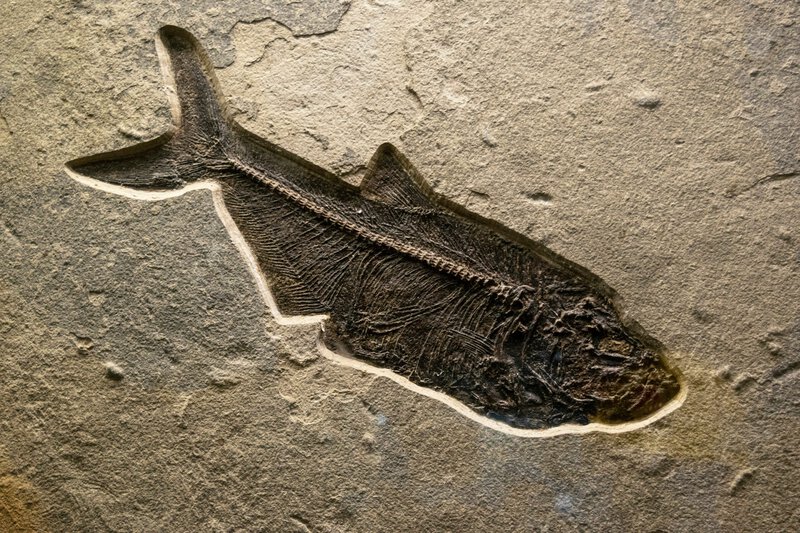
The Archaeoraptor episode was not an isolated embarrassment. Fossil forgery sits at the intersection of three forces that have only grown stronger since 1999: a booming commercial fossil trade, the competitive pressure on researchers and journals to publish spectacular findings, and the chronic underfunding of the laboratory screening that would catch fabrications before they enter the scientific record.
The consequences extend well beyond institutional red faces. A convincing fake can redirect research funding toward a phantom evolutionary lineage, contaminate the peer-reviewed literature for years before retraction, and — perhaps most durably — erode the public trust that palaeontology depends on to justify its work. Understanding how fossil fraud is committed is not a prurient exercise. It is the most direct route to understanding how it is detected, and why detection so often comes too late.
To map the problem honestly, it helps to start where forgers start: with the raw material and the techniques that make a fake plausible. Working palaeontologists who have spoken publicly about fossil fraud detection are consistent on one uncomfortable point — the gap between legitimate specimen preparation and deliberate forgery is, in material terms, very narrow.
Why Faking a Fossil Is Easier Than Most People Assume
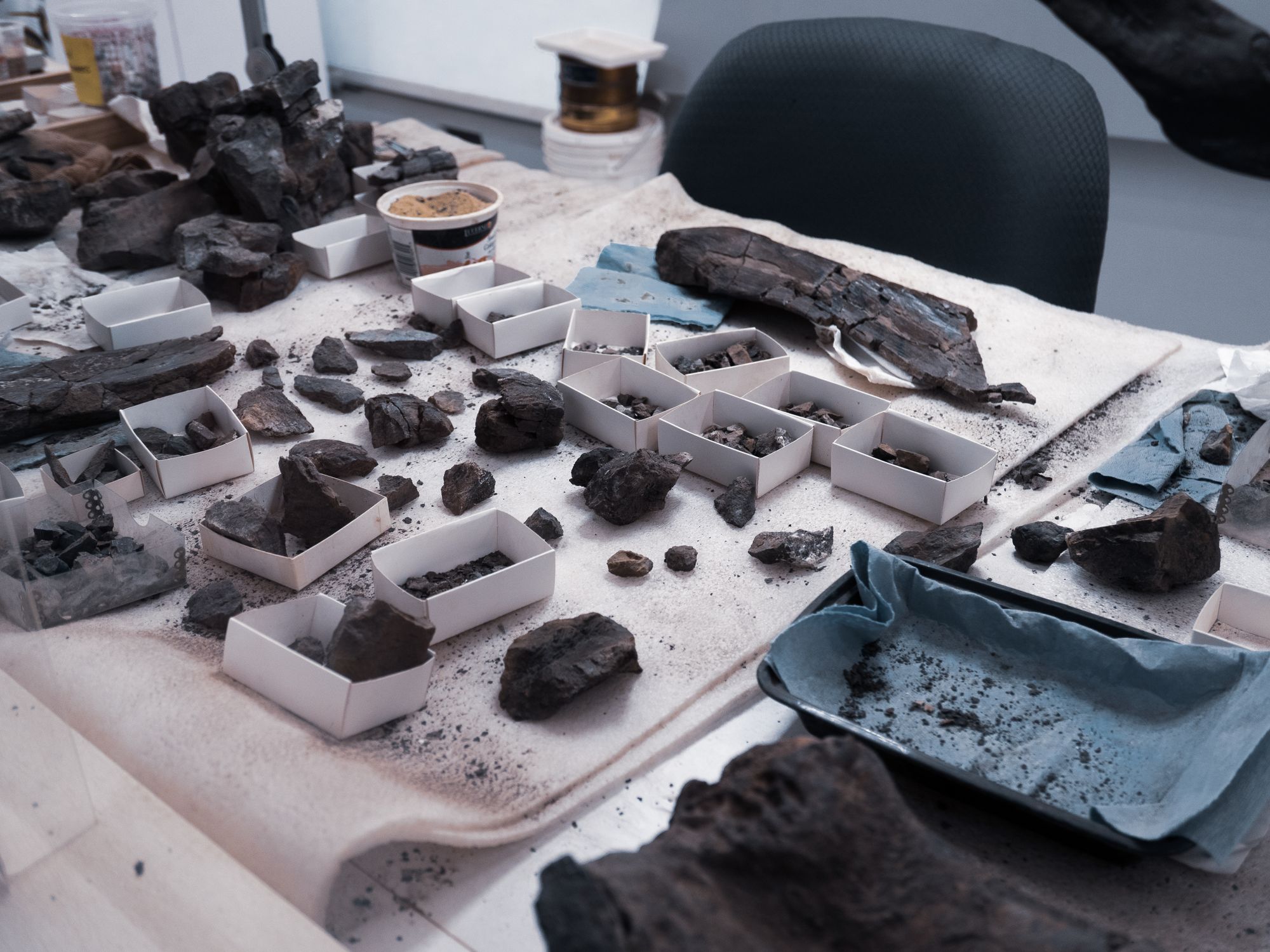
The public image of a fossil is a complete, pristine skeleton embedded in rock, waiting to be brushed free. The reality is almost always fragmentary. The overwhelming majority of specimens recovered from the field are broken, incomplete, and chemically degraded. Legitimate preparators — the specialists who clean and stabilize raw fossils — routinely use consolidants to prevent crumbling, gap-fills to replace missing sections, and sculpted reconstructions to present a coherent specimen for study and display. This is standard, accepted practice. It is also the reason the line between restoration and fraud is so easily crossed: the toolkit is the same.
The basic materials required to produce a visually convincing surface are neither exotic nor expensive. Dental plaster and epoxy resin form the structural base. Acrylic paints tinted with iron oxides replicate the ochre, brown, and grey tones of mineralized bone. Matrix material — the surrounding rock — sourced from the same geological formation as the genuine elements ties the piece to a specific provenance. To the naked eye, and to many trained eyes, the result can be indistinguishable from authentic fossilized bone.
Palaeontologists who study fraud detection are careful to emphasize that the most dangerous fakes are not wholesale inventions built from scratch. They are composite specimens: genuine bones from different individuals, or even different species, bonded together into a single apparently coherent animal. The strategic value of this approach is significant. The authentic material — the real fossil elements — will pass chemical and isotopic screening, because it is genuinely old, genuinely mineralized, and genuinely from the formation claimed. Only the joins are fraudulent, and the joins are precisely where destructive sampling is least likely to be directed.
The first and most consistently exploited vulnerability in the entire system is provenance — the documented record of where, exactly, a fossil was found, at what stratigraphic depth, and by whom. When a specimen enters the market through commercial fossil dealers with no excavation documentation, there is no independent stratigraphic or locality record against which a forger’s claims can be checked. Provenance is not merely an administrative formality; it is the primary forensic anchor for everything that follows.
How Palaeontologists Say a Convincing Fake Would Be Built
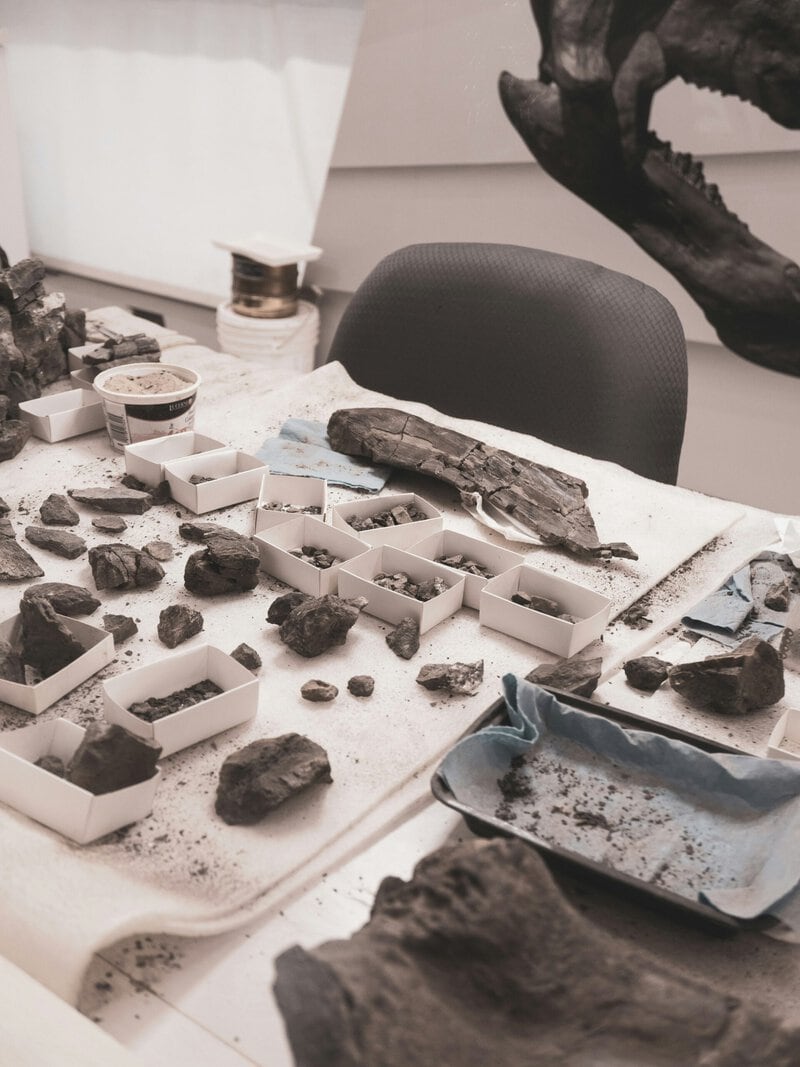
Asked to walk through the process, palaeontologists who have studied fossil fraud describe a sequence that is methodical rather than improvised. The starting point is always real material. Legally sold fragmentary bones from a known formation — available through legitimate commercial channels in many countries — provide the genuine fossil elements that will anchor the piece’s credibility. Missing anatomical sections are then sculpted from epoxy resin mixed with powdered matrix rock, a combination that approximates the density and surface texture of genuine fossil bone under visual inspection and, critically, under low-resolution imaging.
Ageing the joins is where craft becomes deception. The contact points between genuine and fabricated material are coated with iron-rich ochre dissolved in acetone, then treated with thin layers of Paraloid B-72 — an acrylic consolidant that is the industry standard in legitimate fossil preparation — and lightly abraded to eliminate tool marks. The objective is a seam that reads, visually and texturally, as a natural crack rather than an artificial joint. Because Paraloid B-72 is used by preparators worldwide, its presence at a join is not itself evidence of fraud.
Formation selection is a strategic decision. A site with known but poorly documented fauna provides plausible ambiguity. A claimed new species from an under-excavated region is considerably harder to falsify than a duplicate of a well-catalogued taxon, because there is no established comparative baseline against which the specimen’s morphology can be tested. The Liaoning Province beds in northeastern China — spectacularly productive, economically important to local communities, and the source of some of the most important Early Cretaceous specimens ever described — fit this profile closely enough that they became the epicentre of the composite specimen trade documented extensively in the 2000s and 2010s.
Finally, and perhaps most importantly, the forger’s best protection is controlling access to the specimen. The longer a fake avoids destructive or semi-destructive sampling, the longer it survives. Historically, institutions have been reluctant to damage specimens that are commercially valuable, scientifically prestigious, or physically fragile — and forgers have benefited directly from that reluctance.
The Science of Detection: Powerful, but Not Universal
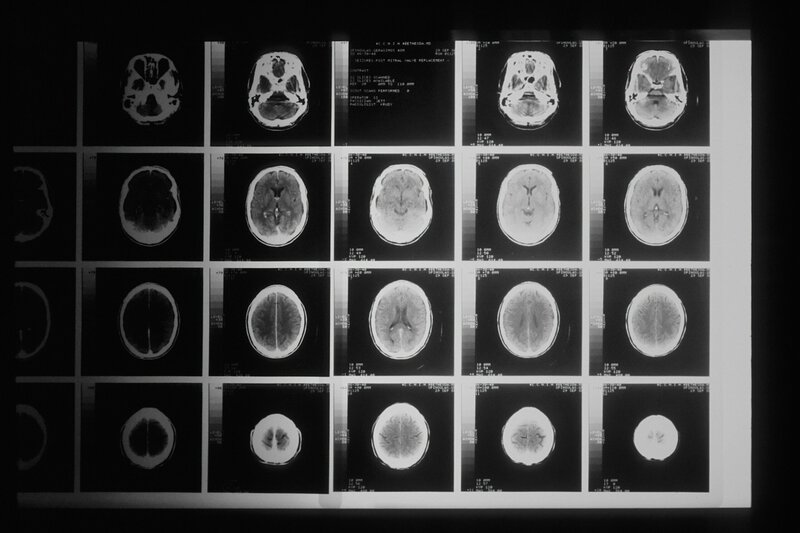
Modern analytical techniques have significantly raised the cost of successful fossil forgery, but they have not eliminated it — partly because they are not universally or mandatorily applied, and partly because the most effective forgeries are engineered around exactly the tests most likely to be used.
Micro-CT scanning (micro-computed tomography) is now considered the first-line non-destructive screen at major institutions. By generating three-dimensional images of internal bone microstructure — the Haversian canals that form during an animal’s life, the trabecular architecture of spongy bone — micro-CT can reveal whether material that looks like fossil bone on the surface is genuine throughout its volume. Sculpted epoxy filler cannot replicate this internal architecture. A composite specimen, however, may show authentic internal structure in its genuine elements and obvious voids or homogeneous fill in the fabricated sections, making the join location the critical area of focus.
Isotopic analysis measures the ratios of strontium, oxygen, and carbon isotopes locked in the mineral apatite that replaces organic bone during fossilization. Because the isotopic signature of groundwater — and therefore of fossilizing bone — varies by geography and geological age, a specimen’s isotopic profile can be compared against the known signature of its claimed formation. This method exposed several high-profile Chinese dinosaur composites in the 2000s, where bones from different formations had been combined and the isotopic mismatch was measurable.
Raman spectroscopy, which identifies mineral composition by analyzing the way molecules scatter laser light, can distinguish genuine bioapatite from modern plaster, resin, or re-mineralized modern bone. It is non-destructive, relatively accessible, and increasingly used as a screening tool — but it requires an operator familiar with the expected spectral profile for a given formation, because what counts as anomalous depends heavily on what counts as normal for that specific geological context.
The critical gap in the system is not the existence of these techniques but their deployment. None of these tests are universally mandatory before a fossil is described in a peer-reviewed paper or incorporated into a museum collection. Cost, access to equipment, and institutional inertia mean that many specimens — particularly in smaller or less well-funded collections — have never been screened by any of these methods. The science exists to detect fraud at scale. The infrastructure to apply it systematically does not.
The Piltdown Shadow: Why Confirmation Bias Remains the Forger’s Most Reliable Tool
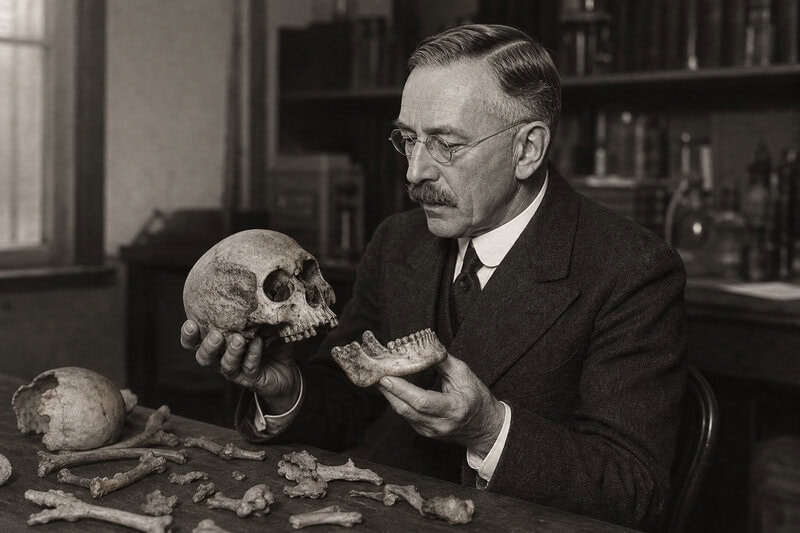
The Piltdown Man case is the episode palaeontologists return to most often when explaining why sophisticated fraud keeps succeeding even in sophisticated scientific environments. In 1912, a human skull combined with an orangutan jaw was presented as a hominin ancestor and accepted by significant portions of the scientific community. It was not definitively exposed as a forgery until 1953 — 41 years during which it shaped interpretations of human evolution, generated a substantial literature, and occupied museum display cases.
Its longevity owed less to the quality of the fabrication, which was not technically extraordinary, than to the fact that it confirmed what many researchers expected to find: a large-brained, ape-jawed ancestor that fit a particular narrative about the trajectory of human evolution. The lesson is not that the scientists of 1912 were naive. It is that confirmation bias — the documented tendency to scrutinize evidence less aggressively when it supports an existing hypothesis — is a universal feature of human cognition that structured scientific review does not automatically cancel out.
A specimen that resolves a longstanding debate about evolutionary sequence, or fills a known gap in the biogeographic record, arrives pre-loaded with institutional enthusiasm. That enthusiasm shortens the critical review process at exactly the moment it should be longest. Commercial incentives compound the problem in a specific and quantifiable way: a fossil with compelling morphology — complete, dramatic, apparently transitional — commands higher prices at auction and generates more institutional interest than a fragmentary specimen of a known species. This creates a direct feedback loop. The specimens most worth faking are precisely the ones that generate the most excitement and, consequently, the least skeptical initial scrutiny.
The Liaoning composite trade represents the modern structural equivalent of the Piltdown dynamic — not a single brilliant hoax by a lone bad actor, but a systemic, market-driven pattern in which economic pressure on local farming communities to produce complete, display-worthy specimens drove the routine assembly of fragmentary material. The result was not one Archaeoraptor but a population of composites, distributed across collections worldwide, of unknown but non-trivial extent.
What Lives in Museum Collections: The Audit Problem
Palaeontologists who study this area are careful to distinguish between two distinct categories of problematic specimens. The first is deliberate fraud: material assembled with the intent to deceive. The second is what might be called historical restoration — preparation practices that were once considered acceptable representations of a specimen’s probable appearance but that would now be classified as misrepresentation because they were not disclosed. Both categories exist in major natural history collections.
Where retrospective audits have been conducted — notably at several European natural history museums reviewing 19th-century acquisitions — unexpected composites and undisclosed restorations have been identified. Deliberate fraud in institutional collections appears to be rare relative to well-intentioned but undisclosed reconstruction. The more common problem is not malice but opacity: the absence of preparation records that would allow a researcher using a specimen today to know precisely what they are analyzing.
The reform that palaeontologists argue is most urgently needed is mandatory disclosure at the point of publication. Every specimen described in the scientific literature should carry a full preparation history, a complete list of all restoration materials used, and documentation of any CT or geochemical screening performed. This standard does not currently exist universally, and its absence is not a technical failure but a policy one. The data needed to establish such a standard already exists as best practice at leading institutions; what is missing is the journal policy to require it everywhere.
What This Means for the Field — and for Anyone Who Reads About Fossil Discoveries
Fossil fraud detection is not a niche forensic specialty at the margins of palaeontology. It is a structural challenge embedded in the economics of the commercial fossil trade, the psychology of how scientists evaluate evidence that confirms their expectations, and the resource constraints of the institutions charged with housing the physical record of life on Earth.
The tools to address it exist. What is missing is the institutional will — and the journal policy — to make their application mandatory rather than optional. The palaeontologists who have spoken publicly on this issue converge on a consistent position: the most effective protection against fraud is provenance transparency enforced at the point of publication, not retrospective laboratory testing. That means the crisis is as much about scientific culture and editorial standards as it is about analytical chemistry.
Public engagement with this problem is not peripheral to its solution. Readers of science journalism — including coverage of spectacular new fossil announcements — can and should ask a basic question before accepting the framing of any discovery claim: where, exactly, did this specimen come from, and how was that documented? The conversation about how fossil fakes are made is inseparable from the conversation about how they are caught, and both conversations are better had before a specimen is announced to the world than after a retraction becomes necessary.
The field is not in crisis in the sense of being unreliable. The overwhelming majority of described fossil specimens are genuine. Modern detection methods are powerful when applied. The scientific community has demonstrated, repeatedly, that it can identify and correct fraudulent findings. But that self-correcting capacity only functions reliably when initial scrutiny is rigorous, adequately funded, and structurally required — conditions that, at present, are met inconsistently at best.