
Inside a cave beneath an active U.S. Army base in northern Alabama, scientists studying a well-monitored underground ecosystem made a discovery that stopped them short: an entire new genus and species of blind cavefish had been living there, hidden in plain sight, the whole time. The animal — informally nicknamed the “Demon Cavefish” — was formally described in a study published in Scientific Reports, titled “Surprising cryptic cavefish diversity in a long-studied karst cave ecosystem of northern Alabama”, and its existence upends several assumptions about what scientists thought they already knew about cave life in the American Southeast.
A New Animal Was Hiding Inside a Military Base
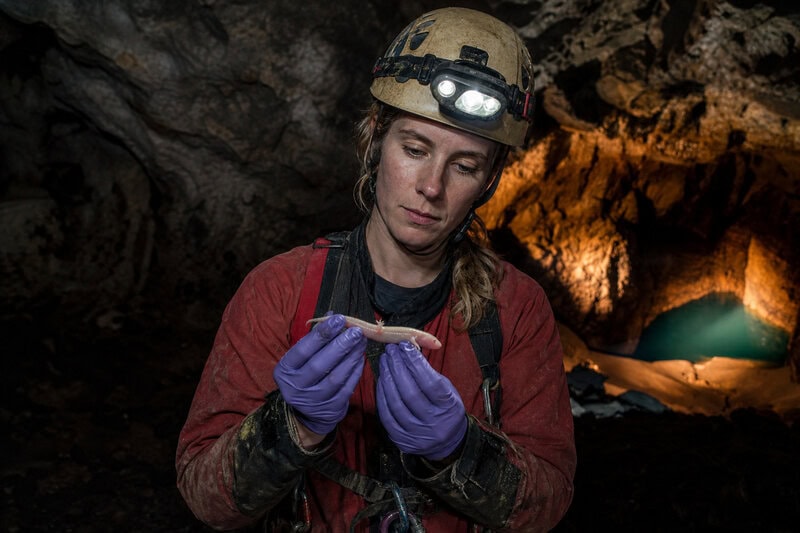
Bobcat Cave sits within Redstone Arsenal, a sprawling U.S. Army installation near Huntsville in northern Alabama. The cave is not some remote, uncharted wilderness — it has been monitored by researchers for years. That sustained scientific attention is precisely what makes the new discovery so striking. Despite repeated observation, the cave concealed a vertebrate animal belonging to a genus never before described by science.
The Demon Cavefish is classified as a cave-obligate species, meaning it cannot survive outside subterranean environments. Its entire known global range is the Bobcat Cave aquifer system beneath Redstone Arsenal, making it one of the most geographically restricted fish on Earth. Every individual of this species lives under a single military installation — a fact that carries immediate and serious conservation implications.
The find is compounded by a second surprise buried within the same study: what researchers had long considered a single, widespread cavefish species — the Southern Cavefish — turns out to be several distinct species that quietly diverged underground, undetected until modern genetic tools were applied. The discovery has drawn attention from local and regional outlets as an example of genuinely new vertebrate biodiversity found not in a remote rainforest, but beneath a heavily managed American military base.
What Exactly Was Found — and How Scientists Confirmed It
The Scientific Reports study formally designates the Demon Cavefish as a new genus and species — marked in taxonomy as sp. nov., shorthand for species nova, meaning new species. A new genus designation represents the highest level of novelty in standard taxonomic classification. It means the animal is not merely a new branch on a known family tree but an entirely distinct limb that has never been named before.
Bobcat Cave is a karst system — a term referring to landscapes and subsurface structures formed by the gradual dissolution of soluble rock, most commonly limestone. Over geological timescales, slightly acidic groundwater carves caves, tunnels, and interconnected aquifer networks through this rock, creating isolated underground habitats that can sustain their own ecosystems, largely cut off from the surface world above them.
To confirm the Demon Cavefish represented something genuinely new rather than a regional variant of a known species, researchers combined two independent lines of evidence: morphological analysis — systematic physical measurements of anatomy, body proportions, and structural features — and genetic sequencing. When both approaches independently pointed to the same conclusion, the bar for a new genus-level description was cleared. Neither method alone would have been sufficient; together, they produced an unambiguous result.
Because the species is found only within the Bobcat Cave aquifer on Redstone Arsenal, its entire global population lives beneath a single point on the map. Any contamination of that groundwater system — from industrial solvents, surface runoff, or hydrological disruption — could extirpate the entire species before formal conservation measures are even enacted.
The Southern Cavefish Problem: One Species That Was Actually Many
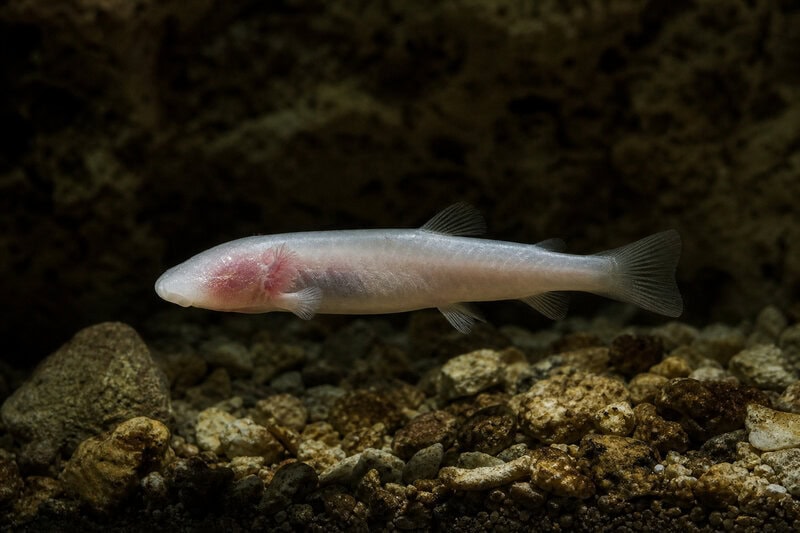
The same study that named the Demon Cavefish also reexamined the Southern Cavefish, long treated as one of the most widely distributed cave-dwelling fish species in the world. The conclusion was unexpected: what had been classified as a single species across a broad geographic range is actually several distinct species that had been grouped under one name — a phenomenon scientists call cryptic species diversity.
Cryptic species are organisms that look nearly identical to the unaided eye but are genetically distinct and reproductively isolated from one another. Their discovery almost always requires molecular tools that did not exist when original species names were assigned. The Southern Cavefish was named and described in an era before DNA sequencing; its apparent uniformity across a wide range was accepted at face value.
According to the research, three species within the Southern Cavefish complex diverged from one another after their ancestors invaded subterranean ecosystems — a process that generated distinct lineages through convergent evolution of cave adaptation. Separate populations of ancestral fish entered caves independently, and each evolved the hallmark traits of cave life on its own: reduced eyes, diminished pigmentation, and enhanced sensory systems.
The reclassification has practical consequences that extend well beyond taxonomy. Conservation status, legal protections under statutes like the Endangered Species Act, and habitat management plans are all assigned at the species level. When several genuinely distinct species are misidentified as one widespread species, rarer populations within that group receive no special protection — they are assumed to be covered by the range and abundance of a single, more common entity. Correcting that misidentification is not an academic exercise; it is a prerequisite for effective conservation.
The Biology of Darkness: What Cave Life Loses — and Gains
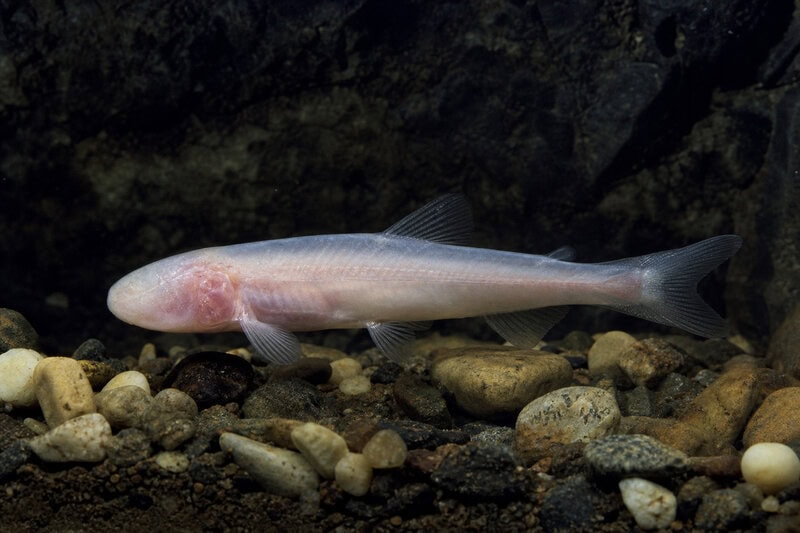
The Demon Cavefish displays the suite of traits characteristic of cave-obligate fish: eyes that are reduced or absent, and pigmentation diminished to near-nonexistence. To outside observers these can look like deficiencies, but the evolutionary logic is straightforward. In permanent darkness, maintaining metabolically expensive visual structures offers no survival advantage. Mutations that disrupt eye development are not eliminated by natural selection, so over many generations they accumulate and spread through isolated cave populations.
At the same time, cavefish commonly develop enhanced lateral-line systems — specialized sensory organs that detect minute changes in water pressure and flow — as well as enlarged fields of taste receptors. These traits are actively selected for in lightless, food-scarce environments where detecting prey by touch and water chemistry is far more useful than vision. The result is an animal that has, in a meaningful sense, traded one sensory toolkit for another rather than simply losing capabilities.
These trade-offs are extensively documented in Astyanax mexicanus, the Mexican cavefish, which has been studied as a model organism for understanding the genetics of cave adaptation. The Alabama findings suggest the same fundamental evolutionary pressures operate across geographically distant and geologically unrelated cave systems — a point that strengthens the generality of what researchers have learned from the Mexican species and raises the value of the Demon Cavefish as a future subject of comparative study.
Scientists are careful to note that “regressive” is a technical descriptor in this context, not a value judgment. Cavefish are not degraded versions of surface fish; they are highly specialized organisms precisely adapted to their environment. Calling their traits regressive simply means those traits represent a reduction from an ancestral state — nothing more.
Challenging the “Evolutionary Dead End” Idea
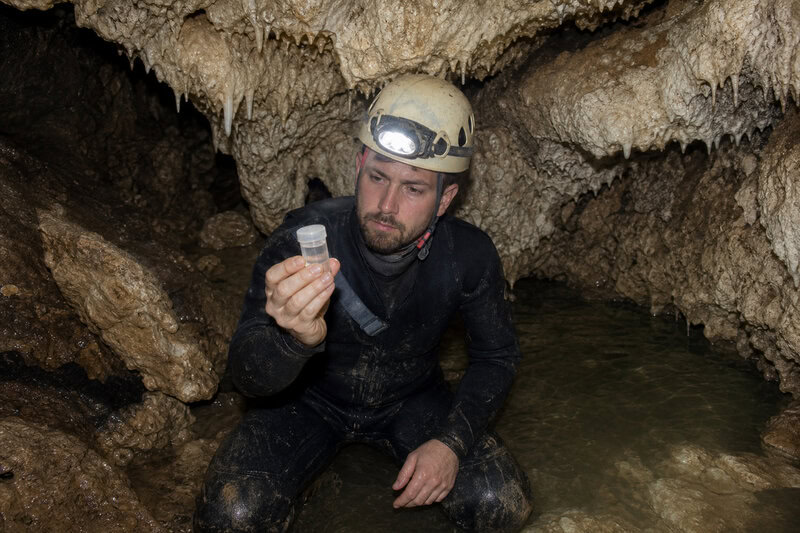
Coverage from Phys.org framed the discovery explicitly as a challenge to the “evolutionary dead end” hypothesis — the longstanding notion that cave-adapted species, having lost eyes and pigment and become trapped in isolated aquifers, have surrendered the evolutionary flexibility needed to diversify further or colonize new habitats. The Scientific Reports study engages that idea directly.
The discovery of multiple independently derived cavefish lineages within a single regional cave system complicates the dead-end narrative considerably. Rather than a terminus, subterranean colonization appears to have occurred repeatedly and generated distinct lineages each time — suggesting that caves can function as evolutionary incubators for new species, not merely as refuges where diversity goes to diminish.
Whether cave species can ever reverse their adaptations and return to surface environments remains an open and contested question in evolutionary biology. The current scientific consensus is that full reversal is extremely rare, if it occurs at all. The loss of complex structures like eyes is generally considered difficult to undo because the underlying genetic architecture has typically been dismantled over many generations, not merely switched off. The Alabama findings do not resolve that debate, but they add empirical weight to a more nuanced view: cave ecosystems may generate biodiversity in ways that scientists are only beginning to systematically quantify.
Why Redstone Arsenal and the Karst Belt Matter for Conservation
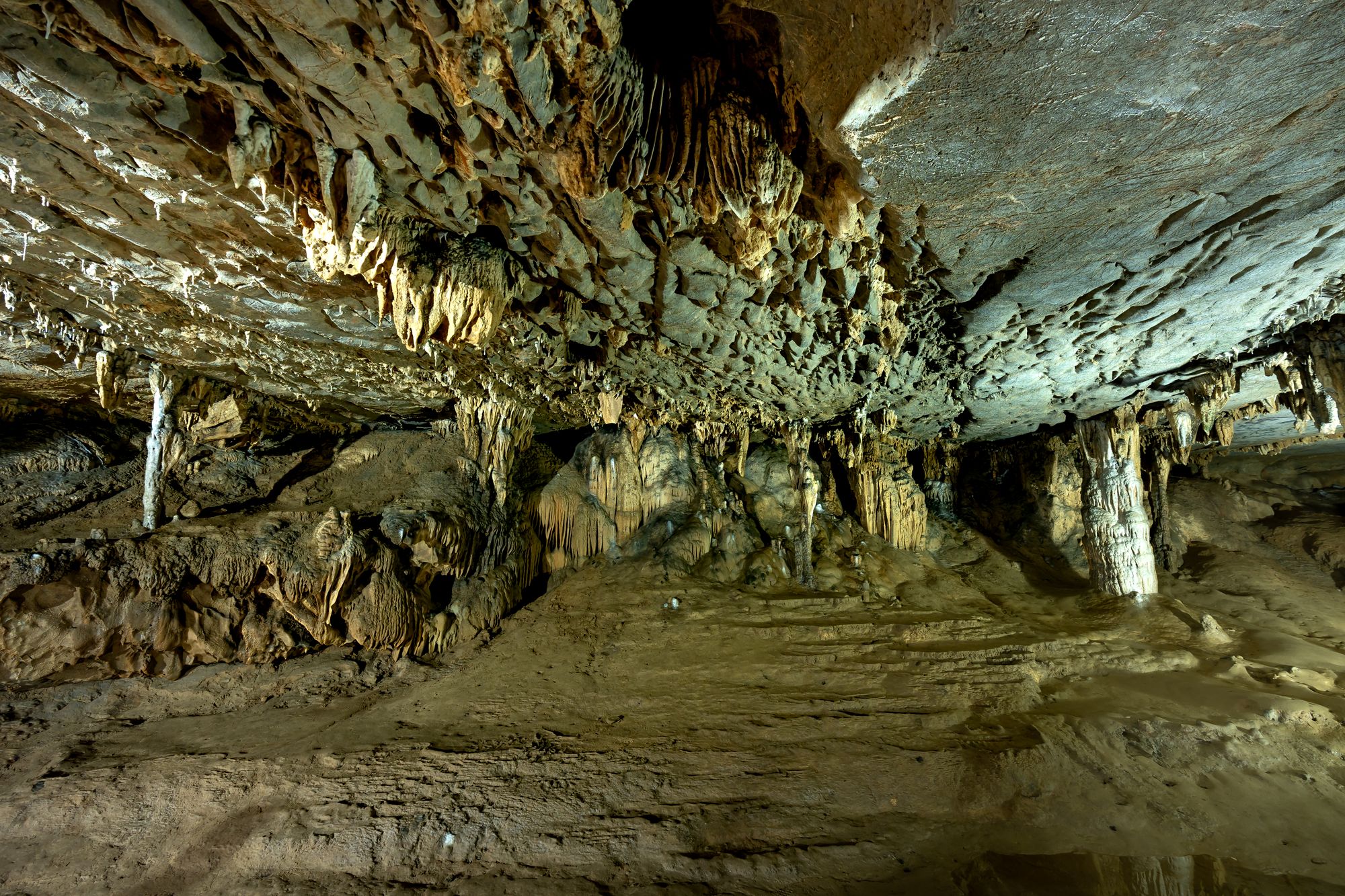
Bobcat Cave is part of the broader Tennessee Valley karst belt, a geologically complex region where limestone bedrock has been dissolved over millions of years into interconnected aquifer networks. These systems sustain isolated underground communities that are largely invisible to surface-level biological surveys — one important reason their biodiversity has historically been underestimated.
Military land in the United States has, somewhat paradoxically, sometimes functioned as de facto wildlife refuge. Restricted public access limits surface disturbance, reduces recreational pressure, and — as the Redstone Arsenal example illustrates — long-term monitoring programs on military installations can produce precisely the kind of sustained scientific attention that leads to discoveries like this one. Local communities have taken note, with residents of the Huntsville area expressing both surprise and pride at a discovery made directly beneath their region.
The conservation arithmetic for the Demon Cavefish is stark. Formal species designation under the Endangered Species Act requires a separate petition process; the Scientific Reports findings are likely to serve as the primary evidentiary foundation for any such petition. Until federal protections are in place, the species’ entire existence depends on the continued integrity of a single aquifer system beneath an active military base — a fragile arrangement by any measure.
The study also underscores a broader methodological lesson that researchers and institutions are increasingly emphasizing: many cave systems worldwide remain biologically uncharacterized, and applying modern genomic tools to previously studied sites routinely uncovers hidden diversity. If a long-monitored karst cave on an active Army installation can harbor an undescribed genus for this long, the total number of unnamed cave species globally is almost certainly larger than current estimates suggest. The story has resonated widely as a reminder that biological discovery is not finished — in some corners of the planet, or beneath them, it is barely begun.