
For more than a century, scientists believed insects ruled the skies long before any bird, bat, or pterosaur even existed — but a fresh look at one pivotal fossil now suggests that the story of how and when insects first took flight may need to be substantially rewritten.
One Fossil, One Very Large Question
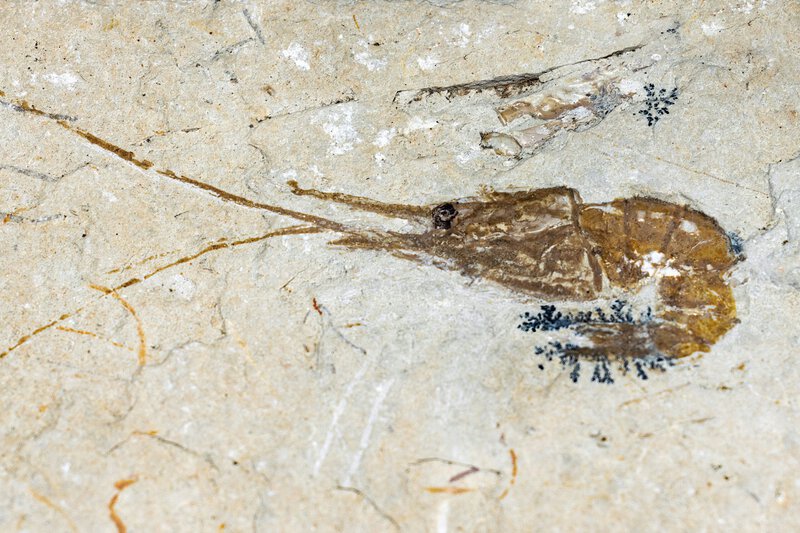
Evolutionary science depends heavily on anchor points — individual fossils that fix a particular milestone to a particular moment in deep time. For the origin of insect flight, one specimen had long served as the earliest reliable evidence that insects were airborne significantly earlier than the broader fossil record suggested. New high-resolution scans of that fossil have now called its identity into serious question.
According to new research reexamining the disputed specimen, the creature preserved in that rock is probably not an insect at all. If that conclusion survives further scientific scrutiny, it removes the primary evidence for an earlier origin of insect flight and pushes the accepted date back by as much as 80 million years — one of the most significant potential corrections in invertebrate paleontology in recent memory.
It is also a striking reminder that even foundational facts in evolutionary science can hinge on a single misidentified specimen, and that improving imaging technology continues to transform what ancient fossils are able to tell us.
Why the Origin of Insect Flight Matters So Much
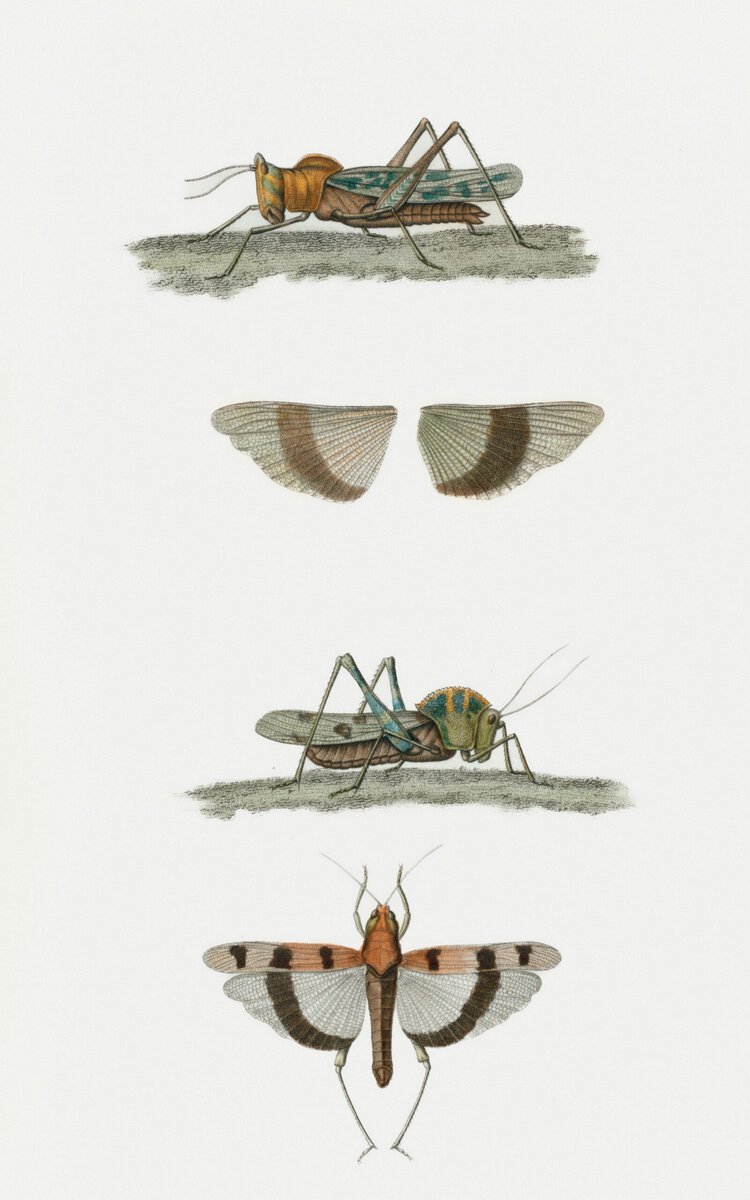
To appreciate what is at stake, it helps to understand how consequential the evolution of insect wings actually was. Insects were the first animals on Earth to evolve powered flight, achieving it perhaps 90 million years before any flying vertebrate appeared. No bird, bat, or pterosaur had yet taken a wingbeat when insects were already navigating the air above Carboniferous forests.
That innovation was not merely a curiosity of natural history. Wings allowed insects to exploit entirely new environments, escape predators that had no answer for aerial prey, and colonize territory at a pace no ground-bound competitor could match. The downstream effects were profound: winged insects accelerated plant dispersal by acting as pollinators and seed carriers, and they created new food webs that shaped animal life for hundreds of millions of years to come.
Pinning down exactly when insect flight evolved is therefore not simply a matter of filling in a date on a geological timeline. It is central to understanding how modern biodiversity took shape — which ecosystems emerged when, and why the living world looks the way it does today.
What the Fossil Record Showed — Until Now
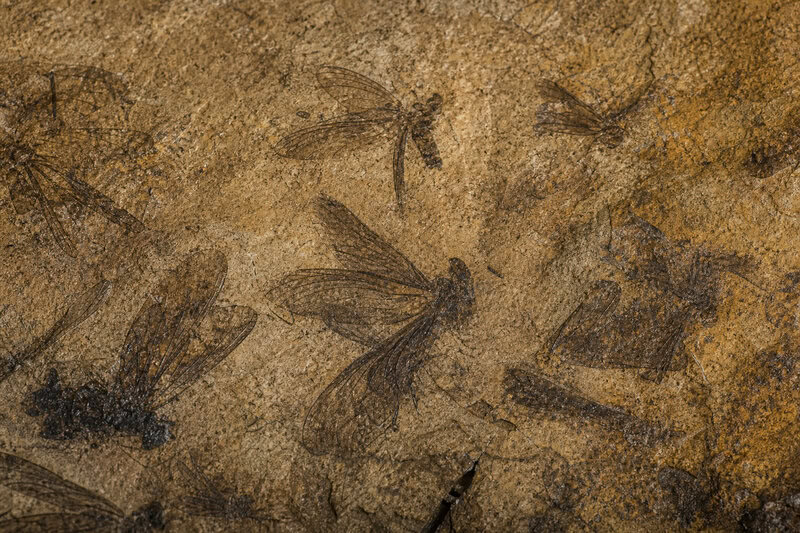
Winged insect fossils appear clearly and abundantly in the geological record at around 325 million years ago, a point during which insect diversity suddenly and dramatically expands. This explosion of preserved forms from the Carboniferous period has long suggested that something transformative happened around that time, with powered flight as the obvious candidate.
One older specimen, however, had appeared to push the origin of insect flight back significantly further, predating that 325-million-year marker by a substantial margin. That earlier date became a cornerstone of how researchers mapped the insect flight timeline, influencing phylogenetic analyses and reconstructions of ancient ecosystems alike.
The new scans now cast serious doubt on whether that anchor fossil belongs in the insect family tree at all. Researchers applied advanced imaging techniques to reexamine the specimen with far greater precision than earlier studies allowed. The anatomical details revealed by those scans are inconsistent with known insect body plans, suggesting the creature is most likely not an insect. Removing it from the insect lineage eliminates the primary evidence for the earlier origin date, leaving the first reliable evidence of winged insects sitting squarely at approximately 325 million years ago.
What 325 Million Years Ago Actually Looked Like

The Carboniferous period was no arbitrary backdrop. It was a world of vast swampy forests, towering vegetation, and atmospheric oxygen levels higher than those of today — conditions that were, in many ways, exceptionally hospitable to newly airborne creatures. The sudden abundance and diversity of insect fossils at this point in the record aligns naturally with the kind of rapid evolutionary radiation that powered flight would have triggered.
Wings gave insects an immediate and compounding advantage: access to food sources available only to aerial foragers, escape routes closed to earthbound predators, and vast new territories to colonize at a pace no crawling competitor could approach. Evidence from the Late Carboniferous captures a moment when insect life was radiating outward with remarkable speed, consistent with a lineage that had just discovered — and begun exploiting — an entirely new dimension of the physical world.
If the revised timeline is confirmed, this era would need to be understood not as one chapter in a longer aerial history but as the true origin point of insect flight itself.
Why Scientists Are Being Cautious — and Why That Matters
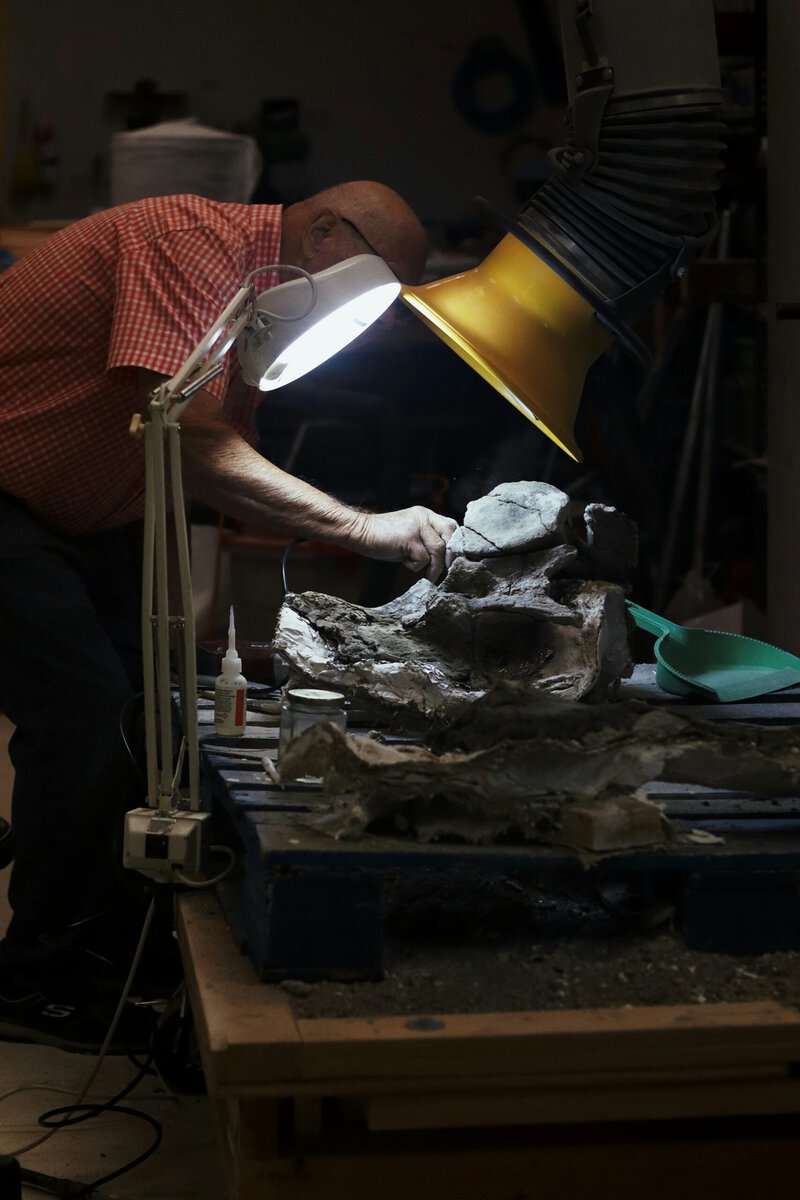
The way researchers are characterizing their own findings deserves attention. The reexamined fossil is described as probably not an insect — a carefully chosen qualifier that reflects genuine scientific uncertainty rather than a definitive verdict. That restraint is appropriate. Fossil identification is painstaking, interpretive work. A single specimen can look strikingly different depending on how it was preserved, what imaging technology is used to examine it, and the training and assumptions of whoever is doing the interpreting.
The scientific community will need to scrutinize this reanalysis thoroughly before the insect flight timeline is formally revised. Other specialists will examine the scans, challenge the conclusions, and either reinforce or complicate the findings. That process can take years. Ongoing research into the evolutionary and developmental origins of insect wings will likely intersect with this debate, adding further layers of evidence to weigh against the new interpretation.
The process itself, however — old evidence reexamined with new tools, long-held conclusions tested against sharper data — is exactly how paleontology is supposed to work. The willingness to question an anchor fossil that has shaped decades of research reflects the intellectual honesty that makes science reliable over the long run.
What a Revision This Large Would Mean for Evolutionary Science
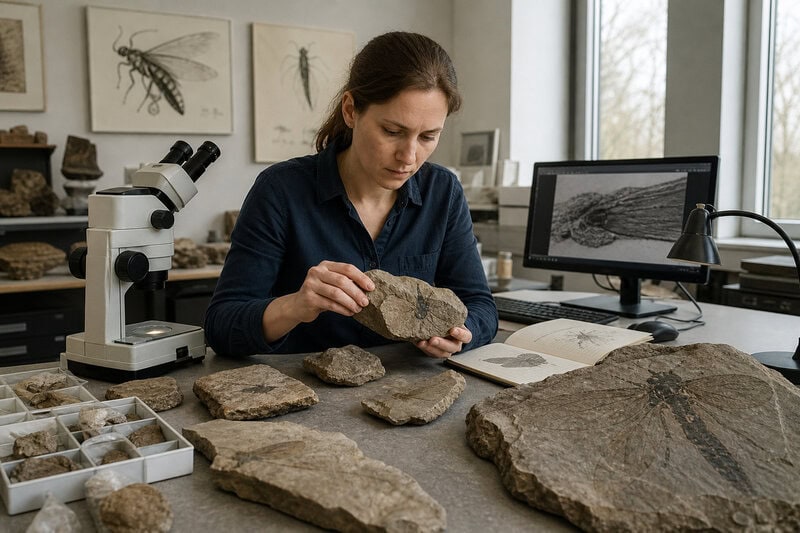
A correction of this magnitude would not exist in isolation. Pushing the origin of insect flight forward by 80 million years would prompt researchers to reexamine related fossil evidence and potentially rethink adjacent evolutionary timelines — including those of early land plants that depended on insect activity and the predator-prey relationships that developed alongside flying insects.
It also underscores something important about the current state of the field: a great deal of deep evolutionary history remains genuinely unsettled. Modern imaging technology continues to extract new information from specimens that have sat in museum collections for generations, and each new technique carries the potential to overturn conclusions that once seemed secure. That is not a weakness of the science — it is the mechanism by which the science improves.
For now, the insects that fill our gardens, forests, and skies can claim a lineage that, while perhaps younger than once believed, is no less extraordinary for it. They still conquered the air first, by a margin no other animal has come close to matching. They still reshaped the living world in ways that echo through every ecosystem on Earth today. The exact moment that journey began may have just shifted — but the scale of what insects achieved once it did remains as remarkable as ever.