
NASA’s Parker Solar Probe flew within 6.9 million kilometers of the Sun’s surface — closer than any human-made object in history — and detected high-energy particles moving faster than any existing scientific model predicted was possible. The source turned out to be something nobody had anticipated: merging closed magnetic loops deep inside the solar corona, a mechanism that challenges decades of consensus on where solar wind energy originates.
A Discovery That Rewrote the Rulebook
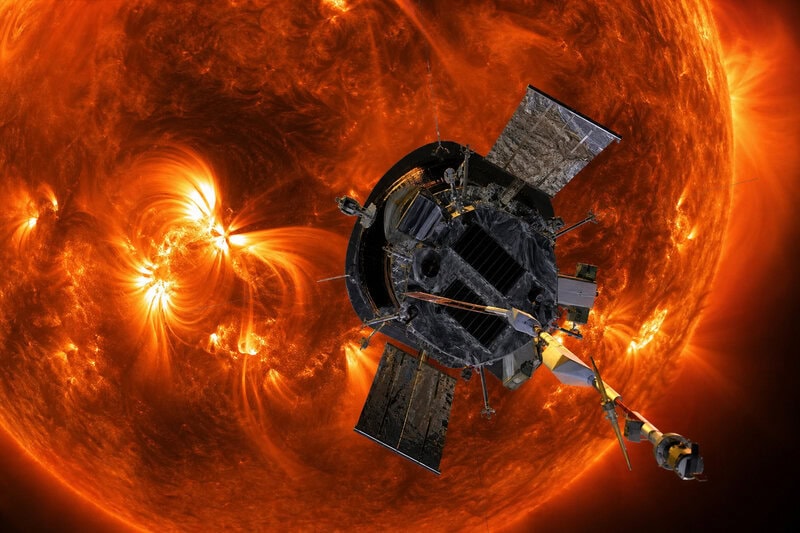
To appreciate how surprising this finding is, consider where Parker Solar Probe was operating. At approximately 9.86 solar radii from the Sun’s center, the spacecraft was deep inside the solar corona — the Sun’s outer atmosphere, which reaches temperatures exceeding one million degrees Celsius despite sitting farther from the solar surface than the much cooler photosphere below it. That temperature paradox alone has puzzled astrophysicists for generations. Parker was sent there, in part, to help explain it.
What the probe found, according to data reported by the Parker Solar Probe science team at NASA, was a previously unknown particle-acceleration mechanism. High-energy particles were being generated not by any process incorporated in existing theoretical models, but by the merging of closed magnetic loops — arcs of magnetic field that begin and end on the solar surface. The velocities of those particles far exceeded the ceilings set by every prior model, a result that immediately ruled out straightforward confirmation of either of the two competing theories the mission was designed to test.
The stakes are not purely academic. High-energy solar particles disable satellites, endanger astronauts aboard the International Space Station and on future lunar missions, and can induce currents powerful enough to knock out power grids on Earth. Understanding where those particles come from — and how energetic they can become — is a practical engineering and safety problem as much as it is a scientific one. Every space-weather forecast model in use today may need revision in light of what Parker has found.
What Parker Solar Probe Is and Why It Was Built
Launched in 2018, Parker Solar Probe was designed around a singular scientific purpose: to resolve two long-standing, competing explanations for how particles in the solar wind reach such extreme energies. The solar wind is a continuous stream of charged particles flowing outward from the Sun in all directions; understanding what drives it has been a central problem in heliophysics — the study of the Sun and its influence on the solar system — for more than half a century.
To reach the corona at all, the spacecraft uses a carefully engineered trajectory. It makes repeated gravity-assist flybys of Venus, using the planet’s gravitational pull to progressively tighten its orbit across 24 scheduled passes, each one bringing Parker closer to the Sun. This strategy allows the probe to survive by minimizing the time spent at closest approach while still collecting high-quality in-situ data — direct, on-location measurements taken inside the environment being studied, rather than remote observations made from a safe distance.
According to the Johns Hopkins Applied Physics Laboratory, which manages the mission, Parker carries three interconnected science objectives: tracing the flow of energy that heats and accelerates the corona and solar wind, determining the structure of the solar wind, and understanding what drives that acceleration. Parker is the first spacecraft ever to fly directly through the corona rather than observe it remotely, which is precisely why it can detect phenomena that no telescope or Earth-based instrument could have revealed.
The Two Old Theories Parker Was Supposed to Settle
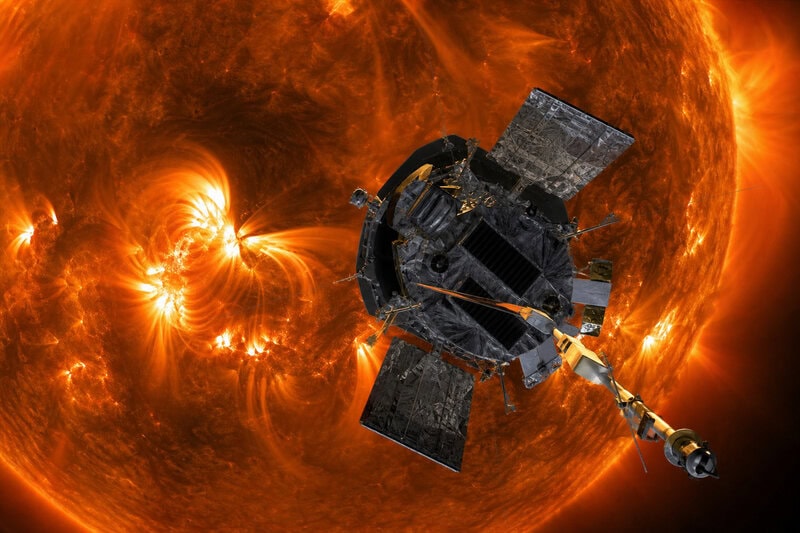
For decades, solar physicists debated two rival explanations for how solar wind particles reach extreme energies. The first is wave-driven heating: electromagnetic waves propagating outward from the Sun gradually transfer their energy to particles, accelerating them over distance. The second is reconnection-driven acceleration: open magnetic field lines — lines that extend from the solar surface out into interplanetary space — snap apart and reconnect, releasing stored magnetic energy that catapults particles to high speeds in violent bursts.
Both theories made testable, specific predictions about particle velocities, locations, and energy distributions. Both also agreed on a critical point: the resulting particle energies would fall within a predictable ceiling. Scientists expected Parker to deliver data that would tip the weight of evidence decisively toward one camp or the other. That expectation was reasonable. It was also wrong.
Parker did not confirm either theory. It found a third process — one neither camp had anticipated — producing particles that exceeded the energy ceiling both theories had independently converged on. That convergence of prediction, followed by a result that violated both predictions simultaneously, is what makes the discovery scientifically significant rather than merely surprising.
What the Probe Actually Found Inside the Corona
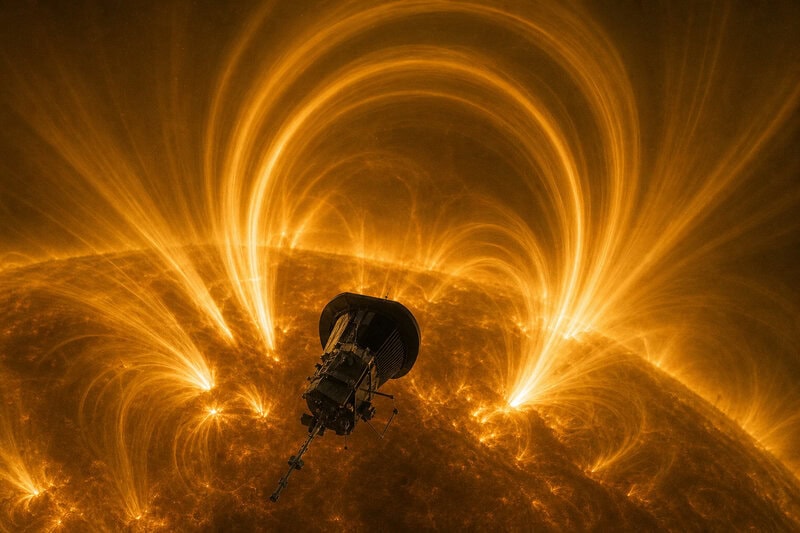
As Parker Solar Probe flew in and out of the solar corona on successive passes, its instruments detected high-energy particles with velocities that no pre-existing model had room for. Tracing the origin of those particles, the science team identified the source as closed magnetic loops — not the open field lines that reconnection theory had focused on for decades.
The mechanism works as follows: when two closed magnetic loops push against each other and merge, they release stored magnetic energy in a rapid burst. Parker’s data indicate that this energy is transferred directly to nearby charged particles, accelerating them to velocities higher than either wave-heating or open-field reconnection models would allow. The process is a form of magnetic reconnection occurring within a closed-loop geometry — a configuration that theorists had not previously built into solar wind models.
It is important to distinguish what is established from what remains under evaluation. The detection of anomalous high-energy particles at these coronal locations is confirmed observational data. The specific interpretation — that closed-loop merging is the primary acceleration mechanism — is the science team’s leading explanation, a strong and well-supported hypothesis now undergoing scrutiny by the broader heliophysics community. Confirmation will require additional observational passes and independent analysis.
Why Closed-Loop Merging Was Never in the Models
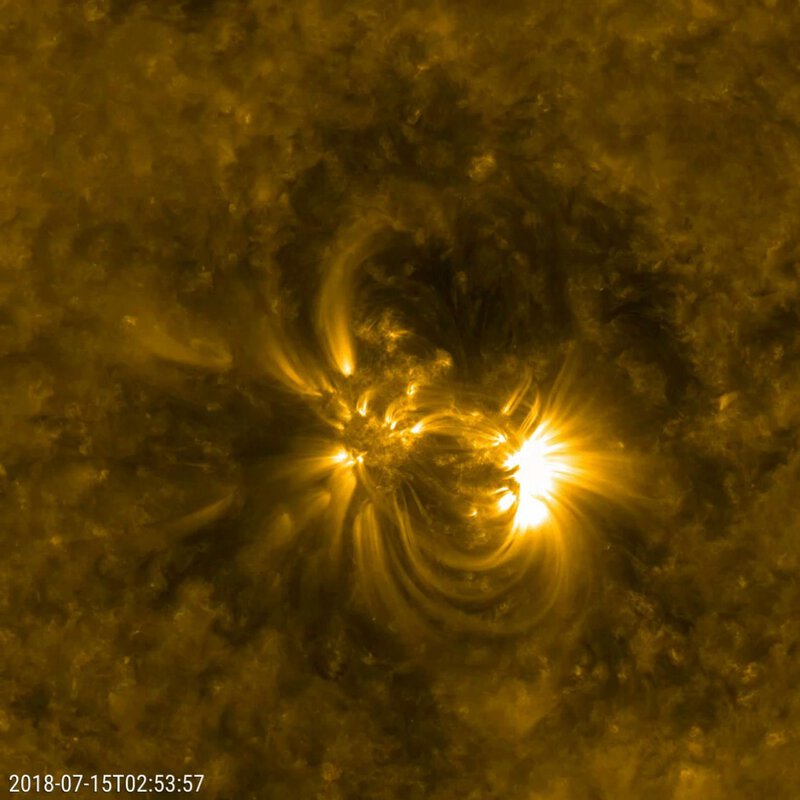
The absence of closed magnetic loops from solar wind models was not an oversight — it was a reasoned assumption. Closed loops, by definition, have field lines that do not extend outward into space. Physicists therefore assumed that any particles accelerated within a closed loop would be trapped inside it and eventually reabsorbed by the Sun, contributing nothing to the outward-flowing solar wind. There was no obvious escape route.
Parker’s in-situ measurements challenge that assumption directly. The data suggest that under the right coronal conditions, the energy released when two closed loops merge is violent enough to eject particles across what was considered an effective magnetic boundary — sending them outward into the solar wind despite their origin inside a nominally closed structure. This has no clean analogue in pre-mission theoretical frameworks, which is part of why the finding drew immediate attention across the heliophysics community.
The fact that detected particle velocities exceeded model predictions is itself a crucial data point, independent of any interpretive framework. It is not merely that a new source was identified; it is that this source appears more powerful than the mechanisms scientists had been debating for decades. That combination — a new source that is also a more energetic one — significantly raises the stakes for how the field incorporates this finding into future models.
What This Means for Space Weather Forecasting and Future Research
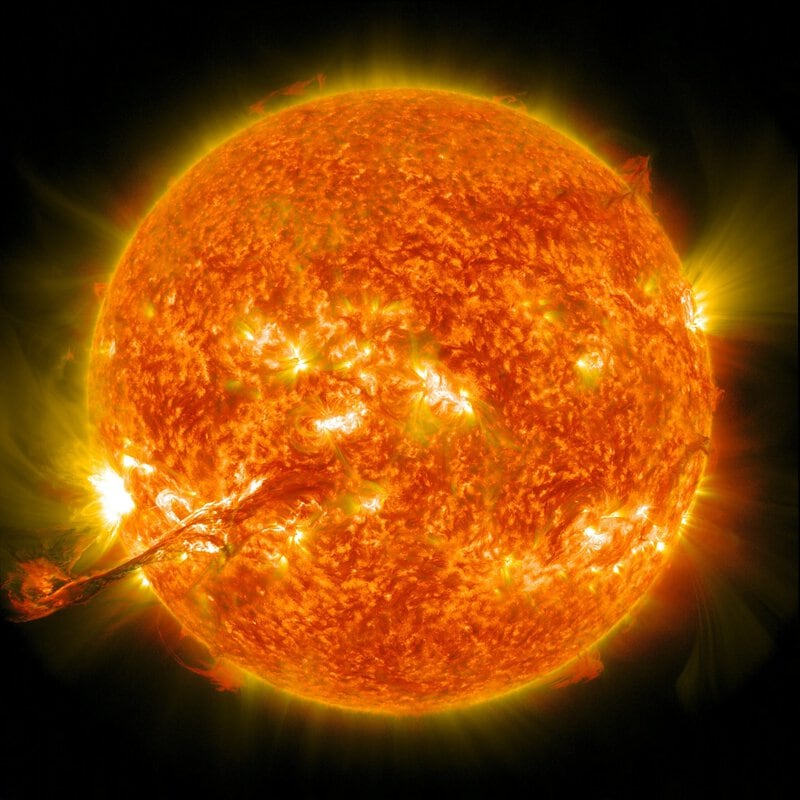
If closed-loop magnetic merging is confirmed as a significant, recurring source of high-energy solar particles, every operational space-weather forecast model will need revision. Those models currently do not account for this acceleration pathway. They were built around wave-heating and open-field reconnection, and their predictions of particle flux, timing, and energy distribution reflect that foundation. Adding a third mechanism — particularly one capable of generating particles faster than the others — changes the outputs in ways that carry direct operational consequences.
Space-weather forecasting informs decisions about when to move satellites into safe mode, when to keep astronauts inside shielded modules, and how to protect ground-based power infrastructure from geomagnetic storms induced by energetic particle events. More accurate models of particle acceleration inside the corona translate, in practical terms, into better warning times and more reliable risk assessments for every one of those applications.
Parker Solar Probe still has multiple scheduled orbits remaining, each bringing the spacecraft closer to the Sun than the last. Researchers studying Parker’s solar wind data expect each successive pass either to strengthen the closed-loop hypothesis with additional examples, to complicate it with contradictory cases, or to reveal further mechanisms the current framework does not yet accommodate. The mission is far from over, and the dataset it is assembling has no historical precedent.
What Parker Is Teaching Us About Stars Beyond Our Own
Parker Solar Probe’s findings carry implications that extend well beyond our solar system. The Sun is the only star close enough for study with an in-situ probe. Every mechanism discovered here — every confirmed or candidate process that heats the corona, accelerates the solar wind, or generates high-energy particles — informs the models physicists use to understand stellar winds, magnetic activity, and particle acceleration around stars throughout the galaxy. What Parker measures at 6.9 million kilometers from the Sun is, in a meaningful sense, the ground truth against which all other stellar models are ultimately calibrated.
The corona-heating problem — why the Sun’s outer atmosphere is dramatically hotter than its visible surface — remains one of astrophysics’ most durable mysteries. The newly identified closed-loop merging process may contribute energy to that heating in ways researchers are now beginning to quantify, potentially offering a partial answer to a question that has resisted resolution for decades. Whether it is a dominant contributor or a secondary one is something the remaining Parker orbits are positioned to help determine.
Parker Solar Probe was built to settle an argument between two competing theories and has instead opened a more interesting question: not which of two rival mechanisms is correct, but how many acceleration mechanisms the Sun operates simultaneously, and how they interact across different regions of the corona and different phases of the solar cycle. The mission’s most significant methodological lesson may also be its simplest: flying through the corona, rather than watching it from a distance, produces not just better data but categorically different data — the kind that changes what questions scientists know enough to ask.