
When NASA Administrator Jared Isaacman announced the four-person crew for Artemis III — the first crewed lunar landing since Apollo 17 in 1972 — every seat went to a man. The backlash was swift and loud. But the most substantive question the announcement raises isn’t primarily political: it’s operational and scientific. Does crew composition affect mission outcomes? Decades of human factors research suggest the answer is yes — and the evidence is more nuanced than either side of the public debate typically acknowledges.
What Isaacman Actually Said

Facing immediate criticism, Isaacman defended the selection on practical grounds. He said the four named astronauts were chosen based on rotation, background, and expertise — not gender. He added that he does not think “anyone should be reading into this,” and noted that he had personally flown to space twice with crews that were 50 percent female. NASA has not released a detailed comparative evaluation of the full candidate pool, leaving the specific claim that the four selected men were the most qualified individuals difficult to independently verify.
The tension is real: the Artemis program was explicitly framed at its 2019 launch as aiming to land “the first woman and first person of color on the Moon.” NASA has not formally rescinded that stated goal, but the Artemis III crew announcement places it in obvious conflict with the program’s actual trajectory.
What ‘Human Factors in Spaceflight’ Actually Means

Human factors spaceflight is the applied science of optimizing crew performance by accounting for individual biology, cognitive load, interpersonal dynamics, and environmental stressors. It is distinct from — though closely related to — the astronaut selection criteria that focus on technical qualifications. NASA’s Human Research Program (HRP), established specifically to identify and mitigate risks on long-duration missions, lists behavioral health and team cohesion among its highest-priority research gaps for deep space travel.
Research published in Aviation, Space, and Environmental Medicine has consistently found that small, isolated teams in extreme environments — directly analogous to a lunar surface crew — are disproportionately vulnerable to interpersonal conflict and communication breakdown compared with larger or more externally supported teams. This makes crew composition a performance variable rather than a background detail.
A key concept in this field is “crew heterogeneity” — measurable differences among crew members in gender, age, culture, or cognitive style. Researchers study it because diverse problem-solving approaches have been linked to improved decision-making under novel, high-stakes conditions. That linkage is the scientific foundation beneath what might otherwise seem like a purely symbolic conversation about representation.
The Physiology Angle: Sex-Based Differences Relevant to Deep Space
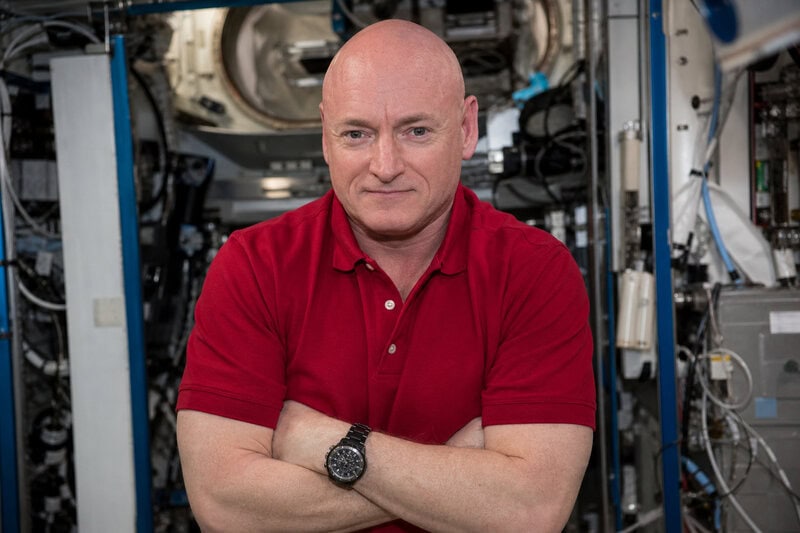
NASA’s own Twin Study — a landmark investigation comparing astronaut Scott Kelly’s year aboard the International Space Station with his Earth-bound twin Mark — demonstrated that spaceflight triggers significant gene expression changes, immune shifts, and telomere dynamics. That study involved only male subjects, leaving sex-comparative physiological data sparse at exactly the moment agencies are planning missions of unprecedented duration and distance.
A 2014 analysis by NASA’s Johnson Space Center found that female astronauts consume fewer resources per mission on average — less oxygen, water, and food — a logistically meaningful finding for missions where every kilogram of consumables carries an enormous launch cost. On a resource-constrained lunar or Mars mission, that difference is not trivial.
Radiation risk is a genuinely contested area. Historically, NASA set more conservative career radiation exposure limits for women based on older cancer-risk models. The agency revised that policy in 2022 toward a unified, individualized risk framework — meaning the once-common argument that women face categorically higher radiation risk in space is no longer supported by current NASA policy. The established scientific consensus holds that no sex-based physiological difference disqualifies women from lunar surface operations. Emerging questions concern long-duration cardiovascular adaptation differences, which remain an active area of NASA HRP investigation and cannot yet be resolved definitively in either direction.
The Psychology Angle: What Group Dynamics Research Says

A 2023 meta-analysis published in the Journal of Applied Psychology, covering more than 100 studies of team performance in high-stakes environments, found that gender-diverse teams showed statistically significant advantages in creative problem-solving and adaptive decision-making — skills directly relevant to lunar surface operations, where communication delays with Earth make crew-level judgment critical.
NASA’s own analog mission studies, including research conducted at the HI-SEAS habitat in Hawaii — a Mars and lunar surface simulation — found that team conflict patterns and communication styles varied with crew composition. The researchers explicitly noted, however, that sample sizes were too small to draw definitive causal conclusions. That caveat matters: the data is suggestive, not settled.
Psychologist Dr. Jack Stuster, in research commissioned by NASA on long-duration isolation and published as Bold Endeavors: Lessons from Polar and Space Exploration, identified team cohesion and complementary skill sets — not gender per se — as the primary predictors of mission success in isolated, confined environments. This is an important distinction. Gender diversity may correlate with broader cognitive diversity, but diversity of background, expertise, and problem-solving style are the mechanistic variables researchers believe actually drive performance differences. Isaacman’s stated criteria of rotation, background, and expertise are scientifically defensible selection factors — even if critics argue the outcome suggests those criteria were applied without adequately accounting for team-level diversity.
NASA’s Selection Criteria: What the Record Shows

NASA’s formal astronaut selection criteria are gender-neutral. They include advanced STEM degrees, relevant professional experience, and physical fitness standards that have been equalized across sexes since the agency’s 2002 policy revision. Women made up 50 percent of the 2021 astronaut class, making the pool of qualified female candidates for Artemis III objectively large — a point critics of the selection have consistently and accurately emphasized.
NASA officials’ stated rationale — that the four named astronauts were chosen on qualifications and rotation — is consistent with the agency’s published selection framework. But the agency has not released documentation showing how candidates were comparatively evaluated, which means the specific merit claim cannot be independently assessed. Human factors researchers would argue that crew composition is precisely the kind of variable that warrants careful, transparent, and documented justification — particularly for a mission carrying this much symbolic and scientific weight.
The Broader Context: Gender Diversity in Space Missions

Fewer than 100 women have flown in space compared with more than 600 men. Human factors researchers argue that disparity is itself a scientific problem: it limits the sex-comparative physiological and psychological dataset available for planning the long-duration missions to the Moon and Mars that agencies are now actively designing. Every mission that does not include women is, from a research standpoint, a missed data point at a moment when the data is already thin.
The European Space Agency’s isolation and analog research has found that mixed-gender crews reported higher team satisfaction scores and lower conflict escalation rates than single-gender crews in matched conditions. ESA researchers explicitly cautioned, however, that the findings are preliminary and context-dependent — a reminder that this field is building its evidentiary base rather than drawing on settled consensus.
The scientific community’s position, as reflected in publications from the International Astronautical Congress and NASA’s HRP annual reports, is not that mixed-gender crews are categorically superior. It is that excluding half the population from deep space experience without rigorous scientific justification slows the accumulation of knowledge needed to safely plan multi-year Mars missions. Those are meaningfully different claims, and the distinction is worth preserving in a debate that consistently flattens it.
What This Means for Artemis and Beyond
The Artemis III mission, targeted for 2027, will be the first human lunar landing in more than half a century. Its crew composition sets a precedent — operational, scientific, and symbolic — for how NASA structures crews on the longer Mars missions the agency is already planning: missions where four people will be confined together for years with no possibility of early return.
Isaacman’s defense of the selection is internally coherent within a merit-and-rotation framework. But human factors science establishes that “merit” in long-duration spaceflight is multidimensional — encompassing not just individual qualifications but team-level dynamics that crew composition directly shapes. The public scrutiny Isaacman’s announcement generated reflects how broadly that distinction is understood by people watching from Earth.
Selecting four highly qualified individuals is necessary. The research suggests it may not be sufficient. The unresolved question hanging over Artemis III — and every deep space mission that follows — is whether NASA has the institutional willingness to make crew composition decisions on documented evidence rather than on precedent, intuition, or political pressure from any direction. What the science does make clear is that who flies to deep space is not merely a matter of fairness or optics. It is a human factors variable with measurable consequences for mission safety, team performance, and the long-term medical knowledge base that will determine whether humans can survive years beyond Earth. Getting that variable right, and being able to demonstrate it was evaluated rigorously, is part of what makes a mission successful before it ever leaves the launchpad.