
When the James Webb Space Telescope began returning its earliest deep-field images, astronomers expected surprises — but not objects so luminous, so compact, and so ancient that they strained every existing model of how stars and galaxies first assembled. A small population of enigmatic sources, quickly nicknamed the “little red dots,” has now prompted a serious scientific proposal: that some of the universe’s earliest stellar objects may have been powered not by nuclear fusion, but by dark matter annihilation — and may have harbored black holes at their very cores.
What Are Dark Stars? Defining a Radical Concept
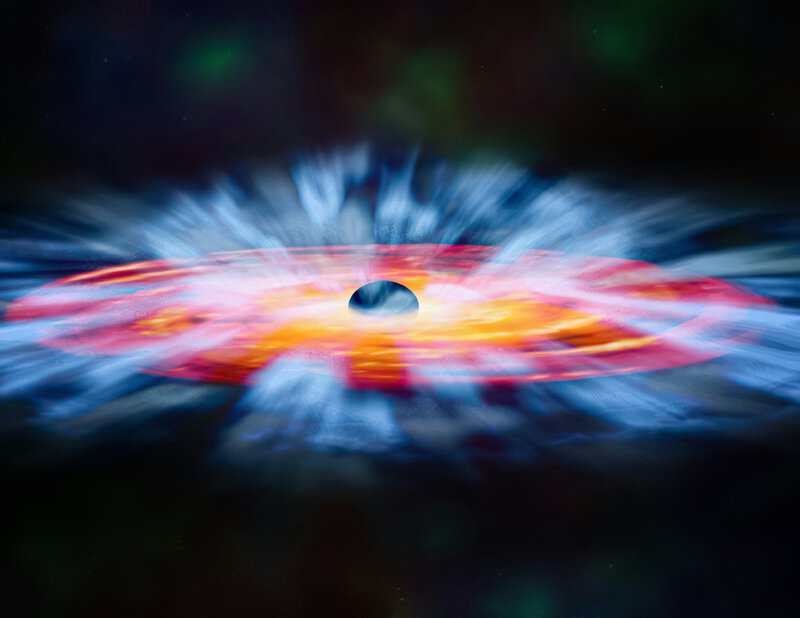
The term “dark star” — sometimes called a black hole star in the literature — refers to a hypothetical class of massive stellar object whose energy source is dark matter annihilation rather than the nuclear fusion that powers every confirmed star astronomers have ever studied. The concept sits at the frontier between established physics and genuinely speculative theory, and it deserves careful unpacking.
Dark matter is thought to consist of exotic particles. Under certain theoretical frameworks, when a dark matter particle collides with its corresponding antiparticle inside an extraordinarily dense environment, the two annihilate each other and release energy. In the core of a forming star in the early universe — when dark matter was far more densely concentrated than it is today — this annihilation process could, in principle, generate enough outward pressure to halt gravitational collapse and allow the object to swell to a scale that ordinary stellar physics simply cannot produce.
It is essential to be precise about what is established and what is not. Nuclear-fusion-powered stars are scientific consensus, confirmed by more than a century of astrophysical observation and solar physics. Dark matter-powered stars are a theoretical prediction with no independent observational confirmation to date. The field remains active and contested.
One detail frequently misunderstood in popular coverage: the word “dark” in dark star does not mean these objects would be invisible. Quite the opposite. Dark stars are predicted to be extraordinarily bright, enormously bloated, and relatively cool at their surfaces compared with fusion-powered stars of equivalent luminosity — making them potentially detectable, at least in principle, by an instrument sensitive enough to peer back to the universe’s first few hundred million years.
The “Little Red Dots” Mystery: What James Webb Actually Observed
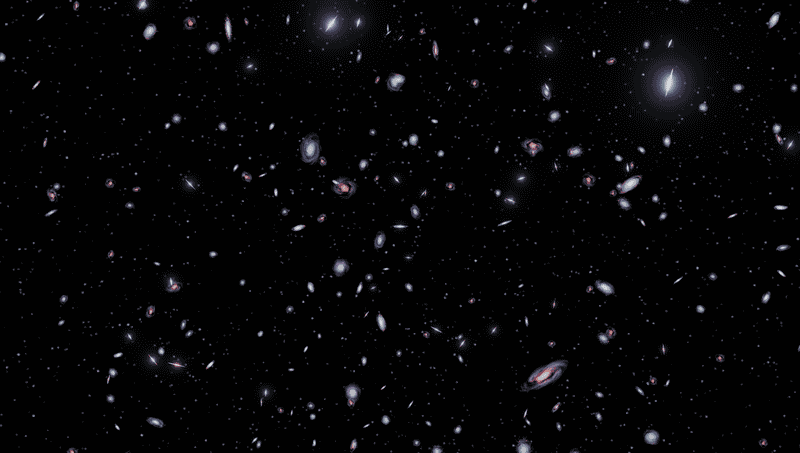
Webb’s near-infrared instruments have identified a puzzling population of compact, intensely luminous objects at extreme cosmic distances — sources so remote that their light has traveled for more than 13 billion years to reach us. Researchers informally labeled these sources “little red dots” for their appearance in Webb’s imaging data. The puzzle is not merely that they exist, but that their brightness and compactness are extraordinarily difficult to reconcile with standard models of early cosmic structure formation.
Those models place tight constraints on how quickly black holes and massive galaxies can grow after the Big Bang. The gravitational and thermodynamic processes involved take time. Yet the little red dots appear to represent concentrations of mass and energy that, under conventional assumptions, should not have had enough cosmic time to assemble. They are, in a precise sense, a genuine scientific anomaly — not a measurement error, but a real observational population that existing theoretical frameworks struggle to accommodate.
A team of scientists analyzing Webb data has proposed that at least some of these little red dots could be dark stars: objects so massive and so thoroughly fueled by dark matter annihilation that they produce an observational signature currently being mistaken for active galactic nuclei — the brilliantly luminous cores of galaxies powered by accreting supermassive black holes. Research highlighted by the Harvard Center for Astrophysics describes these findings as offering a potential glimpse into how the universe’s first supermassive black holes may have formed.
Epistemic honesty is important here. This is a proposed interpretation of Webb data, not a confirmed detection. The dark star hypothesis is one of several competing explanations for the little red dots, alongside models involving dust-obscured quasars and unusually compact early galaxies. Researchers are actively working to design observational tests that could distinguish between these possibilities.
The Black Hole Connection: How a Star Could Incubate a Singularity
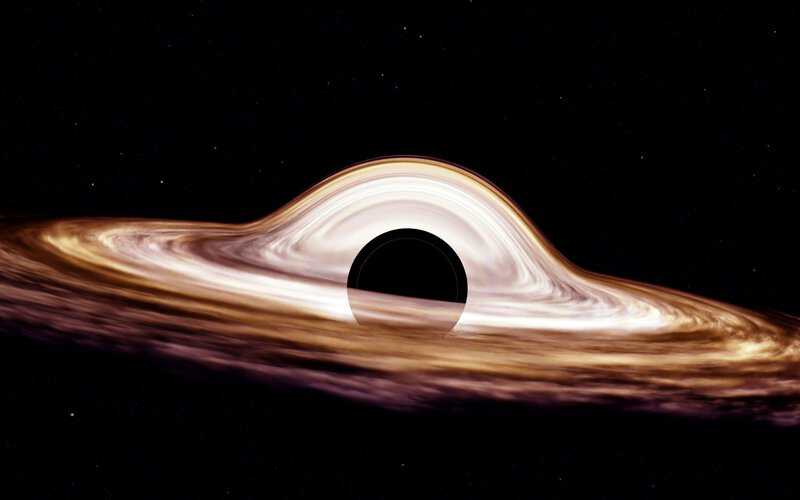
The most cosmologically consequential aspect of the dark star hypothesis is not the stars themselves but what they may leave behind. According to the proposed mechanism, dark matter annihilation halts gravitational collapse at a stage when the proto-stellar object is still accumulating mass. With collapse suppressed, the object can continue growing — potentially reaching millions of solar masses, a scale unreachable through ordinary stellar physics.
The predicted endpoint is dramatic. Once the local supply of dark matter is depleted or dispersed, the energy source sustaining the dark star against gravity disappears. The object then collapses rapidly and catastrophically, potentially seeding a supermassive black hole in a single event rather than through the slow, poorly understood chain of mergers and accretion episodes that standard models currently invoke.
This matters because the existence of supermassive black holes in the very early universe is one of the most persistent and uncomfortable problems in modern cosmology. Webb has made that problem sharper, not softer, by revealing just how massive and how ancient some of these objects appear to be. The dark star pathway offers a mechanistic shortcut — a way to build a supermassive black hole quickly — that standard stellar evolution cannot provide.
To appreciate the scale of the problem, consider that the conventional route to a supermassive black hole involves an ordinary massive star collapsing into a stellar-mass black hole of perhaps tens of solar masses, followed by billions of years of gradual growth through mergers and gas accretion. Webb observations have identified black hole candidates in the early universe that appear far too massive to have grown that way in the time available. Dark star collapse sidesteps that bottleneck entirely by producing an object already millions of times the mass of the Sun before the black hole phase even begins.
How Webb Made This Search Possible

No telescope before Webb could have identified the little red dots, let alone begun characterizing them. Webb’s near-infrared and mid-infrared instrument suite is engineered to detect light from objects more than 13 billion light-years away, capturing radiation that has been stretched by cosmic expansion from visible wavelengths deep into the infrared — light that Hubble and ground-based observatories could not collect with sufficient clarity or sensitivity.
The little red dots exist at redshifts placing them in the epoch when the universe was only a few hundred million years old — precisely the window when the first stars and black holes are theorized to have formed. Reaching them required the combination of infrared sensitivity, wide-field imaging capability, and spatial resolution that Webb was specifically engineered to provide.
Crucially, Webb’s spectrographs add a dimension beyond imaging alone. By dispersing an object’s light into its component wavelengths, spectroscopy reveals chemical composition, surface temperature, velocity structure, and ionization state — the detailed physical fingerprint needed to distinguish a dark star from a conventional quasar or compact early galaxy. Researchers acknowledge, however, a significant current limitation: the spectroscopic signature predicted for a dark star overlaps in important ways with that of a dusty active galactic nucleus, and disentangling the two with existing data is technically demanding. Definitive discrimination may require additional dedicated Webb observing time, refined analysis techniques, or future instruments with greater resolving power.
Where the Science Stands: Consensus, Controversy, and Caution
A clear accounting of what is known versus what remains speculative is essential for understanding the significance of this research. The existence of the little red dots as a genuine observational population is well-established — multiple independent teams have identified and catalogued these sources in Webb data. The dark star interpretation, however, is one hypothesis among several, and it carries an additional layer of theoretical uncertainty: dark matter itself, while powerfully supported by gravitational evidence across cosmological scales, has never been directly detected as a particle. Any mechanism that depends on dark matter annihilation is therefore inherently speculative until the underlying particle physics is better constrained by experiment.
That uncertainty does not make the hypothesis unscientific. A key virtue of the dark star scenario is that it generates testable, falsifiable predictions about the luminosity profiles, surface temperatures, and inferred physical sizes of the objects it describes. If researchers systematically test those predictions against high-quality Webb spectra and rule the hypothesis out, they will simultaneously have placed new constraints on dark matter particle properties and on the range of mechanisms available for early black hole formation. Falsifiable hypotheses that sharpen our understanding of what cannot have happened are a genuine scientific contribution, not a failure.
The Harvard Center for Astrophysics, in highlighting this research, has implicitly acknowledged its place within serious scientific discourse — not as confirmed discovery, but as a productive and rigorously framed response to data that existing models cannot yet fully explain.
What Comes Next: The Path to Confirmation or Refutation
Testing the dark star hypothesis will require progress on several converging fronts simultaneously.
- High-resolution spectroscopy of multiple candidates: Researchers need detailed spectra of many little red dot sources to search for the luminosity profiles, surface temperature signatures, and inferred size estimates that dark star models specifically predict — and to compare them systematically against the signatures expected from dust-obscured quasars and compact early galaxies.
- Expanded Webb deep-field programs: A larger statistical sample of little red dots, drawn from additional Webb observing campaigns, will be necessary to determine whether any subset of the population is genuinely inconsistent with all conventional explanations — a threshold that a handful of detections cannot yet meet.
- Next-generation ground-based facilities: The Extremely Large Telescope, currently under construction in Chile, and other forthcoming instruments may provide angular resolution and spectroscopic sensitivity that push this analysis further than Webb alone can reach, particularly for resolving the spatial structure of candidate objects.
- Refinement of dark matter particle models: Theoretical physicists need to produce sharper, more quantitative predictions for dark matter annihilation rates inside proto-stellar environments under early-universe conditions, giving observers a more precisely defined spectral target rather than a broad family of possible signatures.
The stakes attached to a positive result are difficult to overstate. If even a single confirmed dark star is identified within Webb’s growing archive of early-universe observations, it would represent both an entirely new class of astronomical object and the first indirect observational evidence that dark matter can function as a stellar energy source — a finding with immediate consequences for astrophysics and particle physics alike. For now, the little red dots remain an open and genuine mystery. The dark star hypothesis is an ambitious, carefully reasoned attempt to solve it. Webb has given science the tools to ask the question rigorously; the answer is still being earned.