
A single number reshapes the entire debate about sparkling water and teeth: pH 5. Plain, unflavored sparkling water typically sits at or above that threshold — and according to the American Dental Association, that makes it too mild to dissolve healthy enamel under normal drinking conditions. Yet the question of whether carbonated water damages teeth has lingered for years, fueled by real chemistry, alarming-sounding laboratory findings, and a consumer market that consistently blurs the line between plain seltzer and far more acidic flavored varieties. A new wave of research is finally precise enough to separate the genuine risks from the overstated ones.
The Number That Changes Everything: pH 5
To understand why pH 5 matters, a brief chemical frame helps. The pH scale runs from 0 to 14, with lower numbers indicating greater acidity. Battery acid registers at pH 1; cola hovers around pH 2.5; orange juice sits near pH 3.5; and plain sparkling water typically sits at pH 5 or above. Those differences are not linear — each full step on the pH scale represents a tenfold change in acidity — which means cola is hundreds of times more corrosive than plain seltzer before a single drop of either reaches a tooth.
The reason sparkling water is acidic at all is straightforward chemistry. When carbon dioxide (CO₂) dissolves in water under pressure, it forms carbonic acid (H₂CO₃), a weak acid responsible for the characteristic tingle of carbonation. That reaction is real and chemically confirmed. The question science has been working to answer is not whether carbonic acid exists in sparkling water, but whether it exists in concentrations large enough to matter for everyday drinkers. Recent comparative research is now providing the clearest answer yet: a new study found that unsweetened sparkling water lowers oral pH measurably less than sugar-sweetened soda, giving researchers the closest thing to a controlled, direct comparison between the two most commonly confused beverages.
The American Dental Association’s guidance on sparkling water and teeth reflects that emerging picture: plain sparkling water is generally safe to drink, a conclusion grounded in both the chemistry of carbonic acid and in population-level evidence that has not produced a signal of widespread enamel erosion among seltzer drinkers.
How Carbonation Creates Acid — and Why That Isn’t Automatically Dangerous
Enamel — the hard, mineralized outer shell of a tooth — begins to demineralize, losing calcium and phosphate ions, when exposed to acids with a pH below roughly 5.5 for sustained periods. Plain sparkling water’s pH of 5 or above places it right at or just inside that boundary, which is why the theoretical concern is not baseless. The practical reality, however, is more reassuring than that threshold alone suggests.
The key variables dentists emphasize are acid concentration, contact time, and saliva’s natural buffering capacity. Saliva continuously neutralizes mild acids and re-deposits minerals onto enamel through a repair process called remineralization. Plain sparkling water, consumed in normal sips that are swallowed rather than pooled around teeth, does not meaningfully disrupt that process. The mouth recovers. This is why the scientific consensus, as summarized by the American Dental Association, holds that plain sparkling water is generally safe — while also making clear that this conclusion does not automatically extend to every carbonated beverage marketed under the sparkling water label.
It is also worth noting that carbonic acid is inherently unstable. As soon as sparkling water is swallowed and CO₂ escapes, the acid effectively dissipates. This distinguishes it meaningfully from the phosphoric and citric acids found in sodas and many flavored waters, which are stable, remain in contact with enamel longer, and drive far more sustained erosion.
What the Studies Actually Show: Parsing the Evidence
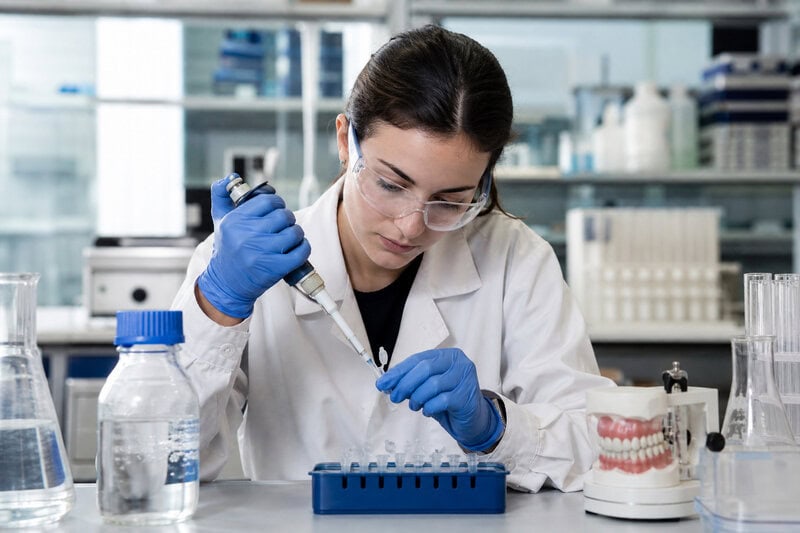
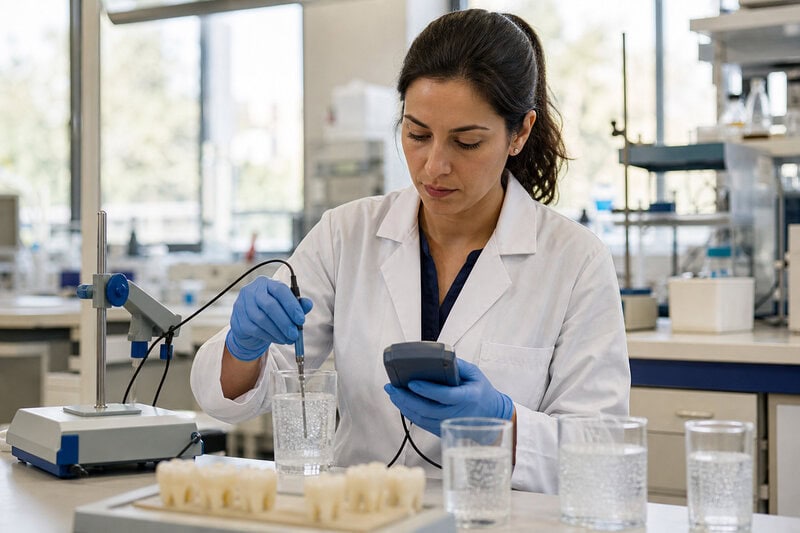
The most cited laboratory finding that appears to contradict the reassuring consensus comes from a study published in PubMed Central examining the effects of carbonated water on dental surfaces. That study found that carbonated water had measurable negative effects on tooth surfaces — specifically decreasing microhardness and removing adhesive material from etched or sealed surfaces. On its face, the finding sounds alarming. In context, it requires careful interpretation.
Laboratory studies that expose extracted teeth or dental materials to prolonged acid baths do not replicate normal human drinking behavior. In a real mouth, sips are brief, saliva is present and actively buffering, and beverages are swallowed rather than maintained in continuous contact with enamel. The conditions that produced measurable harm in that study are conditions that simply do not describe how people actually drink sparkling water. This distinction — between biologically plausible harm demonstrated in a laboratory and clinically observed harm in human populations — is one that researchers and science communicators have an obligation to preserve.
The newer comparative research reinforces a more nuanced conclusion. According to multiple recent studies, drinking plain sparkling water will not harm teeth under typical consumption patterns. Researchers distinguish between a theoretical risk that carbonic acid could erode enamel and a clinical finding of harm in human populations drinking plain sparkling water — and robust evidence for the latter remains absent. As Colgate’s dental health resource on sparkling water notes, the acidity of plain seltzer has the potential to wear down enamel over time, particularly with very high consumption, but that potential is far from the demonstrated harm that characterizes sugar-sweetened soda.
The Flavor Factor: When “Sparkling Water” Is No Longer a Safe Category
One of the most consequential findings from recent dental research is also one of the least understood by consumers: flavored sparkling water is not the same product as plain sparkling water, and treating the two as equivalent is a meaningful category error with real consequences for dental health.
When flavor is added to sparkling water — whether through citric acid, natural fruit essences, or other acidic additives — the beverage becomes measurably more acidic, shifting the risk profile significantly compared with unflavored varieties. Popular flavored seltzers can reach pH levels closer to 3 or 4, territory that overlaps with some fruit juices and sodas and that dental researchers treat as genuinely erosive with repeated, prolonged exposure. The combination of carbonation and acidic flavorings creates a more corrosive environment than either component would produce alone, and some flavored waters also contain added sugars that further increase cavity risk by feeding acid-producing oral bacteria.
Dental health guidance on sparkling water and tooth enamel consistently flags this distinction: check the ingredient label for citric acid, natural flavors, or fruit juice concentrate. Their presence signals a beverage that belongs in a meaningfully different risk category than plain seltzer, regardless of how it is labeled or marketed. A can that says “sparkling water” on the front and lists citric acid in the ingredients is, from a dental chemistry standpoint, closer to a mild soda than to club soda.
Seltzer vs. Soda: The Comparison That Puts Risk in Perspective
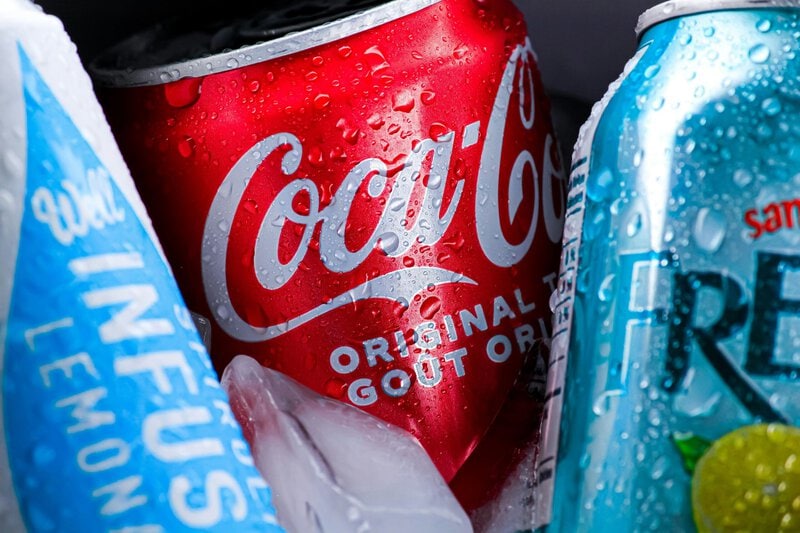
The seltzer-versus-soda comparison is where the practical significance of the science becomes clearest. Sugar-sweetened sodas damage teeth through two compounding mechanisms: acid erosion from low pH and cavity formation driven by oral bacteria that metabolize sugar and produce additional acid as a byproduct. That dual attack — chemical erosion plus bacterial acid production — is what makes soda a well-established risk factor for dental disease. Plain sparkling water replicates neither mechanism.
Although sparkling water carries more theoretical risk than still water, dental researchers are consistent in their view that replacing soda with plain sparkling water represents a meaningful net benefit for dental health — not a lateral trade of equal risks. The American Dental Association’s guidance supports that conclusion. Framing plain seltzer as roughly equivalent to soda in its potential for dental harm, a narrative that circulated widely in health media for several years, is not supported by the current evidence base.
The comparison also illustrates why population-level dental advice must be probabilistic rather than absolute. A person drinking two liters of plain seltzer daily — sipped slowly and continuously throughout the day — faces a different risk calculation than someone who drinks one glass with dinner and swallows normally. Volume, frequency, and drinking behavior all interact with the underlying chemistry in ways that a single blanket verdict cannot capture.
Established Consensus vs. Open Questions: What Science Has and Hasn’t Settled
Responsible reporting on dental health requires preserving honest uncertainty rather than collapsing it into a simple verdict. It is worth being explicit about what the current evidence does and does not establish.
What is established: Plain, unflavored, unsweetened sparkling water does not damage teeth under normal drinking conditions. That conclusion is supported by the American Dental Association and by multiple peer-reviewed studies. It is the closest thing this debate has to a settled answer, and it holds up across a range of consumption levels that most people would consider reasonable.
What remains open: Whether very high daily volumes of plain sparkling water — consumed in ways that maximize contact time, such as slow sipping over hours — could produce measurable enamel thinning in long-term human studies is an actively studied but not yet fully resolved question. The effect of sparkling water on dental restorations, sealants, and adhesive materials flagged in the PMC-published study represents a specific, contested finding that warrants further research before dentists can offer definitive guidance to patients with extensive dental work. Orthodontic guidance on sparkling water similarly advises patients with brackets, bonds, or sealants to discuss their specific situation with a clinician rather than relying solely on general population findings.
Scientists and dentists agree that current evidence does not justify avoiding plain sparkling water. They also agree that the evidence does not yet fully resolve every edge case — and that distinction is worth preserving in any honest account of the science.
Practical Takeaways: How to Drink Sparkling Water Without Worrying About Your Teeth
The science, taken together, supports a set of straightforward, evidence-grounded habits for people who want to enjoy sparkling water while protecting their dental health.
- Choose plain and unflavored. When dental health is a priority, opt for unsweetened, unflavored sparkling water. Check ingredient labels carefully for citric acid, natural flavors, or fruit juice concentrate — all of which lower pH and meaningfully change the beverage’s risk profile, regardless of what the front of the can says.
- Drink with meals, not continuously throughout the day. Sipping sparkling water steadily over hours extends acid contact time and reduces saliva’s opportunity to buffer and remineralize. Drinking with meals limits exposure and takes advantage of the additional saliva that eating naturally stimulates, which helps neutralize mild acids more efficiently.
- Follow with still water. Rinsing with still water after sparkling water helps restore a neutral oral environment more quickly. Wait at least 30 minutes before brushing, since enamel temporarily softened by any acid — even mild carbonic acid — is more vulnerable to abrasion from toothbrush bristles immediately after consumption.
- Use a straw for flavored varieties. If you do drink flavored sparkling water occasionally, using a straw reduces direct contact between the beverage and tooth surfaces, limiting exposure without requiring you to give it up entirely.
- Consult a dentist if you have specific risk factors. Patients with existing enamel erosion, dry mouth (which significantly reduces saliva’s buffering capacity), acid reflux, or extensive dental restorations should seek individualized guidance. The general population findings that underpin the “plain sparkling water is safe” consensus may not apply equally to every clinical situation. Detailed clinical perspectives on sparkling water and tooth enamel offer a useful starting point for that conversation.
The debate over sparkling water and teeth persisted longer than the science justified, partly because alarming laboratory findings were reported without their experimental context, and partly because flavored and unflavored varieties were routinely treated as the same product. The evidence now available draws a clearer picture: plain sparkling water is not soda, carbonic acid is not phosphoric acid, and the pH 5 threshold is not a cliff. For most people, most of the time, the fizz is fine — provided they know what they are actually drinking.