
An armored crustacean the size of a dinner plate was placed under observation, and then scientists waited — for five years — without offering it a single meal. When the study ended, the animal was still alive, its organs functional, its biology humming along on reserves laid down years earlier. That finding, published in the journal Cell, represents one of the most extreme fasting records documented in the animal kingdom — longer than most small mammals live in their entirety.
The Animal at the Center of This Story
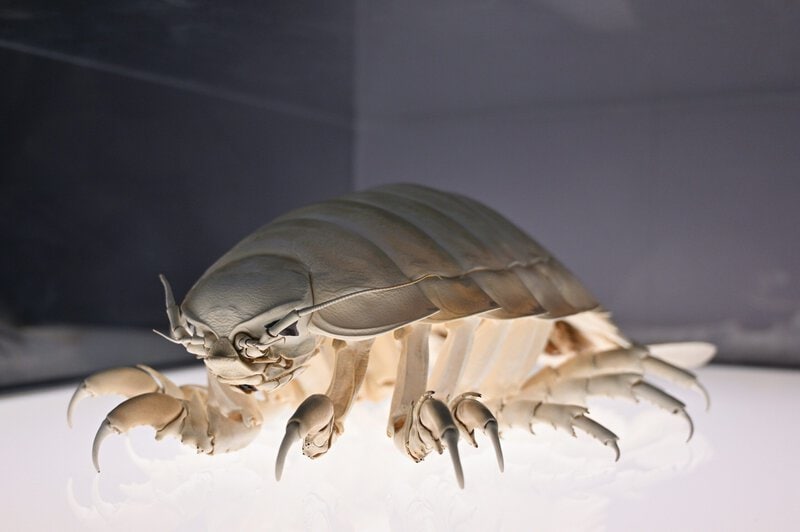
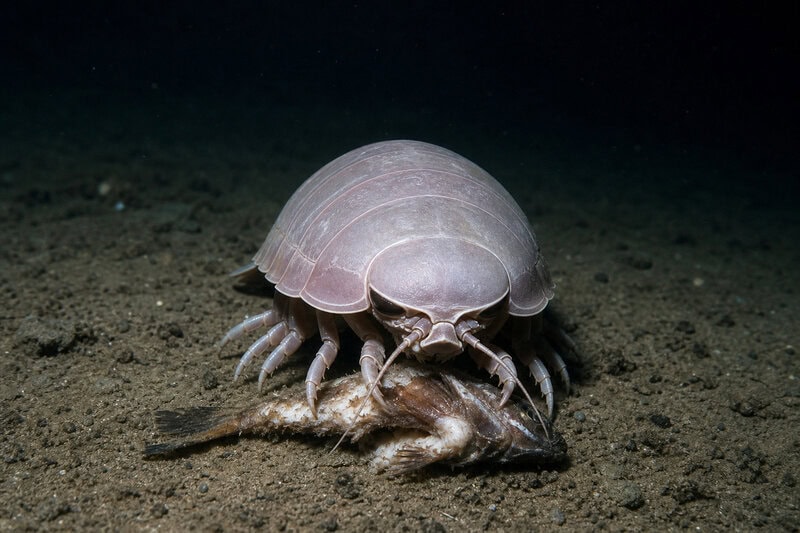
The organism in question is the supergiant bathynomid isopod, a deep-sea relative of the common pill bug that grows to lengths exceeding 30 centimeters. Despite its otherworldly dimensions, it belongs to a well-studied group of crustaceans; what distinguishes the deep-sea varieties is the environment they have adapted to over millions of years. Below 1,000 meters, sunlight is absent, water temperatures hover near freezing, and food — drifting particles of organic matter called marine snow, or the rare windfall of a whale carcass — arrives on no predictable schedule.
In that context, the ability to go years without eating is not a curiosity. It is a baseline requirement for survival. The supergiant bathynomid has become, as researchers describe it, famous for its extreme fasting ability — and the Cell study is the most mechanistically detailed explanation yet of how that ability actually works at the biological level.
Alongside the isopod, the Greenland shark (Somniosus microcephalus) stands as a parallel case study in deep-sea survival under punishing conditions. These two organisms, separated by hundreds of millions of years of evolution, have arrived at strikingly similar solutions to the same problem: a world defined by scarcity, cold, and darkness.
A Two-Part Biological Mechanism, Explained
Scientists framed the isopod’s survival capacity as resting on a remarkable two-part biological mechanism. Understanding each component separately is essential before grasping how they work in combination.
Part One: The Storage Engine
When food does reach the seafloor — whether from a pulse of marine snow or an opportunistic feeding event — the supergiant bathynomid can consume an extraordinary quantity in a single sitting. Its stomach is disproportionately large relative to its body, functioning less like a conventional digestive organ and more like a biological larder. A comparably sized surface-dwelling animal would be unable to bank anything close to the same caloric surplus in one meal. For the isopod, that oversized stomach is the first line of defense against the long famines that define its habitat.
Part Two: The Metabolic Brake
Storing a large meal solves only part of the problem. The other half of the equation is the rate at which those reserves are spent. The supergiant bathynomid’s metabolism operates at a pace so sluggish that what a human body would exhaust within days — or at most weeks — sustains the isopod across years. Researchers identify this ultra-slow metabolic rate as a key adaptation enabling prolonged starvation survival, and it is not simply a passive consequence of living in cold water. Cold does slow biochemical reactions, but the isopod’s metabolic suppression appears to go beyond what temperature alone would produce.
That distinction matters, because it points toward an active biological mechanism rather than a merely physical one. Research into how deep-sea isopods survive extended fasting has identified a gene that appears to act as a metabolic switch — a regulatory element capable of toggling the animal’s body between an active, fuel-burning state and a conservation mode in which energy expenditure is throttled down to near standstill. This finding offers a molecular explanation for how the slowdown is coordinated at the cellular level, rather than being an incidental byproduct of cold water.
Scientists are careful to note that the precise functional role of this metabolic-switch gene represents a newer and still-developing line of inquiry. That slow metabolism and large stomach capacity together enable extended fasting is well-supported by the research. The full characterization of the gene’s pathway is ongoing, and should not be overstated as a complete or final explanation. Identifying a discrete genetic regulator does, however, open the possibility of mapping analogous systems in other extreme-fasting animals — including species not yet studied.
Greenland Sharks: A Vertebrate Running the Same Playbook
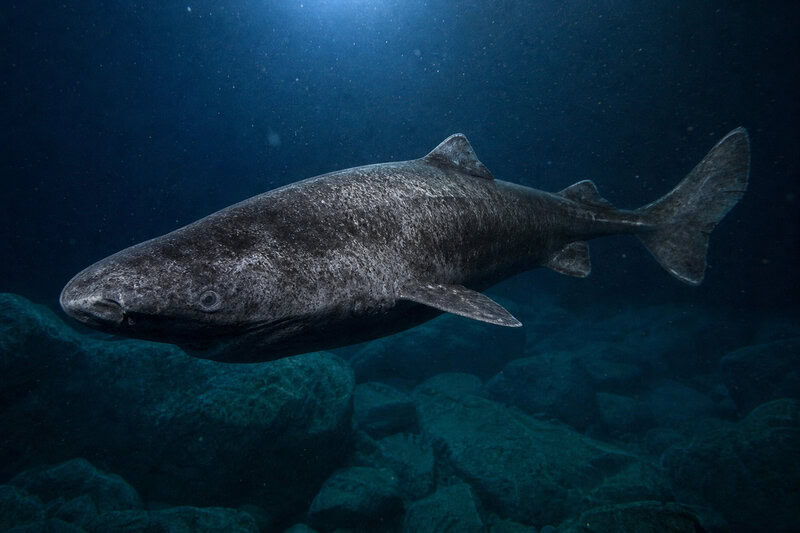
The Greenland shark occupies a different branch of the tree of life but inhabits a comparable ecological niche: frigid, food-sparse depths in the North Atlantic and Arctic. According to a 2016 study in Science led by Julius Nielsen at the University of Copenhagen, Greenland sharks are among the longest-lived vertebrates on Earth, with age estimates exceeding 400 years based on radiocarbon dating of eye lens proteins. They grow at approximately one centimeter per year — a pace that signals an extraordinarily low metabolic rate sustained across an almost incomprehensible lifespan.
That slow metabolism translates directly into reduced caloric demand. A Greenland shark’s energy requirements over any given period are a fraction of those of a comparably sized warm-water predator, meaning the animal can tolerate long intervals between successful hunts without incurring the physiological damage that rapid starvation would cause in a mammal or a fast-metabolism fish. The convergence with the isopod is striking: in both cases, the combination of energy-storage capacity and suppressed metabolic demand emerges as the reliable solution to environmental scarcity.
A careful distinction is warranted here. Direct, multi-year fasting observations in wild Greenland sharks have not been documented with the same experimental precision as the isopod findings published in Cell. The extended fasting capacity attributed to Greenland sharks is a well-reasoned scientific inference — drawn from metabolic rate data, body condition studies, and stomach-content analyses — rather than a controlled laboratory result. The inference is credible and widely accepted among researchers, but it carries less direct evidentiary weight than the controlled isopod study.
The broader zoological pattern reinforces the inference nonetheless. Across phylogenetically distant deep-sea lineages, the same two-part strategy — oversized energy storage paired with metabolic suppression — appears repeatedly. Evolution has, apparently, discovered this solution more than once, which is a strong signal that it is genuinely effective.
What the Body Looks Like After Five Years Without Food
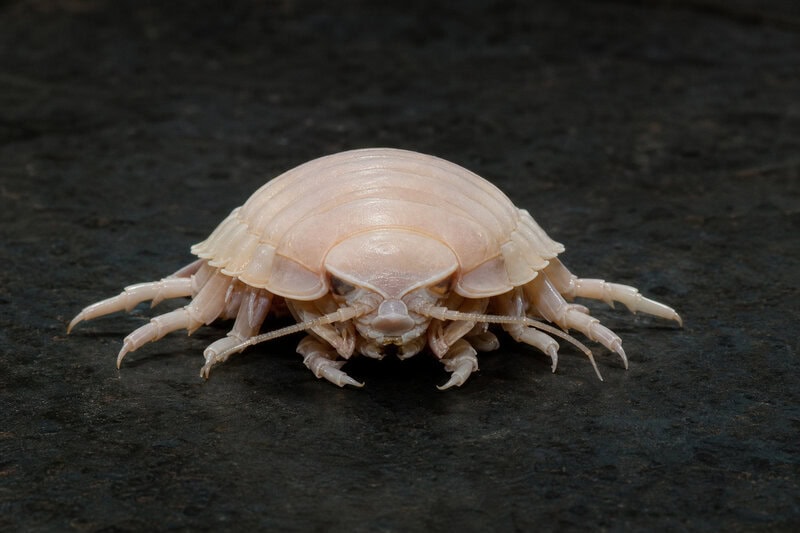
Perhaps the most counterintuitive aspect of the supergiant isopod’s fasting biology is what it does not look like. Rather than wasting away as a mammal would, the animal in prolonged fasting appears to enter a state of sustained biological economy. Organ systems remain functional. Tissue loss is minimized. The cascade of physiological failures that characterizes severe starvation in warm-blooded animals — rapid muscle catabolism, immune suppression, progressive organ damage — does not appear to unfold in the same way or on the same timeline.
In humans, severe caloric deficit produces measurable muscle loss and immune compromise within weeks. The mechanisms the Cell study is beginning to map at the genetic level suggest the isopod’s physiology is architecturally different in ways that prevent those cascading failures, not merely slower to reach them. The metabolic switch identified by researchers may be central to maintaining a stable, low-energy state across years rather than allowing the gradual degradation that uncontrolled starvation produces in most animals.
The scientific significance of these findings extends well beyond deep-sea biology. Understanding how an animal maintains tissue integrity, immune function, and organ health through years of caloric deprivation has potential relevance to research into muscle-wasting diseases, metabolic disorders, and the physiology of long-duration human spaceflight. None of those translational applications are imminent — scientists have not yet fully characterized the metabolic-switch findings across multiple species or life stages, and the path from isopod genetics to clinical medicine is long — but the conceptual foundation the research provides is genuinely novel.
There is also a conservation dimension. As climate change alters deep-ocean food-web dynamics and reduces the predictability of nutrient pulses reaching the seafloor, species like bathynomid isopods and Greenland sharks face environments shifting even beyond their already extreme baselines. Knowing the outer limits of their fasting biology — and the genetic mechanisms that enforce those limits — helps researchers model how resilient these populations might be to further disruption.
Where the Science Stands, and What Remains Unknown
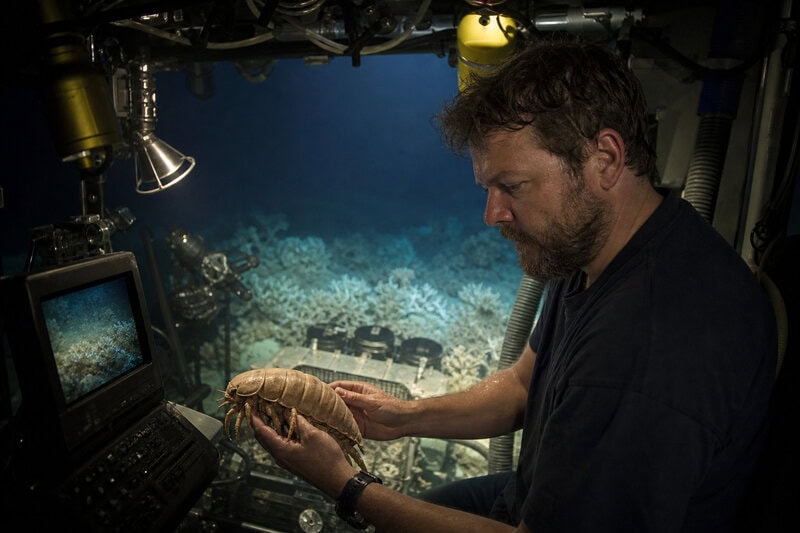
The supergiant bathynomid isopod’s documented survival of more than five years without eating, as reported in Cell, is explained by a two-part system: a disproportionately large stomach for rapid energy storage and an ultra-slow, apparently genetically regulated metabolism that rations those reserves across timescales no surface-dwelling animal approaches. Together, these traits make it one of the most thoroughly mechanistically described examples of extreme fasting biology in the animal kingdom. It joins a growing list of organisms — certain lungfish, tardigrades, and hibernating bears among them — that modulate metabolism in response to food scarcity, each offering a different genetic toolkit for achieving the same outcome.
Yet both the isopod findings and the Greenland shark’s inferred fasting capacity carry an implicit reminder: the deep ocean remains one of the least-monitored ecosystems on Earth. The creatures thriving in permanent darkness, near-freezing temperatures, and episodic food supply have had millions of years to refine solutions to problems scientists are only beginning to pose correctly. The biological strategies not yet imagined, let alone studied, almost certainly outnumber those already described. The question of how deep-sea creatures survive without food is yielding its first molecular answers — and in doing so, revealing how much of the picture remains, for now, in the dark.