
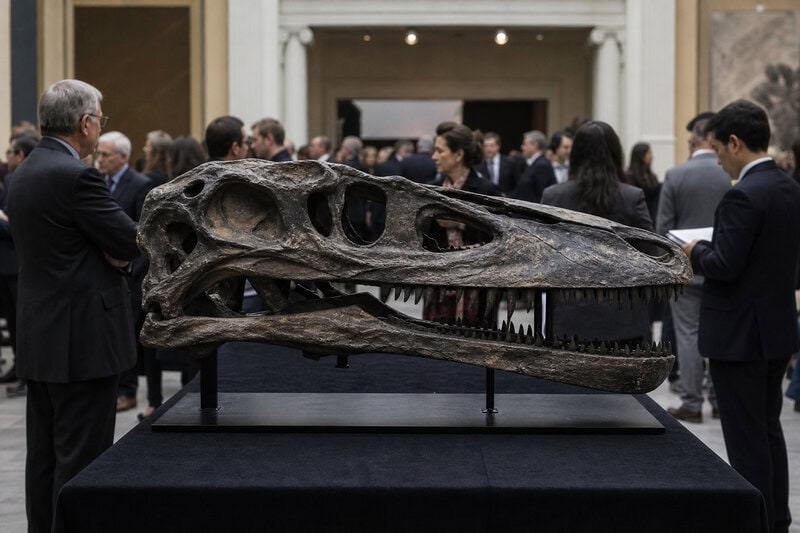
On a single afternoon in New York, a 67-million-year-old Tyrannosaurus rex skeleton named “Gus” sold at Sotheby’s for $50.1 million — more than most natural history museums spend on acquisitions across an entire decade. That sale, which set a new world record for a dinosaur fossil sold at auction, crystallized a tension that has been building for years in paleontology: the same wave of tech-sector wealth reshaping the art and luxury markets is now flowing into prehistoric bones, and scientists are warning that the consequences for research could be irreversible.
The $50 Million Sale That Changed the Conversation
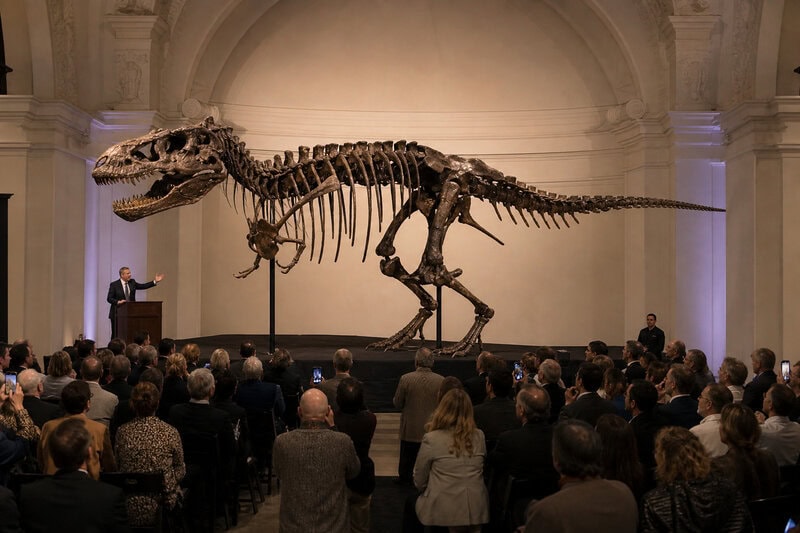
The record price for “Gus” did not arrive in a vacuum. Major auction houses racked up nearly $10 billion in combined sales in the first half of the year alone, marking one of the strongest-ever starts on record. Sotheby’s reported its best-ever first-half performance, with dinosaur skeletons emerging as a marquee category alongside fine art, classic cars, and luxury watches — trophy assets whose prices have been elevated, the auction houses themselves acknowledge, by a new generation of technology-sector buyers.
The scale of the “Gus” sale is worth pausing on. Fifty million dollars is not simply a large number for a fossil; it is a price point that structurally excludes every natural history museum in the world from the bidding. And when a fossil leaves the auction block for a private estate, it does not merely change owners — it effectively exits the scientific record, potentially forever. That is the central problem paleontologists are pressing lawmakers, journalists, and the public to understand.
The “Gus” sale also landed at an unusually visible cultural moment. Auction houses have been explicit in their earnings commentary and press releases about the role of technology-sector liquidity in pushing prices across multiple trophy categories simultaneously — not just fossils, but Impressionist paintings, Paul Newman-era Rolex references, and postwar sculpture. The convergence of those markets under the same demand driver makes 2025 and 2026 something meaningfully different from earlier auction booms, which tended to be category-specific.
What the Commercial Fossil Trade Actually Is — and How Big It Has Gotten
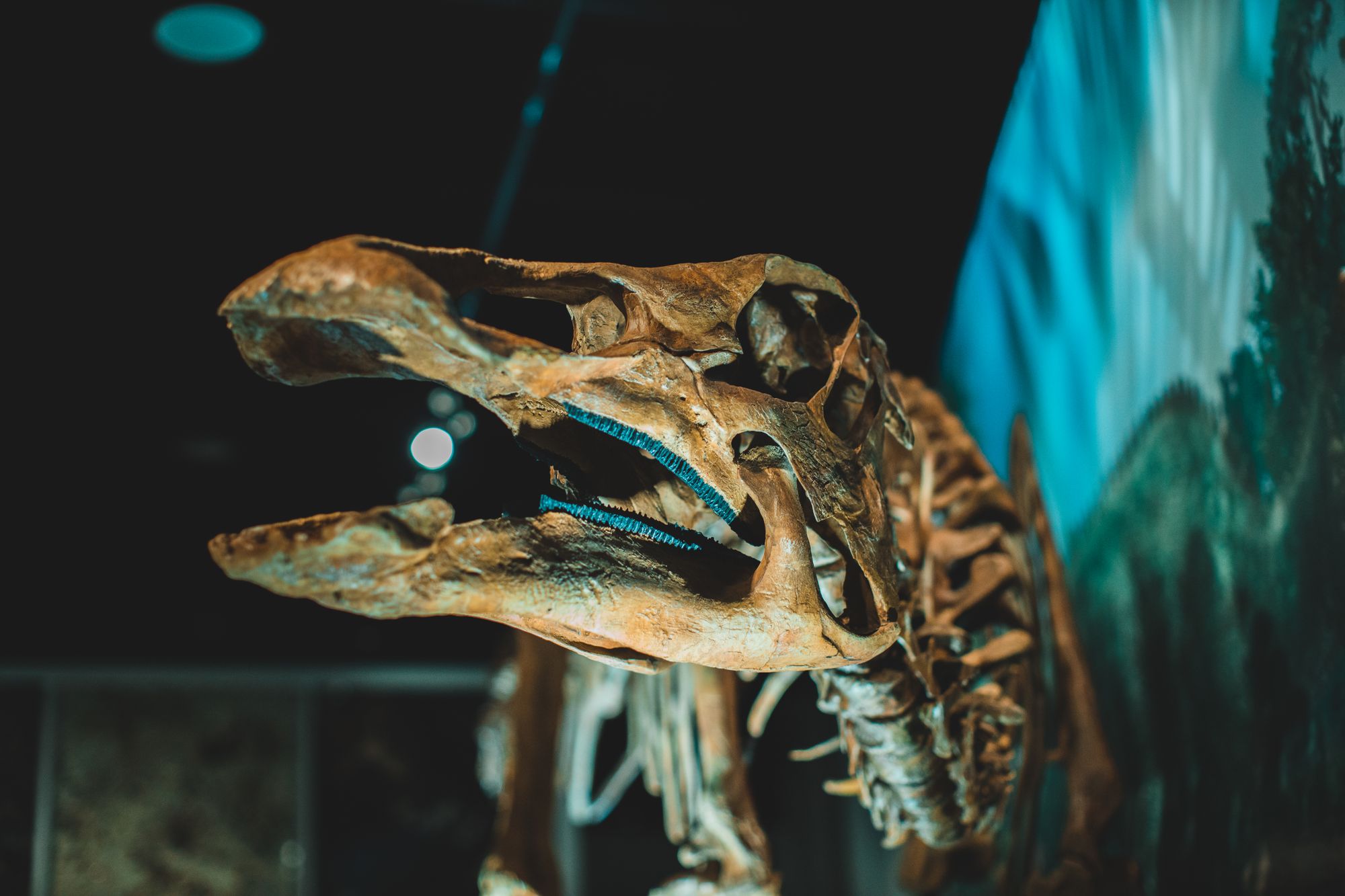
The term “commercial fossil trade” refers to the legal buying and selling of scientifically significant specimens by private dealers, collectors, and auction houses, as distinct from fossils collected under government permit for research institutions. It is not a fringe activity. The market spans an enormous price spectrum — from individual vertebrae sold online for a few hundred dollars to complete, museum-quality skeleton mounts fetching eight figures — which makes uniform regulation genuinely difficult to design or enforce.
The legal geography of fossil collecting in the United States creates particularly complex incentives. Fossils discovered on private land can be legally excavated and sold under current U.S. statute. Fossils found on federal land — managed by agencies such as the Bureau of Land Management or the National Park Service — cannot be commercially collected without a permit, and selling them is a federal crime. That distinction encourages landowners in fossil-rich states like South Dakota, Montana, and Wyoming to view the specimens beneath their soil as a revenue source, and it has produced a robust commercial sector operating entirely within the law.
Auction houses have publicly credited a new generation of AI and tech-sector wealth with driving demand for trophy assets across categories, and dinosaur skeletons fit the profile of that market almost perfectly: they are finite, visually spectacular, narratively powerful, and impossible to replicate. As that demand has intensified, prices have risen to levels that would have been unthinkable a decade ago, and the pace of high-profile sales has accelerated accordingly.
Why Paleontologists Say Every Private Sale Is a Scientific Loss
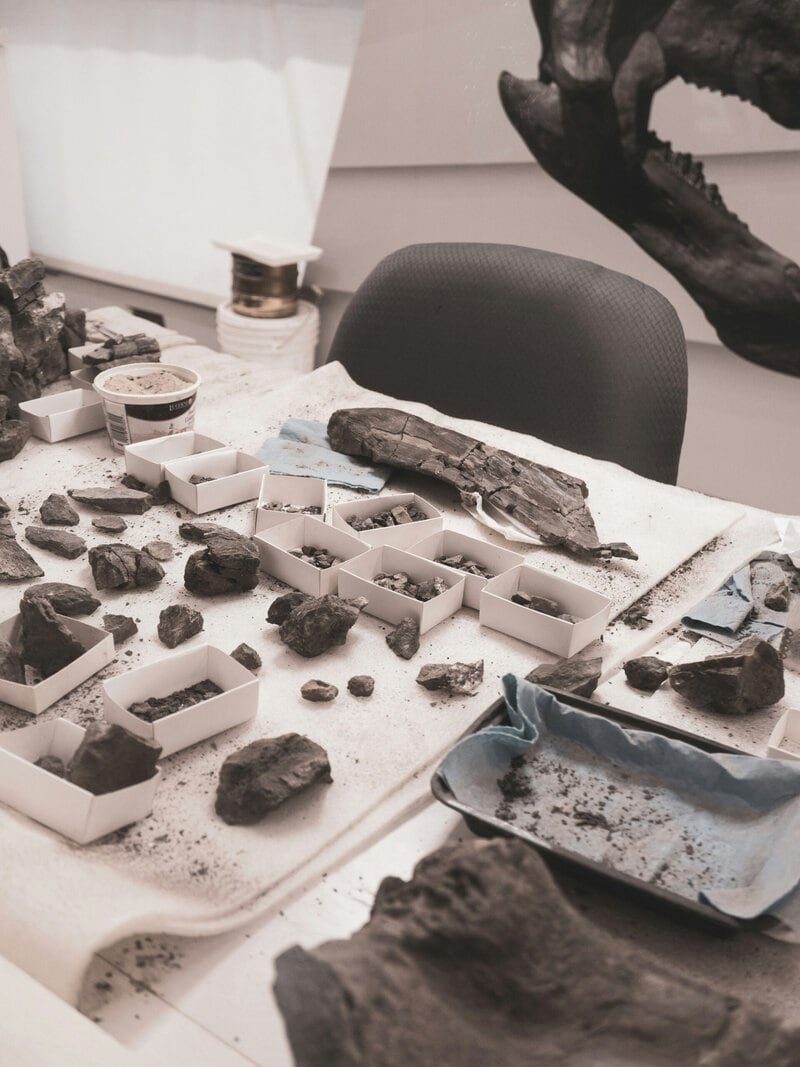
To understand why scientists react so sharply to each headline-grabbing fossil sale, it helps to understand what a fossil actually is to a researcher. The object itself — the mineralized bone — is only part of the data. Equally important is provenance: the precise stratigraphic layer (the specific band of rock, representing a specific slice of geological time) and geographic coordinates where the specimen was found. That contextual information tells scientists what environment the animal lived in, what other species shared that ecosystem, and how the specimen relates to others found elsewhere. Once a fossil is excavated for commercial sale, that stratigraphic context is routinely lost, unrecorded, or undocumented in any scientifically usable form.
The scientific community broadly agrees that loss of provenance permanently degrades a specimen’s research value. What remains genuinely debated is how often commercial collectors adequately document context before extraction — the empirical data on this question is limited, making sweeping conclusions difficult to support rigorously in either direction.
There is a second, structural problem beyond provenance. Peer-reviewed science requires that findings be replicable and that other researchers can examine the same evidence. A fossil held in a private collection is inaccessible to independent researchers, meaning it cannot be cited in the scientific literature in any meaningful way. It is, for practical purposes, invisible to science — even if it is one of the finest specimens ever recovered. As CT scanning, isotopic analysis, and ancient-protein research have made it possible to extract information from fossils that earlier generations of scientists could not, the cost of losing physical access to well-documented specimens has risen, not fallen.
The museum funding gap compounds the problem structurally. Natural history museums operate on public or nonprofit budgets that have remained essentially flat in real terms even as the auction market has inflated. A single lot at a major auction now routinely exceeds what an institution might spend on acquisitions across multiple years. That disparity has widened sharply as technology wealth has concentrated, and there is no market mechanism that corrects it spontaneously.
The Tech Wealth Effect: Who Is Buying These Bones, and Why
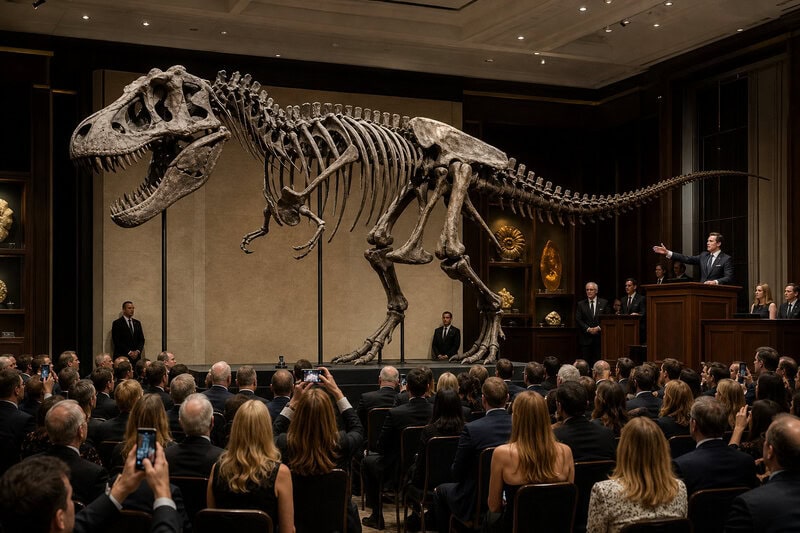
Auction houses soaring to new records have been explicit about the role of AI and IPO-generated wealth in elevating demand across the trophy asset market. For ultra-high-net-worth individuals whose fortunes were built on intangible assets — code, platforms, equity stakes — physical objects with deep time scales and intrinsic narrative power offer something that financial instruments cannot replicate. A genuine T. rex skeleton represents 67 million years of Earth history, survived the mass extinction that killed its species, and exists as a singular physical object. That combination of scarcity, spectacle, and story is precisely what trophy asset markets have always monetized; the difference today is the scale of the wealth available to pursue it.
The picture is not, however, entirely one-dimensional. Some private buyers have loaned specimens to natural history museums for public display, and a small number have funded field excavations that expanded the scientific record. Scientists are generally reluctant to paint every private collector as purely extractive, because the reality is more complicated. The more precise concern is structural: when demand for a rare category is driven by a small cohort of extraordinarily wealthy individuals, prices can spike in ways that are completely disconnected from a specimen’s scientific significance. That creates feedback loops — rising prices attract more media attention, which attracts more buyers, which drives prices higher — that further price out the institutions whose entire purpose is public scientific stewardship.
It is also worth noting what is happening in adjacent trophy categories, because the pattern is consistent. In the fine-art market, works by blue-chip postwar artists have seen comparable price inflation driven by the same cohort of buyers. In the luxury-watch market, references that traded for tens of thousands of dollars five years ago now clear seven figures at auction. The common thread is not taste — it is liquidity. When a new class of wealth enters a finite-supply market, prices rise across every category simultaneously, and the institutions and enthusiasts who previously set the market ceiling are priced out.
The Global Policy Patchwork and Where U.S. Law Falls Short
The United States sits at an unusual position in global fossil policy. Countries including China, Mongolia, Argentina, and most of Europe treat significant fossils as national heritage, prohibiting private export. Yet specimens with murky or falsified provenance continue to enter the international market — a problem that Interpol and U.S. federal prosecutors have pursued through high-profile repatriation cases involving dinosaur material illegally exported from Mongolia and China.
Within the United States, the enforcement gap on federal land is significant. Although collecting vertebrate fossils on Bureau of Land Management or National Park territory without a permit is a federal crime, the sheer scale of fossil-bearing terrain in the American West makes consistent enforcement practically difficult. Commercial collectors operating on adjacent private land have little regulatory friction, and the boundary between private and federal parcels is not always clearly marked or monitored.
The Society of Vertebrate Paleontology (SVP), the primary professional organization for the field, has repeatedly called for federal legislation that would extend to vertebrate fossils on private land protections analogous to those currently afforded to archaeological artifacts under the Archaeological Resources Protection Act of 1979. As of publication, no such federal extension exists for privately held vertebrate fossils, and the commercial trade remains legal under current U.S. statute. The SVP’s position is that this legal gap represents the single most tractable point of policy intervention available to Congress.
The international dimension adds a further layer of complexity. Even when a specimen’s U.S. origin is legitimate, auction-house sales attract buyers globally, and once a fossil leaves U.S. jurisdiction in private hands, the practical ability of any American institution to access it for research diminishes sharply. Several high-profile T. rex specimens sold at auction in the past decade are now believed to be held in collections in Asia and the Gulf region, where there is no legal mechanism compelling access for researchers.
The Counter-Argument: When Private Collectors Save What Science Would Have Lost
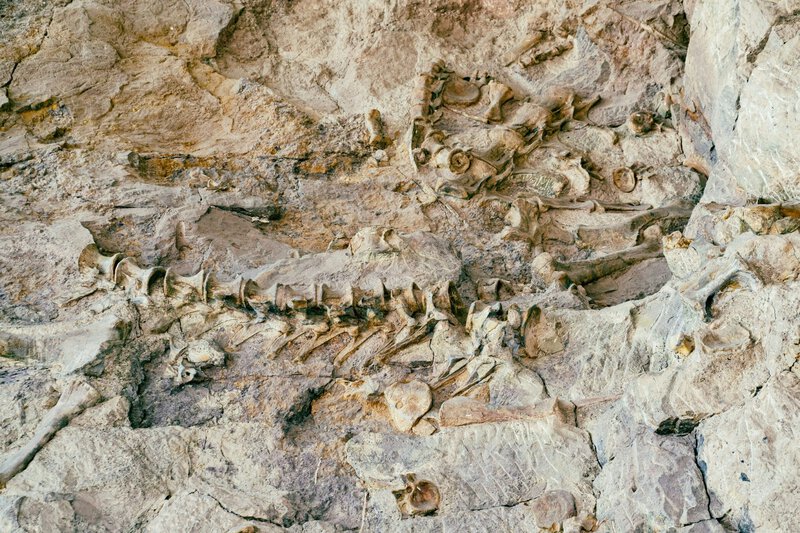
The commercial sector’s strongest argument deserves a fair hearing. Some paleontologists acknowledge, if reluctantly, that commercial collectors have recovered specimens from actively eroding badlands — sites where freeze-thaw cycles and seasonal flooding destroy fossils within years of their exposure — that would have crumbled before any research team arrived. A portion of those specimens have subsequently entered museum collections through purchase or donation.
The case most frequently cited by both sides of the debate is T. rex “Sue,” now on permanent display at the Field Museum in Chicago. Sue was originally excavated in 1990 by commercial fossil hunter Sue Hendrickson on private land in South Dakota and sold at auction in 1997 for $8.36 million — at the time a record price. The Field Museum, with support from corporate donors including McDonald’s and Disney, acquired Sue for public science. It is, by most measures, the most scientifically studied T. rex specimen in existence, and it would not be in a research institution today if commercial excavation had not occurred.
The SVP’s official position is that the net harm of the commercial trade outweighs cases like Sue. A minority of researchers argue that a regulated commercial market — one with mandatory provenance documentation as a legal condition of sale — could coexist productively with science. What is genuinely unclear, because the data has not been systematically collected, is what percentage of commercially sold fossils are subsequently made available to researchers in any form. That empirical gap makes sweeping conclusions in either direction difficult to defend rigorously.
What the “Sue” precedent also illustrates, however, is how much the market has changed since 1997. The Field Museum’s $8.36 million purchase required a coalition of major corporate sponsors and remains one of the largest acquisition efforts in American museum history. A comparable effort today, aimed at a specimen selling for $50 million, would require a fundraising campaign of a scale that no natural history institution has ever mounted for a single object. The “Sue” model is not replicable at current price levels without a fundamental change in either museum funding or donor incentives.
What Would Actually Help — and What Comes Next
The structural dynamic is not self-correcting. As tech-driven wealth concentration continues to inflate the trophy asset market and museum acquisition budgets remain flat in real terms, the gap between what science can afford and what the market will bear is likely to widen. Researchers and policy advocates have identified several near-term interventions they consider tractable within the existing legal framework.
- Mandatory provenance documentation: Requiring, as a condition of legal sale, that the stratigraphic and geographic origin of a specimen be professionally recorded and deposited with a publicly accessible registry — preserving at least some scientific data even when the specimen itself enters private hands.
- Right-of-first-refusal windows: Giving accredited natural history institutions a defined period — comparable to mechanisms used in some European art markets — to match auction prices before a specimen passes to a private buyer.
- Restructured tax incentives: Reforming the U.S. tax code to make donation of significant fossils to research institutions substantially more advantageous than private retention, shifting the financial calculus for wealthy buyers who might be indifferent between the two outcomes.
- Access agreements as a condition of sale: Requiring that auction houses, as a condition of listing scientifically significant specimens, obtain buyer commitments to make specimens available for documented research visits — a model already used voluntarily by a small number of private collectors.
None of these interventions is currently federal law. All have been proposed in various forms by the SVP and allied researchers. All face the same political friction: they require Congress to treat a legal commercial market as a public-interest problem, which is a harder argument to make when the specimens in question are privately owned and the sellers are operating within existing statute.
What gives the issue particular urgency is the timing. Paleontology is in the middle of a data revolution. CT scanning allows researchers to examine internal bone structure without cutting. Isotopic analysis can reconstruct diet, migration, and climate. Ancient-protein research — still in its early stages — may eventually yield biological information from fossils that are tens of millions of years old. Each of these techniques requires physical access to well-documented specimens. The scientific value of a properly contextualized fossil is higher today than it has ever been, at precisely the moment when market forces are making access harder to guarantee.
The $50.1 million sale of “Gus” is not simply a curiosity about the tastes of the newly wealthy — it is a data point in an accelerating conflict over who controls access to the physical evidence of life on Earth, a conflict that the scientific community argues existing law is not equipped to resolve. Whether the current Congress treats it as such is, for now, an open question.