
Every living python and boa carries a secret hidden in its skeleton: tiny, vestigial pelvic spurs — remnant hip bones from legs lost millions of years ago, a silent anatomical memory of a limbless transition that science has not yet fully decoded. Now, an approximately 80-million-year-old fossil is offering researchers the clearest anatomical snapshot yet of that transition, a rare chance to read the evolutionary blueprint of snake limb loss while it was still mid-edit.
The Snake That Still Remembers Its Legs
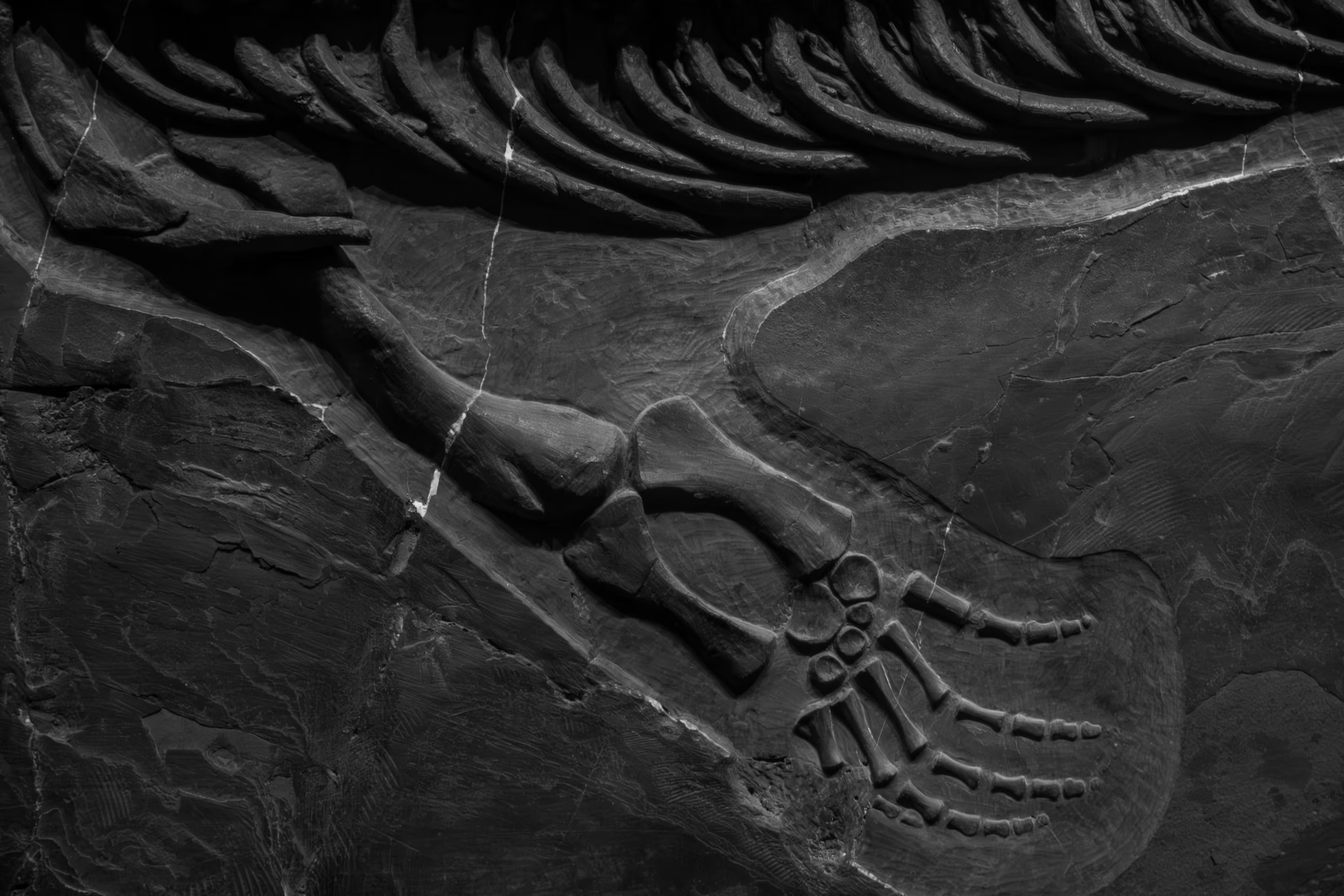
The central puzzle is deceptively simple to state and remarkably difficult to answer: snakes are essentially highly modified lizards, yet somewhere deep in the age of dinosaurs, one lizard lineage surrendered its limbs entirely and stretched its body into the undulating, scaly tube of muscle that defines every snake alive today. How that happened — and precisely why — remains one of the more compelling open questions in vertebrate evolutionary biology.
The new fossil, dated to approximately 80 million years ago and placed in the late Cretaceous period, situates the find in a world still dominated by non-avian dinosaurs. Continents were positioned differently, global temperatures were warmer, and the ecosystems that snakes were threading themselves into bore little resemblance to anything alive today. That geological context matters because it tells researchers roughly when in the long history of life these anatomical changes were unfolding — and what selective pressures were plausibly at work.
According to reporting by Smithsonian Magazine, the specimen preserves key anatomical details that allow researchers to identify the stage of limb reduction captured in bone — showing which structures were already shrinking, which had vanished entirely, and which skeletal hallmarks of modern snakes were already locked in place. That combination of presence and absence is precisely what makes the fossil valuable: it is not a direct ancestor of living snakes, but a contemporaneous relative that records what an intermediate body plan actually looked like in hard tissue.
Researchers covering the find have been careful to distinguish what the specimen confirms from what it merely suggests. Certain anatomical features are observable facts recorded in bone. Interpretations about lifestyle, behavior, and the environmental pressures driving those changes require additional inference — and that inference, however well-reasoned, remains under active scientific discussion.
The Burrowing Hypothesis: Why Going Underground Costs You Your Legs
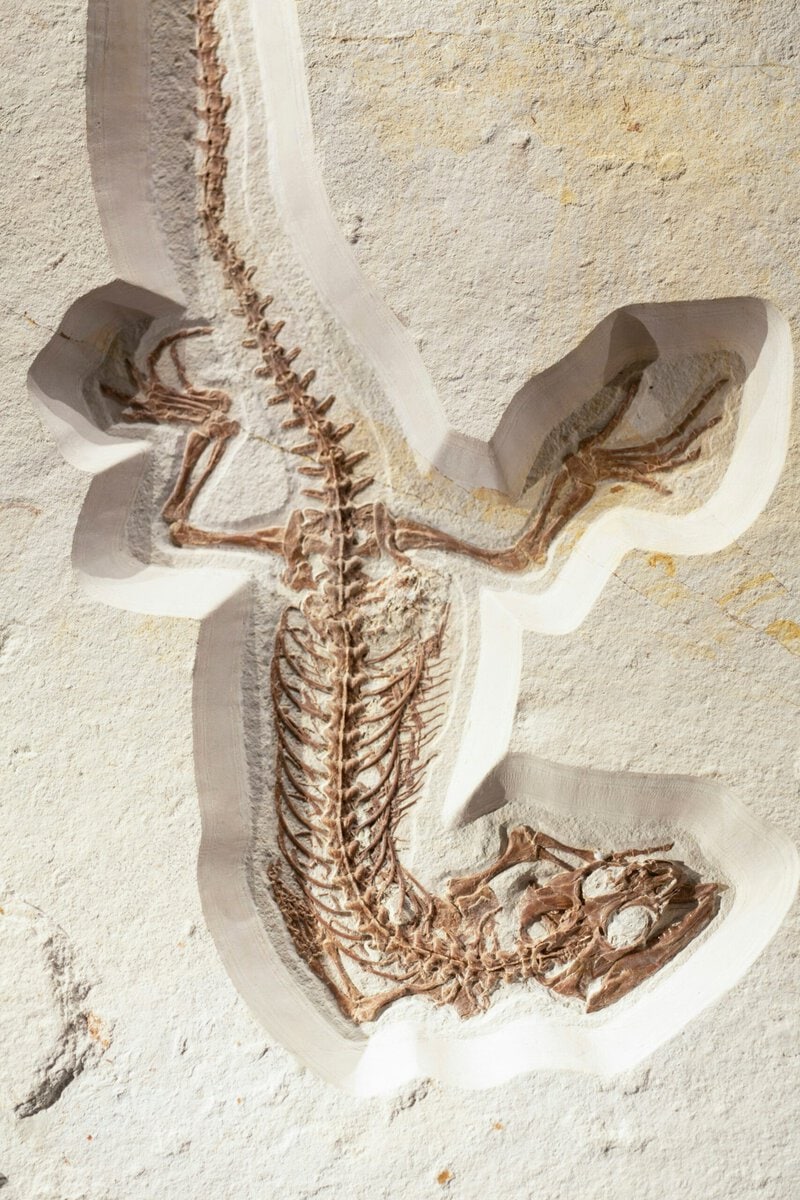
The leading explanation for how snakes lost their legs centers on a subterranean lifestyle, and the biomechanical logic is intuitive once it is laid out. One well-supported hypothesis holds that snake ancestors evolved to live and hunt in burrows, where a compact, tube-shaped body dramatically outperforms a limbed one. Limbs that help a lizard sprint across open ground become genuine obstacles inside a tight tunnel: they catch on walls, disrupt forward motion, and offer no propulsive advantage in a confined space. Natural selection, operating over millions of generations, would have steadily favored individuals whose limbs were smaller and less obstructive.
Some researchers propose a specific sequence to that reduction. As The Conversation’s coverage of the fossil explains, some scientists contend that forelimbs disappeared first, then hindlimbs, as snake ancestors adapted to burrowing. The logic follows the anatomy of burrowing itself: the leading edge of a body pushing through soil encounters the most resistance, making forelimbs the first structural liability to be eliminated. Hindlimbs, trailing behind, would have persisted longer before selection pressure finally removed them — which is consistent with the fact that pythons and boas still carry vestigial pelvic remnants where hindlimbs once attached.
This remains a hypothesis rather than settled consensus. A competing framework — the marine-origin hypothesis — proposes that the ancestors of snakes were aquatic or semi-aquatic, and that limb loss occurred in a marine context rather than a terrestrial burrowing one. Fossils of the ancient snake Pachyrhachis, which show reduced hindlimbs in what appears to have been a marine animal, have been cited in support of this view. The debate between burrowing and marine origins is genuine and ongoing, and the 80-million-year-old specimen contributes new data to that discussion without definitively resolving it.
How Evolution Actually Removes a Limb: The Genetics Behind the Disappearance
Understanding snake limb loss at a mechanical level requires a look inside the developmental genetics of vertebrate limbs. Limb growth in vertebrates is orchestrated by a genetic toolkit — a set of signaling molecules and regulatory genes that switch on in precise sequences during embryonic development. One of the most studied of these is Sonic hedgehog (Shh), a signaling molecule that plays a central role in shaping limb buds. Research has established that snakes carry mutations or regulatory changes in the genomic regions that control this program, effectively switching it off before limb development can proceed.
Crucially, limb loss is not a single mutation that flipped a switch in one generation. It is a gradual accumulation of changes across millions of generations, meaning that intermediate forms — animals with reduced but still present limbs — must have existed throughout the transition. That is precisely what fossils like this one can capture: the physical record of a body plan partway through a molecular rewriting process. As the American Museum of Natural History notes in its coverage of snake limb loss research, the physical bones record the end-states of those molecular changes, allowing paleontologists and genomicists to cross-check timelines and build a more coherent picture of how quickly or slowly the transition unfolded.
The precise sequence of regulatory mutations that drove the ancestral transition remains an emerging rather than established finding. Comparative genomics studies are actively mapping which specific changes in which regulatory regions matter most, and different snake lineages appear to have arrived at limblessness through subtly different molecular routes. Fossil anatomy provides the external timeline against which those genomic hypotheses can be tested — making paleontology and genetics mutually reinforcing rather than separate endeavors.
Snakes as Modified Lizards: Placing the Fossil in the Bigger Evolutionary Tree
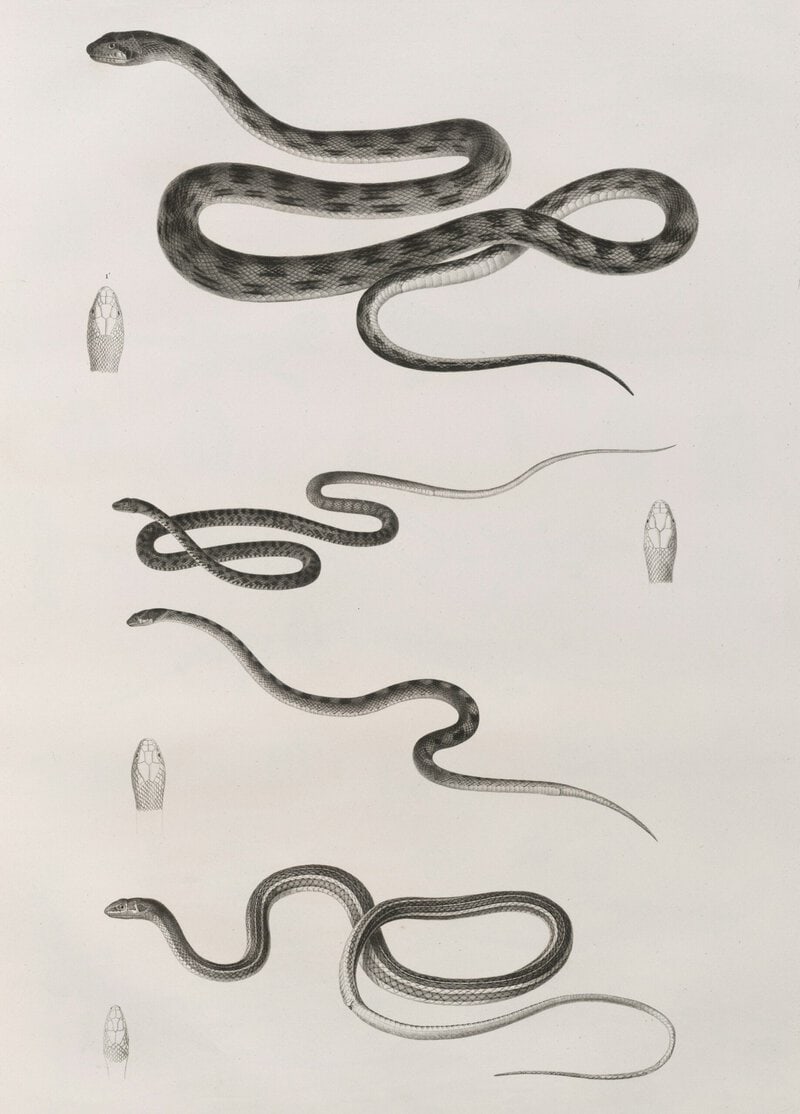
One point on which there is strong scientific consensus deserves clear statement: snakes are not a separate reptile lineage that diverged from lizards in the distant past. By every modern phylogenetic analysis, snakes are deeply nested within lizards. They are, technically and biologically, a highly modified lizard group that diverged sometime in the Mesozoic era. Calling a snake a lizard is not poetic license; it is an accurate description of the evolutionary relationship.
Within that broader lizard family tree, the new fossil’s anatomical features allow researchers to ask a more specific question: does it sit closer to the ancient stem-snakes — the earliest diverging members of the snake lineage — or does it show features linking it to crown-group snakes, the lineage that includes all living species? Those distinctions matter because they help researchers understand not just that limb loss happened, but when particular anatomical innovations were acquired and in what order.
The 80-million-year-old specimen adds to a fossil record that has historically been frustratingly sparse. Other key specimens — including Najash rionegrina, a Cretaceous snake from Argentina with robust hindlimbs, and the long-debated Tetrapodophis amplectus from Brazil — have helped build a cumulative evidence base. No single fossil resolves all open questions, but each adds a data point that constrains the range of plausible evolutionary scenarios. As UC Berkeley’s Evolution site explains in its broader discussion of limb loss research, the value of any given specimen lies less in what it proves alone than in how it fits into a growing mosaic of evidence.
Why Ghost Hips Are Scientifically Valuable
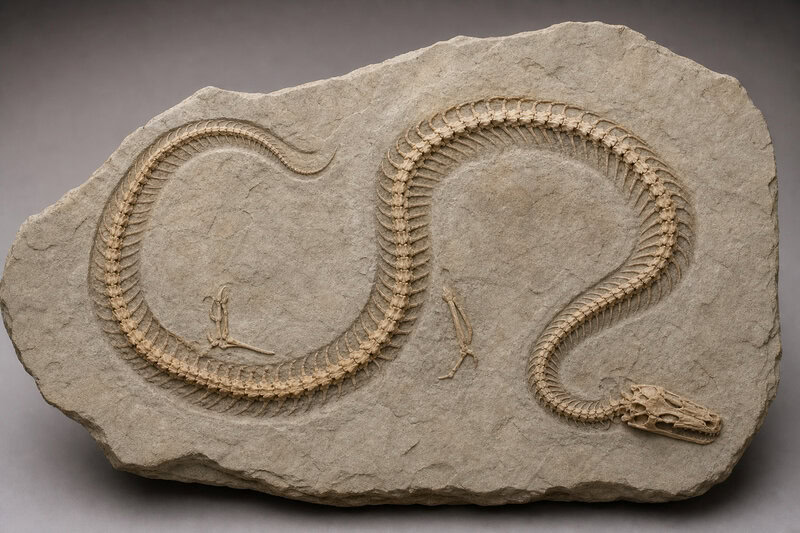
Vestigial structures — anatomical remnants that have lost their original function but persist in reduced form because evolution has not yet eliminated them — are among the most compelling physical evidence for descent with modification. The pelvic spurs of pythons and boas are a textbook example. These small, claw-like protrusions near the tail are the surface expression of internal pelvic and femoral bones that no longer support locomotion but have not disappeared. They are, in a meaningful sense, ghost hips: the skeletal memory of ancestors that walked.
Their scientific value is twofold. First, they confirm in living animals that modern snakes descended from limbed ancestors, providing a physical bridge between the fossil record and present-day anatomy. Second, vestigial pelvic elements appear in the fossil record of ancient snakes as well, allowing researchers to trace the progressive miniaturization of the pelvis across deep time. A snake from 80 million years ago with more robust pelvic remnants than a modern python offers a measurable data point in that trajectory of reduction — a before-and-after comparison written in bone across geological time.
This is the article’s central theme made concrete: snakes did not simply appear limbless. They arrived at that body plan through a long, documented, and still-being-decoded evolutionary journey, one that left physical traces in both ancient rock and living tissue. The ghost hips of a modern boa constrictor and the fossilized limb remnants of a Cretaceous snake ancestor are chapters of the same story, written in different media across millions of years.
What Remains Unsettled — and Why It Matters Beyond Snakes
Several important questions remain genuinely open. The exact geographic origin of snakes — whether the lineage first diversified in Gondwana, Laurasia, or elsewhere — is still debated. Whether a marine or burrowing environment drove the earliest limb reductions remains contested. The precise molecular sequence of regulatory changes that produced the first truly limbless snake ancestor has not yet been fully reconstructed by comparative genomics. And the taxonomic identity and precise phylogenetic position of the new 80-million-year-old specimen itself will likely invite scrutiny and discussion within the paleontological community.
Those open questions are not a failure of the science; they are the science working as it should. Each new fossil, including this specimen, adds a data point that helps researchers test and refine competing models. Paleontology is an ongoing, evidence-driven process, and the picture it produces becomes sharper with each well-documented find.
The broader significance extends well beyond snakes. Understanding how a complex structure like a limb — built from dozens of bones, muscles, tendons, and nerves, all coordinated by an intricate genetic program — can be progressively lost yet retained as vestigial tissue has direct implications for developmental biology. Researchers studying limb development and regeneration in other species look to limb-loss systems precisely because they illuminate the genetic levers that control whether a limb forms at all. The snake, legless as it is, turns out to be one of vertebrate biology’s most instructive teachers on the subject of how bodies are built.
As genomic tools continue to improve and as more Cretaceous fossil sites are excavated across South America, Africa, and Central Asia, the story of how one lizard lineage became the world’s most successful legless predators will come into ever-sharper focus — one fossilized bone, and one sequenced genome, at a time.