
A Soyuz capsule trailing fire across the Kazakhstan steppe on a Sunday carried two Russian cosmonauts and one NASA astronaut back to a planet they had not stood on for 241 days — roughly eight months. Before the parachutes even opened, the quieter biological assault of long-duration spaceflight had already been working on their skeletons, hearts, and muscles for the better part of a year.
241 Days Aboard the International Space Station

The crew’s return after eight months aboard the ISS marked the conclusion of a mission that has become increasingly routine in operational terms — and increasingly revealing in scientific ones. The International Space Station has maintained a continuous human presence in low-Earth orbit since November 2000, circling roughly 400 kilometers above the surface at a speed that keeps the station and everyone inside it in a state of constant free fall. That free fall is precisely what produces the “weightlessness” that cameras make look effortless and that biology finds profoundly disruptive.
Microgravity — the near-weightless environment inside an orbiting spacecraft, where gravitational acceleration is effectively neutralized by the constant state of orbital free fall — removes almost every mechanical cue the human body has relied on throughout its evolutionary history. For the skeleton in particular, that silence is anything but neutral.
Missions of this duration have become a deliberate research strategy. NASA and its international partners are accumulating long-duration spaceflight data specifically because future Moon and Mars missions will require crews to spend months or years without Earth’s gravitational cues. The ISS is currently the only laboratory capable of generating that data on living humans at scale.
How Microgravity Erodes the Skeleton
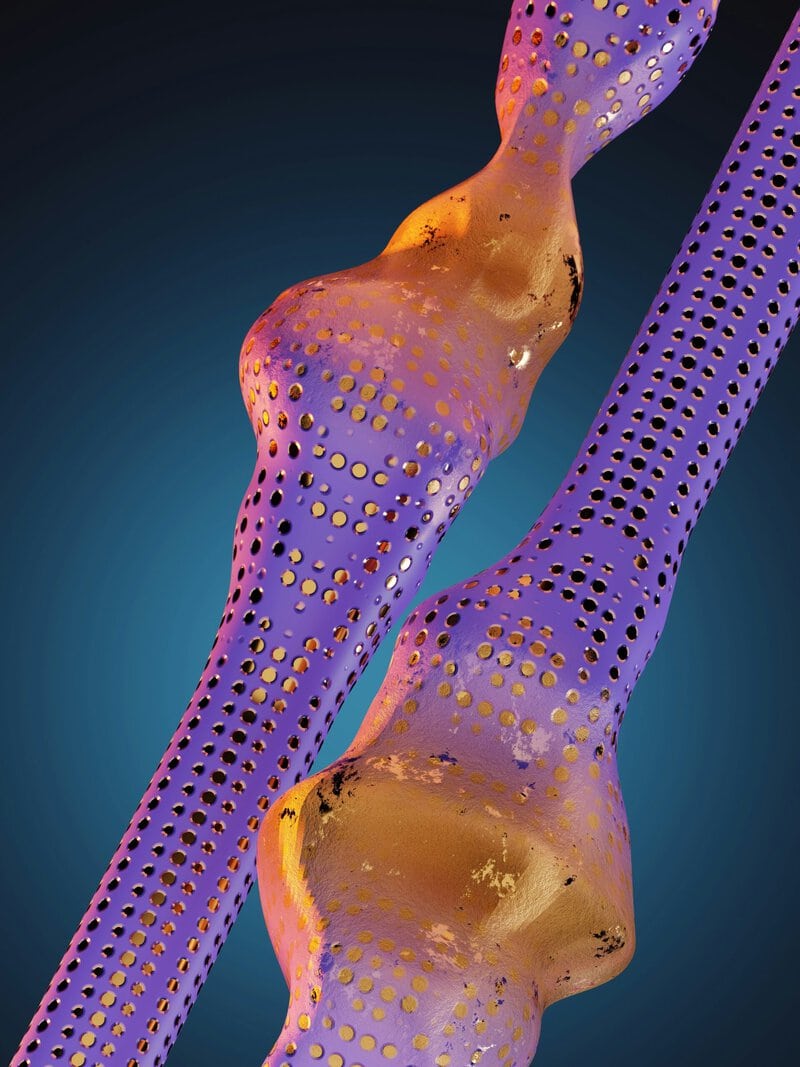
Bone is not static tissue. On Earth, it remodels continuously because mechanical load — the everyday stress of standing, walking, and carrying weight — signals specialized cells called osteoblasts to deposit new mineral tissue. Remove that load signal and the balance tips. In microgravity, osteoclasts, the cells responsible for breaking down bone, outpace osteoblasts, and net bone loss follows with a consistency researchers have now documented across dozens of astronauts.
The scale of that loss is striking. A 2022 study published in Scientific Reports, led by researchers at the University of Calgary, measured bone density in 17 astronauts before and after long-duration ISS missions and found an average loss of approximately 2 percent in weight-bearing bones per month. The hip showed the most severe and lasting deficits. To put that figure in context, the same research found that bone density losses in long-duration crew members were equivalent to roughly a decade of normal age-related skeletal aging compressed into six months.
Not all bone tissue responds equally. Trabecular bone — the spongy inner lattice that gives bones their load-bearing architecture — is particularly vulnerable in microgravity. Cortical bone, the hard outer shell, tends to recover somewhat faster after return to Earth. Whether microstructural changes to trabecular bone are permanent remains an open and actively researched question rather than settled science.
The University of Calgary study produced one finding the authors themselves described as concerning for mission planning: approximately half of the astronauts studied had not recovered pre-flight bone density in the hip region even one year after returning to Earth. That result suggests the body’s recovery mechanisms, even with rehabilitation support, may not be sufficient to fully reverse what microgravity takes.
Beyond Bones: The Full Cascade of Physiological Change
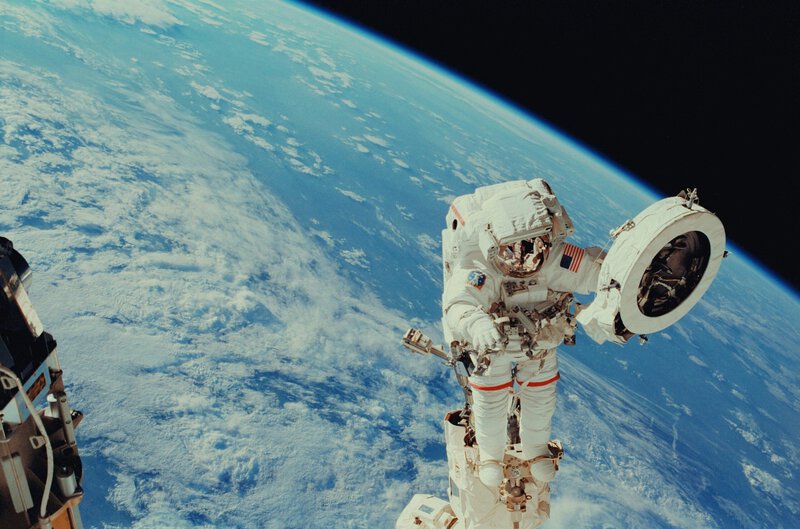
Bone loss is the most extensively documented structural consequence of long-duration spaceflight, but it is far from the only one. NASA’s Human Research Program identifies at least five major physiological risk domains for crews on extended missions: musculoskeletal, cardiovascular, sensorimotor, vision, and radiation exposure. Each presents its own timeline, its own degree of reversibility, and its own gaps in scientific understanding.
The vision risk has emerged as one of the more surprising findings of the ISS era. A condition now termed spaceflight-associated neuro-ocular syndrome, or SANS, involves optic disc swelling and shifts in cerebrospinal fluid pressure and has been documented in a significant minority of long-duration male astronauts. Its long-term consequences and precise cause remain under active investigation. SANS represents an area where the science is genuinely emerging rather than settled, and researchers are careful not to draw firm conclusions from the data collected so far.
Muscle atrophy follows a more predictable pattern. Without gravitational resistance, skeletal muscle mass can decline measurably within weeks. NASA’s standard countermeasure protocol requires astronauts to exercise approximately two hours per day using specialized resistance and aerobic devices aboard the station. That regimen has been shown to substantially reduce muscle loss, but it does not eliminate it entirely — a distinction that matters acutely when a crew member steps out of a capsule and must immediately bear their own body weight.
The cardiovascular system undergoes its own remodeling during long missions. Research published in the Journal of the American College of Cardiology has documented that the heart becomes more spherical in shape during extended spaceflight — a structural adaptation to an environment where it no longer pumps against gravity. Most of these cardiac changes appear to reverse after return to Earth, though the pace and completeness of that reversal continues to be studied.
The Moment of Touchdown: What Happens When Gravity Returns
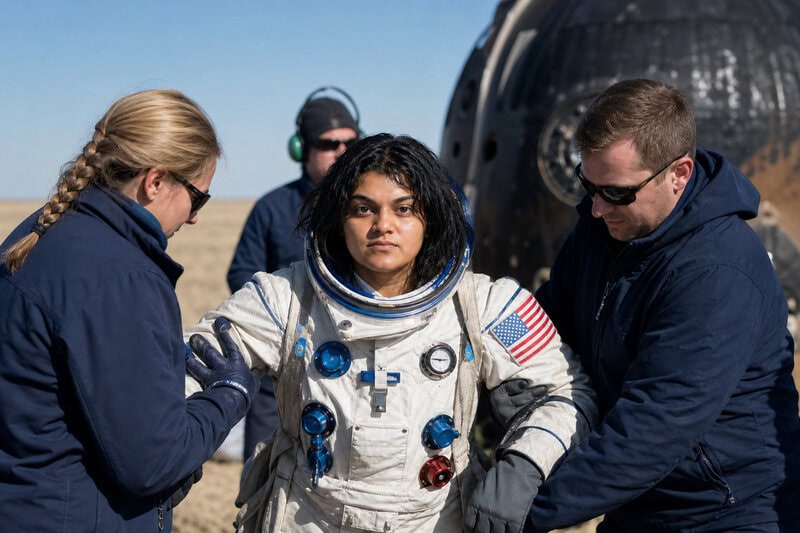
For a crew member who has spent 241 days in microgravity, landing is not a relief so much as a second physiological event. The cardiovascular system must suddenly regulate blood pressure against a gravitational field it has largely stopped accounting for. The vestibular system — the inner-ear organs that signal balance and spatial orientation — must relearn the difference between up and down. And bones that have been losing density for eight months must immediately bear full body weight.
Orthostatic intolerance is the clinical term for the difficulty of maintaining blood pressure when standing upright after long periods of weightlessness. It is why returning astronauts are typically carried out of the capsule and cannot stand unaided for minutes to hours after landing — not because of injury, but because their circulatory systems have adapted to an environment that no longer exists the moment the hatch opens on the steppe.
NASA’s standard rehabilitation program for long-duration crews spans approximately 45 days and includes structured physical therapy, resistance training, balance and coordination exercises, and cardiovascular conditioning. Those timelines reflect decades of post-landing data accumulated from ISS returns. What remains less certain is whether the program is sufficient — particularly for bone. The University of Calgary researchers noted explicitly that exercise countermeasures performed in space did not fully prevent the bone density losses they measured, which suggests current in-flight protocols may require refinement before crews attempt missions measured in years rather than months.
How Long Recovery Actually Takes: What the Science Says
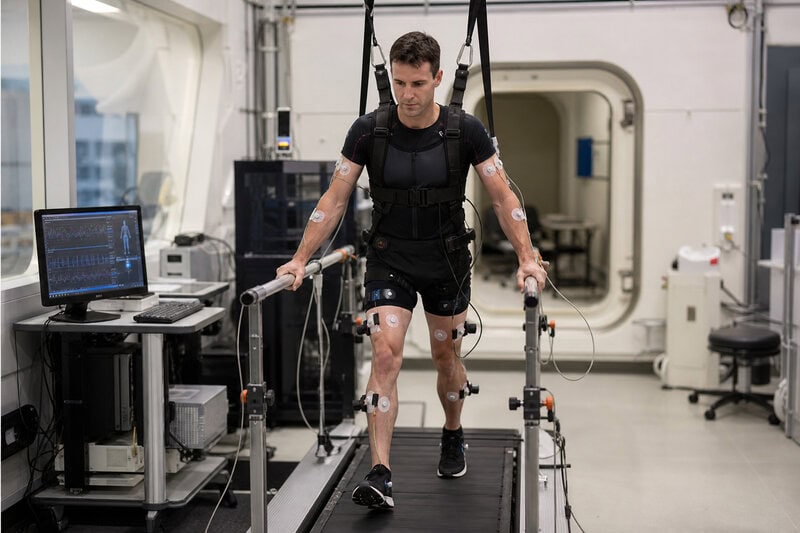
Recovery from long-duration spaceflight is not a single event but a process with a timeline that varies significantly by physiological system — and by individual. For muscle mass and cardiovascular function, the outlook is relatively encouraging: NASA Human Research Program data indicate that most crew members return to near-baseline levels within weeks to a few months after landing, provided they follow their rehabilitation protocols diligently.
Bone recovery takes considerably longer and is less complete. The 2022 Scientific Reports study found that bone density in weight-bearing sites recovered partially within six months after landing for most astronauts. Full recovery to pre-flight levels — when it occurred at all — took up to 12 months, and some crew members showed lasting deficits beyond that window. The distinction between recoverable and potentially permanent change is one of the most consequential open questions in space medicine. The honest scientific answer at this point is that researchers do not yet know where the permanent threshold lies.
Individual variability has emerged as a significant and underexplored factor. Scientists at NASA’s Johnson Space Center and partner institutions are actively investigating why some astronauts experience severe bone and vision changes while others on missions of identical duration do not. Genetics, pre-flight bone density, and exercise compliance aboard the station are all candidate explanations, but no definitive biological predictor has been validated. That variability complicates mission planning and raises pointed questions about crew selection for future deep-space expeditions.
Why This Mission Matters for the Future of Human Spaceflight
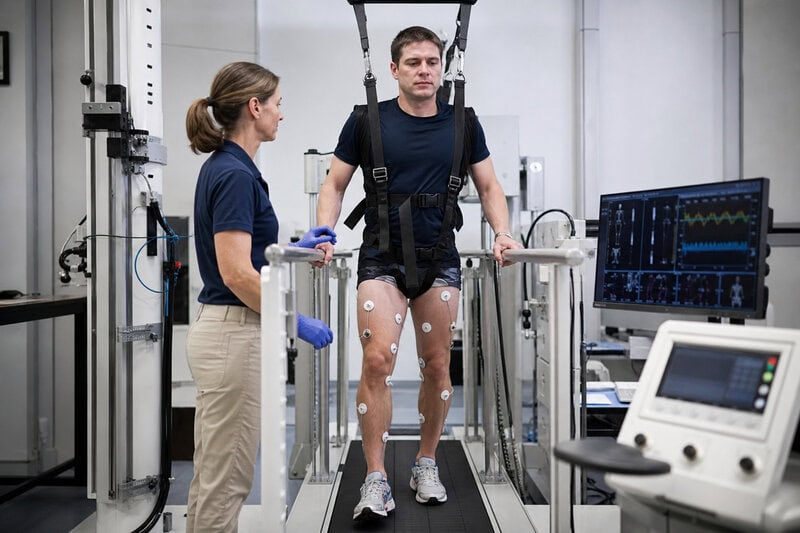
Every 241-day mission generates biological samples, imaging data, and performance metrics that researchers cannot ethically or practically obtain any other way. The two cosmonauts and NASA astronaut who returned from the ISS this past Sunday are, in the most literal sense, living data points in humanity’s effort to understand what deep space does to the human body — and what it will take to survive it on longer journeys.
The scale of the challenge ahead makes that data urgent. A round-trip crewed mission to Mars is currently estimated at roughly three years in transit and surface time combined, meaning astronauts would face bone and muscle loss, radiation exposure, and cardiovascular changes at durations far beyond anything yet systematically studied. The gap between current scientific knowledge and what a Mars mission would demand of human physiology is real, openly acknowledged by NASA, and the subject of active international research programs.
The countermeasure pipeline is advancing on several fronts. Institutions including the European Space Agency, JAXA, and NASA are testing pharmacological interventions alongside hardware and nutritional approaches. Bisphosphonates — drugs that inhibit bone resorption and are already widely used to treat osteoporosis on Earth — have shown promise in preliminary spaceflight-related research as a way to slow in-flight bone loss. However, no pharmacological or exercise intervention has yet been validated as a complete solution for long-duration bone loss in microgravity. The science is progressing, but it has not yet caught up with the ambition of missions being planned.
The safe return of two cosmonauts and a NASA astronaut from 241 days aboard the International Space Station is simultaneously a mission success and a reminder that the human body, shaped by millions of years of Earth’s gravity, still has no reliable blueprint for long-term life without it. Writing that blueprint — before crews are sent to Mars — remains among the most urgent and genuinely difficult challenges in the history of medicine.