
A fossil no larger than a few millimeters, pulled from early Cambrian rock in South China, has pushed the origin of a critical anatomical innovation back by roughly 30 million years — a span of time long enough to encompass the entire age of the dinosaurs. The structure at the center of that revision is the siphuncle: a slender internal tube that allowed ancient shelled animals to regulate their buoyancy like a biological ballast tank, and the defining invention that would eventually set cephalopods — the lineage of squids, octopuses, and nautiluses — on a path toward becoming the ocean’s first sophisticated active predators.
The Fossil and What It Represents
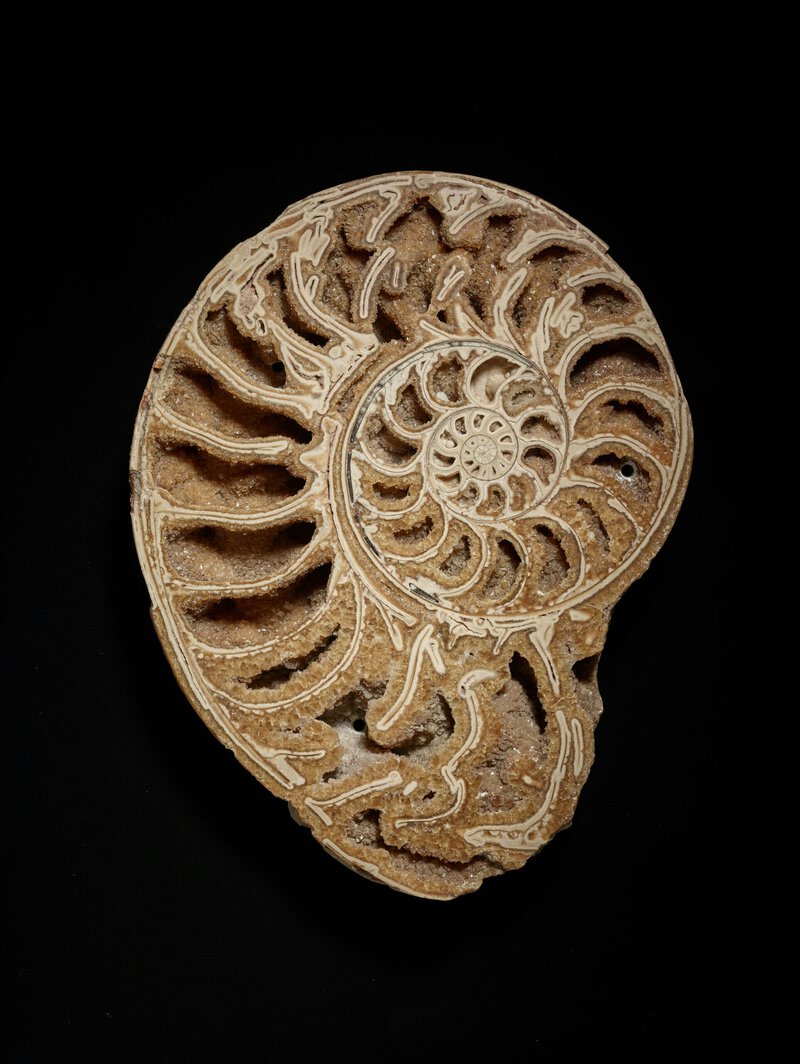
An international research team has announced the discovery of the earliest known siphuncle-bearing cephalopod, a specimen dating to approximately 520 million years ago and recovered from early Cambrian strata in South China. The find, reported by Phys.org, places a recognizable piece of cephalopod architecture squarely within the Cambrian explosion — one of the most consequential bursts of animal diversification in Earth’s history, when most major animal body plans made their first appearance in the fossil record.
Before this discovery, the fossil record placed siphuncle-bearing cephalopods firmly in the later Cambrian or early Ordovician. The new specimen pushes that boundary back by roughly 30 million years, raising the possibility that the cephalopod lineage is even older than any fossil yet recovered. Cephalopods needed buoyancy control to escape the seafloor and become mobile, water-column-dwelling hunters, so establishing when that control first appeared has direct bearing on understanding how and why they rose to ecological dominance.
At only millimeters in size, the specimen demanded high-resolution imaging to reveal the internal structures — the siphuncle, the septa dividing the shell into chambers, and the septal necks through which the siphuncle passes — that distinguish it from simpler shelled invertebrates and confirm its cephalopod identity. That those structures are visible at all reflects both the exceptional preservation conditions in South China’s Cambrian beds and the capabilities of modern micro-imaging technology.
South China’s Cambrian Record and Why It Matters Here

South China has become one of the world’s most productive windows into Cambrian marine life, yielding celebrated fossil deposits that have illuminated the rapid diversification of animal body plans. The region’s early Cambrian strata preserve soft tissues and minute internal structures with a fidelity rarely matched elsewhere, making it uniquely suited to discoveries of this kind.
The fossil’s age predates the previously accepted record for siphuncle-bearing cephalopods by roughly 30 million years. To put that gap in perspective: non-avian dinosaurs existed for approximately 165 million years, so the revision adds to the front of cephalopod history a stretch of time nearly one-fifth as long. As Sci.News details in its coverage, the specimen fills a critical gap between the earliest shelled mollusks and the fully elaborated cephalopod body plans that would proliferate through the Ordovician.
Placing a recognizable cephalopod architecture in the early Cambrian also carries implications for evolutionary tempo. Those seas were already crowded with novel animal experiments — arthropods, echinoderms, early chordates — yet cephalopods appear to have assembled their defining buoyancy apparatus with remarkable speed after their origin. That speed suggests the selective pressures favoring active, three-dimensional movement in the water column were powerful from the very beginning of complex animal life.
The Anatomy of Buoyancy: How a Siphuncle Works
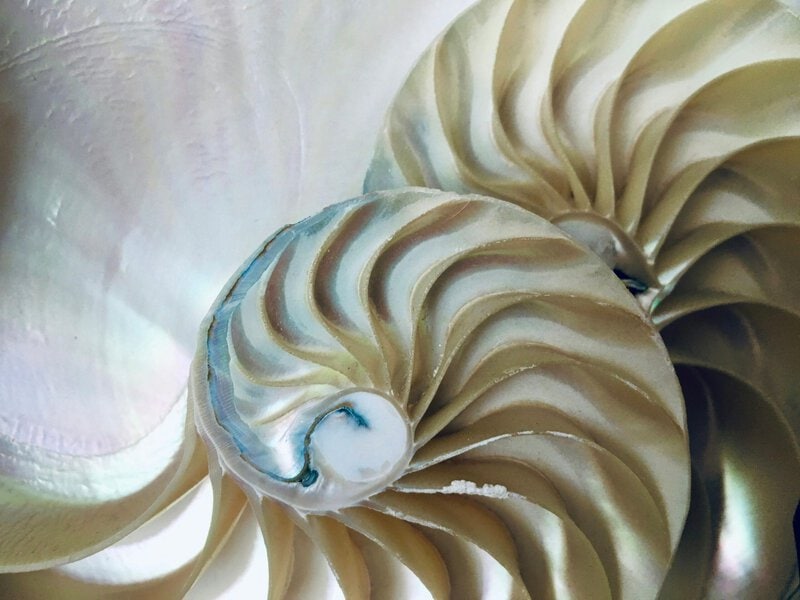
Understanding why this fossil matters requires a brief look at the hydraulic engineering that evolution arrived at more than half a billion years ago. The siphuncle is a living tube of tissue that runs longitudinally through the interior of a cephalopod’s shell, threading through a series of gas-filled chambers separated by walls called septa. Where the siphuncle passes through each septum, short collars of shell material called septal necks provide structural support for the tube.
The system functions as a built-in ballast tank. By drawing fluid into the chambers or expelling it through the siphuncle, the animal can fine-tune its overall density relative to the surrounding seawater, achieving neutral buoyancy — the ability to hover at a given depth without continuous muscular effort. That energy saving is not trivial: an animal freed from the metabolic cost of constant swimming can redirect resources toward hunting, reproduction, and sensory processing, providing a substantial competitive advantage over purely bottom-dwelling relatives.
Buoyancy control is the innovation that separated active, water-column-dwelling cephalopods from their presumed bottom-crawling molluscan ancestors, making the siphuncle one of the most consequential anatomical inventions in marine evolutionary history. A video overview of the discovery walks through how researchers identified these internal structures in such a minute specimen and explains why their geometry is diagnostic for cephalopod affinity.
An Evolutionary Intermediate: What ‘Primitive’ Means Here
The research team characterizes the new specimen’s buoyancy tube as morphologically simple compared with the elaborate siphuncular systems seen in later cephalopods — and that simplicity is scientifically valuable. Evolutionary intermediates are rare in the fossil record, and especially useful because they allow researchers to test hypotheses about the sequence of anatomical changes: in this case, how a passive shell gradually acquired the capacity for active buoyancy control.
The fossil appears to represent a stage between the earliest unseptate shelled mollusks — animals whose shells were single undivided cavities — and the fully chambered, siphuncle-equipped architecture that defined cephalopods through the Ordovician and beyond. Its primitive design suggests the buoyancy system was functional but not yet optimized, perhaps offering only coarse depth control rather than the precise regulation that later, more complex siphuncles permitted.
It is important to distinguish established consensus from emerging interpretation. While it is broadly accepted that cephalopods evolved from simpler shelled mollusks, the exact transitional steps have long been debated. This fossil offers the first direct physical evidence for a primitive siphuncle in the early Cambrian, but the research team acknowledges that its precise phylogenetic placement — exactly where it sits on the cephalopod family tree — requires further analysis and independent peer review.
Some researchers have argued that early chambered shells found in other Cambrian lineages may represent parallel evolutionary experiments in buoyancy rather than direct cephalopod ancestors. The new specimen’s anatomy will need to be compared rigorously with those alternatives before the broader community can fully accept its assignment. Discussion across scientific communication channels reflects both the excitement around the find and the appropriate caution that accompanies any claim to a new fossil record.
Thirty Million Missing Years: Why the Gap Matters
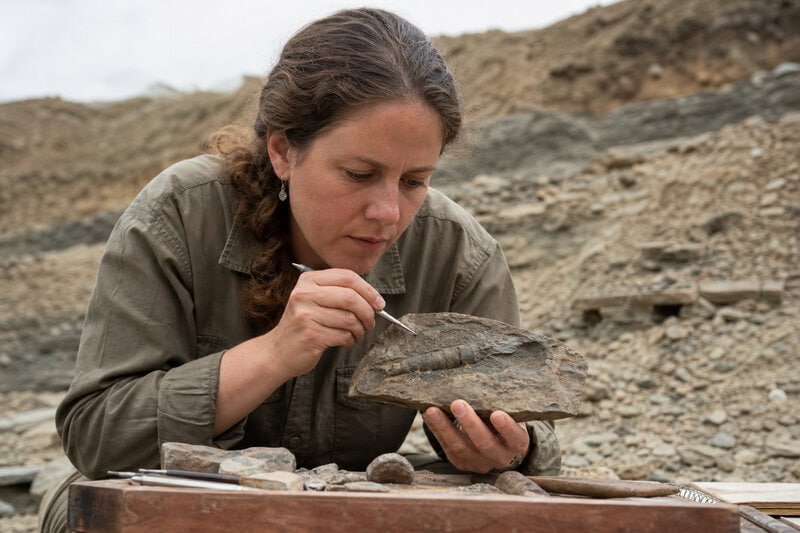
Prior to this discovery, paleontologists working on cephalopod origins could point to siphuncle-bearing fossils in the later Cambrian and early Ordovician, but the deeper Cambrian record was conspicuously silent. That silence generated competing explanations: perhaps cephalopods had not yet evolved; perhaps they were present but too rare and small to preserve or detect; or perhaps researchers had not yet examined the right rock horizons in the right regions.
The new specimen suggests the second or third explanation — or both — were closer to the truth. A 30-million-year extension of the record implies that cephalopods were already experimenting with buoyancy control during the earliest phases of the Cambrian explosion, yet remained below the detection threshold of earlier fossil surveys. If an animal this small and this architecturally significant could go undetected for so long, the early cephalopod radiation may have been richer and more geographically dispersed than current evidence indicates.
The revision also carries consequences for molecular evolutionary biology. Genetic studies that estimate divergence times among major animal groups rely on fossil calibration points to anchor their timelines. A 30-million-year shift in the earliest confirmed cephalopod record can propagate significant revisions through those molecular clocks, potentially reshuffling the implied timing of other molluscan and lophotrochozoan divergences as well.
More broadly, the finding reinforces a growing consensus that the Cambrian explosion was not a single brief pulse of diversification but a more extended and geographically complex radiation. South China’s fossil beds continue to yield specimens that reorder established narratives about when and how modern animal body plans first appeared.
From Cambrian Seafloor to Modern Ocean: The Long Legacy of One Tube
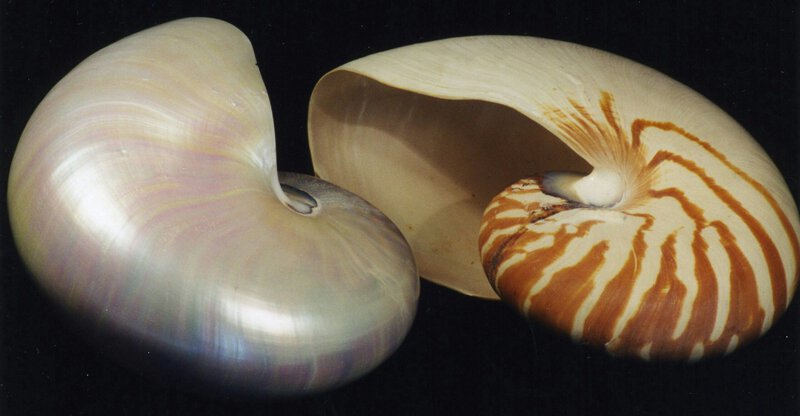
The anatomy pioneered by this Cambrian organism is still at work today, roughly half a billion years later, in the chambered nautilus — the only living cephalopod that retains an external shell equipped with a functioning siphuncle. The nautilus serves as a rare living analogue for understanding how the ancient system operated: researchers can observe in real time how the animal adjusts its buoyancy, measure the gas compositions within its chambers, and model the fluid dynamics of the siphuncular mechanism in ways that fossils alone cannot support.
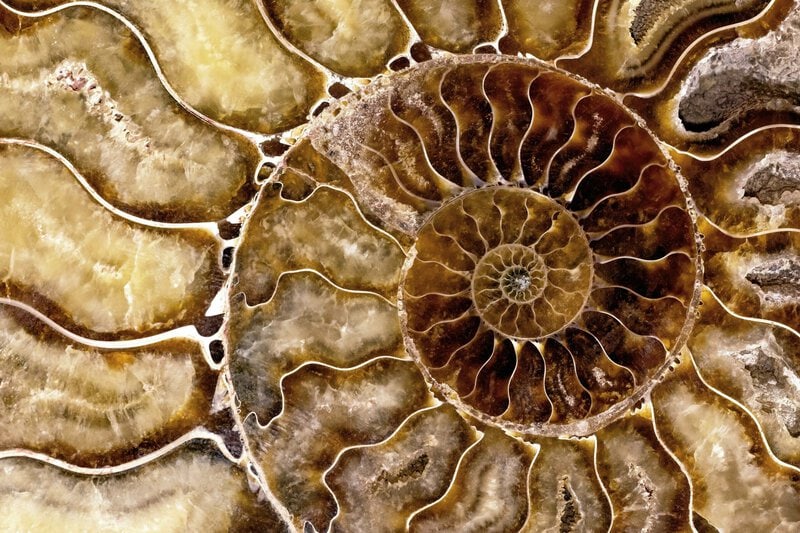
Armed with buoyancy control, early cephalopods diversified explosively through the Ordovician into hundreds of species, eventually giving rise to ammonites — the coiled, often ornately sculptured shell-bearers that would persist until the end-Cretaceous mass extinction — as well as belemnites, and ultimately the soft-bodied squids and octopuses that dominate modern cephalopod diversity. That entire radiation traces its origins to the anatomical innovation now confirmed to have been present in the early Cambrian.
Squids and octopuses have largely abandoned the rigid chambered shell over evolutionary time, retaining only vestigial structures: the squid’s flexible internal pen, or gladius, and the cuttlefish’s porous cuttlebone, which still functions as a buoyancy device through a modified version of the same fluid-and-gas exchange principle. These structures are evolutionary descendants of the same buoyancy architecture visible, in its most primitive known form, in a millimeter-scale fossil from South China.
Open Questions and the Search for Even Earlier Ancestors
The discovery resolves one longstanding gap in the cephalopod fossil record while opening several new questions. If a siphuncle-bearing cephalopod with an already-simplified buoyancy tube existed approximately 520 million years ago, its fully unseptate ancestor must be older still. That logic points researchers toward the earliest Cambrian and potentially even Ediacaran-age rock horizons, though no confirmed cephalopod precursor from those intervals has yet been described.
The methodological frontier is advancing rapidly. Micro-CT scanning and synchrotron X-ray imaging can now resolve internal structures in sub-millimeter Cambrian fossils that would have been completely invisible to researchers working even two decades ago. The implication is significant: legacy museum collections containing thousands of undescribed Cambrian specimens may harbor additional transitional forms awaiting re-examination with modern tools. The record that currently ends at 520 million years ago may not hold for long.
The research team’s identification of the specimen as a cephalopod rests on the presence and geometry of the siphuncle and septa, interpreted against what is known about cephalopod shell architecture. Peer review and independent replication by other research groups will determine how broadly the community accepts the phylogenetic assignment, and future specimens from the same horizons could either corroborate or complicate the picture. The discovery has already generated wide engagement as researchers and science communicators work through its implications.
Each small fossil recovered from Cambrian rock in South China adds another data point to one of science’s most consequential puzzles: how, in a geologically brief window some 520 million years ago, the sea filled with the ancestors of virtually every major animal group alive today — and how one slender tube of tissue, no thicker than a thread, helped set the cephalopods on a trajectory that continues to shape the modern ocean.