
Picture a six-year-old correcting a grown adult on the precise difference between a Brachiosaurus and a Diplodocus — deploying vocabulary most medical students never encounter — and doing so with the calm authority of a tenured professor. It sounds like an anomaly, but developmental science says it is closer to a biological norm than a charming accident. Around one in three children between ages 2 and 6 develop what researchers call an “intense conceptual interest,” a laser-focused passion for a single subject, and dinosaurs rank among the most common triggers, according to research by psychologists Patricia Bloom and Sandra Waxman at Northwestern University. This summer, community calendars across the country are reflecting that demand — including at the Huron Public Library, whose Youth Summer Learning Program culminates in a “Roar-some Celebration” at the Huron Boat Basin and Amphitheater on July 30 at 5:30 p.m. The science behind why children pack those events is anything but trivial.
What “Intense Interest” Actually Means in the Developing Brain

Psychologists use the term “intense conceptual interest” — sometimes called a “focused passion” — to describe sustained, self-motivated engagement with an entire category of knowledge, not merely a preference for a particular toy or color. A child who likes a plastic stegosaurus figurine has a preference. A child who memorizes the Triassic, Jurassic, and Cretaceous periods, cross-references them unprompted, and corrects the natural history museum’s gift-shop labels has an intense conceptual interest. The distinction matters developmentally.
Research on intense interests has found that children who develop them score significantly higher on measures of sustained attention, information-processing depth, and persistence than peers without such focused passions. Researchers have interpreted these obsessions not as quirky phases to be managed but as a mechanism the brain actively uses to practice expert-level thinking ahead of schedule. In plain terms: the obsession may be the brain training itself.
Neuroscientists have linked intense interest to elevated activity in the brain’s mesolimbic reward circuitry — the same reinforcement loop associated with adult expertise and professional mastery. When a child encounters a new dinosaur fact, that circuit fires, producing a mild but genuine pleasure signal that motivates the next round of learning. Over time, repeated activation of this loop is thought to strengthen the prefrontal cortex, the region most closely associated with reasoning, planning, and impulse control. An important caveat applies here: the attention and persistence benefits associated with intense interests are well-replicated across multiple studies, but the specific neurochemical pathway underlying those benefits in young children is still being mapped and should be treated as a promising scientific hypothesis rather than settled fact.
Why Dinosaurs Specifically? The Cognitive Sweet Spot
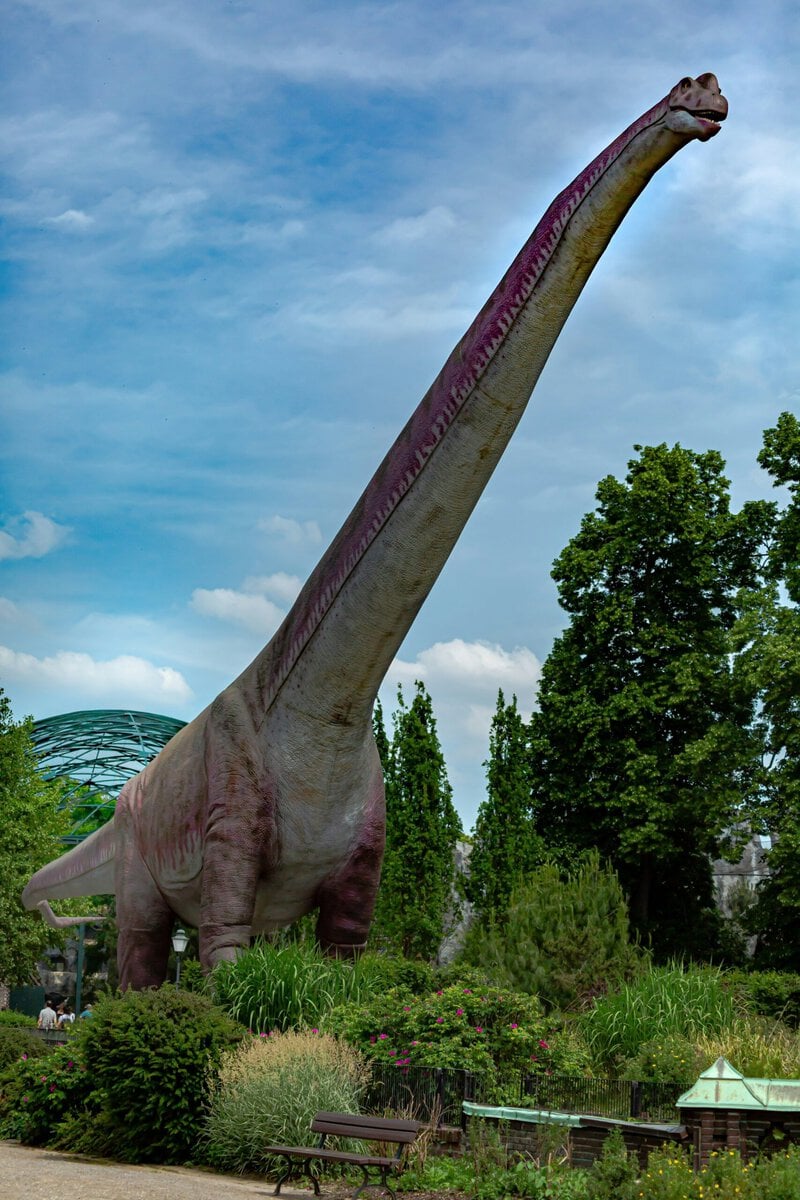
Not every subject triggers an intense interest with the consistency that dinosaurs do, and the reasons are rooted in how a child’s brain evaluates incoming information. Dinosaurs occupy a rare cognitive sweet spot along several dimensions simultaneously. They are real, which lends them scientific credibility that dragons or unicorns lack. They are extinct, which removes any genuine threat response that might otherwise create anxiety rather than pleasure. They are visually dramatic — enormous, sharply toothed, structurally unlike anything alive today — which activates the brain’s high-salience object-recognition systems and makes them intrinsically memorable. And they are categorically rich: with more than 1,000 named species spanning three geological periods and every continent, they offer a child an almost inexhaustible taxonomy to master.
Developmental researchers have noted that children are strongly drawn to domains where they can become “the expert in the room” relative to the adults around them. Dinosaurs qualify almost uniquely, because most caregivers genuinely know less than a deeply obsessed seven-year-old. That asymmetry is not incidental — it is motivationally powerful. A child who can teach a parent something real has experienced a form of social competence that reinforces continued learning.
The sheer scale of certain dinosaurs also engages what psychologist Paul Rozin at the University of Pennsylvania has studied under the concept of “benign masochism” — the safe experience of awe, and mild simulated fear, that produces pleasure precisely because the child knows the threat is not real. A T. rex is terrifying in the abstract and entirely safe in the library, making it an ideal vehicle for the kind of controlled emotional arousal that children find deeply engaging.
One contested angle worth noting: some researchers in evolutionary psychology propose that intense interest in large predatory animals may tap into an evolved predator-recognition system — ancient neural circuitry that once helped human ancestors catalog dangerous species. Under this hypothesis, cataloging dinosaurs would feel intrinsically rewarding because it mimics a once-adaptive behavior. This interpretation remains debated within the field and should be understood as speculative rather than established.
The Learning Cascade: What the Obsession Actually Builds
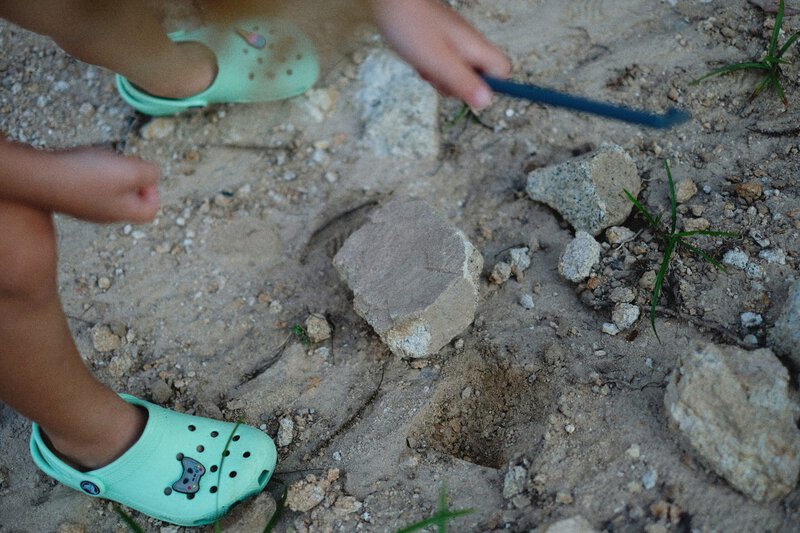
Whatever its origins, a dinosaur obsession produces measurable cognitive benefits that extend well beyond paleontology. Research published in the journal Science of Learning has found that children with intense interests show accelerated vocabulary acquisition — in some cases the equivalent of a substantial developmental leap — because intrinsic motivation drives repeated, contextual exposure to genuinely complex words. A child who wants to understand the difference between a theropod and a sauropod has a real reason to decode the word “bipedal.” That motivation is a more powerful teacher than most curricula.
Reading comprehension benefits as well. Research by John Guthrie at the University of Maryland on motivational reading theory found that when children are permitted to select high-interest texts — rather than being assigned reading — comprehension scores rise sharply. A child who chooses a book about the Cretaceous-Paleogene extinction event reads more carefully, rereads more willingly, and retains more than a child assigned the same passage as a requirement.
Intense interest episodes also teach metacognition — the ability to think about one’s own thinking. A child who notices a gap in their dinosaur knowledge and actively seeks to fill it is modeling the scientific method in miniature: identifying ignorance, formulating a question, seeking evidence, and updating a mental model. These habits of mind transfer across subjects. An important methodological note: most of the studies supporting these benefits are correlational in design. Randomized controlled trials that isolate intense interest as the sole causal variable in child development are rare and difficult to construct ethically, so the causal direction of these relationships should be interpreted with appropriate caution.
Key Dinosaur Facts That Hook Young Minds — and Why They Work
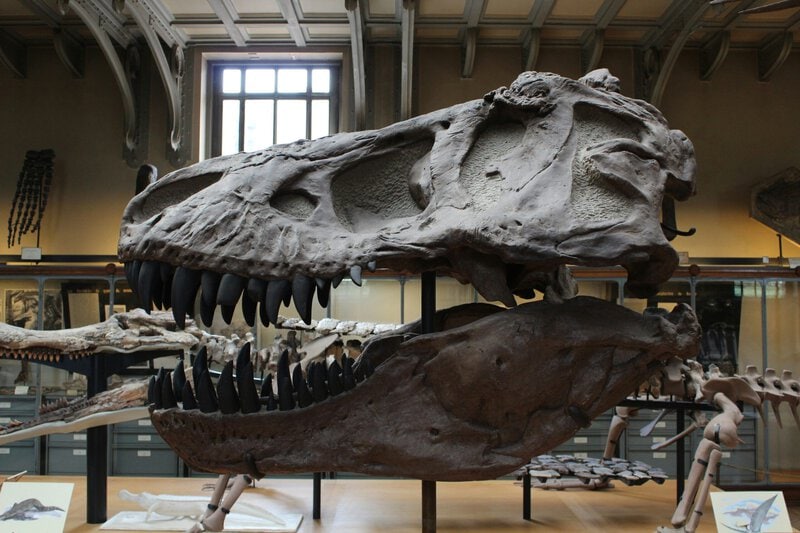
The specific facts that captivate children are not random. They share cognitive features that make them particularly effective as learning anchors.
- Bite force: Biomechanical research, including work by Gregory Erickson at Florida State University, estimates that T. rex had a bite force in the range of approximately 8,000 pounds per square inch — among the most powerful of any known terrestrial animal. Facts with extreme, countable magnitude are especially effective at developing numerical cognition, giving children a concrete scale against which to measure the world.
- Birds are dinosaurs: The scientific consensus, supported by the Society of Vertebrate Paleontology and the broader paleontological community, is that modern birds are avian theropod dinosaurs — the dinosaur lineage did not go fully extinct 66 million years ago. This fact reframes a child’s everyday experience (every sparrow becomes evidence of survival) and delivers a lesson in how science revises its own categories, which is among the most important things a young person can learn about knowledge itself.
- Superlatives drive inquiry: Argentinosaurus is among the largest dinosaurs yet discovered, with mass estimates ranging widely in the scientific literature but potentially reaching 70 metric tons or more — figures that place it among the heaviest land animals in Earth’s known history. Superlatives — biggest, fastest, oldest — activate comparative reasoning and fuel the cascade of “but why?” questions that deepen understanding.
These facts function as what cognitive scientist John Sweller, in his work on cognitive load theory, calls “conceptual anchors” — mental hooks onto which subsequent, more complex knowledge can be attached efficiently. A child who knows that T. rex lived in the Late Cretaceous has a framework ready to receive information about the Chicxulub impact, continental drift, and climate change.
What Parents and Librarians Can Do to Maximize the Benefit

The research points toward a clear practical principle: follow the child’s lead rather than redirecting. Research by Angeline Lillard at the University of Virginia on child-directed learning suggests that adult validation and scaffolding of a child’s chosen interest — rather than substituting adult-preferred topics — produces stronger motivation and longer retention. Telling a dinosaur-obsessed child to “try something new” may be developmentally counterproductive at precisely the moment the brain is most primed to learn.
A more productive approach is to use the interest as a bridge. A child captivated by dinosaurs can be introduced, through that single entry point, to geology (rock strata and deep time), evolutionary biology (how Archaeopteryx connects reptiles and birds), geography (why Argentina and Mongolia are fossil-rich), and mathematics (what it concretely means for something to have lived 230 million years ago). The obsession is not a detour from education — it is, potentially, the most efficient on-ramp available.
Community institutions like libraries are uniquely positioned to amplify this effect. Dinosaur-themed events at the Huron Public Library and similar programs elsewhere provide something classroom learning often cannot: peer validation. When a child sees dozens of other children sharing their passion at an event like the July 30 “Roar-some Celebration” at the Huron Boat Basin and Amphitheater, the experience can reduce the social isolation that occasionally accompanies very intense interests and reinforces the idea that expertise is socially valued — a powerful motivational signal.
One important caution from the research: intense interest is normative and beneficial within a range. If an interest becomes so rigid that a child refuses all other activities, shows significant distress when redirected, or the pattern is accompanied by other developmental concerns, it may warrant a conversation with a pediatric psychologist. Inflexibility at the extreme end of the spectrum can occasionally be an early signal worth discussing with a professional, and parents should feel empowered to seek that guidance without stigma.
Dinosaur Obsession as a Window Into How Expertise Forms
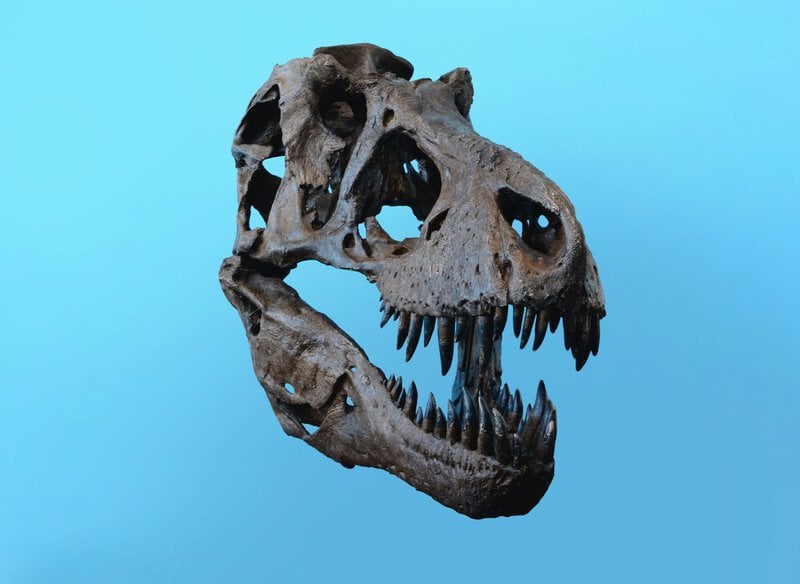
Zooming out, the cognitive skills built during a childhood intense interest — sustained attention, deep categorization, expert vocabulary, tolerance for complexity, and intrinsic motivation — are precisely the capacities that longitudinal research links to academic and professional achievement across domains. Psychologist K. Ann Renninger at Swarthmore College, who has spent decades studying interest development across the lifespan, argues that what she calls “triggered situational interest” — the initial spark phase, which dinosaurs so reliably represent — is the seed stage of what can become lifelong expertise, provided it is nurtured rather than dismissed. The trajectory from “obsessed kindergartener” to “domain expert” is not guaranteed, but the early cognitive architecture is recognizably the same.
The practical upshot for parents, educators, and the librarians organizing events like Huron’s summer dinosaur programming: a child roaring like a Velociraptor at the Huron Boat Basin on the evening of July 30 is not wasting time. By the best available evidence in developmental psychology, they may be doing some of the most productive cognitive work of their entire childhood.
A final note on scientific humility: child development is complex and deeply individual. No single interest guarantees any particular outcome, and the research reviewed here reflects population-level trends with meaningful variation between individuals. The goal of this science is not to over-engineer a child’s natural curiosity or to load a fun summer evening with developmental pressure. It is simply to reframe what looks like obsession as what it more likely is — opportunity.