There Are Giant Carvings of Animals In Peru
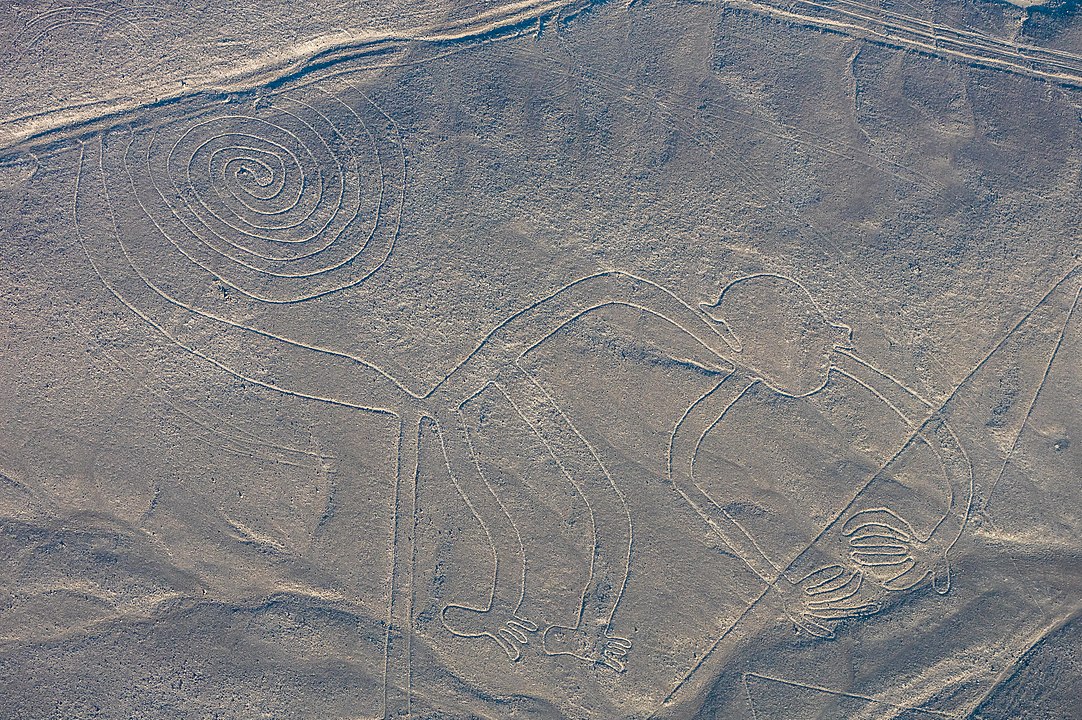
People know about the Nazca lines. They crisscross the Peruvian pampas, flat and fertile lowlands in South America. What was not realized until aerial photographs were taken was that the lines were not random collections of depressions drawn into the ground. They were massive carvings of animals, some of which were over half a mile in size. Their enormity leads many researchers to question what caused the people of ancient Peru to invest so much time and energy in carving these hieroglyphs and how they could do so with such stunning precision.
Some local theories range from religious significance to slave labor to alien intervention. Nevertheless, scientists believe these large hieroglyphs came to be between 500 BCE and 500 CE. They made shallow and sometimes deep incisions in the desert floor to expose the colored dirt underneath. The combination of all the lines is over 1,300 kilometers or 800 miles, covering an area of 50 square kilometers or 19 square miles, and most lines are over one-third meter or a foot wide. If they are impressive looking at them from a plane, it’s, even more, looking up close on how they made it.