Turkey Has Mineral Springs Made of Limestone
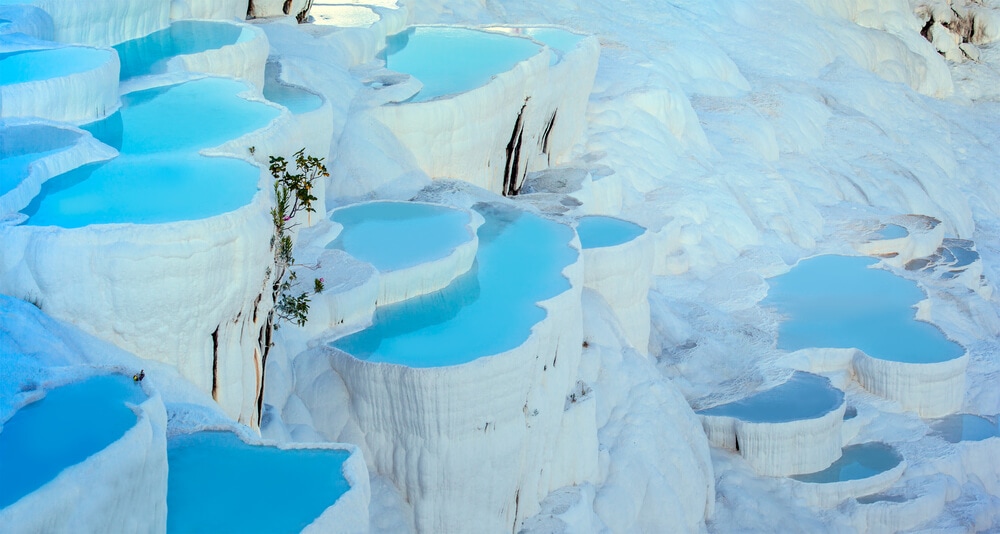
Pamukkale is a place in western Turkey, and its name means “cotton castle.” It was the site of the ancient Greek city of Hierapolis or the Holy City, and one visit will make you realize why it was so revered. The place is made of white limestone, and the minerals in the hot springs have long been known to rejuvenate weary people. Experts believe the Greco-Roman city of Hierapolis was built in the 2nd century BC on top of the travertine. The formation is almost 9,000 feet long, 1,970 feet wide, and 525 feet high.
In addition to being a natural wonder, Pamukkale is an archeologist’s and history buff’s dream. It is the site of many ancient Greek and Roman ruins. They are remarkably well-preserved, possibly due to the hot springs’ minerals. People named it the “Cotton Castle” due to its snow-white limestone dripping down the mountainside. The shimmer makes it look like it is from a fairy tale book. Some legends even say that the formations are solidified cotton that giants left out to dry. Visitors can enjoy artificial pools, enter preserved Roman ruins, and learn more about its history in the museum on-site.