Underground Parisian Streets Are Littered With Bones
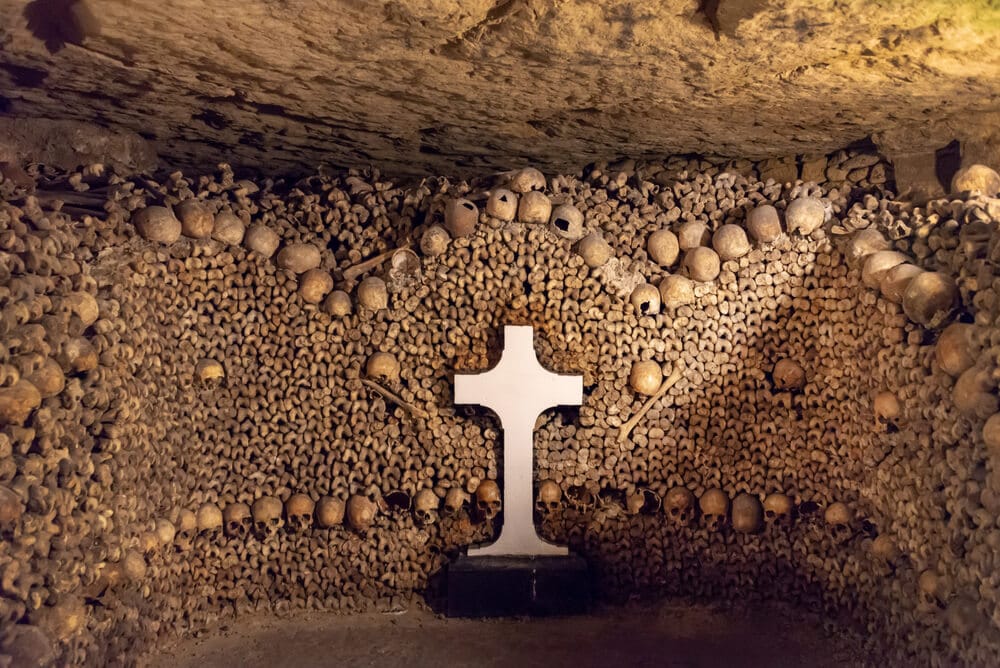
Paris has been around for a long time, and many people have died within its limits over the centuries. Ancient graveyards became so full of bodies that city workers moved skeletons from anonymous pits into the catacombs that crisscross the city’s underground in the eighteenth and nineteenth centuries. In total, there’s more than 6 million human remains in the underground catacombs. The city started the process after an incident in 1774 where basement walls in Saint Innocents Cemetery collapsed, bringing an urge of urgency to find a new home for the dead.
The catacombs are situated in a small part of a tunnel network built to consolidate Paris’ ancient stone quarries. The ossuary was mostly forgotten until it became a fad to place concerts and private events in the 19th century. City officials recognized the potential that the underground catacombs had for drawing in more tourists (and more money). They arranged the anonymous skeletons into the arrangements that can be seen today, methods that are quite macabre and disturbing. In 2013, they became part of the Paris Museums managed by Paris Musées, which is the same institution that manages the archaeological crypts of Notre-Dame.