
A stone spearhead that spent years sitting quietly in a county historical society’s collection has just delivered one of the most significant findings in Maryland’s archaeological history: traces linked to mammoth blood, making it the first known evidence that humans hunted mammoths on the state’s Eastern Shore. That single artifact — a knapped-stone projectile point housed at the Dorchester County Historical Society — is now forcing researchers to reconsider where and how the earliest human inhabitants of Maryland lived, traveled, and survived.
One Artifact, One Stunning Revelation
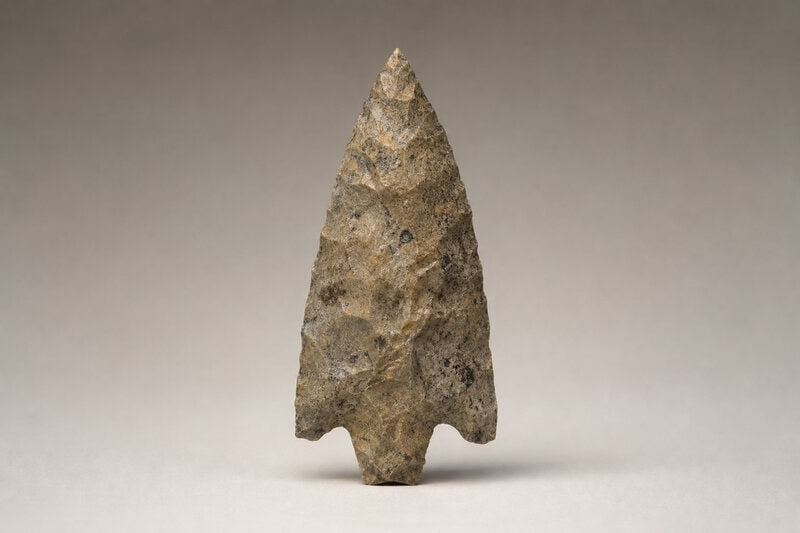
This discovery pushes back the documented timeline of human activity in the region and challenges long-held assumptions about Paleoamerican populations — the term archaeologists use for the earliest confirmed human inhabitants of the Americas — in the mid-Atlantic. Before this finding, the Eastern Shore was not a landscape most researchers associated with major Paleoamerican evidence. It was considered archaeologically sparse, a place where the record was thin and the early human story frustratingly incomplete.
To understand why the discovery matters, it helps to picture what Dorchester County looked like roughly 13,000 years ago. The low-lying coastal plain that today gives way to marshland, tidal creeks, and Chesapeake Bay looked nothing like it does now. Sea levels were significantly lower during the late Pleistocene epoch — the geological period ending approximately 11,700 years ago — exposing a broader coastal plain that extended well beyond the current shoreline. The climate was cooler, the vegetation more open, and the landscape was shared by megafauna including mastodons and mammoths. It was terrain that a small band of hunters with stone-tipped spears could plausibly have crossed in pursuit of prey that weighed several tons.
The animating question this artifact raises is deceptively simple: What does one spearhead, quietly stored in a county historical society, tell us about the people who first called Maryland home?
The Artifact Itself: What Was Found and Where
The spearhead is a knapped-stone projectile point — a tool shaped by the controlled removal of stone flakes to produce a sharp, symmetrical tip suitable for hafting onto a wooden or bone shaft. This method of tool-making is consistent with Paleoamerican traditions documented across North America, and the artifact’s general form places it within the broad Paleoamerican period, roughly 13,000 to 10,000 years before present.
What makes this find geographically notable is precisely where it turned up. The Eastern Shore of Maryland is not a region traditionally associated with major prehistoric spearhead discoveries or Paleoamerican sites. The mid-Atlantic’s significant early human finds have tended to cluster inland or in areas where excavation conditions are more favorable. The Eastern Shore’s waterlogged, low-lying terrain presents real challenges for in-ground archaeology, which is part of why this artifact — recovered and preserved by a local historical society rather than a formal excavation — carries such unexpected scientific weight.
New research reported by WBOC News on the Dorchester County spearhead describes how a stored object was transformed into a scientifically significant Paleoamerican artifact through fresh analysis — a reminder that the most important archaeological finds are not always the ones pulled from the ground in a current dig season.
The Science: How Researchers Read Blood Traces on Stone

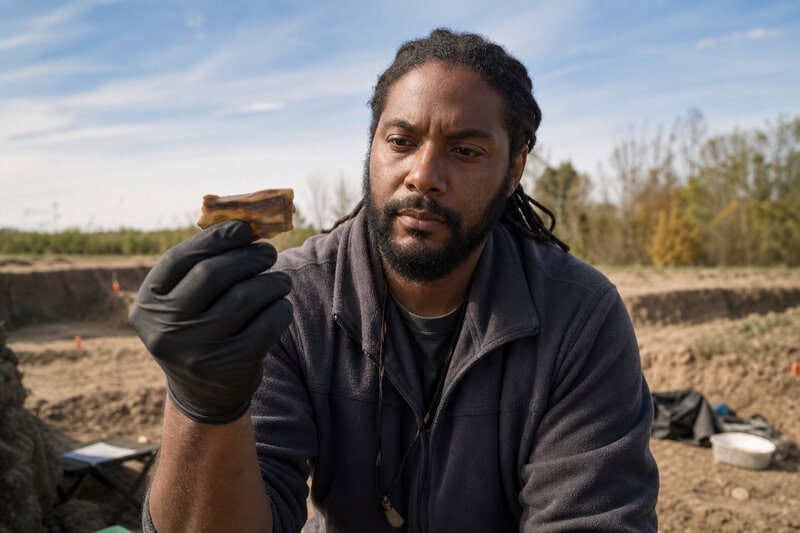
The claim that this spearhead carries traces linked to mammoth blood rests on a technique called residue analysis. In plain terms, residue analysis examines microscopic organic material — proteins, lipids, or molecular fragments — preserved on or within the surface of stone tools long after those tools were last used. The logic is straightforward: when a stone implement cuts, pierces, or scrapes biological material, microscopic traces of that material can become lodged in the tool’s surface.
Stone, particularly flint or chert — the fine-grained silicate rocks commonly used by Paleoamerican toolmakers — can trap organic molecules in the micro-crevices created by the knapping process. Under the right conditions of burial, storage, or both, those molecules resist full degradation across thousands of years. This is what makes residue analysis possible on artifacts of this age, and it is why a spearhead that has been handled, curated, and stored for generations can still yield biological information.
In this case, researchers identified molecular signatures associated with proboscidean biological material. Proboscidea is the taxonomic order that includes both mammoths and mastodons, the two large-tusked megafauna species present in North America during the late Pleistocene. The finding links the tool to one of those animals, which is why the discovery is being described as evidence of mammoth hunting — though precision matters here: the identification is based on protein or molecular signatures consistent with proboscidean material, not a confirmed ancient DNA sequence, which would represent a higher and more demanding evidentiary standard.
Residue analysis on ancient stone tools is an accepted method within archaeology, but it exists in contested scientific terrain. Cross-contamination — the introduction of foreign biological material during excavation, handling, or storage — and the natural degradation of organic molecules are recognized challenges. The strength of any residue finding depends heavily on the rigor of the controls applied during analysis. These are not reasons to dismiss the result, but they are reasons the scientific community will appropriately look for independent replication before treating the mammoth-hunting interpretation as settled consensus.
Why Mammoth Hunting on Maryland’s Eastern Shore Matters
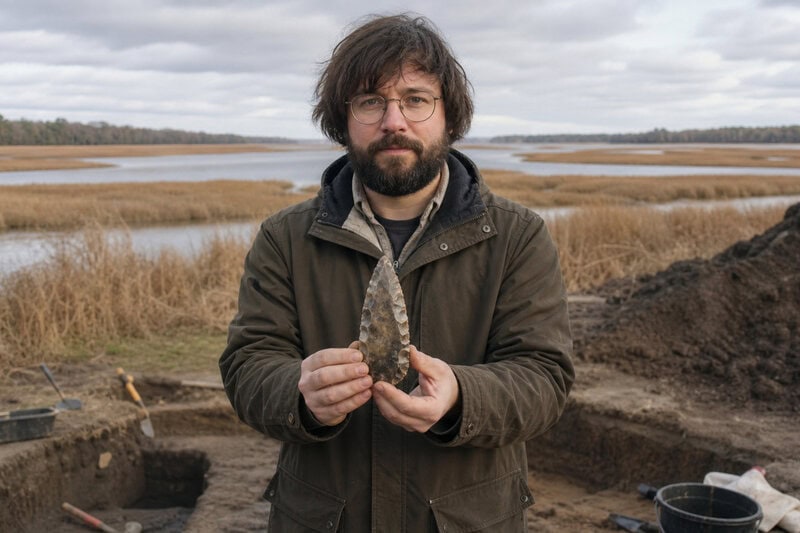
Prior to this finding, the oldest confirmed human evidence in Maryland was largely associated with inland sites and the broader Chesapeake region. The Eastern Shore yielded comparatively sparse Paleoamerican material, leaving a significant gap in the regional record. This spearhead begins to fill that gap in a meaningful way.
The ecological picture supports the plausibility of the find. During the late Pleistocene, Maryland’s Eastern Shore was a cooler, more open landscape connected to a broader coastal plain exposed by lower sea levels — the kind of habitat that could sustain mammoths and the human groups who followed them. As glaciers retreated and sea levels rose over subsequent millennia, that landscape was gradually submerged, taking with it much of the physical evidence of the people who lived there. What remains on dry land today is an incomplete sample of what was once a more continuous record.
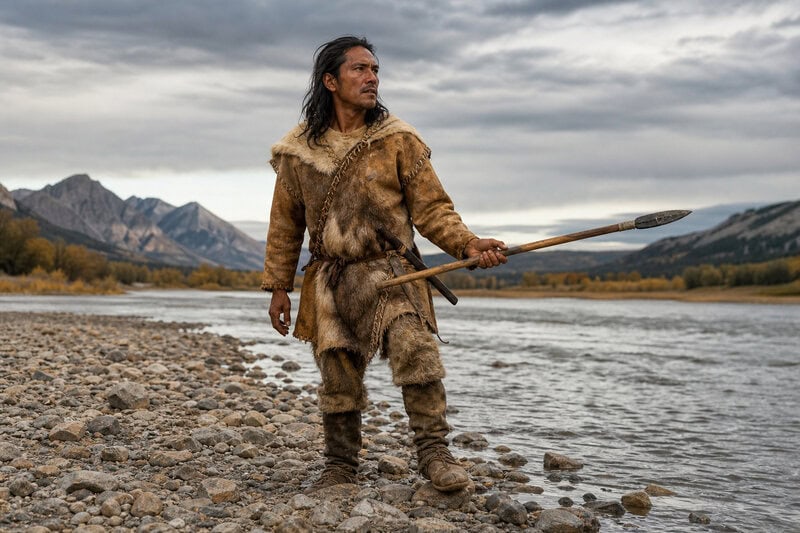
The mammoth connection also carries an indirect but important implication about the people themselves. Hunting mammoths — animals that could weigh several tons or more — was not a solitary undertaking. It required coordinated group effort, sophisticated projectile weaponry effective enough to bring down large prey, and detailed knowledge of animal behavior and landscape. This spearhead is therefore indirect evidence of complex social organization, planning capacity, and ecological knowledge among the first Americans in Maryland. These were not opportunistic scavengers but skilled hunters operating within a coherent cultural system.
What remains unknown is equally important to acknowledge. Researchers cannot yet determine the precise age of the hunt, the size of the human group involved, or whether this location represents a single isolated encounter or evidence of sustained human occupation in the area. Those open questions keep the finding appropriately contextualized and point toward the research that needs to follow.
Placing Maryland in the Broader Story of the First Americans
The question of when and how humans first populated North America is one of archaeology’s most actively debated topics. Evidence now points to human arrivals at least 15,000 to 16,000 years ago, based on well-documented sites such as Cooper’s Ferry in Idaho and Monte Verde in Chile, both of which predate the threshold once considered definitive. Maryland’s new finding must be understood within that evolving framework.
For decades, the Clovis culture — identified by a distinctive fluted-point tool style dating to roughly 13,000 years ago and found widely across North America — was considered the earliest confirmed widespread human presence on the continent. The so-called Clovis-first model has been significantly complicated by pre-Clovis sites, and the debate over North America’s earliest inhabitants remains genuinely open. Any Maryland artifact must be evaluated carefully against this backdrop, with attention to whether its tool style aligns with Clovis traditions or suggests something different.
The Eastern Seaboard has historically offered fewer well-preserved Paleoamerican sites than interior regions, and the reason is partly geological. Rising post-glacial sea levels submerged the coastal landscapes where early populations may have concentrated, erasing much of the record below the present waterline. This means that surface finds and collection pieces like this spearhead are disproportionately valuable — they represent survivals from a much larger world of evidence that is now inaccessible.
This discovery does not rewrite the continental story of the first Americans. But it meaningfully fills a regional gap, offering new evidence that Paleoamerican populations were present, active, and hunting large game across a broader swath of the Eastern Seaboard than the archaeological record previously confirmed — a significant contribution even if it raises as many questions as it answers.
What Comes Next: Research, Preservation, and Open Questions
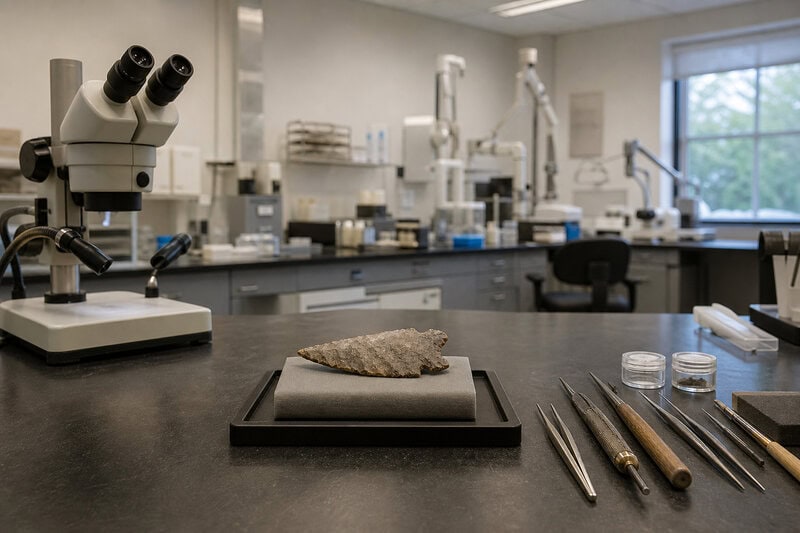
The logical next steps are clear in outline, if not yet confirmed in practice. Additional residue testing on the same artifact — ideally conducted by an independent laboratory — would strengthen or challenge the original finding. Comparison with other Eastern Shore collections, many of which may contain unstudied artifacts with similar profiles, could reveal whether this spearhead is an isolated outlier or a signal of broader undiscovered Paleoamerican activity in the region. Targeted survey work in areas with similar geological profiles to the original find location could also help identify associated sites.
This case illustrates a broader methodological lesson that is reshaping parts of the discipline: historical societies and museum collections are unexpected archives of ancient history. Across the country, significant prehistoric artifacts were collected by amateur archaeologists, farmers, and curious landowners over the past century and a half, then deposited in local institutions where they have sat largely unstudied. Modern analytical techniques — including residue analysis, portable X-ray fluorescence for sourcing stone materials, and advances in ancient protein identification — can now extract information from those objects that was simply unavailable to earlier researchers. Additional coverage of the Dorchester County spearhead finding highlights the broader significance of revisiting these collections with contemporary tools.
Preservation adds urgency to the research agenda. The low-lying, waterlogged environment of the Eastern Shore is both part of why organic residues may have survived on this particular spearhead and a reason that in-ground archaeological sites are difficult to locate and increasingly vulnerable to erosion, development, and accelerating sea-level rise. The physical landscapes that might contain additional early human evidence in Maryland are, in some cases, actively disappearing.
For the mammoth-hunting interpretation to move from compelling finding to established consensus, the scientific community’s standard expectation would require independent replication of the residue analysis and, ideally, associated faunal remains or stratigraphic context — evidence from the ground itself that corroborates what the stone tool’s surface suggests. That bar has not yet been cleared, and responsible reporting requires saying so plainly.
Why a County Historical Society Changed Maryland’s Story
The people who knapped this spearhead, tracked a mammoth across a landscape that no longer exists above sea level, and left this single stone object behind were, in a meaningful sense, the first Marylanders. Their story has been largely invisible in the regional archaeological record — not because they were absent, but because the evidence of their presence has been difficult to recover, preserve, and study. One artifact, reexamined with modern methods, has made them visible in a way they were not before.
Some of the most significant recent advances in understanding prehistoric human history are coming not from dramatic new excavations but from the careful re-examination of objects already in hand. The Dorchester County spearhead is a clear example of that pattern, and it suggests that the next important finding may already be sitting in a drawer somewhere, waiting for the right question and the right technique to bring it to light.
The spearhead does not answer every question about Maryland’s earliest inhabitants, but it asks better ones — and in archaeology, a sharper question is often more valuable than a premature answer. As sea levels rise and the low-lying coastal landscapes of the Eastern Shore continue to change, the window for recovering physical evidence of the first Americans in Maryland’s most vulnerable regions may be narrowing. That lends new urgency not only to fieldwork yet to be done, but to the careful study of every artifact that has already, against considerable odds, made it into a collection.