
Miniature human brain tumors have been orbiting Earth inside the International Space Station, quietly transforming in ways that have left cancer researchers reconsidering some of their most basic assumptions. What happened to those tumors in microgravity may point toward a new chapter in one of oncology’s most frustrating stories.
Glioblastoma: A Disease That Has Resisted Decades of Progress
Glioblastoma multiforme, or GBM, is the most aggressive primary brain tumor in adults. Most patients survive fewer than 15 months after diagnosis, even with surgery, radiation, and chemotherapy. Despite decades of research and genuine scientific effort, the treatment landscape has shifted only modestly. New approaches keep arriving in laboratory settings, yet very few survive the journey to clinical benefit.
Part of the problem is biological. Glioblastoma doesn’t grow as a tidy, contained mass — it threads itself through surrounding brain tissue like roots through soil, making complete surgical removal nearly impossible and giving tumor cells ample opportunity to develop resistance to treatment. But another, less-discussed part of the problem is methodological: the tools scientists use to study GBM in the lab may be giving them an incomplete picture.
Traditional flat, two-dimensional cell cultures in petri dishes fail to replicate the complex architecture of a real human tumor. Animal models are more sophisticated, but they introduce their own biological differences. In recent years, researchers have turned to tumor organoids — lab-grown, three-dimensional tissue models that more closely mimic the structure and behavior of actual tumors. They are not perfect analogs, but they are considerably more realistic than anything that came before. The next question researchers began asking: does the physical environment in which an organoid grows change how the tumor inside it behaves?
What Happens When You Culture a Brain Tumor in Orbit?
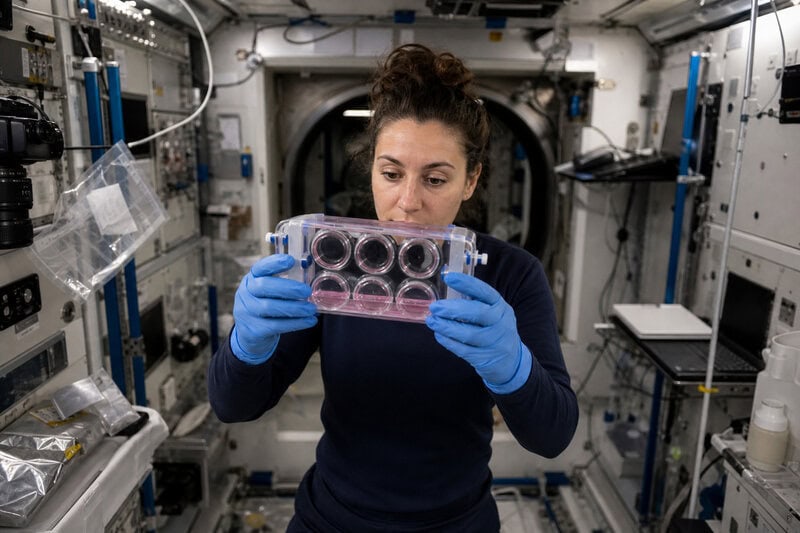
To answer that question, researchers led by A. Burchett Darantiere and colleagues did something genuinely unusual: they sent glioblastoma organoids to the International Space Station, where the samples were cultured for 40 days in microgravity. Parallel organoids were grown simultaneously on the ground under otherwise identical conditions, creating a direct comparison between space-grown and Earth-grown tumors.
The rationale for going to space wasn’t novelty for its own sake. In microgravity, cells experience dramatically reduced mechanical stress. The gravitational forces that constantly act on tissue on Earth — compressing, shaping, and influencing how cells cluster, signal, and communicate — are largely absent. That changes everything from fluid dynamics around the cells to the way cellular structures organize themselves in three-dimensional space. Scientists had reason to believe this altered physical environment might reveal tumor biology that standard lab conditions had been obscuring.
To analyze what actually changed, the team used a multi-omics approach — simultaneously examining genomics, proteomics, and metabolomics — combined with spatial analysis that mapped biological activity across different regions within the organoids. The result was an unusually layered, high-resolution portrait of how these tumors responded to life in orbit. The findings were published in PNAS.
Three Findings That Researchers Didn’t Fully Expect
The results produced several findings worth understanding in detail, because each carries different implications for where this research could lead.
- Significant shifts in gene expression. After 40 days in orbit, the space-grown glioblastoma organoids showed significant changes in gene expression, leading to markers linked to more severe disease states. Microgravity didn’t simply preserve the tumors in amber; it pushed their biology in a distinct direction.
- More uniform internal morphology. The spaceflight organoids developed a noticeably more consistent internal structure compared to the ground controls, which were more structurally irregular. This difference in shape and organization has significant practical consequences, particularly for drug testing.
- A context-dependent cellular response. Microgravity didn’t affect all cells within the organoids in the same way. Instead, the organoids exhibited a context-dependent response, as observed in multi-omics and spatial analysis. This suggests the tumors contain functionally varied cell groups that only become clearly distinguishable under sufficiently unusual conditions.
Taken together, the findings suggest that space didn’t create some alien version of glioblastoma. Rather, it stripped away what researchers might call “gravitational noise” — the constant background physical forces that shape how tumors look and behave in Earth-based conditions — and exposed underlying biology that may have been present all along but difficult to see clearly on the ground.
Why the Shape of a Tumor Model Actually Matters
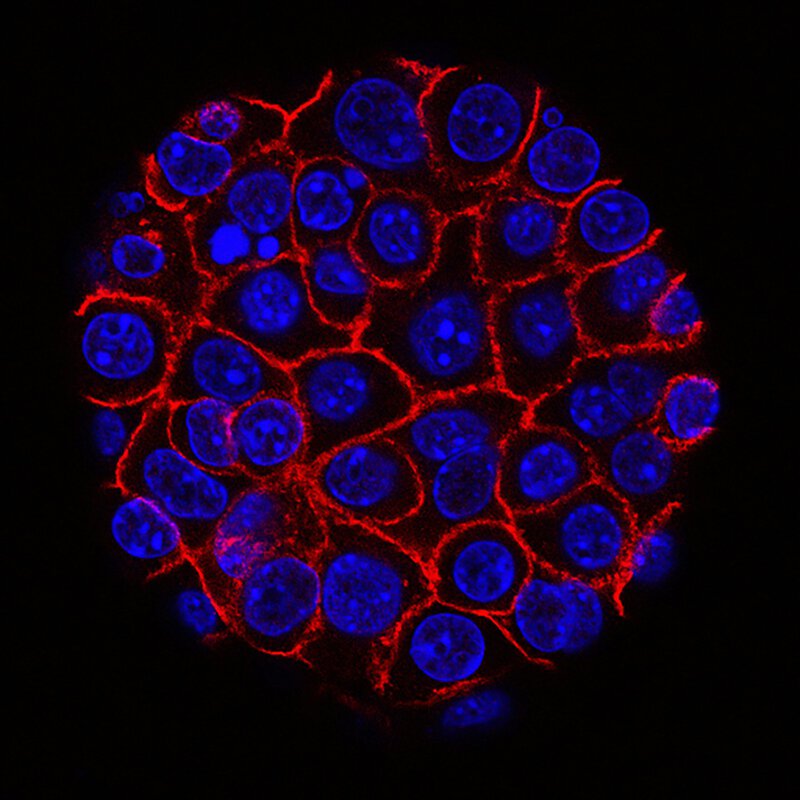
The finding about morphology — specifically the greater uniformity of space-grown organoids — deserves special attention, because it speaks directly to a stubborn practical problem in preclinical cancer research.
When scientists test experimental drugs on tumor organoids, the therapy must actually reach the cells it’s meant to target. With structurally irregular and lumpy organoids, drug penetration becomes uneven and unpredictable. If a drug appears to fail, researchers can’t always determine whether the compound genuinely didn’t work or whether it simply never reached the right cells in sufficient concentration. That ambiguity slows the entire drug-discovery pipeline and contributes to the high attrition rate of GBM drug candidates.
Consider testing a cleaning solution on two sponges: one with a consistent, even texture and one that is irregular and compressed in places. The uniform sponge yields cleaner, more trustworthy data because you can be confident the solution reached everywhere it was supposed to go. The more consistent architecture of space-grown organoids offers that same reliability advantage for drug screening — and in early-stage pharmaceutical research, reliability is enormously valuable.
If these findings are validated and extended, pharmaceutical researchers may eventually treat microgravity-grown organoids as a more rigorous platform for preclinical GBM drug testing, at least for specific research questions where structural consistency is critical to interpreting results.
The Larger Movement: Space as a Biological Laboratory
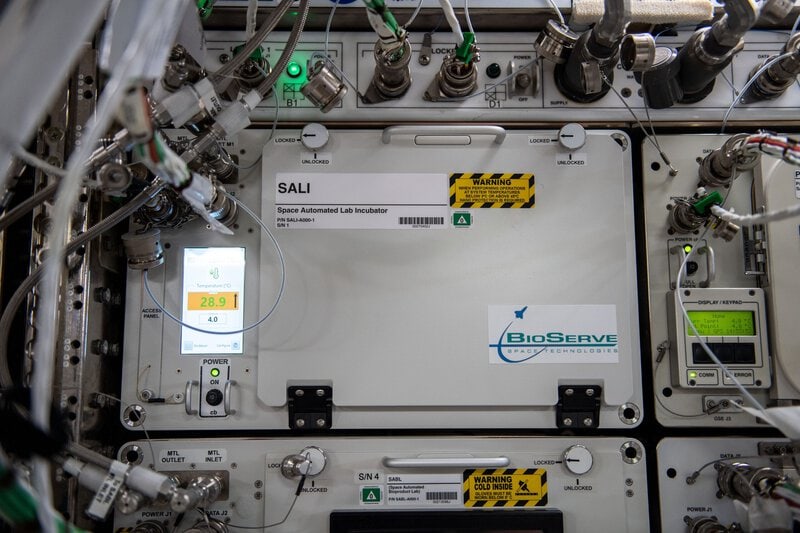
This study sits within a broader and growing scientific movement. The ISS has long hosted physics, materials science, and engineering experiments that benefit from microgravity, but its role as a biological research platform has expanded considerably in recent years. Researchers have already demonstrated that microgravity environments can improve protein crystal growth and assist in drug formulation — areas with direct pharmaceutical relevance. Cancer organoid research in space represents a newer and particularly promising frontier within that movement.
The honest limitation here is scalability. Sending biological samples to the ISS is expensive, logistically demanding, and nowhere near suitable for routine drug discovery. Not every experimental compound can realistically be tested on organoids grown in orbit. But that may not be the central point — at least not yet. The insights generated by space-based experiments can inform how scientists design better Earth-based models, nudging ground-level research toward approaches that more accurately reflect what’s actually happening inside a human tumor.
Critically, the biological differences observed between space-grown and ground-grown organoids also sharpen a question that matters for all GBM research: how much are current Earth-based models shaped by physical artifacts of their growth environment rather than intrinsic tumor biology? That question has implications well beyond space research.
As low-Earth orbit becomes more commercially accessible through the expansion of private space stations and reduced launch costs, the barriers to this kind of biomedical research are expected to decrease. What is currently a rarefied experiment could become a more routine research tool within the coming decades.
What This Means for Patients — and What Comes Next
It’s important to be precise about what this research is and isn’t. It does not produce a new glioblastoma treatment. No patient will benefit directly or immediately from the fact that tumor organoids behaved differently in orbit. Basic and translational science works through exactly this kind of methodological progress: better models lead to better drug candidates, which eventually reach clinical trials, which eventually reach patients. The timeline is long, and the path is not guaranteed.
The most concrete near-term next steps will likely include validating whether the aggressive gene expression markers observed in space-grown organoids correspond to specific patient subtypes, and whether therapeutic strategies aimed at those markers produce meaningfully better outcomes. That work belongs to Earth-based laboratories — but it may be asking questions that only a space-based experiment made clearly visible in the first place.
Perhaps the most significant thing this research represents is a philosophical shift in how scientists think about studying cancer. The environment in which a tumor is studied is not a neutral backdrop — it actively shapes what researchers see and what they miss. Changing that environment, even radically, can reveal new truths about biology that has been present all along. For a disease as stubborn and lethal as glioblastoma, the next real breakthrough might not come from a new drug or a newly discovered gene. It might come from changing where — and under what physical conditions — scientists choose to do the science.