The Assyrian Astronomers
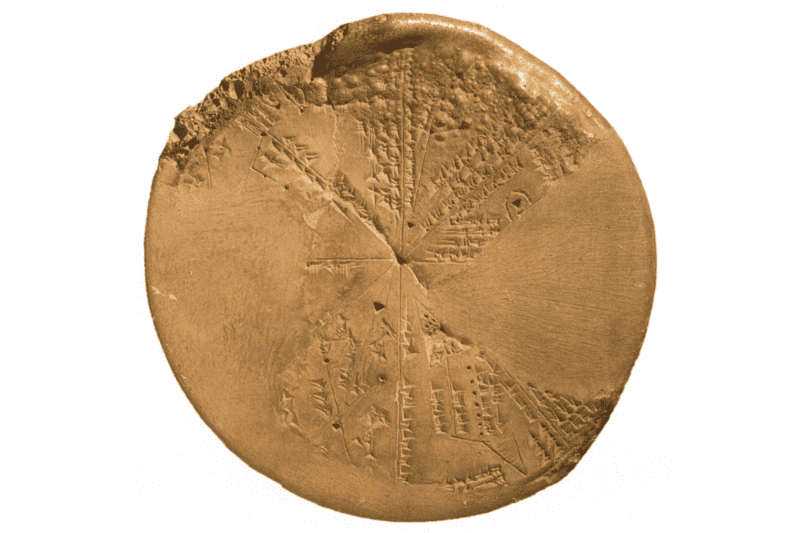
Hidden deep in the cradle of Mesopotamia, the Assyrians emerge as heavenly custodians, building upon the rich astronomical legacy left by their predecessors—the Sumerians and Babylonians. In their pursuit of cosmic understanding, the Assyrians meticulously observed and documented celestial events, contributing significantly to the vibrant tapestry of ancient astronomy. Carrying forward the tradition of their Mesopotamian forebears, Assyrian astronomers refined the art of astronomical record-keeping, leaving an impact on astronomical history.
For the Assyrians, astronomy was not a mere scientific endeavor but a tool with practical and symbolic significance. Their keen observations of the night sky aurorae served dual roles, acting as a cosmic timekeeper. The meticulous records they maintained played a pivotal role in crafting calendars, predicting lunar and solar events, and determining auspicious moments for agricultural and religious activities.
As stewards of the heavens, the Assyrians shaped a holistic approach to astronomy, seamlessly blending the pragmatic with the mystical. Their contributions extended beyond the confines of their empire, influencing the broader Mesopotamian worldview and laying the foundation for subsequent cultures to unravel the secrets of the cosmos.
Where Do We Find This Stuff? Here Are Our Sources:
The Sumerians and Babylonians of Mesopotamia: https://www.ancientpages.com/2017/02/28/babylonians-and-sumerians-had-advanced-knowledge-of-astronomy/#google_vignette
Egyptians of Mesopotamia: https://explorable.com/egyptian-astronomy
Ancient Greek Astronomy: https://www.loc.gov/collections/finding-our-place-in-the-cosmos-with-carl-sagan/articles-and-essays/modeling-the-cosmos/ancient-greek-astronomy-and-cosmology
Mayan Astronomy: https://explorable.com/mayan-astronomy
Ancient Chinese Astronomy: https://explorable.com/chinese-astronomy
Medieval Islamic Astronomy: https://www.metmuseum.org/toah/hd/astr/hd_astr.htm
The Hopi and Navajo Tribes of North America: https://link.springer.com/referenceworkentry/10.1007/978-1-4020-4425-0_8459
Inca People of South America: https://ui.adsabs.harvard.edu/abs/2021AAS…23720202G/abstract#:~:text=The%20Incas%20were%20a%20Sun,Milky%20Way%20and%20the%20Pleiades.
Ancient Indian Astronomy: https://www.teachastronomy.com/textbook/Early-Astronomy/Indian-Astronomy/
Polynesian Astronomy: https://ulfsvaettrcraftsman.com/polynesian-astronomy/
Aztec Astronomy: https://www.smh.com.au/education/the-legacy-of-aztec-astronomy-20140708-3bkls.html
The Dogon People of Mali: https://www.ancient-origins.net/myths-legends-africa/dogon-s-extraordinary-knowledge-cosmos-and-cult-nommo-0010059
Ancient Japanese Astronomy: https://www.crystalinks.com/japanastronomy.html
Aboriginal People of Australia: https://indigenousknowledge.unimelb.edu.au/curriculum/resources/indigenous-astronomy-and-the-solar-system#:~:text=Aboriginal%20and%20Torres%20Strait%20Islander%20people%20are%20keen%20observers%20of,%2C%20Jupiter%2C%20and%20Saturn).
Phoenician Astronomy: https://phoenicia.org/Phoenicians-Solar-Theology-Opioiatry.html
Etruscan Astronomy: https://phys.org/news/2021-09-legacy-etruscans.html
Hittite Astronomy: https://popular-archaeology.com/article/the-hidden-celestial-sanctuary-of-the-hittites/
Scythian Astronomy: https://www.ancient-origins.net/news-history-archaeology/scythians-0015114
Olmecs of Mesoamerica: https://www.science.org/doi/10.1126/sciadv.abq7675#:~:text=The%20prevalence%20of%20the%20260,even%20earlier%20to%20the%20apogee
Harappan People of the Indus Valley: https://visav.phys.uvic.ca/~babul/AstroCourses/P303/WebContent/harappan.html#:~:text=Harappan%20Astronomy&text=On%20the%20other%20hand%2C%20astronomical,and%20the%20solar%20time%2Dreckoning.
Caral-Supe People of Peru: https://www.atlasobscura.com/places/pyramids-of-caral-supe-peru#:~:text=Much%20like%20those%20in%20Egypt,cultures%20by%20thousands%20of%20years.
The Assyrian Astronomers: https://eos.org/articles/ancient-assyrian-aurorae-help-astronomers-understand-solar-activity