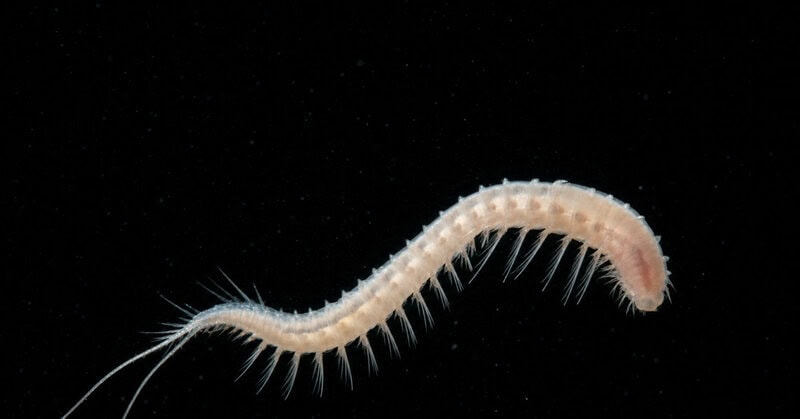
More than 3,000 feet beneath the Southern Ocean’s surface, in a world of crushing pressure, near-freezing temperatures, and total, permanent darkness, a tiny pale worm has spent its entire existence without ever encountering light — and it has just been given the name of one of the most luminous entertainers alive. Bathyadmetella dollypartonae, a newly formally described deep-sea scale worm collected from the Antarctic seafloor in 2008, now bears the name of Dolly Parton — honoring the singer, author, and humanitarian whose cultural reach extends about as far from the abyssal dark as it is possible to get.
What Exactly Is Bathyadmetella dollypartonae?
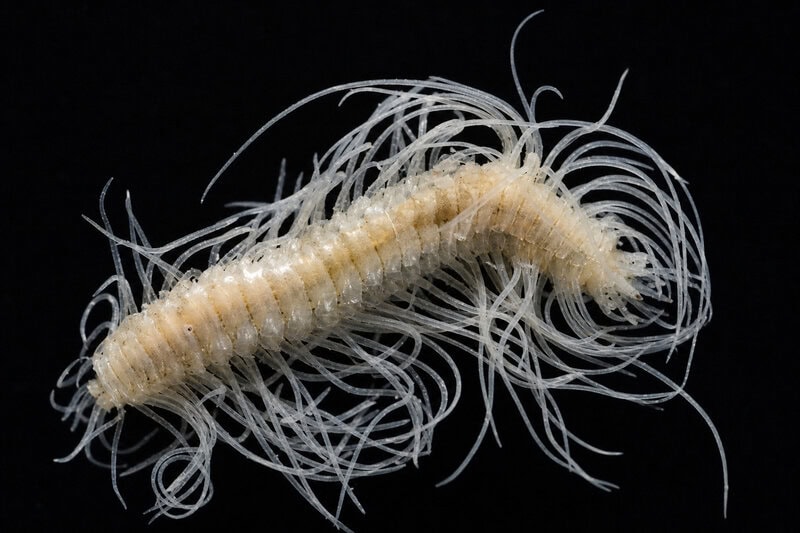
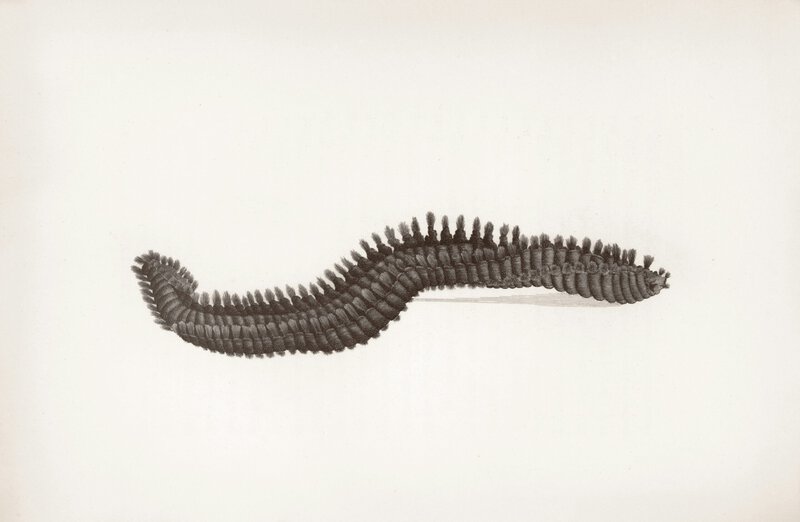
Bathyadmetella dollypartonae is a scale worm, a member of the polychaete family: a diverse group of segmented marine worms whose backs are covered in overlapping plate-like structures called elytra. These flexible, shield-like plates function as armor and are thought to help trap oxygenated water close to the body — a meaningful adaptation in an environment where dissolved oxygen can be vanishingly scarce. The worm is tiny and covered in pale, hair-like sheaths: delicate filaments that in living specimens likely serve sensory or hydrodynamic functions, helping the animal navigate and respond to its lightless surroundings.
There is an important caveat to what scientists can confidently say about its appearance. Because the specimen has been held in chemical fixative since its collection in 2008, the Natural History Museum team acknowledges that preserved specimens offer only a faded glimpse of the worm’s original coloration and texture. The living animal almost certainly looks strikingly different from what museum records currently suggest — a humbling reminder of how much even a formally described species can still conceal.
The phrase “formally described” carries specific scientific weight. A species is not considered scientifically established until researchers publish a peer-reviewed description that designates a type specimen, defines the diagnostic traits that distinguish it from all known relatives, and assigns a binomial Latin name under the International Code of Zoological Nomenclature. Until that process is complete, a specimen sitting in a museum drawer is a biological reality without a scientific identity. The formal description of Bathyadmetella dollypartonae was led by Lenka Neal of the Natural History Museum, London. Her work draws on both classical morphological examination under high-powered microscopy and DNA barcoding — a molecular technique that uses short genetic sequences to confirm species boundaries in groups where body shapes can be misleadingly similar across related organisms.
Life in the Abyssal Dark: The Southern Ocean Seafloor
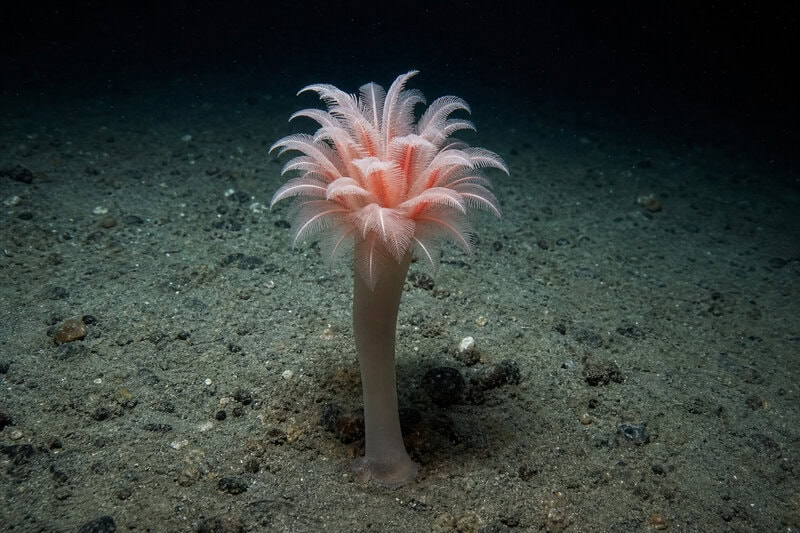
The environment where this worm was collected sits within what oceanographers classify as the bathyal zone — depths ranging from roughly 660 to 13,000 feet — where sunlight is completely and permanently absent, water temperatures hover near freezing, and hydrostatic pressure can exceed 100 times that at the ocean’s surface. These are not conditions that life merely tolerates; for organisms like Bathyadmetella dollypartonae, they are the only conditions the species has ever known.
The deep Southern Ocean is considered one of Earth’s last major biological frontiers. Biodiversity assessments, including those produced by the Census of Marine Life and ongoing surveys by institutions such as the Natural History Museum, London, consistently find that the region harbors an extraordinary and largely uncataloged diversity of seafloor life. Estimates suggest tens of thousands of macrofaunal species — animals large enough to be retained on a 0.5-millimeter sieve — remain formally undescribed in the global deep sea, with the Southern Ocean contributing a disproportionate share of that unknown total.
Scale worms like Bathyadmetella are not passive inhabitants of this environment. Polychaetes occupy critical positions in deep-sea food webs, functioning variously as predators, scavengers, and decomposers. They process “marine snow” — the slow, continuous rain of organic particles drifting down from surface waters — and in doing so recycle nutrients that sustain the broader benthic, or seafloor, community. Remove them, and the chemistry and biology of the bottom changes in ways scientists are only beginning to model.
What remains unknown about this particular species is substantial. Whether Bathyadmetella dollypartonae is rare or locally abundant across the Southern Ocean, how it reproduces, what it preferentially feeds on, and how it interacts with neighboring species are all open questions. A formal species description marks a beginning, not a conclusion, of scientific inquiry.
The 2008 Expedition and the Long Road to a Name
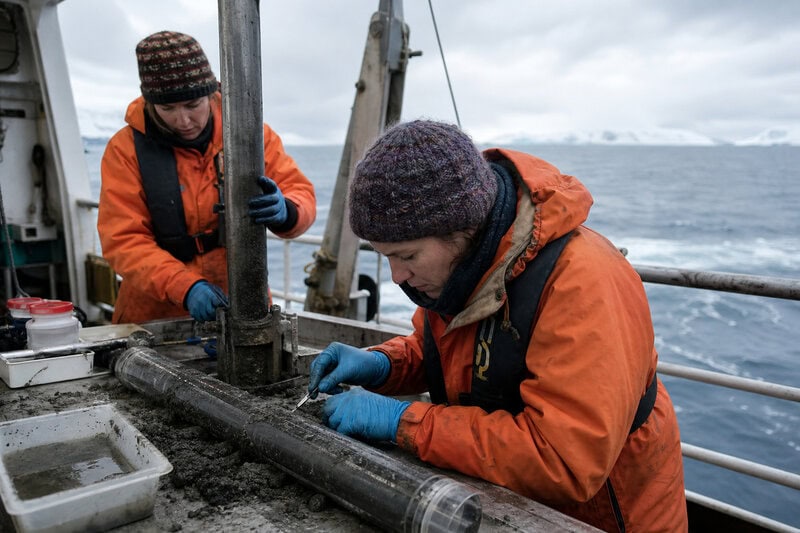
The specimen that became Bathyadmetella dollypartonae was retrieved during a Southern Ocean research cruise in 2008, then preserved and deposited in museum collections, where it waited for the painstaking comparative work required to formally separate it from known relatives. That wait lasted seventeen years — a gap that is, in the world of deep-sea taxonomy, entirely unremarkable.
Deep-sea taxonomy is chronically underfunded relative to the scale of its backlog. The Natural History Museum alone holds millions of specimens awaiting description, and the specialized expertise required to work through them is concentrated in a small global community of researchers. Gaps of a decade or more between collection and publication are routine rather than exceptional, and represent one of the field’s most persistent structural problems.
The formal publication of Bathyadmetella dollypartonae as a new deep-sea worm species is part of a wider effort by deep-sea taxonomists to accelerate species descriptions before climate change, ocean warming, and the emerging deep-sea mining industry alter or destroy habitats that have never been fully surveyed. Lenka Neal and her colleagues at the Natural History Museum are working against that clock — and naming species in ways that attract public attention is, in part, a deliberate response to that urgency.
Why Dolly Parton? The Science of Celebrity Naming
According to the Natural History Museum team, the name honors Dolly Parton’s music, writing, and humanitarian work. That places her in a long, eclectic, and entirely legitimate scientific tradition. The International Code of Zoological Nomenclature permits honorary names — formally called nomina in honorem — for any person the describing authors choose to recognize. The convention has produced names honoring musicians, politicians, athletes, and even fictional characters, with researchers openly acknowledging that celebrity associations can dramatically increase media coverage of otherwise obscure discoveries.
The roster of celebrity namesakes in zoology is extensive. Sir David Attenborough has had dozens of species named in his honor across multiple animal groups. Barack Obama, Beyoncé, and David Bowie have each lent their names to newly described organisms. Conservation scientists argue that this pattern serves a function beyond tribute: it converts public curiosity — the kind generated by a famous name in a headline — into awareness of biodiversity loss and the institutional effort required to document it.
It is worth being precise about what a celebrity name does and does not do scientifically. Bathyadmetella dollypartonae is defined entirely by its morphological and genetic characteristics, not by its namesake. It would be just as scientifically valid under any other name. But it would be considerably less likely to appear in a news cycle — and considerably less likely to reach audiences who would never otherwise encounter the phrase “abyssal-zone scale worm.” The naming choice is honorific; the science beneath it is independent.
What This Discovery Tells Us About Deep-Sea Biodiversity
Scientists estimate that fewer than 20 percent of deep-sea species have been formally described, making the ocean floor the planet’s single largest reservoir of undiscovered multicellular life. This figure, cited consistently in assessments from the Census of Marine Life and subsequent deep-sea survey programs, is not a margin of error — it is the dominant condition of the field. The described species are the exception; the undescribed are the rule.
Antarctic waters are of particular scientific interest in this context. Their relative geographic isolation and long-term thermal stability — the Southern Ocean has remained cold for tens of millions of years — have allowed lineages like deep-sea polychaetes to diversify along evolutionary trajectories not seen in warmer ocean basins. Each formally described Southern Ocean species potentially carries information about the deep evolutionary history of marine life that cannot be recovered from warmer-water relatives.
That scientific value intersects directly with an urgent conservation question. Interest in deep-sea mining for polymetallic nodules — mineral-rich deposits found on the seafloor — has intensified international regulatory debate, including in Southern Ocean-adjacent regions. Researchers, including those at the Natural History Museum, make a consistent argument: you cannot assess what industrial activity threatens to destroy until you know what lives there. Accelerating taxonomy is not an academic exercise. It is a prerequisite for informed environmental governance.
The scientific community broadly agrees that deep-sea biodiversity is vastly underestimated. What remains genuinely contested is the magnitude of that underestimate, with published models ranging from tens of thousands to hundreds of thousands of undescribed macrofaunal species globally. That range of uncertainty is itself a measure of how much remains to be learned.
Open Questions and the Broader Mission
Future research on Bathyadmetella dollypartonae will likely focus on mapping its distribution range across the Southern Ocean, clarifying its phylogenetic position within the broader scale-worm family tree, and investigating whether its pale hair-like sheaths serve a function that can be inferred from comparison with better-studied relatives. Each of those questions requires additional expeditions, additional specimens, and additional specialist time — resources that are, in this field, perpetually constrained.
The tools available to deep-sea taxonomists are, however, improving. Advances in autonomous underwater vehicles, environmental DNA sampling — which allows researchers to detect species from the genetic material they shed into surrounding water without physically collecting the animal — and high-throughput genomic sequencing are collectively compressing the timeline from collection to formal description. The backlog of undescribed deep-sea species may shrink faster in the next decade than in any previous century of marine biology.
Bathyadmetella dollypartonae is one data point in an enormous and largely unread biological record. Its formal description adds one clean, citable entry to that record — and by bearing a famous name, ensures that the existence of abyssal-zone scale worms will reach audiences who would never otherwise encounter them. In the economy of public scientific attention, naming a lightless Antarctic worm after Dolly Parton may be one of the most cost-effective conservation communication strategies a taxonomist can deploy: turning a museum drawer into a news cycle, and a news cycle into, perhaps, a reason to care about the deep.