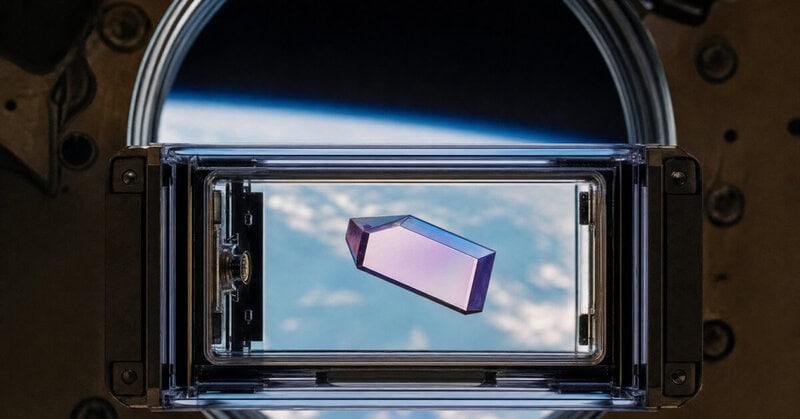
A protein crystal grown aboard the International Space Station can be so much more ordered and uniform than its Earth-grown counterpart that it yields X-ray diffraction data at resolutions ground laboratories simply cannot match — and the reason comes down to a force so ordinary that most scientists never think to remove it: gravity. That gap between what is possible in orbit and what is achievable on the ground has driven decades of frustrated demand for affordable, repeated access to microgravity. In November 2026, Space Cargo Unlimited and Thales Alenia Space unveiled the development model of REV1, a 3.7-metric-ton reusable reentry spacecraft designed to carry up to 1,000 kilograms of payload for months in low Earth orbit — a vehicle its developers say could crack open a substantial backlog of science that has been waiting for exactly this kind of platform.
What Microgravity Actually Means — and Why It Isn’t Simply ‘Zero Gravity’
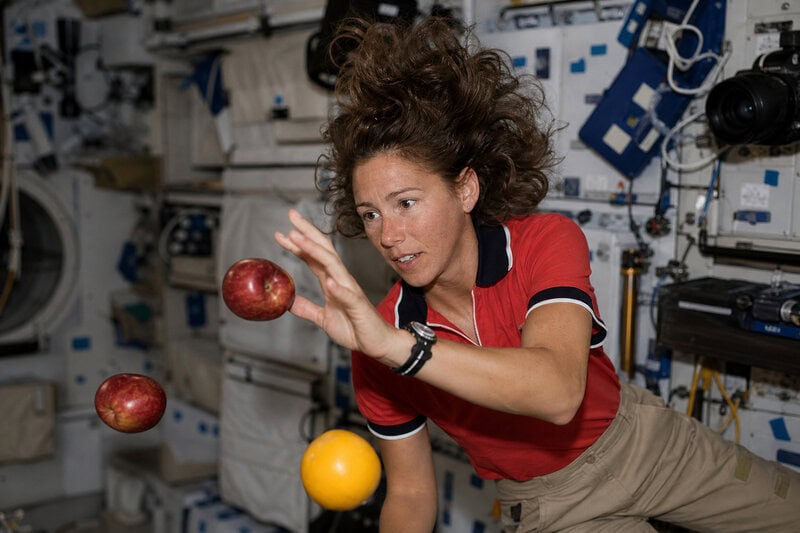
The word “microgravity” is frequently misread as a synonym for “zero gravity,” but the distinction matters scientifically. Objects in low Earth orbit are in continuous free fall around the planet; the effective gravitational acceleration they experience is reduced to roughly one-millionth of surface gravity — hence the prefix “micro” — not eliminated entirely. Astronauts floating inside the ISS are not beyond Earth’s gravitational reach: at orbital altitude, gravity still pulls at approximately 88 percent of its surface value. The apparent weightlessness is entirely a product of that perpetual free fall.
The dominant physical consequence of that near-weightless state is the suppression of buoyancy-driven convection. On Earth, tiny density differences in fluids, cooling melts, and biological cultures constantly generate convective currents — flows driven by gravity acting on denser regions sinking and lighter regions rising. Those currents interfere with how molecules arrange themselves, how crystals grow, and how cells organize into tissue-like structures. Remove convection, and subtler forces — surface tension, molecular diffusion, intermolecular attraction — take over and reveal behavior that is simply masked at the bottom of a gravity well. The European Space Agency’s microgravity research program and NASA’s Physical Sciences Informatics database both document that removing convective interference routinely changes the kinetics, morphology, and yield of physical and biological processes, a finding replicated across hundreds of ISS experiments.
Cells, Proteins, and Drugs: Biology Behaves Differently Without the Pull
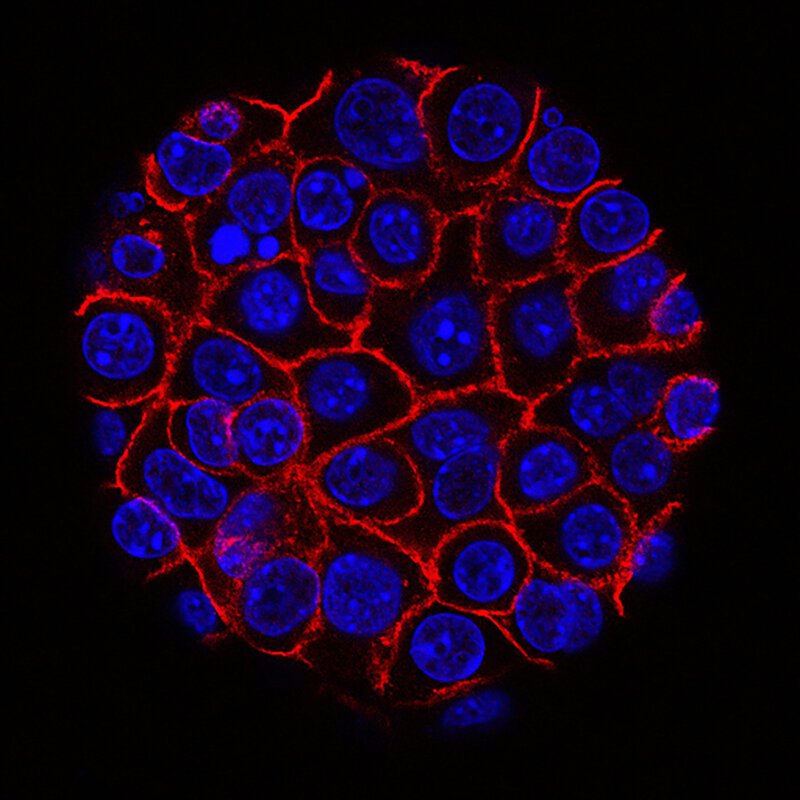
Among the most consequential — and best-established — findings in microgravity research is what happens to human cancer cells when gravity stops flattening them. Research published by the Center for the Utilization of Biological Engineering in Space and confirmed by multiple ISS National Laboratory studies shows that cancer cells spontaneously form three-dimensional tumor-like spheroids in microgravity. That geometry more closely mimics the architecture of real tumors inside the body than the flat, two-dimensional monolayers that form in ground-based culture dishes, making drug-screening data from orbit more clinically predictive of how a compound will actually perform in a patient.
Protein crystallography represents perhaps the most commercially mature of all microgravity research benefits. NASA’s decades-long collaboration with pharmaceutical partners demonstrated that macromolecular crystals grown in orbit are larger and more structurally ordered than ground-grown equivalents, yielding higher-resolution X-ray diffraction data that accelerates structure-based drug design. Without gravity-induced convective currents distorting the crystal lattice as it forms, molecules settle into more regular positions, and the resulting structural maps are cleaner. This is scientific consensus, not an emerging claim, and it underpins the sustained commercial interest from pharmaceutical companies in orbital research platforms.
A more speculative frontier involves stem cells. Some researchers propose that microgravity-induced changes in stem-cell gene expression could inform regenerative medicine and tissue engineering. The ISS U.S. National Laboratory has noted, however, that sample sizes in these studies remain small, Earth-based replication is inconsistent, and much larger, repeated experiments are needed before conclusions can be responsibly drawn. This is an area of genuine scientific interest, not established fact, and it should be treated as such by anyone evaluating the case for expanded orbital access.
The hardware specifications of REV1 speak directly to these biological requirements. The spacecraft’s 1,200-liter pressurized internal volume and 2.5 kW of continuous shared power are sized to support payloads that need active temperature control and gas exchange over multi-month mission durations — conditions that short suborbital hops or cramped secondary payload slots on crewed vehicles cannot reliably provide.
Crystals and Materials: When Gravity Stops Interfering, Structure Emerges
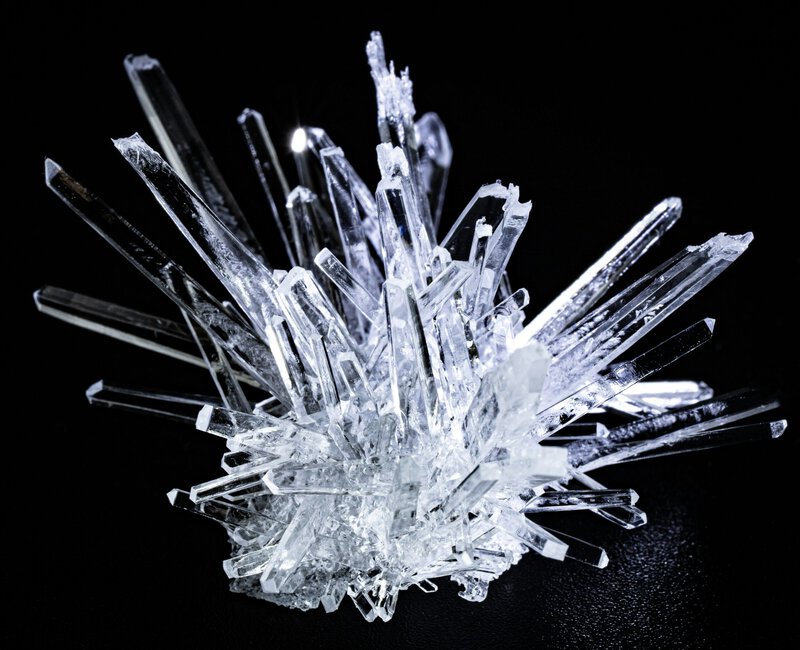
The same convective interference that distorts protein crystals also afflicts industrial materials. Semiconductor crystals grown by the float-zone method in microgravity exhibit dramatically reduced defect densities compared to their ground-grown counterparts, according to research conducted aboard the ISS by the Japan Aerospace Exploration Agency. On Earth, density gradients in a cooling semiconductor melt trigger buoyancy flows that introduce striations and voids into the crystal structure — defects that manufacturers must engineer around at considerable cost. In microgravity, those flows vanish, and atoms settle into more energetically favorable, uniform lattice positions, producing a purer crystal with fewer performance-limiting flaws.
NASA’s Glenn Research Center has separately documented that metallic alloys solidified in microgravity form finer, more homogeneous microstructures — a characteristic associated with higher fatigue resistance and potentially longer component lifespans. These findings are well-replicated and not scientifically contested. What remains genuinely unresolved is an economic question rather than a physical one: whether orbital alloy processing will ever be cost-competitive with sophisticated ground-based directional solidification techniques depends on launch costs, throughput, and market demand that do not yet have clear answers. The science is real; the business case is still being written.
Flames in Free Fall: Combustion Science That Could Make Engines Cleaner
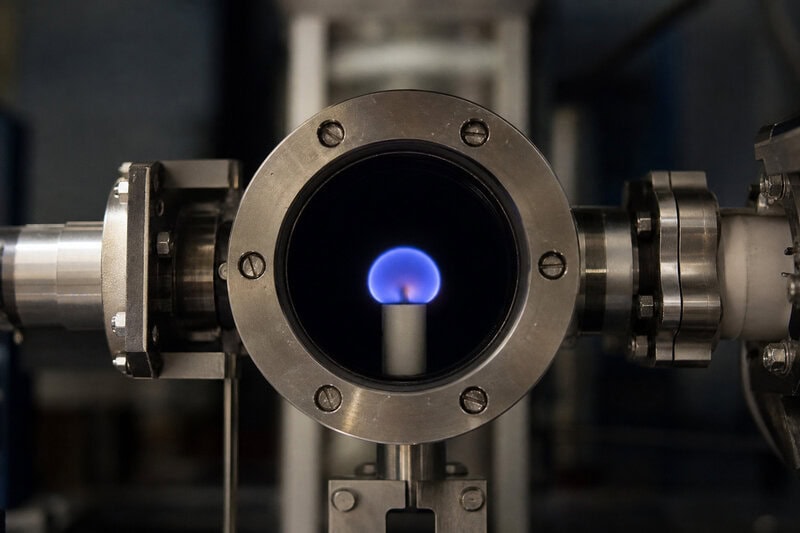
A candle flame in microgravity burns cooler, rounder, and dimmer than its familiar teardrop-shaped counterpart on Earth. Without convection to continuously feed the flame with fresh oxygen and carry away combustion products, the fire forms a near-perfect sphere of pale blue light — and that strange geometry has yielded combustion insights with real engineering consequences. NASA’s FLEX (Flame Extinguishment Experiment) aboard the ISS discovered that fuel droplets can continue to burn even after the visible flame appears to go out. Researchers at the University of California San Diego linked this phenomenon — called “cool flames” — to low-temperature oxidation chemistry that is effectively undetectable in ground experiments because convection continuously disrupts the delicate thermal and chemical gradients involved.
Understanding cool-flame chemistry has since informed the development of homogeneous charge compression ignition engines, which promise higher thermodynamic efficiency and lower nitrogen-oxide emissions than conventional spark-ignition designs. This engine concept has not yet achieved widespread commercial deployment, for reasons that include engineering challenges in combustion control beyond the scope of combustion chemistry alone — but the foundational chemistry that makes the concept credible was clarified, in meaningful part, by experiments that could only be conducted in orbit.
Combustion experiments also illustrate concretely why reusability matters operationally: each test consumes its fuel sample and produces residues, meaning the science depends on flying fresh, well-characterized payloads repeatedly. That is precisely the use case a reusable, tonne-class spacecraft is designed to serve.
REV1: What the Spacecraft Actually Offers Researchers
Space Cargo Unlimited and Thales Alenia Space unveiled the REV1 development model in November 2026, presenting a 3.7-metric-ton reusable reentry spacecraft with up to 1,000 kilograms of payload capacity, 1,200 liters of pressurized internal volume, and 2.5 kW of shared continuous power. First flight is targeted for 2030. The vehicle is designed as an uncrewed, dedicated research platform: it would launch, dock with a Reusable Orbiting Service Station in low Earth orbit to allow payloads to operate in the microgravity environment for several months, and then reenter and return samples to researchers on the ground.
The structural gap REV1 is designed to fill is historically significant. The retirement of the Space Shuttle in 2011 eliminated the only Western vehicle capable of returning substantial pressurized mass from orbit. SpaceX Dragon provides some downmass capacity, but Northrop Grumman’s Cygnus provides none — it reenters destructively — while ISS access for research payloads remains constrained by crew schedules, power allocation, and the station’s finite operational lifespan. REV1 is positioned as a dedicated, uncrewed research platform that sidesteps those constraints by design, rather than competing for margin within a crewed vehicle’s secondary payload allotment.
What should not be overstated: commercial pricing, confirmed manifest commitments, and the specific architecture of post-ISS infrastructure partnerships had not been publicly disclosed as of the November 2026 unveiling. The vehicle’s real impact on microgravity research throughput will depend entirely on launch cadence, ticket price, and customer demand — none of which can be assessed from the information available at this stage.
The Science Backlog and the Road to 2030
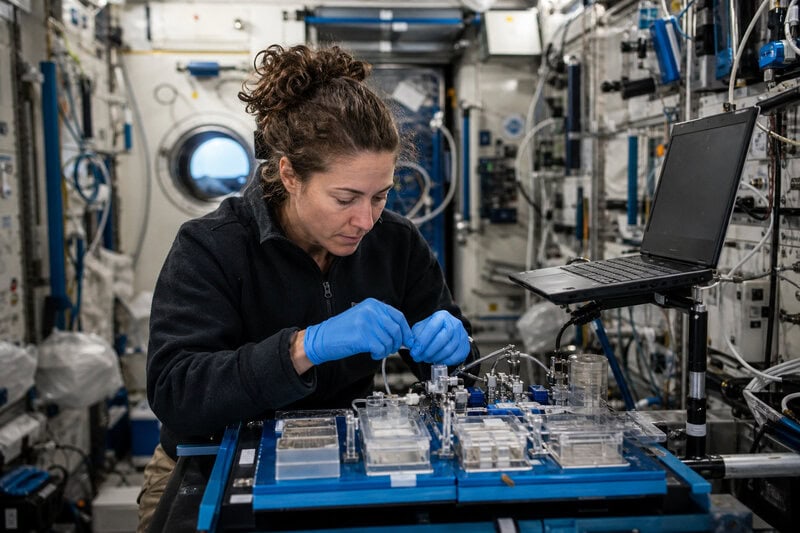
The ISS National Laboratory has consistently reported that researcher demand for in-orbit experiment time exceeds available slots — a supply-demand mismatch that has shaped which experiments get flown and which sit in proposal queues for years. A reusable, dedicated platform like REV1 could address a portion of that backlog, but only if launch costs fall to levels accessible to academic institutions and mid-tier pharmaceutical users, a threshold Space Cargo Unlimited has not yet publicly specified.
Based on existing peer-reviewed literature, three scientific domains are most likely to benefit earliest from expanded microgravity experiment access. Protein crystallography and drug formulation lead the list, because returning physical samples to Earth is non-negotiable for X-ray diffraction analysis and downstream assay work. Advanced materials processing follows, since multi-month thermal cycles require exactly the sustained, dedicated power supply REV1’s architecture is designed to provide. Cell biology rounds out the near-term priority list, because longer culture durations directly improve the statistical power of results — the persistent weakness of studies relying on the brief windows currently available on crewed vehicles.
REV1 also enters a competitive and uncertain infrastructure landscape. Sierra Space’s Dream Chaser is pursuing a cargo variant with comparable return-to-Earth capability. The planned deorbit of the ISS around 2030 raises substantive questions about what orbital destination vehicles like REV1 will dock with, and the trajectory of commercial space station development — from Axiom Space to other ventures — will determine whether a Reusable Orbiting Service Station concept has the infrastructure support it requires. Space Cargo Unlimited’s broader mission is oriented around making orbital manufacturing and research commercially viable at scale, but the gap between an unveiled development model and a functioning, affordable, repeatedly-flying spacecraft remains significant, and it would be misleading to minimize it.
Microgravity is not a curiosity or a novelty — it is a reproducible physical condition that removes a force so ubiquitous on Earth that scientists rarely get to study what happens in its absence. The findings that have emerged from ISS experiments in protein crystallography, cell biology, materials science, and combustion physics are peer-reviewed, replicated across multiple independent research groups, and consequential for medicine, manufacturing, and energy efficiency. REV1 represents a serious and technically credible engineering attempt to make that condition available on demand, at a scale and cadence that existing Western launch infrastructure does not currently provide. Whether it delivers on that promise will depend on a 2030 flight schedule, a pricing model, and a destination architecture that remain, as of its unveiling, still to be determined.