
Sixty-six million years ago, a feathered dinosaur was doing something no paleontologist had ever confirmed in the fossil record: plucking and crushing fruit with jaws built almost identically to those of a modern parrot. That animal was Infernogallus jamesi, a newly described species that is forcing researchers to rethink one of the most fundamental assumptions in dinosaur science — that no non-avian dinosaur ever specialized in eating fruit.
Meet Infernogallus jamesi: The Dinosaur That Ate Like a Parrot
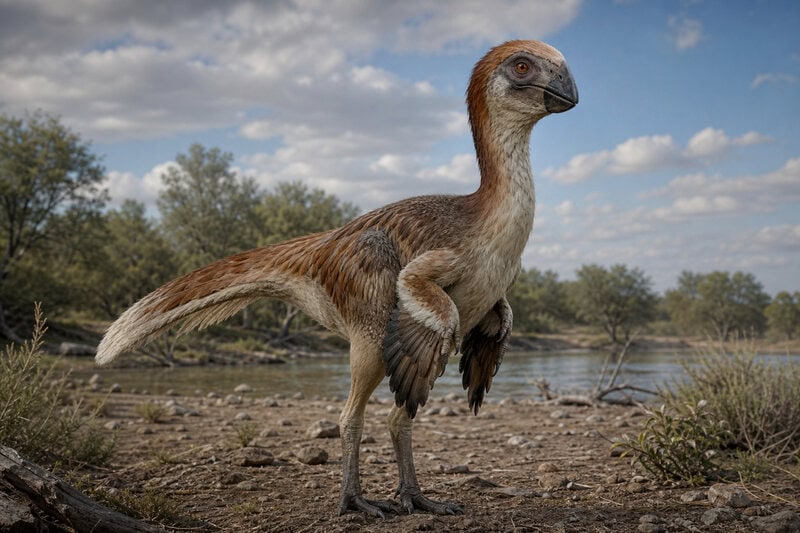
At first glance, Infernogallus jamesi might look like a strange bird. It was feathered, toothless, and beaked — part of a group called oviraptorosaurs, whose unusual appearance once earned them an unfair reputation as egg thieves. That mischaracterization has long since been revised, but the group has continued to surprise researchers. Now, scientists from Stony Brook University and the Royal Ontario Museum have identified Infernogallus jamesi as something genuinely unprecedented: the first known dinosaur species identified as a specialized fruit eater.
The species lived approximately 66 million years ago — right at the twilight of the non-avian dinosaur age — in what is now North America. It belongs to the Hell Creek oviraptorosaurs, a branch of the family found in one of the most fossil-rich geological formations on Earth. For a group already known for breaking paleontological assumptions, Infernogallus jamesi may be the most surprising member yet.
For readers unfamiliar with oviraptorosaurs: think of them as the oddities of the dinosaur world. They were bipedal, often crested, covered in feathers, and equipped with powerful beaks rather than teeth. For decades they were assumed to be generalist omnivores or opportunistic feeders. The discovery of Infernogallus jamesi suggests at least one lineage took a far more specific evolutionary path.
The Fossil Evidence: How Scientists Read a Dinosaur’s Diet
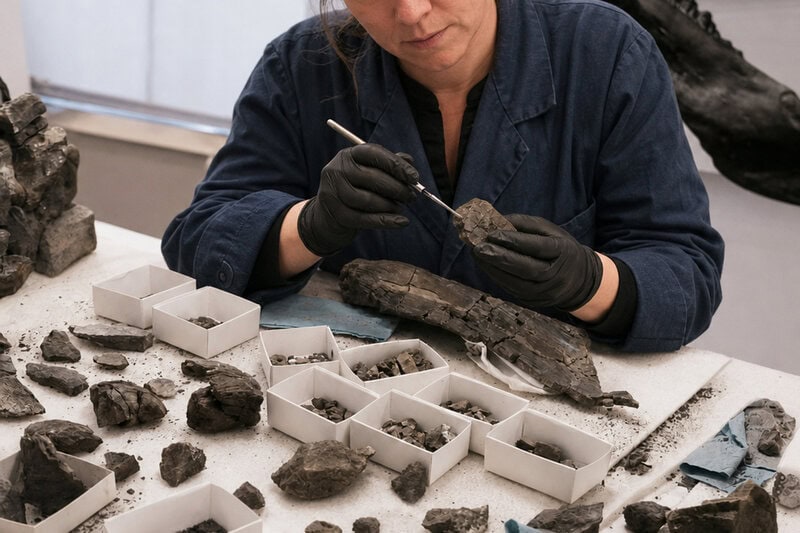
Determining what a dinosaur ate from bones alone is one of paleontology’s most persistent challenges. Soft tissue rarely survives. Stomach contents are exceptional finds. So researchers lean heavily on structural clues — the shape of teeth (or in this case, the beak), the mechanics of the jaw, and the architecture of the skull — to infer feeding behavior.
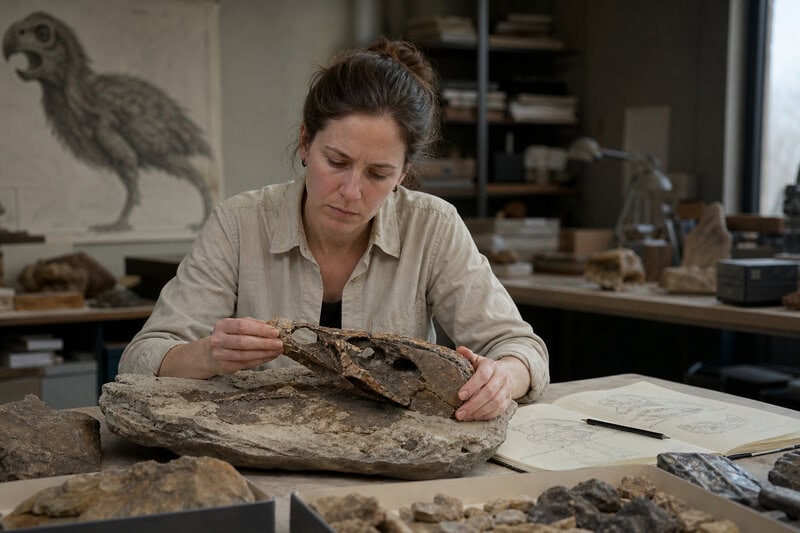
In Infernogallus jamesi, those structural clues were striking. The fossil displays chewing adaptations in the jaw and skull that are seen today only in fruit-eating parrots — birds that need to grip, crush, and process tough-skinned fruit efficiently. The convergence is precise enough that dismissing it as coincidence would be difficult to defend scientifically. When a 66-million-year-old dinosaur and a living parrot share the same unusual jaw engineering, the most logical explanation is the same dietary pressure driving the same evolutionary solution — a phenomenon biologists call convergent evolution.
This kind of comparative anatomy — using living animals as reference points for extinct ones — is one of the most reliable tools available to paleontologists working on diet reconstruction. Jaw geometry constrains what an animal can do mechanically, and those constraints leave clear signatures in bone. In this case, the analysis yielded an identification that has never been made before in the dinosaur fossil record: a species that was, by well-supported scientific inference, a frugivore.
Why ‘Frugivore’ Is Such a Big Deal in Paleontology
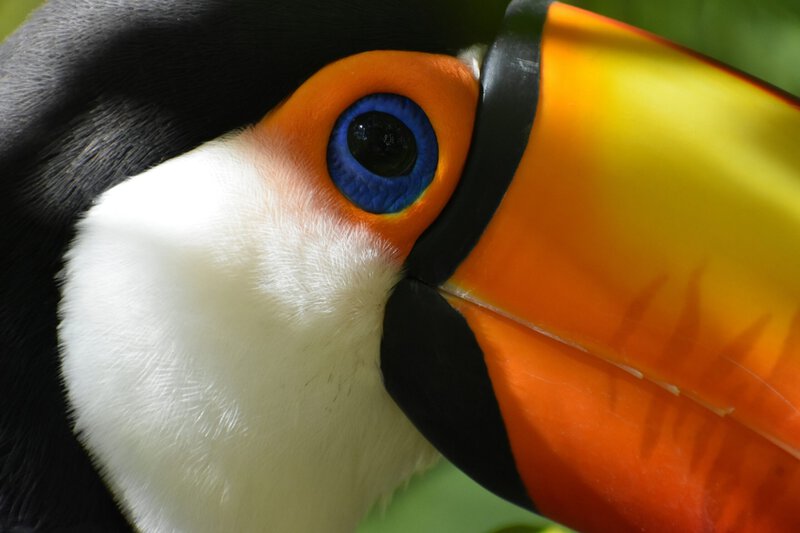
A frugivore is an animal whose diet centers primarily on fruit. Plenty of living animals fit that description — fruit bats, toucans, many primates, and yes, parrots. But in the dinosaur fossil record, dietary categories have traditionally been broad: carnivore, herbivore, omnivore. The idea that a dinosaur might have been a specialist in fruit — not just an opportunistic consumer of it, but an animal whose anatomy was shaped by that dietary focus — was effectively absent from scientific thinking before this discovery.
That absence matters. Frugivory is not an accidental behavior. It requires specific physical tools: the ability to grasp and manipulate fruit, jaw mechanics capable of crushing it, and digestive systems adapted to process high-sugar, often fibrous material. When a species evolves those tools, it reflects sustained natural selection — fruit-eating was a viable, long-term ecological strategy, not a side habit picked up opportunistically.
This connects directly to the broader story of plant-eating dinosaur diversity. Herbivorous dinosaurs are often portrayed in shorthand as simple grazers or browsers — sauropods sweeping up vegetation in bulk, hadrosaurs grinding through cycads. But the reality was almost certainly more nuanced. Infernogallus jamesi is direct fossil evidence that dinosaurs were partitioning plant resources in sophisticated ways, carving out ecological niches that modern ecosystems would recognize immediately.
What This Rewrites About Dinosaur Ecosystems

The implications extend well beyond diet. A frugivorous dinosaur living in the late Cretaceous was almost certainly interacting with its landscape in ways that go beyond simply consuming calories. Frugivores in modern ecosystems are often seed dispersers — they eat fruit, move through the environment, and deposit seeds elsewhere, acting as agents of plant reproduction and forest expansion.
The late Cretaceous was a period of explosive diversification for flowering plants — the angiosperms that now dominate most of the world’s ecosystems. Fruit, as a biological structure, evolved specifically to attract animals that would consume it and carry its seeds to new locations. The possibility that dinosaurs like Infernogallus jamesi participated in that relationship — that they were, in a meaningful ecological sense, partners in the spread of flowering plants — adds an entirely new dimension to how scientists understand Cretaceous food webs and plant geography.
Researchers involved in the discovery have noted that Infernogallus jamesi suggests dinosaurs may have had a broader dietary range than previously understood. That is a carefully worded scientific statement, but its implications are genuinely expansive. If one oviraptorosaur evolved this level of dietary specialization, the question immediately becomes: how many others did, and have we simply lacked a template for recognizing them?
The Hell Creek Formation: A Site That Keeps Rewriting History
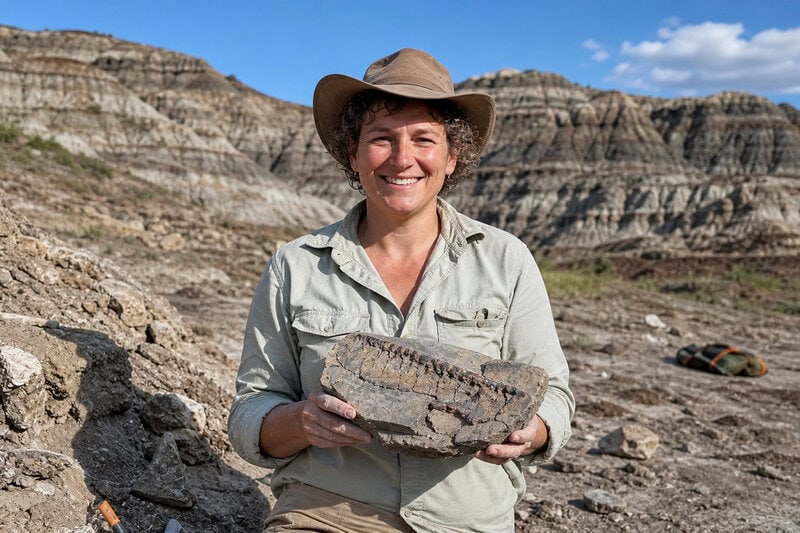
That this discovery came from the Hell Creek Formation is both fitting and instructive. Spanning parts of Montana, South Dakota, and Wyoming, Hell Creek is among the most productive fossil sites in the world — the formation that gave science Tyrannosaurus rex, Triceratops, and dozens of other iconic species. It represents a richly preserved snapshot of a single late Cretaceous North American ecosystem, a community of animals frozen in time by exceptional geological conditions.
Finding a fruit-eating specialist within that same ecosystem underscores how much ecological complexity existed in one place and time. T. rex was apex-predating. Triceratops was browsing low vegetation. And somewhere in the same landscape, Infernogallus jamesi was doing something closer to what a macaw does today. Hell Creek continues to demonstrate that even the most intensively studied fossil sites have not exhausted their surprises — and that the species already known from a formation may be giving us an incomplete picture of its actual biodiversity.
What Comes Next: The Questions This Discovery Opens
Science rarely closes a door without opening several more. The identification of Infernogallus jamesi as the first confirmed frugivorous dinosaur raises questions that researchers will now spend years pursuing. Were there other fruit-eating dinosaurs that have not yet been recognized as such? How widespread was frugivory as a strategy across the oviraptorosaur family — or across other dinosaur groups entirely? And crucially, how did the dietary relationships between frugivorous dinosaurs and flowering plants shape the vegetation of the late Cretaceous world?
Paleontologists will likely use Infernogallus jamesi as a comparative template, re-examining existing oviraptorosaur specimens for the same jaw adaptations that flagged this species as a frugivore. Museum collections around the world hold thousands of dinosaur fossils that have never been analyzed through this lens. Some may conceal dietary specializations that were simply invisible until there was a confirmed example to compare them against.
That is the methodological shift quietly underway in paleontology right now. The bones have been in the ground for tens of millions of years. What changes is the sophistication of the questions scientists bring to them — and occasionally, a single extraordinary species that reframes everything researchers thought they understood about an entire group.
Infernogallus jamesi is a reminder that the dinosaur story is still being written — one fossil, one careful comparison, and one overturned assumption at a time.