
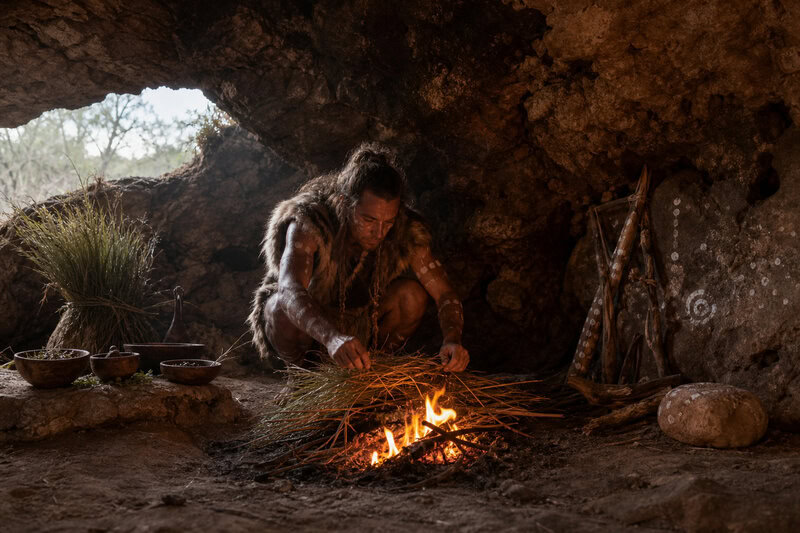
At least 25,000 years ago — while glaciers smothered much of the Northern Hemisphere and artists were painting horses on cave walls in France — people in what is now Victoria, Australia, were carrying specific grasses into a limestone cave and setting them alight. Not for warmth or cooking, but for magic, healing, and cursing their enemies. New analysis of ash layers inside Cloggs Cave in Gippsland, Victoria, has identified this as the oldest confirmed evidence of deliberate ritual fire use yet discovered anywhere on Earth.
A Cave That Held Smoke for Millennia
Cloggs Cave is not a newly discovered site. Archaeologists have known about it since excavations began in the 1970s, and it has long been recognized as significant in Australian prehistoric research. What has changed is the precision with which scientists can now read what the cave’s sediments contain.
The key technique is phytolith analysis — the examination of microscopic silica crystals that form inside grass cells during the plant’s lifetime. As grasses grow, they absorb groundwater containing dissolved silica, which gradually mineralizes into rigid, microscopic crystals shaped by the cells they occupy. Those crystals are species-identifiable and nearly indestructible. They survive fire, burial, and thousands of years of soil chemistry that destroys every trace of organic material around them. This is how scientists can establish, with physical certainty, what was burned in a cave 25,000 years ago: the grasses themselves are long gone, but their skeletal silica signatures are not.
Using phytolith analysis on Cloggs Cave’s ash layers, researchers identified specific grass species that do not naturally grow inside caves, confirmed their presence across dozens of distinct sediment layers spanning the full 25,000-year deposit, and concluded that they had been deliberately carried in and burned — repeatedly, across an extraordinary span of human time.
The people whose ancestors performed these rituals are the GunaiKurnai, an Aboriginal nation of southeastern Australia whose cultural connection to Cloggs Cave is direct and documented. Critically, this research was not conducted on the GunaiKurnai or merely about them — it was conducted with them. GunaiKurnai elders and community representatives were partners in shaping the research questions, interpreting the findings, and deciding how those findings would be communicated. That collaborative structure is not incidental to the science — it is, as explained below, foundational to understanding what the physical evidence actually means.
What the Ash Layers Reveal
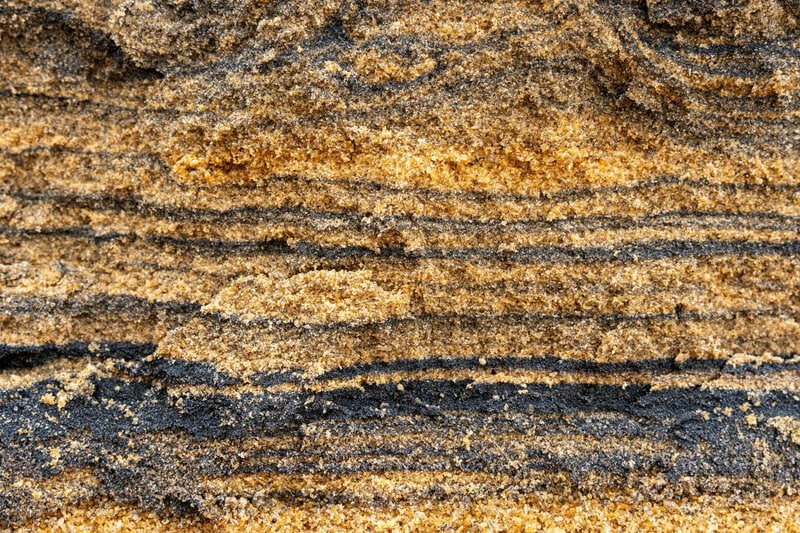
The excavation found stratified layers of ash distributed throughout the cave’s sedimentary deposit and spanning the full 25,000-year window the study examined. Phytolith identification confirmed the consistent presence of specific grass species across these distinct stratigraphic layers — layers separated not by weeks or seasons but by generations, centuries, and millennia. The pattern matters as much as any single data point: this was not a one-time event or an isolated curiosity. It was repeated, structured, and sustained across an almost incomprehensible stretch of human time.
What distinguishes this from incidental fire use is precisely that recurrence. A campfire lit for warmth or cooking leaves traces, but it does not leave the same species of non-native grass, in the same enclosed location, in layer after layer across 25,000 years. The consistency points to intentional, patterned behavior — a practice transmitted across generations with enough fidelity that it produced an archaeologically legible signature lasting to the present day.
Researchers are careful about the limits of what physical evidence alone can establish. Phytoliths confirm that specific grasses were burned in this location repeatedly over millennia; they cannot, by themselves, prove intent or spiritual meaning. That interpretive layer requires a different kind of knowledge — and that is precisely where the GunaiKurnai partnership becomes scientifically indispensable rather than merely ethically appropriate.
Magic, Healing, and Cursing: Connecting Evidence to Meaning
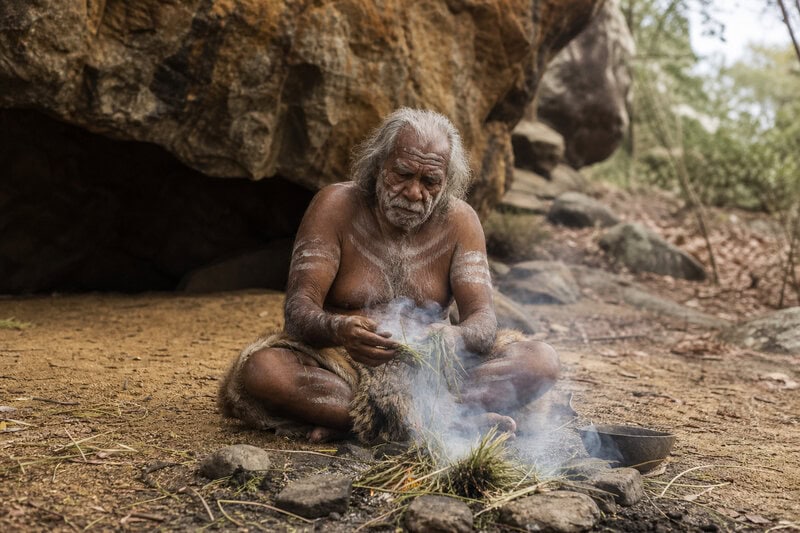
The three purposes identified in the research — magic, healing, and cursing enemies — do not come from archaeologists projecting assumptions onto ancient ash. They come from GunaiKurnai traditional knowledge and from historical ethnographic records documenting how these practices functioned within GunaiKurnai culture. In GunaiKurnai tradition, burning specific plants in enclosed or spiritually significant spaces was a means of communicating with ancestral forces, treating illness, and directing harm toward adversaries. These are not reconstructed hypotheses; they are practices with living cultural continuity, transmitted within the community across generations.
The cave setting itself carries significance that open-air burning would not. Unlike a fire lit outside, a cave concentrates smoke, controls airflow, limits light, and creates an enclosed sensory environment fundamentally different from the domestic everyday. Across many unrelated cultures, anthropologists have observed that enclosed spaces — caves, chambers, darkened rooms — are repeatedly associated with ritual or ceremonial contexts rather than utilitarian ones. The deliberate choice to carry grasses inside Cloggs Cave rather than burn them in the open air is itself a data point about intent.
Researchers are explicit that calling this behavior “ritual” reflects a convergence of physical evidence and living cultural testimony, not a conclusion drawn from either source alone. Attributing specific spiritual meaning to 25,000-year-old behavior is inherently interpretive, and the researchers present this as the most evidence-consistent explanation available — not as an established fact immune to further scrutiny. That epistemic honesty is a strength of the research, not a weakness in it.
Older Than Farming: The Global Context
To appreciate what 25,000 years actually means, it helps to anchor it against familiar timelines. The earliest well-documented origins of agriculture — in the Fertile Crescent of the Middle East — date to roughly 10,000 to 12,000 years ago. The Cloggs Cave grass-burning practice is more than twice as old. It predates the domestication of wheat, rice, and maize. It predates the construction of Stonehenge by roughly 20,000 years. It was already ancient when the first cities were built in Mesopotamia.
This places the finding in direct conversation with a persistent misconception about Aboriginal Australians: the shorthand assumption that they had “no agriculture” and therefore no sophisticated relationship with plants. Evidence like Cloggs Cave illustrates that intentional, sustained, and ecologically sophisticated relationships with plants long predate and exist entirely independently of farming as typically defined. The GunaiKurnai ancestors who carried specific grasses into that cave knew those plants, their properties, and their purposes in ways that required accumulated, transmissible knowledge — the same cognitive and cultural infrastructure that underlies any complex human relationship with the plant world.
Australia preserves some of the oldest continuous human cultural records on Earth, reflecting both the extraordinary longevity of Aboriginal presence on the continent and the preservation conditions that have protected archaeological sites across tens of thousands of years. Cloggs Cave adds a specific, dateable, and mechanistically explained data point to that broader pattern. The finding is unusual globally not because ritual fire use was unique to Australia, but because the physical evidence for it here has survived intact and been correctly identified.
Whether similarly ancient ritual fire use existed at other sites worldwide but has not yet been found — because the evidence did not survive, or because researchers have not yet applied the right analytical techniques — remains an open question. The Cloggs Cave findings suggest that phytolith analysis of cave ash deposits elsewhere could be a productive avenue of inquiry.
How the Research Was Done
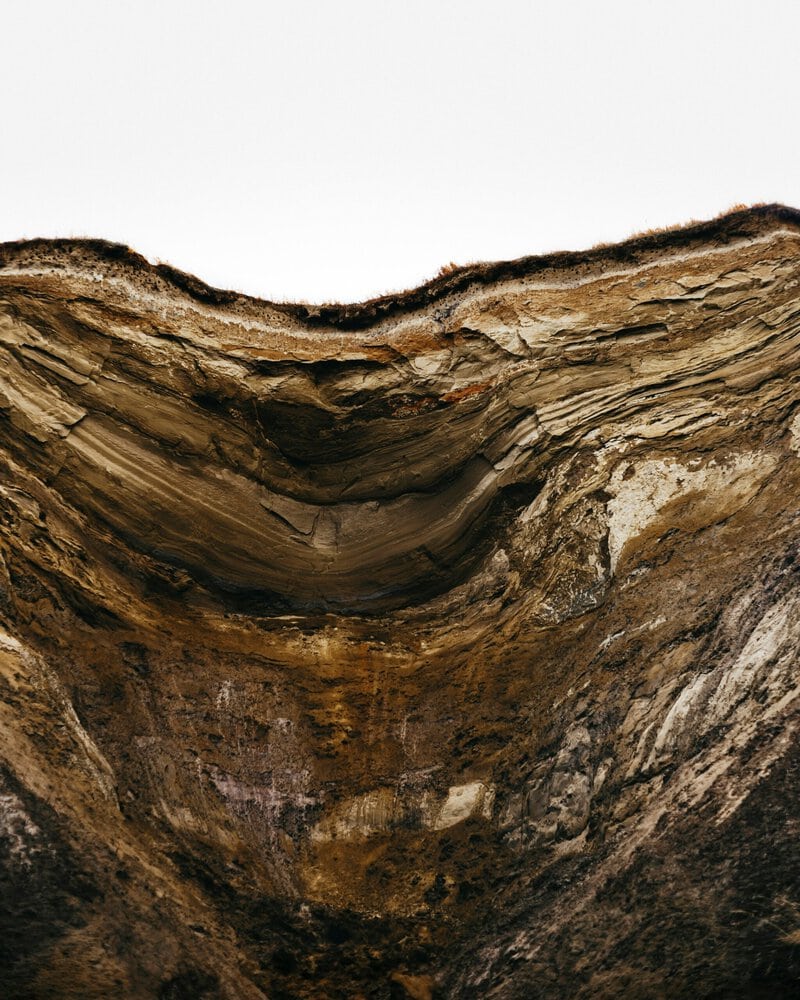
Beyond phytolith identification, the research relied on stratigraphic analysis — the systematic reading of sediment layers as a chronological record — cross-referenced with existing radiocarbon dates from Cloggs Cave’s long excavation history. This allowed researchers to build a timeline of burning events and confirm that the grass-burning practice was not confined to one period but recurred across the full temporal range of the deposit.
The methodological significance of combining archaeobotany with indigenous knowledge is difficult to overstate. The phytoliths told scientists what was burned and approximately when; GunaiKurnai cultural knowledge — both oral tradition and documented ethnographic record — provided a culturally grounded framework for understanding how and why. Neither source alone could have produced the full picture the study presents.
This model of collaborative research, in which indigenous communities are partners rather than subjects, is one that Australian archaeology has been developing for decades, and projects like this demonstrate it at its most productive. GunaiKurnai community members were involved not only in interpretation but in governance: decisions about how findings would be framed, published, and communicated were made collaboratively, reflecting protocols developed in Australian indigenous research ethics. This is not merely procedurally important — it shapes the intellectual content of the findings, because the most significant interpretive claims rest on GunaiKurnai knowledge that community members had standing to share, contextualize, and authorize.
The phytolith evidence also gives the findings an empirical foundation that other researchers can examine independently. Phytolith analysis is a well-established method in archaeobotany; the specimens are laboratory-analyzable physical objects, and the claims are therefore subject to verification, replication, and contestation through normal scientific channels — grounding the findings in evidence that extends beyond any single interpretive framework.
What This Changes, and What Remains Open
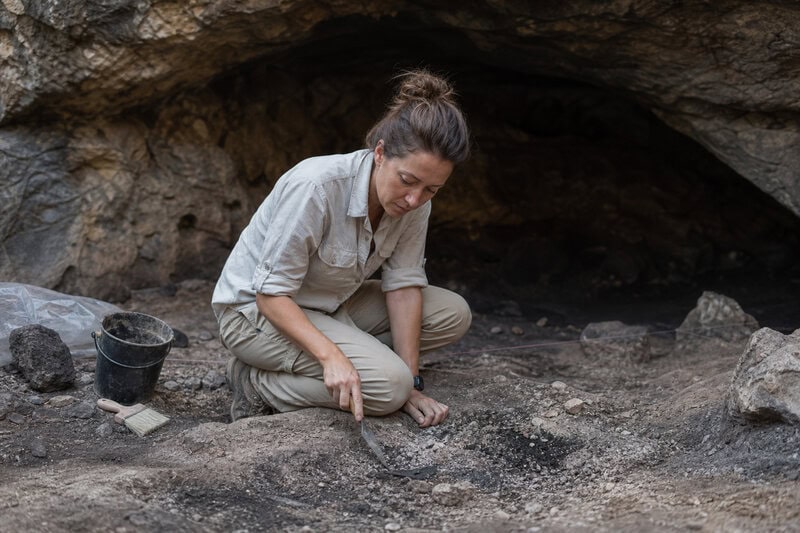
If the evidence holds up to further scrutiny — and the researchers present it as robust — Cloggs Cave represents the oldest known site of deliberate ritual fire use by anatomically modern humans anywhere on Earth. That is a significant revision to assumptions about when and where sustained symbolic or ceremonial behavior became part of human cultural life, pushing the confirmed timeline back substantially beyond previously documented examples.
What this does not prove is that earlier humans elsewhere lacked ritual capacity. Absence of evidence is not evidence of absence, and it is entirely possible that equally ancient or older practices existed at other sites but left no surviving physical trace, or have simply not yet been identified because the right analytical questions have not been asked. The Cloggs Cave finding establishes a confirmed floor, not a claimed ceiling.
For GunaiKurnai people specifically, the research carries significance that goes well beyond its place in global archaeological chronology. The findings affirm the extraordinary depth and continuity of GunaiKurnai cultural presence on their Country — a fact with direct implications for land rights, cultural heritage protection, and community identity. The cave was never merely an archaeological site; it has always been a place of meaning for the people whose ancestors lit those fires. What the science has done is give the rest of the world a means of beginning to understand how long that meaning has been tended.
The deeper question the findings open is as much methodological as historical. If 25,000-year-old ritual burning has been preserved in one limestone cave in Victoria through the survival of microscopic silica crystals — waiting to be read by researchers who knew what to look for and how — what else remains in the archaeological record of Australia, and of the world, that has simply not yet been asked the right question?