
When neuroscientist Uri Hasson’s lab at Princeton University placed listeners inside functional MRI scanners and played them spoken narratives, the scans revealed something striking: the brains of speaker and listener began to mirror each other in real time. Hasson’s team described this as “neural coupling” — the literal synchronisation of neural activity across two separate minds through the medium of a story. Researchers working at the intersection of cognitive science and classical literature are now asking a pointed follow-up question: if emotionally resonant stories produce this kind of measurable biological alignment, what does that tell us about a poem that has been doing exactly that for approximately 3,000 years?
The Oldest Surviving Story and Its Unlikely Renaissance
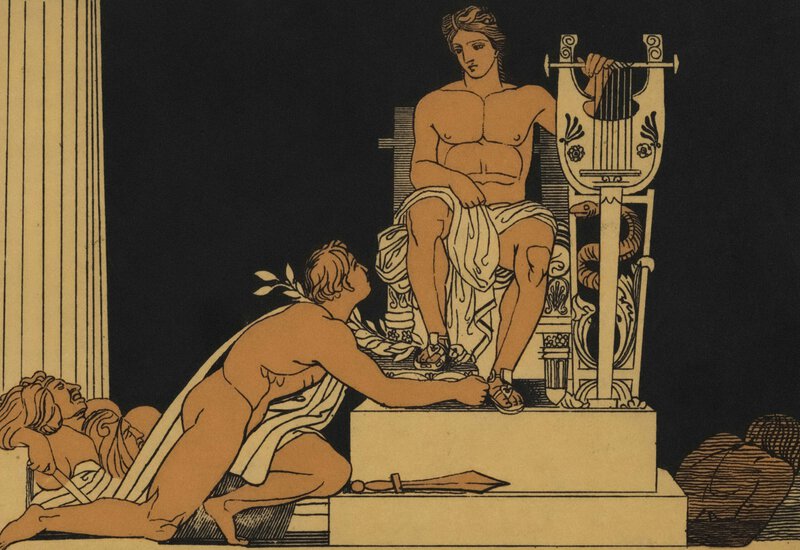
Homer’s Odyssey is among the oldest surviving works of literature in the Western tradition, and its origins matter more to neuroscientists than is immediately obvious. The poem was not written down first and read later — it was composed as part of a living oral tradition, shaped line by line for live recitation before listeners whose brains processed it as spoken sound. Its earliest audiences never held a scroll. They sat and listened, which means that for the early centuries of its existence, the Odyssey functioned, in a very literal sense, as a technology for transmitting complex information through the human auditory system.
That origin story has gained fresh relevance in recent years, because Homer’s epic has undergone a remarkable surge in cultural fashionability. New translations by scholars including Emily Wilson have reached mass audiences. Stage adaptations, literary retellings, and university course enrolments have all climbed. Publishers and classicists have publicly remarked on the trend, and it raises a question that is partly literary and partly biological: why does a pre-literate poem about a Bronze Age sailor feel as urgent as a text message, and what does modern brain science reveal about the machinery behind that staying power?
Scholars studying why the Odyssey still matters have long pointed to its themes — homecoming, loyalty, the long cost of war — as the engine of its durability. Neuroscience is beginning to offer a complementary account, one rooted not in literary interpretation but in the architecture of human cognition. The two explanations are not in competition; they describe the same phenomenon from different altitudes.
What Neuroscience Actually Means by ‘Storytelling and the Brain’
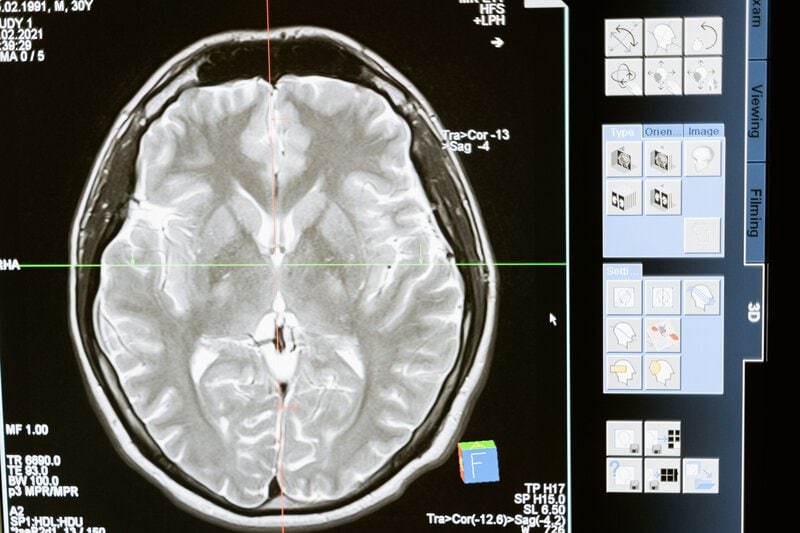
The phrase “storytelling rewires the brain” appears frequently enough in popular coverage to have become almost meaningless. It is worth being precise about what the evidence actually supports — and where it runs out.
The well-replicated consensus finding is this: when people comprehend narratives, brain activation is not confined to the classical language-processing regions — Broca’s area and Wernicke’s area — but spreads to sensory, motor, and emotional circuits. Reading or hearing the word “lavender” activates olfactory regions; a passage describing a physical struggle engages motor cortex. This phenomenon, sometimes called “embodied simulation,” suggests that the brain does not passively decode story language but partially enacts it. That finding is robust and has been replicated across multiple independent research groups.
Neural coupling — the mirroring effect documented by Hasson’s Princeton lab — extends this picture. When narrative communication succeeds, the listener’s brain activity does not merely respond to the speaker’s: it anticipates it, showing patterns of activation that track closely with those of the person producing the story. Hasson’s team described this as the neural basis of communication itself, not a byproduct of it. The stronger the coupling, the better listeners later report understanding and remembering the content.
A separate but related mechanism is what psychologists Melanie Green and Timothy Brock termed “narrative transportation” — the state in which absorption in a story becomes so complete that a listener’s sense of present reality partially recedes. Experimental studies have shown that people in a transported state engage in less counterarguing against ideas embedded in the narrative, and are more likely to update their attitudes in response to story-conveyed information than to the same information presented as direct argument. This is not a trivial finding: it suggests stories move beliefs in ways that conventional persuasion often cannot.
What remains speculative — and should be clearly labelled as such — is whether exposure to specific ancient texts produces lasting structural changes in the brain: alterations in white matter connectivity, for example, or durable shifts in default mode network organisation. No peer-reviewed longitudinal studies have examined the Odyssey specifically in this way. Claims of that strength are not currently supported by the available data.
Why the Odyssey’s Specific Architecture Works on the Brain

Even setting aside the speculative claims, the Odyssey‘s internal structure maps onto features that cognitive scientists associate with optimal memory encoding in ways that are difficult to dismiss as coincidental.
Consider the poem’s use of rhythm and repetition. Its dactylic hexameter — the rolling six-beat line of ancient Greek epic — and its formulaic repeated phrases (epithets like “wine-dark sea” and “rosy-fingered Dawn”) were not ornamental. They were functional. They gave oral poets a scaffolding of predictable sound patterns from which to reconstruct tens of thousands of lines across a performance. Modern memory researchers recognise this as an exploitation of the brain’s “chunking” mechanism — the process by which repeated patterns are compressed into single retrievable units, reducing the cognitive load of recall. The poem was, in effect, pre-formatted for a brain that had not yet developed writing as an external memory aid.
The poem’s episodic journey structure — discrete adventures unified by a single protagonist’s overriding goal — mirrors the organisation of human autobiographical memory. Neuroscientist Eleanor Maguire and colleagues at University College London demonstrated that autobiographical memories are stored and retrieved in narrative-like sequences, with the hippocampus playing a central role in linking episodes into coherent personal histories. A poem structured as a series of causally linked episodes, sustained by a character with a clear motivation, is essentially formatted to match how the brain already organises lived experience.
The poem’s dominant themes — identity, homecoming, marital fidelity, the relationship between parent and child — engage what neuroscientists call the default mode network, a set of brain regions active during self-reflection, social cognition, and the imaginative modelling of other minds. Research associated with this network consistently shows strong activation in response to narratives involving close relationships and moral dilemmas. The Odyssey sustains precisely these themes across all 24 books. Whether that constitutes evidence of intentional cognitive engineering on Homer’s part, or simply reflects what audiences across centuries have rewarded with their attention, is a question the data cannot yet resolve — but the structural alignment is real.
Readers who return to the Odyssey today often report that its emotional logic feels immediate in a way its historical distance would not predict. The neuroscience of the default mode network offers one account of why: the circuitry that makes readers care about Odysseus’s wife and son is the same circuitry they use to track their own relationships. The poem commandeers those cognitive resources automatically.
Themes That Transcend Time — and the Psychology Behind Them
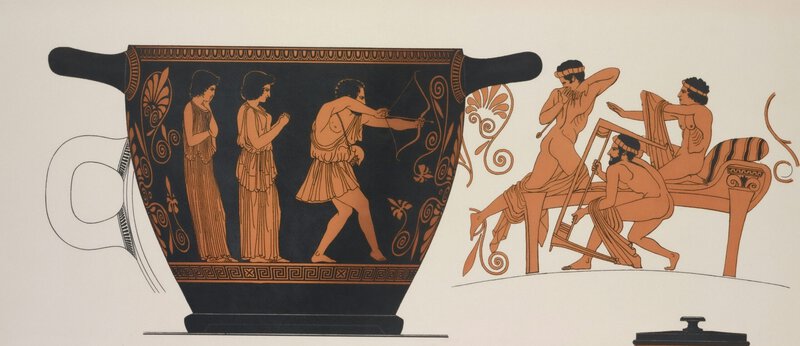
At its structural core, the Odyssey is a story about coming home. The word “odyssey” itself has entered the language as a synonym for any long and transformative journey — testimony to how thoroughly the poem’s central arc has embedded itself in cultural cognition. Attachment theorists, building on John Bowlby’s foundational work on human bonding, frame reunion after prolonged separation as one of the most biologically primed emotional experiences humans undergo. Odysseus’s 20-year return is not merely a plot device; it is a sustained activation of attachment circuitry that has not changed in three millennia.
Psychologist Jonathan Gottschall, author of The Storytelling Animal, has argued that stories across cultures disproportionately feature conflict, threat, and resolution — precisely the emotional arc the Odyssey sustains from the sack of Troy to the slaughter of the suitors. Gottschall connects this pattern to the brain’s threat-detection systems: narratives that keep a protagonist in sustained danger maintain heightened engagement because the neural circuitry that monitors real-world threats cannot fully distinguish a fictional danger from a genuine one. The poem keeps those systems running for the duration of its telling.
It is important, however, to resist overstating the universality of any of this. The Odyssey reflects specific cultural assumptions of ancient Greek society — about gender, slavery, violence, and social hierarchy — that are neither universal nor uncontested. Emily Wilson has been explicit in cautioning against reading the poem as a timeless mirror of human nature when it is also a document of a particular and often troubling historical moment. The resonance that modern Western readers feel may owe as much to centuries of cultural inheritance — to the transmission of the poem through education systems and literary canons — as to any direct biological response. Readers genuinely uncertain about why the poem carries such weight are asking a legitimate question, and the honest answer involves both biology and cultural history in proportions that are not yet precisely known.
What the Research Confirms — and Where It Hits Its Limits
Controlled studies by Paul Zak’s lab at Claremont Graduate University have demonstrated that emotionally engaging narrative increases oxytocin — a neurochemical associated with empathy and prosocial behaviour — in listeners, and that this increase predicts greater charitable behaviour following the story. That finding has been reported across multiple studies and lends neuroscientific weight to the intuition that stories make people more generous and empathic, at least in the short term.
What the research cannot yet support is the stronger claim that reading or hearing the Odyssey specifically produces lasting neural changes. Most neuroimaging studies of narrative comprehension use short, purpose-built passages lasting minutes, not epics requiring many hours to hear in full. Extrapolating from those laboratory stimuli to a 3,000-year-old poem in translation requires interpretive leaps that careful scientists acknowledge openly. The ecological validity problem — the gap between what happens in a scanner and what happens when a reader is absorbed in an ancient text at home — is real and not yet resolved.
Interdisciplinary work combining classics, cognitive science, and neuroimaging is beginning to address this directly. Collaborative projects at the intersection of digital humanities and neuroscience are designing studies that use longer, culturally authentic texts rather than purpose-written laboratory passages. This work is in its early stages, and no confirmed findings specific to Homer are yet available in the peer-reviewed literature. The field is moving in a promising direction, but claims of arrival are premature.
Why This Matters Beyond the Lab
The practical implications of this research, even in its current incomplete state, extend well beyond academic interest. If ancient oral narrative structures were optimised — through thousands of years of cultural trial and error — for human memory encoding and emotional engagement, that has direct implications for how literature is taught. It also speaks to the growing clinical literature on narrative therapy, the use of structured storytelling in trauma treatment, which already draws on the understanding that humans process difficult experience more effectively when it is given narrative form.
The neuroscience framing offers a complement to literary and humanistic accounts of why the Odyssey endures, not a replacement for them. The poem may persist across centuries because it exploits biological architecture that has not changed since Homer’s time, and because each generation of translators and adapters keeps the surface current while the deep structure — the episodic journey, the imperilled attachments, the long pressure toward home — holds firm.
The broader implication is perhaps the most remarkable: pre-literate cultures had, through sustained collective practice, reverse-engineered features of human cognition centuries before brain science existed as a discipline. The oral poets who refined the Odyssey across generations did not know what a neuron was. The evidence accumulating in modern imaging labs suggests they understood, intuitively and profoundly, how a human brain wants to be told a story — and built one accordingly.