
Wild bottlenose dolphins travel up to 100 kilometers per day, navigating three-dimensional social hierarchies of remarkable complexity — a behavioral baseline that makes the dimensions of even the largest marine park pool neurologically significant. When the Canadian government endorsed a plan to relocate the last remaining captive whales from Marineland of Canada, the Niagara Falls, Ontario, theme park and zoo that operated from 1961 until its closure, it forced a public reckoning with a question researchers had been quietly answering for decades: what does confinement actually do to a cetacean’s brain?
A Brain Built for Boundlessness
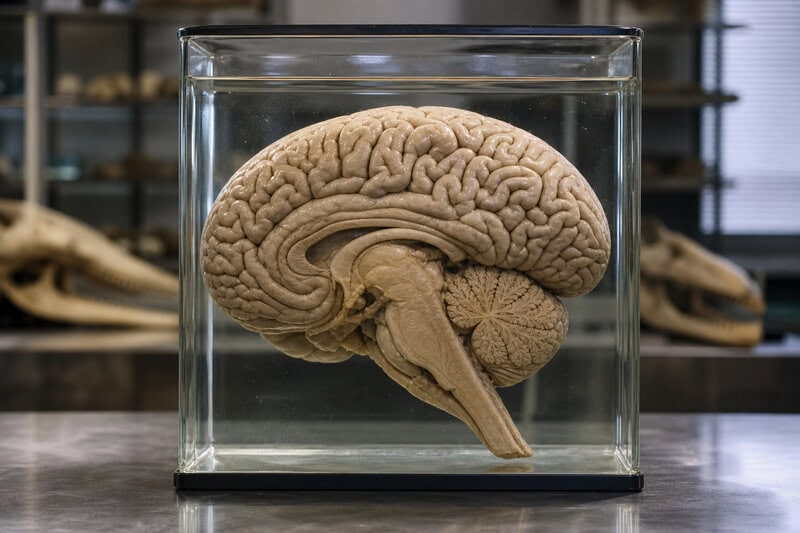
The answer begins in anatomy. Dolphin and orca brains are not merely large — they are structurally elaborated in ways that neuroscientists link directly to social complexity, emotional processing, and spatial cognition. The paralimbic lobe, a cortical region nearly absent in humans, is dramatically enlarged in cetaceans. Emory University neurobiologist Lori Marino has hypothesized that this structure regulates affective states across vast, fluid social networks — the kind that require tracking dozens of relationships simultaneously over years.
Marino’s 2007 paper in PLOS ONE confirmed that bottlenose dolphins pass the mirror self-recognition test, placing them alongside great apes and elephants in a small cohort of species whose demonstrated self-awareness implies a level of psychological interiority that any welfare evaluation must take seriously. Researchers have also identified spindle neurons — previously thought exclusive to great apes and humans — in humpback, fin, sperm, and bottlenose whales. These elongated cells are associated with rapid social judgment and empathy, and their presence in cetaceans is not contested in the peer-reviewed literature.
Cetacean neocortex gyrification — the folding pattern that increases surface area and computational capacity — rivals that of humans. What remains an active area of inquiry is the precise threshold at which captive conditions translate this anatomical capacity into measurable psychological harm. The architecture is agreed upon; the implications for welfare policy are still being worked out.
Stress Hormones Don’t Lie: The Cortisol Evidence
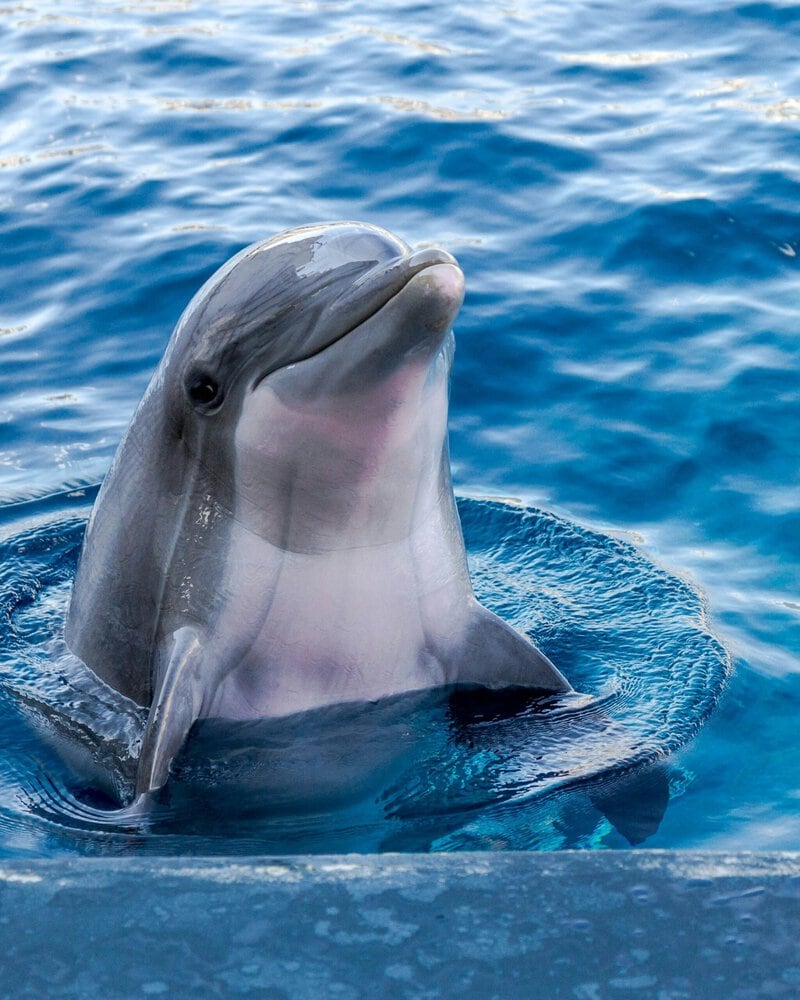
Endocrinology offers some of the most direct evidence available. Multiple studies, including a 2019 review published in Frontiers in Veterinary Science, document chronically elevated glucocorticoid levels — glucocorticoids are the class of stress hormones that includes cortisol — in captive cetaceans compared to wild counterparts. Critically, cortisol can now be sampled non-invasively from the aerosol exhaled through a dolphin’s blowhole, a methodology that has made field-to-captivity comparisons increasingly reliable and difficult to dismiss.
Chronic cortisol elevation in mammals suppresses hippocampal neurogenesis — the ongoing birth of new neurons in the brain region governing memory and spatial navigation. This mechanism is well-established in rodent and primate models. Given that cetaceans share the same mammalian stress-response architecture, researchers hypothesize the same suppression occurs in dolphins and orcas, though longitudinal neuroimaging data in living cetaceans remains difficult to obtain.
Behavioral evidence converges with the hormonal data. Stereotypies — repetitive, invariant behaviors with no obvious goal, such as jaw-popping, head-weaving, or circling pool walls — are documented in captive dolphins and orcas at rates rarely observed in wild populations. Behavioral ecologists classify stereotypies as reliable indicators of compromised welfare and possible neurological dysregulation, analogous to crib-biting in horses or bar-biting in sows. They are not random quirks; they are signals.
It is worth acknowledging a genuinely contested point: stress hormone baselines vary by individual, season, and reproductive state. Some researchers affiliated with zoological institutions argue that well-managed facilities with enrichment programs can meaningfully reduce this hormonal gap. The broader scientific community views this position as partially supported — enrichment does help — but insufficient to close the welfare case.
Echolocation and the Hidden Cost of Concrete
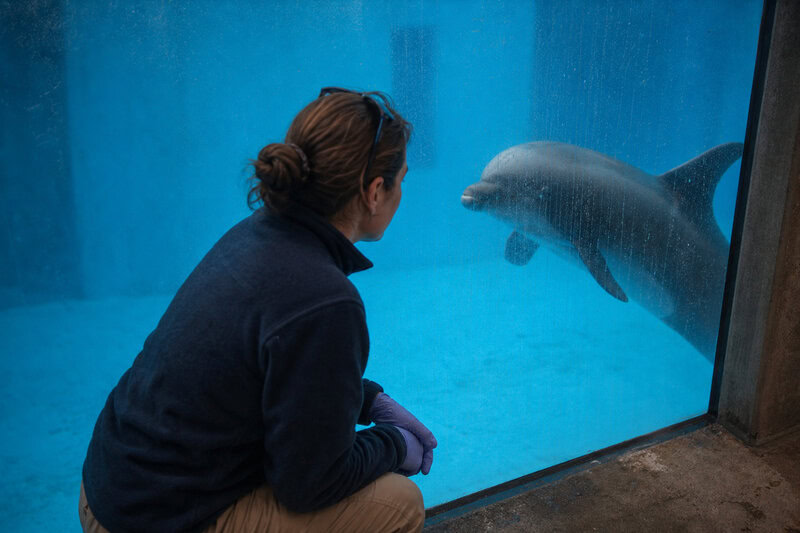
Dolphins navigate, hunt, and communicate primarily through biosonar. They emit clicks at frequencies up to 200 kilohertz and interpret the returning waveforms with a resolution precise enough to distinguish objects the size of a coin at 50 meters. In a concrete tank, those same signals bounce chaotically off hard walls — a permanent acoustic environment researchers have described as the sensory equivalent of living inside an echo chamber.
A 2020 study published in the Journal of the Acoustical Society of America measured reverberation times in marine park pools and found them orders of magnitude longer than the open-water conditions dolphin biosonar systems evolved to interpret. The study raised the hypothesis — not yet fully tested longitudinally — that chronic acoustic distortion may contribute to auditory system fatigue and navigational disorientation. Captive dolphins have been observed modifying their click trains in ways that mirror known stress-response vocalizations, and researchers at the University of St. Andrews’ Sea Mammal Research Unit have identified this as a potentially important welfare indicator requiring standardized monitoring across facilities.
Orcas present an additional layer of complexity. Distinct ecotypes — groups with genetically and culturally differentiated communication dialects — lose access to their natal dialect when separated from family groups. Some cetacean cognition researchers argue this constitutes cultural deprivation with neurological correlates. That claim sits at the frontier of the field rather than settled consensus, but it is taken seriously by specialists who study cetacean social learning.
Social Deprivation and the Neuroscience of Broken Bonds
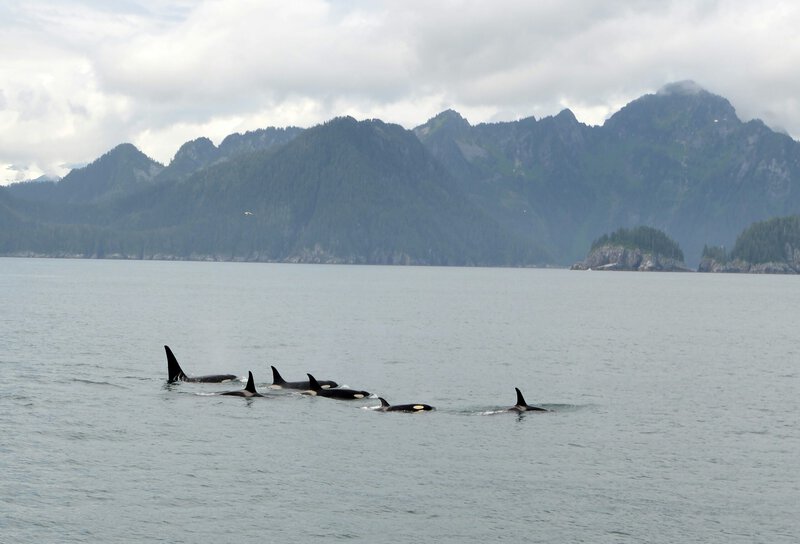
Wild orca matrilines maintain cohesion across decades. A landmark 2012 study in Science by Darren Croft and colleagues at the University of Exeter found that post-reproductive female orcas serve as ecological memory stores for their groups — their absence correlates with elevated mortality in offspring. This demonstrates that orca sociality is not merely behavioral preference but a survival-linked cognitive architecture. The grandmother is not optional equipment; she is functional infrastructure.
Captive facilities routinely mix individuals from different ecotypes or separate mother-calf pairs for transport or breeding programs. Social neuroscientists classify these conditions as analogous to social isolation stress in other highly social mammals, triggering oxytocin dysregulation and heightened aggression — both documented in captive cetacean behavioral records reviewed in a 2021 Animal Cognition meta-analysis. Oxytocin, sometimes called the bonding hormone, does not merely make animals feel connected; it regulates physiological stress responses across multiple organ systems.
Aggression between captive cetaceans — including raking, the deep scratch marks inflicted by one animal’s teeth on another’s skin, as well as redirected aggression toward trainers and interspecies dominance displays — is significantly more frequent in captive settings than wild ones, according to data compiled by the nonprofit Whale and Dolphin Conservation. Researchers interpret this not as individual temperament but as a downstream consequence of disrupted social cognition: animals whose brains evolved to manage complex, stable relationships are instead managing incompatible strangers in an inescapable space.
Marineland specifically drew scrutiny from Canadian journalists and Ontario animal welfare authorities over documented animal welfare concerns prior to its closure — a pattern that illustrates how the gap between facility-level management decisions and species-level neurological needs can become publicly, and painfully, visible. As of mid-2025, Marineland had not decided whether it would reopen, describing itself to CBC Hamilton as an aquarium rather than a theme park.
What Enrichment Can and Cannot Fix
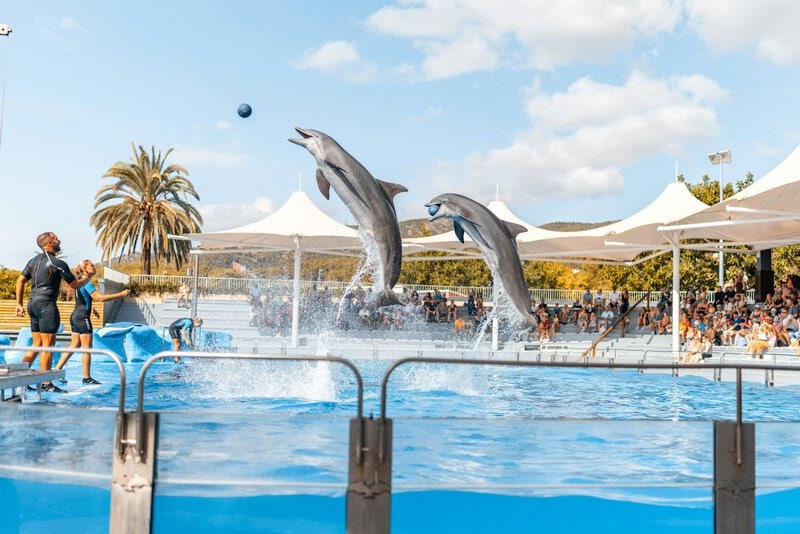
Proponents of well-managed marine parks point to cognitive enrichment programs — puzzle feeders, novel objects, voluntary participation training — as a form of neurological mitigation. This is not wishful thinking. A 2018 study in Applied Animal Behaviour Science found that environmental enrichment reduces stereotypy frequency and modestly lowers cortisol in captive dolphins. The effect is real.
The problem is the ceiling. Enrichment research in cetaceans consistently shows diminishing returns: animals habituate rapidly to novel stimuli, and no published study has demonstrated that any enrichment protocol restores wild-equivalent glucocorticoid profiles, full biosonar utility, or intact social structure. Most independent cetacean welfare scientists classify enrichment as harm reduction, not harm elimination — a meaningful distinction when setting policy.
The Canadian government’s endorsement of a relocation plan for Marineland’s remaining whales, as reported by the Associated Press, reflects a regulatory trajectory increasingly shaped by this body of science. It mirrors legislative moves in California, where AB 2140 passed in 2016, and France, which banned cetacean breeding in captivity in 2021. Sanctuary models — particularly open-water sea pen proposals such as the Whale Sanctuary Project’s site in Nova Scotia — represent an emerging third category between full captivity and open-ocean release, one that researchers argue could allow longitudinal study of recovery trajectories. No facility of this type currently operates at scale for large cetaceans.
What the Science Settles — and What It Doesn’t
The scientific consensus, as reflected in position statements from the Society for Marine Mammalogy and the American Cetacean Society, is that current captive conditions for dolphins and orcas are incompatible with meeting the full range of neurological, social, and acoustic needs these animals evolved to fulfill. This conclusion is decades in the making and is now embedded in regulatory frameworks across multiple jurisdictions.
What remains genuinely contested is the question of individual variation and reversibility. Some captive-born cetaceans may lack the learned behaviors required for open-ocean survival, and relocating them carries documented risks. The case of Keiko — the orca made famous by the film Free Willy — is the most cited example: reintroduced to open water in 2002, he died within months without successfully integrating into a wild population, a cautionary data point that responsible researchers do not dismiss.
The closure of Marineland and the subsequent Canadian government intervention represent a natural experiment that the research community is watching carefully. The outcomes of the planned whale relocations may provide the clearest longitudinal data yet on whether the neurological costs of long-term captivity are partially reversible in a higher-welfare environment — a question with implications far beyond one park in Ontario.
For now, the most accurate summary of the science is this: a dolphin’s brain is an instrument shaped by millions of years of open-ocean complexity, and every credible measure researchers have applied — hormonal, behavioral, acoustic, neuroanatomical — indicates that captivity extracts a cost that no tank, however large or carefully managed, has yet been shown to fully repay.