Mechanical Earthquake Detector (1868)
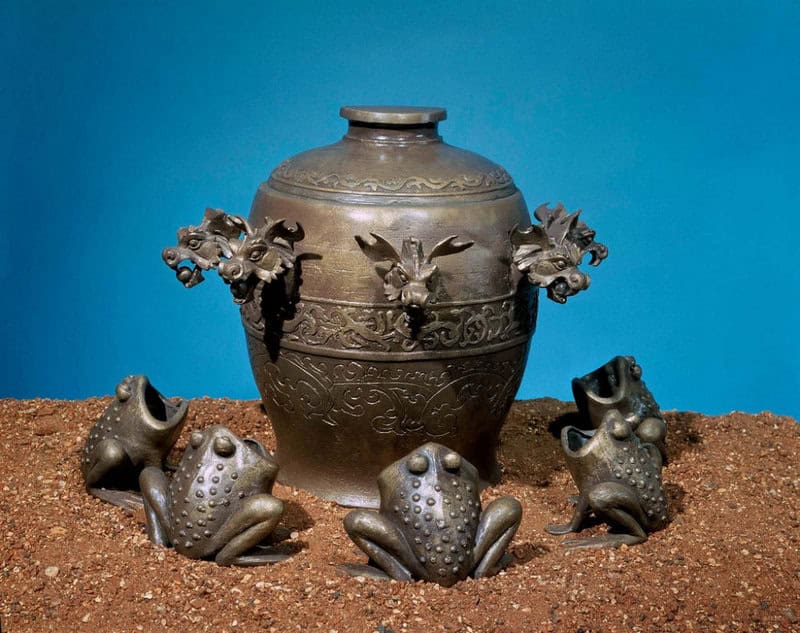
Chinese scientists created a device that used bronze dragons arranged around a central vessel, each facing a different direction. Each dragon held a copper ball in its mouth. Below each dragon sat a metal frog with its mouth open, ready to catch the ball. When an earthquake occurred, a delicate internal mechanism shifted slightly and caused one of the dragons to release its ball.
The ball fell into the corresponding frog’s mouth, indicating the direction from which the tremors originated. This design did not rely on complex machinery; it used only gravity and carefully balanced levers. Its sensitivity was remarkable, allowing it to detect quakes from hundreds of miles away, and even now, modern seismologists respect the precision and ingenuity of this ancient instrument.