10. Yellowstone’s Grand Prismatic Spring (Superheated Chemistry)
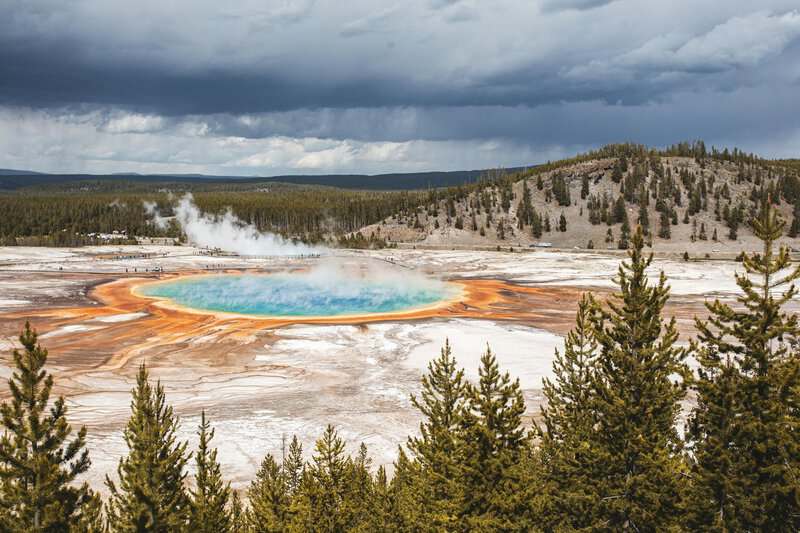
Yellowstone’s Grand Prismatic Spring, the largest hot spring in the United States, features vibrant microbial mats that form concentric color bands around its center. These mats consist of thermophilic bacteria, each adapted to specific temperature and chemical gradients. For instance, the outermost brown mats are formed by Calothrix cyanobacteria, thriving in temperatures between 30°C and 45°C. Moving inward, Phormidium cyanobacteria dominate the orange mats at temperatures ranging from 35°C to 50°C. Further in, Synechococcus cyanobacteria create green mats in waters between 50°C and 72°C. The center of the spring remains sterile due to extreme temperatures, with water reaching up to 87°C. The specific metabolic pathways and survival strategies of these organisms, particularly their adaptations to high temperatures and varying pH levels, are still under active research. More information is available at the U.S. National Park Service. (nps.gov)