
Roughly one in three people with psoriasis who start a biologic — a precision-engineered drug that can cost tens of thousands of dollars per year — will see little to no meaningful improvement, triggering a frustrating cycle of switching medications and waiting months to learn whether the next option will work any better. A study published in the Journal of the American Academy of Dermatology (JAAD) now offers a molecular explanation for why that happens, identifying a specific immune-cell pattern that may predict, before treatment even begins, which patients are likely to respond and which are not.
What Biologics Are — and What They Are Supposed to Do

Biologics are laboratory-engineered proteins, most commonly monoclonal antibodies, designed to intercept specific molecules in the immune system that drive inflammation. In psoriasis, the primary targets are cytokines — signaling proteins called IL-17, IL-23, and TNF-alpha — that, when chronically overproduced, trigger the accelerated skin-cell turnover responsible for the thick, scaly, often painful plaques that define the disease.
Unlike older systemic treatments that broadly suppress immune activity across the body, biologics are engineered for precision: neutralize the specific rogue signal, and the disease should retreat. For many patients, this logic works spectacularly well, producing near-complete skin clearance within weeks. For a substantial minority, however, the drug does almost nothing — and medicine has struggled to explain why in advance.
Clinicians distinguish between two types of treatment failure. Primary non-response means the drug never works at all. Secondary non-response means it works initially and then stops, often because the immune system generates antibodies that neutralize the drug itself. Until recently, identifying either pattern — and predicting which patients are at risk — has been largely a process of trial and error, with patients serving, in effect, as their own experiments.
The Dual Immune Signature That May Explain Variable Response
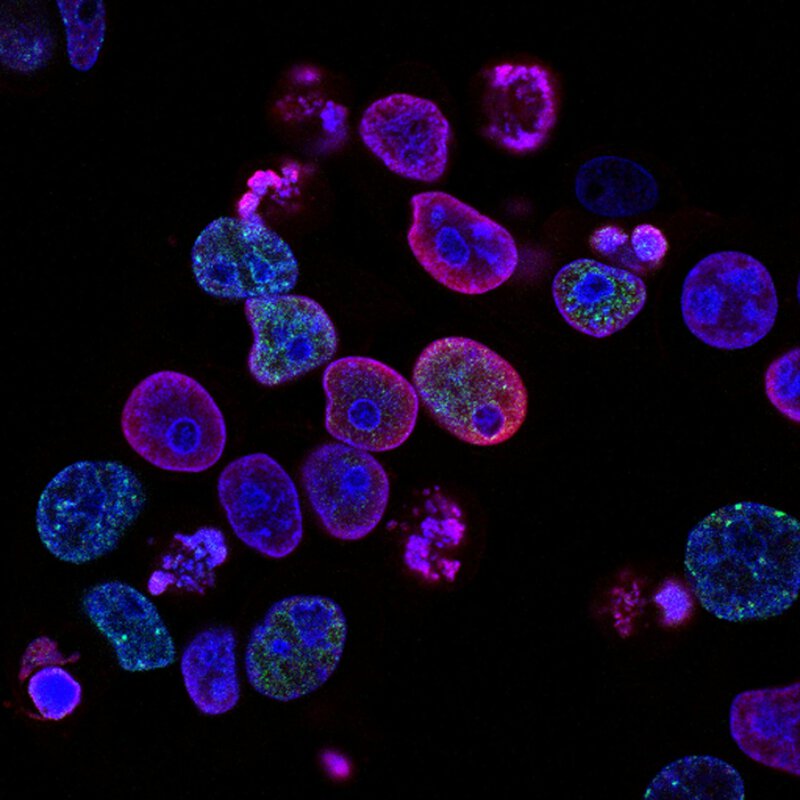
The JAAD study identified a dual Th17 and Type 2 immune signature in a subset of psoriasis patients — a finding that challenges the standard model of how the disease works at a molecular level. Most biologics approved for psoriasis are engineered to interrupt the Th17 inflammatory pathway. Th17 cells are a category of immune cell that release pro-inflammatory proteins; in the classical model of psoriasis, their overactivation is the central driver of skin lesions. The precision of IL-17 and IL-23 blockers depends entirely on this model being accurate for the patient receiving the drug.
The problem is that it may not always be accurate. In the subset identified by the JAAD researchers, patients showed simultaneous activation of a second, normally distinct inflammatory pathway — the Type 2 pathway, more commonly associated with allergic conditions such as atopic dermatitis and asthma. When a patient’s inflammation is partly driven by Type 2 immune activity rather than exclusively by the Th17 pathway, a drug engineered solely to block Th17 signaling is, in a meaningful biological sense, addressing only part of the underlying problem.
This immune overlap offers a plausible molecular explanation for a clinical puzzle dermatologists have long observed: patients whose plaques look essentially identical under examination can respond in dramatically different ways to the same drug. The disease presents the same face to the physician while concealing very different machinery underneath.
Researchers describe this as an emerging insight rather than established consensus. The dual-signature finding points toward a mechanism, but prospective clinical trials — studies that enroll patients, measure their immune profiles before treatment, and track outcomes over time — are still needed to confirm that identifying this signature can reliably guide treatment decisions in practice. The science is promising but not yet practice-changing on its own.
Beyond Immune Biology: The Clinical Factors That Quietly Undermine Treatment
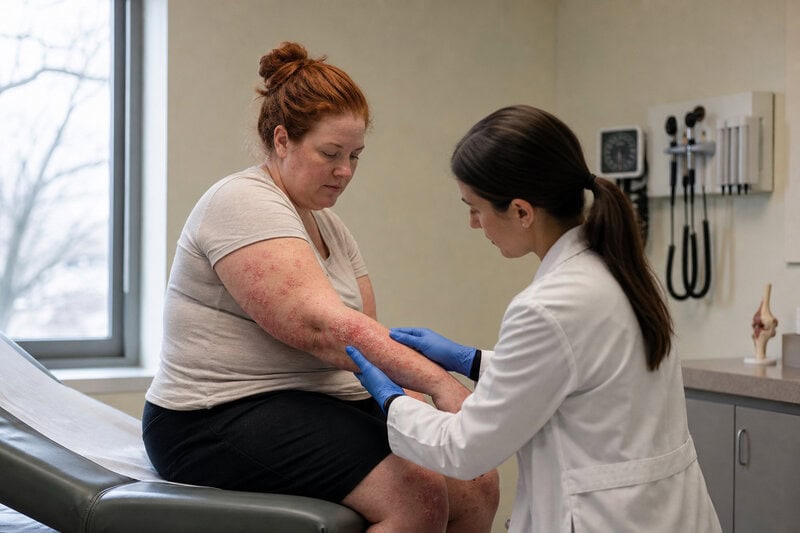
Immune architecture is not the only reason biologics fail. A consistent body of research has established that several clinical characteristics are independently associated with poorer biologic response in psoriasis, and three stand out with particular reliability: elevated body mass index (BMI), smoking history, and older age at treatment initiation.
The BMI connection has a pharmacological explanation that goes beyond general health. Higher body weight alters how a drug is distributed throughout the body — a phenomenon called pharmacokinetic interference — and can effectively reduce the concentration of the biologic that reaches inflamed tissue. Research has consistently linked higher BMI to less favorable biologic outcomes in psoriasis, with this distribution effect considered a leading mechanism. Some biologics are dosed by body weight precisely to account for this; others use fixed dosing, potentially leaving heavier patients with subtherapeutic drug levels.
Smoking presents a different kind of problem. Cigarette exposure is thought to promote a broadly pro-inflammatory state that may counteract the drug’s mechanism — effectively raising the inflammatory background against which the biologic is trying to work. The precise molecular pathway linking smoking to biologic failure in psoriasis specifically remains under investigation, but studies examining predictors of biologic response have consistently identified smoking as a negative prognostic factor across multiple drug classes.
These factors carry particular clinical importance because, unlike fixed biological variables, they are at least partly modifiable. A patient who loses weight, stops smoking, or addresses related metabolic conditions before or during biologic therapy may be doing more than improving general health — they may be directly improving the pharmacological conditions under which their treatment operates. That distinction is worth making explicit in clinical conversations.
Why Predicting Response Has Been So Difficult
Psoriasis carries a single diagnostic label, but the JAAD research reinforces a growing view among immunologists that it is better understood as an umbrella of immunologically distinct subtypes that happen to produce similar-looking skin lesions. The tools currently used to classify disease severity — including the Psoriasis Area and Severity Index (PASI), which quantifies the extent, thickness, and redness of plaques across the body — measure how much disease is present but reveal nothing about which immune pathway is dominant in a given patient.
Genetic research has added some clarity without yet delivering clinical utility. Studies have identified genetic markers associated with biologic response, but no single gene or panel has proven reliable enough for routine use. The immune system’s behavior is shaped not only by inherited genetics but by environmental exposures, metabolic status, and the concurrent activity of multiple immune pathways — variables that interact in ways genetics alone cannot capture.
The practical result is that prescribing a biologic has historically involved educated inference: a clinician selects a drug based on clinical guidelines, patient preference, and insurance coverage, then waits 12 to 16 weeks to learn whether it worked. For the patient, that waiting period represents months of potential non-improvement, possible side effects, and, if the drug fails, the psychological burden of starting the process over.
Can Predictive Tools Shorten the Trial-and-Error Cycle?

The complexity of predicting biologic response — spanning immune profiles, genetics, body composition, lifestyle, and metabolic factors — has made it a natural target for computational analysis. A machine learning-based diagnostic tool called Mind.px has been investigated for its ability to analyze patient data before treatment begins and generate a probability estimate of whether a given individual is likely to respond to biologic therapy.
Mind.px belongs to a category called predictive biomarker testing — tools that integrate multiple biological signals into a single decision-support score. Early research findings have been described as promising by investigators, but the tool has not yet been validated in large, independent clinical trials across diverse patient populations. That distinction matters: a predictive model trained on one patient group can perform poorly when applied to different demographics, and independent replication across varied populations is the standard by which such tools earn clinical credibility.
The potential value is concrete. If a clinician could determine before prescribing that a patient’s immune and metabolic profile makes them a poor candidate for an IL-17 blocker but a strong candidate for an IL-23 inhibitor, the trial-and-error cycle that currently consumes months of patients’ lives and substantial healthcare resources could be meaningfully shortened. That outcome, however, remains a goal rather than a present clinical reality.
What This Means for Patients Now and in the Years Ahead

The JAAD immune-signature findings, the well-documented influence of BMI and smoking on drug response, and the early promise of predictive tools all point toward the same structural conclusion: psoriasis treatment is overdue for a precision-medicine approach that matches the right drug to the right patient, rather than applying a standard first-line therapy to everyone and adjusting only after failure.
For patients, the most immediate practical implication is the value of a candid, thorough conversation with a dermatologist before starting or switching a biologic. That conversation should explicitly address all known response modifiers — body weight, smoking history, age-related considerations, and any concurrent conditions that may influence immune behavior. Clinical data consistently link these factors to treatment outcomes, and acknowledging them before prescribing is the first step toward a genuinely individualized treatment strategy rather than a one-size-fits-all default.
For the field, the path forward almost certainly involves integrating immunological biomarkers, genetic data, and clinical variables into validated, prospectively tested decision-support tools. Researchers emphasize that this goal is scientifically plausible — the foundational building blocks are becoming clearer — but remains years away from routine clinical implementation. The dual immune signature identified in the JAAD study is a meaningful step in that direction, not an arrival at the destination.
For the roughly 3 percent of the global population living with psoriasis, that distinction between a step and an arrival matters enormously. The science now offers better explanations for why some patients respond and others do not; it does not yet offer a reliable method for determining in advance which category any individual patient falls into. Closing that gap is the central challenge of the next phase of psoriasis research — and the JAAD findings suggest the field is, at minimum, asking the right questions with the right tools.