
More than half of 200 systematically surveyed Syrian archaeological sites — 59 percent, recorded between 2015 and 2025 — show confirmed signs of looting, according to findings reported across multiple news outlets. That single figure reframes the Syrian civil war not only as a human catastrophe measured in lives, but as a cultural catastrophe measured in millennia. Understanding what was lost, how it was lost, and what that loss means requires looking at all three questions together.
A Civilisation Beneath the Soil
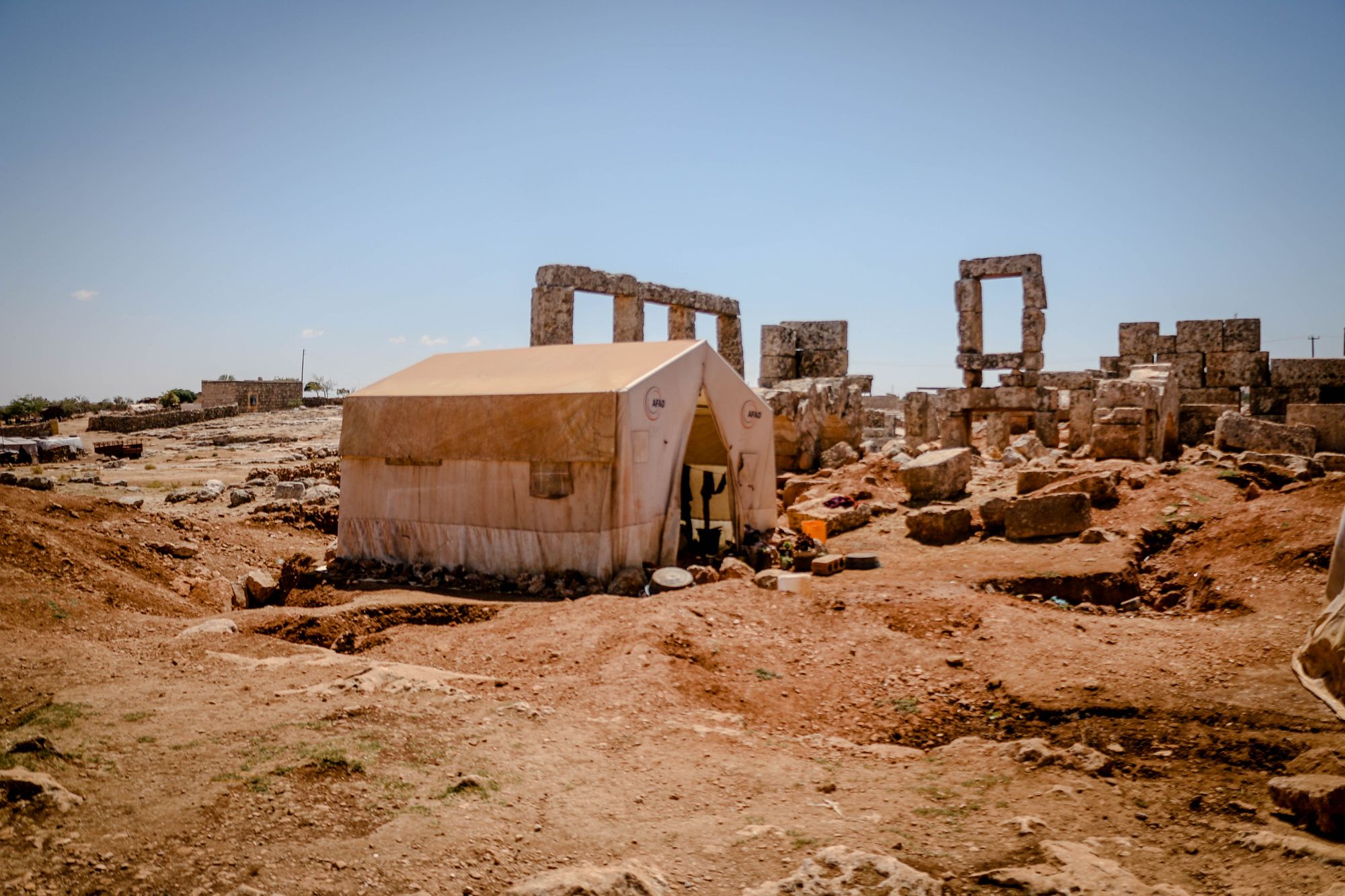
Syria is not merely old. It is foundationally old. Neolithic villages, Bronze Age city-states, Assyrian trade networks, Hellenistic temples, Roman colonnades, and Byzantine churches are stacked — sometimes literally — atop one another across the country’s landscape. The region sits at one of the densest concentrations of continuous human settlement on Earth, with occupation stretching back roughly 10,000 years. Cities were built here, alphabets refined here, and religions that still shape billions of lives took early form here.
Much of that record is stored inside what archaeologists call tell mounds — artificial hills formed over thousands of years as successive generations of people built their homes and towns directly on top of the ruins of earlier ones. Each layer is a chapter. Together, a tell mound is a physical archive of human experience that no library can replicate, because it preserves not just objects but the precise spatial relationships between them: what was stored next to what, what was burned when, who lived above whom. Those relationships are the data. Once disturbed, they cannot be reconstructed from the objects alone.
Two sites anchor the geographic and chronological range of what Syria held before the war. Palmyra, a UNESCO-listed desert caravan city in the Syrian interior, flourished as a crossroads between the Roman Empire and the Silk Road routes running east. Apamea, in western Syria, was one of the grandest urban centres of the Roman world, its colonnaded main street stretching nearly two kilometres. Both are now synonymous with destruction. So, in varying degrees, are all six of Syria’s UNESCO World Heritage Sites — every single one sustained documented damage during the civil war, according to UNESCO assessments. The conflict’s cultural reach was total, not selective.
How Satellites Saw What Fieldworkers Could Not
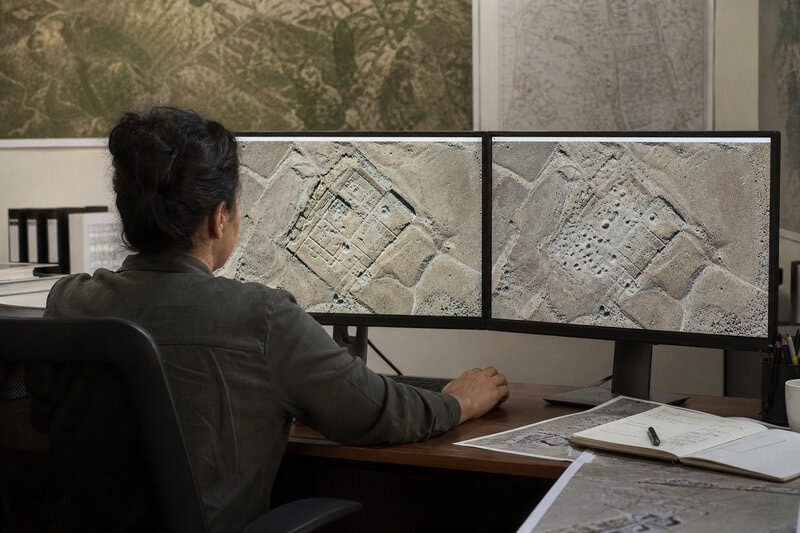
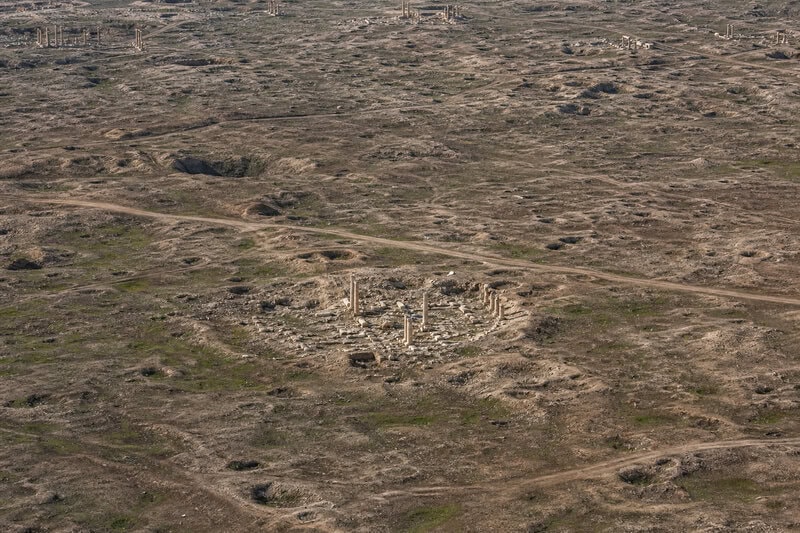
For much of the conflict, visiting Syria’s most endangered sites was simply too dangerous for researchers and archaeologists. The methodology that filled that gap was satellite image analysis — the systematic comparison of high-resolution commercial photographs taken from orbit before and after periods of known instability. Researchers examined these images for looting pits, bulldozed earthworks, collapsed structures, and the distinctive honeycomb scarring that large-scale illegal digging leaves on the surface of the ground.
What they found at Apamea became one of the most visually striking illustrations of the method’s power. By 2011 and 2012, satellite photographs showed the area surrounding the Roman city’s famous colonnaded street pocked with hundreds of fresh excavation pits — disturbance visible from orbit, in a pattern consistent with organised, rapid extraction. Satellite image analysis also confirmed that some significant archaeological locations were not merely dug into but bulldozed wholesale, obliterating the stratigraphic context — the precise layering that allows archaeologists to determine what happened, in what sequence, across thousands of years — in a way that is permanent and irreversible.
The methodology has an honest limitation that researchers are careful to acknowledge. Satellite imaging can confirm that surface disturbance occurred, but it cannot determine exactly which objects were removed, by whose hand, or through which smuggling routes they subsequently travelled. Full loss assessments remain inherently incomplete for this reason. The satellite record is powerful evidence of the scale of destruction; it is not a complete inventory of what was taken.
The Looting Economy: Desperation, Organisation, and Global Demand
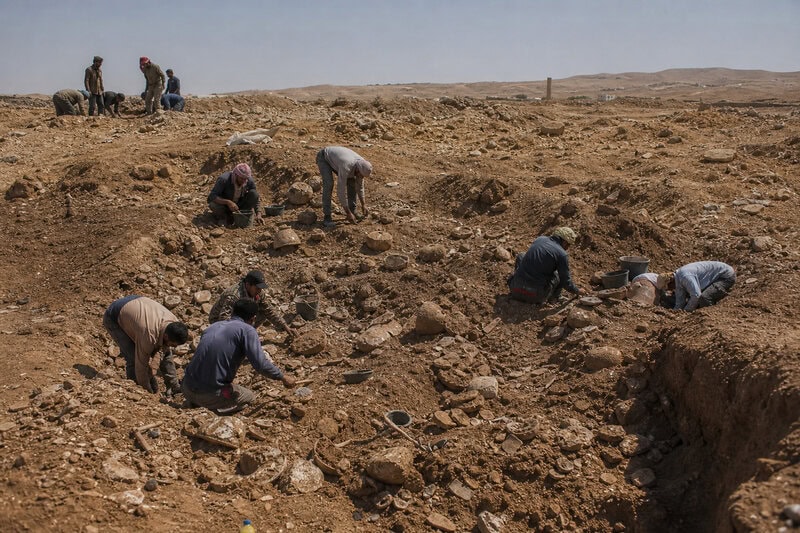
The destruction did not follow a simple narrative of soldiers smashing antiquities for ideological reasons. Researchers and investigative journalists who have studied the evidence distinguish between two overlapping patterns. The first is opportunistic looting driven by economic desperation — civilians in collapsed communities turning to the only asset left beneath their feet. The second is more organised extraction, linked to armed factions who recognised antiquities as a convertible currency in a war economy where conventional financial systems had broken down entirely.
The supply chain, in plain terms, runs from illegal excavation pit to local middleman to regional smuggling network to international art markets, with provenance — the documented ownership history that legitimises an object for sale — laundered at each step. An object that left a Syrian tell as an unrecorded theft can arrive at an auction house or with a private collector appearing, on paper, to have a clean history. The demand that makes this chain profitable originates largely outside Syria, in wealthy collector markets thousands of miles from the excavation pit.
The sharpest evidence for increasing organisation is the trajectory of the looting rate itself. Between 2011 and 2016, 13 percent of the surveyed sites showed signs of pillaging. Between 2015 and 2025, that figure rose to 59 percent — a more than fourfold increase across a period that overlapped with the wind-down of peak fighting. Destruction did not peak when the conflict was at its most intense. It accelerated as governance collapsed and black-market demand persisted, consistent with what conflict-archaeology researchers describe as looting functioning as an adaptive economic behaviour that outlasts headline warfare.
One contested area deserves honest acknowledgement. Attributing specific revenue figures to specific armed groups, including ISIS, remains difficult to verify independently. Scholars working in this field have cautioned against accepting headline financial estimates without rigorous scrutiny of how those numbers were sourced. The broader pattern — that looting was organised, ongoing, and financially motivated — is well-supported; precise accounting is not.
Palmyra and the Human Stakes of Cultural Protection
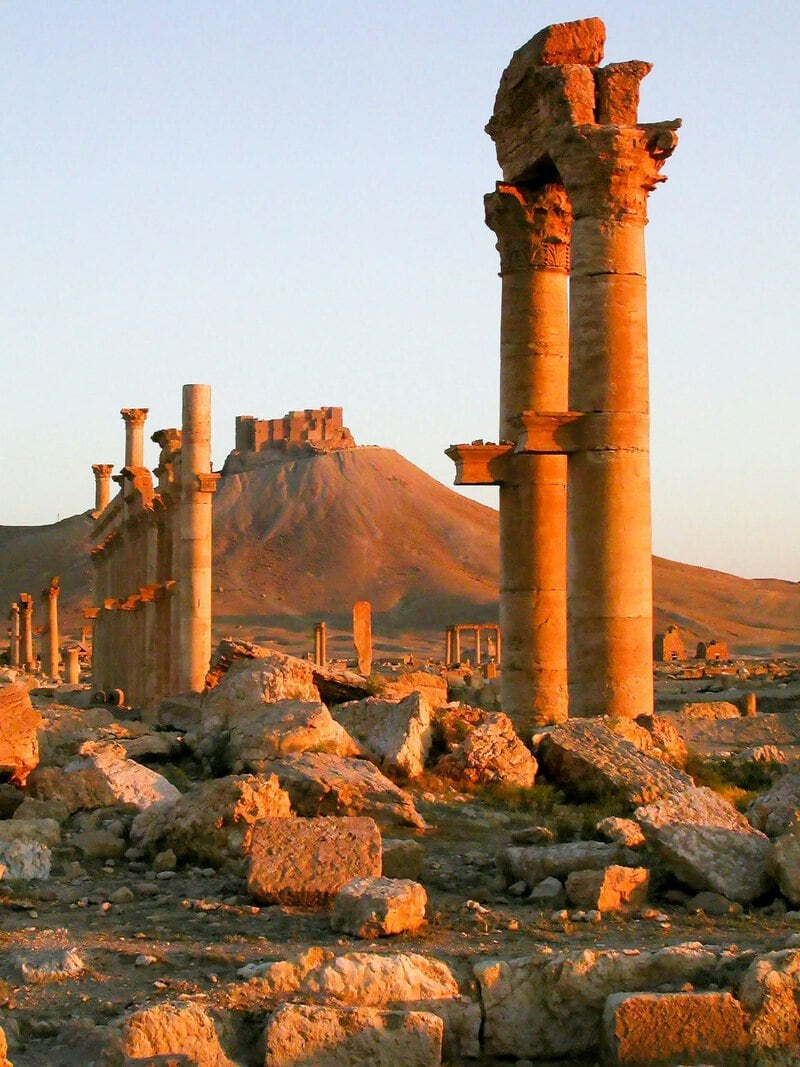
Palmyra distils the war’s cultural dimension into events concrete enough to name and mourn. Khaled Assad, who spent decades as the head of antiquities at Palmyra and knew its ruins more intimately than almost anyone alive, was murdered there during the conflict. He had refused to leave despite the danger. His death became a global symbol of the human cost borne by those who dedicate their professional lives to preserving the past as a shared inheritance, and it illustrated a reality that statistics alone cannot carry: cultural heritage protection is not an abstraction but a commitment that people have died for.
The physical losses at Palmyra followed. ISIS destroyed the Temple of Bel and the Arch of Triumph in 2015 — UNESCO-listed structures that had survived roughly two thousand years before the war reached them. The site illustrates a dynamic that researchers note repeatedly: ideological demolition and financial looting were not contradictory motivations but coexisting ones. The same actors who filmed themselves destroying monuments for propaganda were simultaneously extracting and selling the objects those monuments contained.
Restoration efforts at Palmyra remain ongoing and, among conservators, contested. Some argue that rapid reconstruction risks misrepresenting what was genuinely lost and replacing authentic ruin with something closer to replica. Others prioritise the site’s symbolic significance and its potential to support the economic recovery of surrounding Syrian communities. The International Committee of the Red Cross has documented Syria’s cultural heritage destruction as part of a broader accounting of the conflict’s humanitarian dimensions, reflecting growing international recognition that the loss of shared heritage carries a distinct harm — one that belongs to all of humanity, not only to the nation where the site stands.
What Is Gone Forever, and What Remains to Be Done
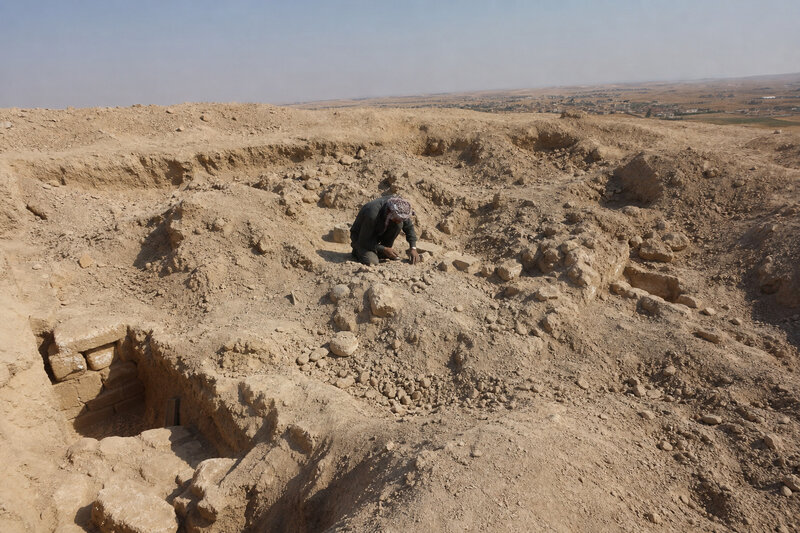
The most important category of loss is also the least visible to a general audience: stratigraphic context. A looted tell mound may still yield objects to a collector or even, eventually, to a museum. But the spatial relationships between those objects — what was buried with what, at what depth, in what orientation — are destroyed the moment the layer is disturbed without proper documentation. Those relationships are what allow archaeologists to reconstruct trade patterns, population movements, agricultural shifts, and the spread of ideas across centuries. They cannot be recovered from the objects alone. That knowledge is gone permanently, regardless of whether the objects themselves are eventually recovered or repatriated.
Against that irreversibility, some partial preservation tools have demonstrated genuine value. Photogrammetry, three-dimensional scanning, and LiDAR — a remote-sensing technique that uses laser pulses to map surfaces in fine detail — captured records of some Syrian sites before or shortly after damage occurred. These baselines are scientifically useful even though they are incomplete. They are not substitutes for the sites themselves, but they ensure that future researchers will not be working entirely blind when attempting to understand what once existed.
International efforts to intercept looted Syrian objects through customs monitoring and database matching have recorded measurable successes, but the volume of material dispersed across global markets vastly exceeds current monitoring capacity. The scale of the looting documented in Syria has, however, strengthened the legal and scholarly argument for treating systematic archaeological destruction in conflict zones as a war crime under international humanitarian law. Prosecutions remain rare, but the evidentiary and normative framework is more developed than it was before the Syrian conflict began, and that shift matters for how future conflicts may be prosecuted.
A Pattern Larger Than Syria
Syria’s losses are not unique in kind. The same cycle of satellite-documented looting, smuggling-chain dispersal, and permanent stratigraphic destruction has been recorded in Iraq, Libya, Mali, and Yemen. The pattern repeats wherever governance collapses suddenly and monitoring capacity does not exist to fill the gap. What makes Syria exceptional is scale — the extraordinary density of what existed there, and the documented breadth of how much was reached before any protective response could take hold.
Researchers working across these cases identify three interventions with the highest potential to reduce future losses: pre-conflict documentation of at-risk sites to create baseline records before instability begins; rapid-response satellite monitoring during and after periods of armed conflict; and demand-side enforcement in art markets that reduces the economic incentive to loot in the first place by closing the legal pathways through which stolen material enters legitimate commerce. All three remain underfunded relative to the scale of the problem they are designed to address.
The jump from 13 percent to 59 percent site looting across the Syrian survey period carries one lesson that applies far beyond Syria’s borders: heritage destruction is not a byproduct of active combat that ends when the fighting does. It continues, and can intensify, in the instability that follows a ceasefire or a regime collapse. Syria’s archaeological record is not a national asset in any narrow sense. It is shared human memory — the physical evidence of where settled life, writing, cities, and long-distance exchange first took root at scale. Its partial erasure does not diminish Syria alone. It permanently narrows what all future generations will be able to know about how and where human civilisation began.